Quick Verdict: Is the 2026 BMW i3 Worth the Premium?
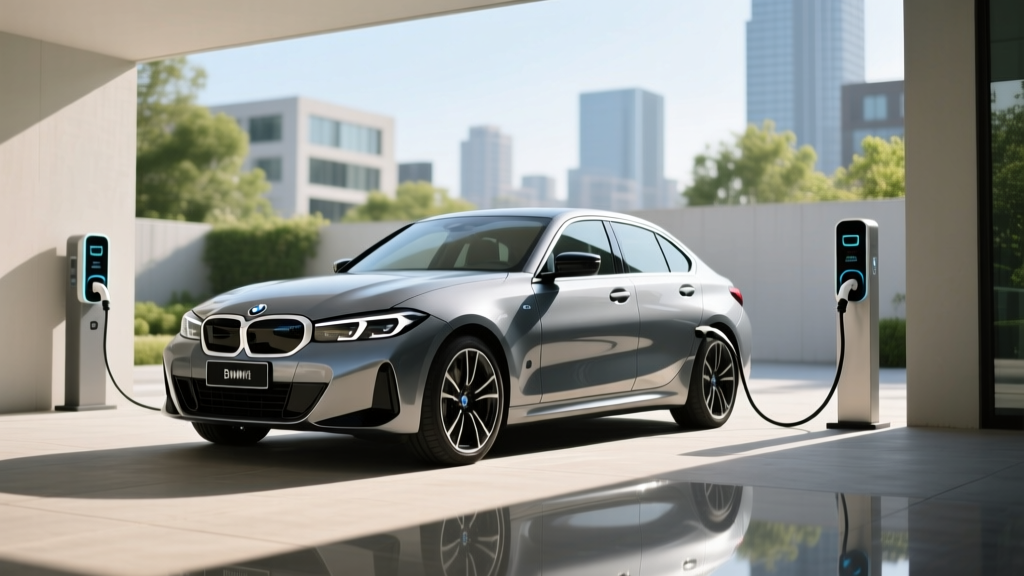
BMW revived the i3 nameplate for its next-generation compact electric sedan, and the 2026 model arrives with a starting MSRP of $47,300 (including destination). Built on BMW's latest Neue Klasse platform with an 800-volt architecture, the new i3 targets buyers who want a premium compact EV with genuine fast-charging capability and a usable real-world range above 300 miles. It slots between the Tesla Model 3 and the Mercedes-Benz CLA EV in a segment where efficiency, tech, and charging speed separate the contenders from the pretenders.
After spending time with the specs, cross-referencing EPA data, and running the ownership math, the 2026 i3 is a compelling package for commuters and tech-forward buyers — but its compact cargo space and tax-credit uncertainty mean it won't be the right call for everyone. Here's every number that matters.
Range, Efficiency, and the Real-World Reality
The 2026 BMW i3 eDrive40 — the launch trim — carries an 84.0 kWh usable battery built with BMW's sixth-generation cylindrical NMC (nickel-manganese-cobalt) cells. BMW claims these cells deliver roughly 20% higher energy density than the prismatic packs in the outgoing i4.
Real-World Expectation: Plan for ~265–285 miles on highway-heavy trips at 70–75 mph. In freezing weather (below 30°F), expect a 15–25% reduction, putting effective range around 235–265 miles unless you precondition the cabin and battery while plugged in.
EPA Efficiency: ~128 MPGe combined / 26 kWh per 100 miles (estimated)
The i3's heat pump comes standard, which helps preserve range in cold climates compared to EVs relying solely on resistive cabin heating. Still, 315 EPA miles is a strong starting point — and the 800V architecture means you won't be stranded long when you do need to plug in.
Charging Speed: 800V Architecture Pays Off
The headline charging spec: the i3 supports up to 250 kW peak DC fast charging, courtesy of its 800-volt electrical system. BMW quotes a 10–80% charge time of approximately 21 minutes at a compatible 350 kW station.
| Charge Level | Power / Voltage | Charge Time | Miles Added per Hour |
|---|---|---|---|
| Level 1 (120V household) | ~1.4 kW | ~60+ hours (0–100%) | ~5 mi/hr |
| Level 2 (240V home, 48A) | 11.5 kW | ~8.5 hours (0–100%) | ~37 mi/hr |
| DC Fast Charge (peak) | 250 kW (800V) | ~21 min (10–80%) | ~620 mi/hr (peak rate) |
Charging-curve reality check: Like all EVs, the i3 won't sustain 250 kW for the entire session. Peak rate typically holds between roughly 10–35% State of Charge (SoC), then tapers progressively. Expect an average sustained rate closer to 150–170 kW across the full 10–80% window. The 21-minute claim assumes a charger capable of delivering the full rate and a preconditioned battery — always use the BMW app's preconditioning feature before arriving at a DC station.
For home charging, the i3's onboard charger accepts up to 11.5 kW on Level 2, which is competitive with the Hyundai Ioniq 6 (10.9 kW) and ahead of the base Tesla Model 3 (11.5 kW on a 48-amp circuit). A full overnight charge is easily achievable with a standard Level 2 home installation.
Performance and Drivetrain
The eDrive40 trim sends power to the rear wheels through a single electric motor producing 335 horsepower and 317 lb-ft of torque. BMW estimates a 0–60 mph time of 5.4 seconds. An xDrive all-wheel-drive variant with dual motors and approximately 450 hp is expected to join the lineup later in the 2026 model year (specs preliminary).
| Specification | Value |
|---|---|
| Drivetrain | Rear-Wheel Drive (RWD) |
| Horsepower | 335 hp |
| Torque | 317 lb-ft |
| 0–60 mph | 5.4 seconds (mfr. est.) |
| Battery (usable) | 84.0 kWh, NMC (Gen 6 cylindrical) |
| EPA Range | 315 miles (est.) |
| MPGe (combined) | ~128 MPGe (est.) |
| Max DC Fast Charge | 250 kW |
| 10–80% DC Time | ~21 minutes |
| Level 2 Charge Rate | 11.5 kW (48A) |
| Top Speed | 130 mph (electronically limited) |
BMW's rear-drive bias gives the i3 a sportier feel than most compact EVs, and the low center of gravity from the under-floor battery pack keeps body roll well-controlled. Regenerative braking offers multiple levels selectable through paddle shifters, including a one-pedal driving mode that brings the car to a complete stop without touching the brake pedal.
Interior, Cargo, and Technology
The Neue Klasse cabin represents a significant departure from BMW's recent interiors. A panoramic "Vision" display stretches across the lower windshield, replacing the traditional instrument cluster, while a central 14.9-inch curved touchscreen runs BMW's latest iDrive X operating system.
Passenger space:
- Front headroom: 39.1 inches
- Rear headroom: 37.0 inches
- Front legroom: 41.5 inches
- Rear legroom: 35.2 inches
Cargo volume: 14.2 cubic feet (trunk) plus a small 1.8 cu-ft front trunk (frunk) for charging cables. The trunk is competitive with the Tesla Model 3 (23 cu ft with rear seats folded) only if you rarely carry bulky items — the i3's sedan trunk opening is more restrictive than a liftback.
Notable tech features:
- Augmented-reality head-up display with navigation overlay
- Wireless Apple CarPlay and Android Auto
- BMW Digital Key Plus (UWB-based phone-as-key)
- Over-the-air software updates for powertrain and infotainment
- Plug & Charge capability on Electrify America and compatible networks
Drawbacks: The panoramic lower-windshield display takes getting used to — traditionalists may miss a conventional gauge cluster. Rear visibility is limited by the thick C-pillars, making the surround-view camera (included on Premium tier) nearly essential for parking. No NACS (Tesla-style) charge port at launch — the i3 uses CCS1, though BMW has confirmed a NACS transition for the 2027 model year.
Pricing, Trims, and Federal Tax Credit Eligibility
The 2026 BMW i3 launches in two trims:
| Trim | Base MSRP | As-Tested (Typical Options) | §30D Federal Credit Eligibility |
|---|---|---|---|
| eDrive40 | $47,300 | $52,000–$55,000 | Up to $3,750 (partial — see below) |
| eDrive40 Premium | $53,800 | $58,000–$63,000 | Up to $3,750 (partial — see below) |
Federal tax credit breakdown (IRS §30D, 2026 rules): The i3 qualifies for a partial credit of up to $3,750 based on current critical-mineral sourcing requirements. The full $7,500 credit requires that both critical-mineral and battery-component sourcing thresholds are met — BMW's supply chain currently satisfies one of the two prongs for this model. Credit eligibility is subject to change as sourcing rules tighten annually. Per IRS guidelines, buyers must also meet income caps:
- MSRP cap: Sedans must be at or below $55,000 — the eDrive40 base qualifies; adding options can push it over
- Income caps: $150,000 single / $225,000 head of household / $300,000 joint (modified AGI)
- Point-of-sale transfer: Eligible buyers can apply the credit as an immediate dealer discount rather than waiting for tax filing
- Battery sourcing: Critical minerals and component thresholds increase each year — verify current status on the IRS clean vehicle report before purchasing
Because the i3 is a sedan, the $55,000 MSRP cap applies (not the $80,000 SUV/truck cap). This means a loaded Premium trim with packages can exceed the cap and become ineligible. Always confirm the exact VIN's credit status through the dealer and the fueleconomy.gov tax credit lookup.
Warranty and Long-Term Ownership
BMW backs the i3 with its standard EV warranty package:
- Battery warranty: 8 years / 100,000 miles (capacity retention threshold: 70% of original)
- Powertrain warranty: 4 years / 50,000 miles
- Bumper-to-bumper: 4 years / 50,000 miles
- Complimentary maintenance: 3 years / 36,000 miles
- Roadside assistance: 4 years / unlimited miles
The 70% battery retention threshold is industry-standard, matching Tesla and Hyundai/Kia. Independent long-term data on BMW's Gen 6 cylindrical cells isn't yet available, but the chemistry (high-nickel NMC) has shown solid cycle-life performance in third-party lab testing. BMW's thermal management system, which includes a dedicated battery cooling loop and heat pump, should help mitigate degradation in hot climates.
How It Compares: i3 vs. the Competition
| Spec | BMW i3 eDrive40 | Tesla Model 3 LR | Hyundai Ioniq 6 SEL |
|---|---|---|---|
| Base MSRP | $47,300 | $42,380 | $42,200 |
| EPA Range | ~315 mi | 363 mi | 361 mi |
| Battery (usable) | 84.0 kWh | 75.0 kWh | 77.4 kWh |
| DC Fast Charge Peak | 250 kW | 250 kW | 240 kW |
| 10–80% DC Time | ~21 min | ~25 min | ~18 min |
| 0–60 mph | 5.4 sec | 4.9 sec | 5.1 sec |
| Drivetrain | RWD | RWD | RWD |
| Charge Port | CCS1 | NACS | CCS1 |
| Max §30D Credit | Up to $3,750 | $7,500 | $7,500 |
The trade-off is clear: The Tesla Model 3 Long Range delivers more range and a larger tax credit for roughly $5,000 less. The Hyundai Ioniq 6 offers comparable range and faster 10–80% charging at an even lower price. What the BMW i3 brings to the table is build quality, cabin materials, and a driving refinement that neither competitor fully matches. The i3's steering feel, suspension tuning, and noise isolation are a class above — but you're paying a measurable premium for them.
Pros
- 800V architecture delivers genuinely fast DC charging
- Premium cabin materials and build quality
- Standard heat pump for cold-weather efficiency
- Rear-drive dynamics with well-tuned suspension
- Plug & Charge on major networks reduces charging friction
Cons
- Base price undercuts competitors only on features, not cost
- Partial §30D credit ($3,750 vs. full $7,500)
- CCS1 port (no NACS until 2027 model year)
- Compact trunk opening limits cargo versatility
- Unconventional panoramic dash display polarizes drivers
Who Should Buy the 2026 BMW i3?
- You value driving dynamics and cabin refinement over maximum range-per-dollar
- You have reliable home Level 2 charging and need DC fast charging only for road trips
- You're a current BMW owner comfortable with the iDrive ecosystem
- Your household income falls within §30D limits and the partial credit still meaningfully reduces your cost
- Maximizing range and minimizing price is your top priority (Model 3 LR, Ioniq 6)
- You need NACS access to Tesla Superchargers today
- You regularly haul cargo that requires a liftback or hatchback opening
- You want the full $7,500 federal credit and your chosen trim/options push MSRP above $55,000
Frequently Asked Questions
What is the real-world range of the 2026 BMW i3?
The EPA estimates approximately 315 miles for the eDrive40 trim. In real-world highway driving at 70–75 mph, expect 265–285 miles. Cold weather (below 30°F) can reduce this to 235–265 miles, though the standard heat pump helps mitigate losses compared to EVs without one.
How fast does the BMW i3 charge at home and on the road?
On DC fast charging, the i3 peaks at 250 kW and charges from 10–80% in approximately 21 minutes at a compatible 350 kW station. At home on a Level 2 (240V, 48-amp) charger, it accepts up to 11.5 kW, adding roughly 37 miles of range per hour and fully charging overnight in about 8.5 hours.
Does the 2026 BMW i3 qualify for the federal EV tax credit?
Yes, but only partially. Based on current IRS §30D sourcing rules, the i3 qualifies for up to $3,750 — not the full $7,500. The base eDrive40 at $47,300 falls under the $55,000 sedan MSRP cap. Buyers must also meet income thresholds ($150K single / $300K joint). Always verify eligibility for your specific VIN before purchase.
How much does the BMW i3 cost after tax credits?
The base eDrive40 starts at $47,300. With the partial $3,750 federal credit applied at point of sale, the effective price drops to approximately $43,550 before state incentives, dealer fees, or optional packages. A loaded Premium trim can exceed $58,000 and may breach the $55,000 MSRP cap, eliminating federal credit eligibility entirely.
Is the BMW i3 worth buying over the Tesla Model 3 or Hyundai Ioniq 6?
The i3 costs more and delivers less EPA range than both competitors. Its advantage lies in cabin quality, driving dynamics, and BMW's dealer/service network. If premium build and handling matter more to you than range-per-dollar, the i3 justifies its premium. If cost-efficiency and maximum range are your priorities, the Model 3 LR or Ioniq 6 are stronger choices.
Does the i3 have a NACS (Tesla) charge port?
Not at launch. The 2026 i3 uses CCS1. BMW has confirmed a NACS transition for the 2027 model year. In the meantime, BMW provides access to Electrify America and other CCS networks, and Plug & Charge capability streamlines the public charging experience.
What is the battery warranty on the 2026 BMW i3?
BMW covers the high-voltage battery for 8 years or 100,000 miles, whichever comes first. The warranty guarantees at least 70% of original capacity retention. If the battery falls below this threshold within the warranty period, BMW will repair or replace it at no cost.