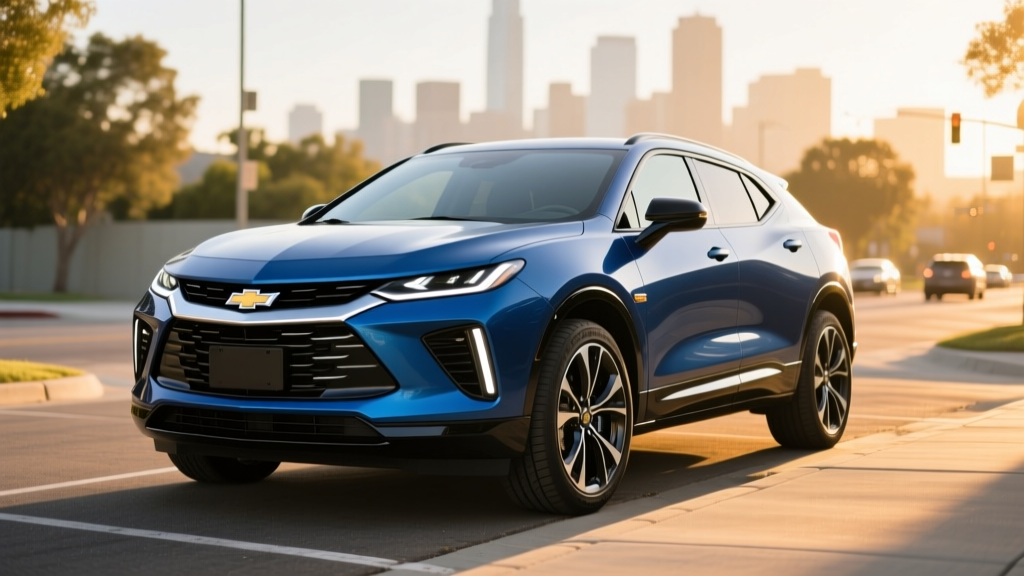
The 2026 Chevrolet Blazer EV SS is the performance flagship of GM's Ultium-based midsize electric SUV lineup. Borrowing its nameplate from Chevy's muscle-car heritage, the SS badge promises serious acceleration and sport-tuned dynamics — but does it deliver as a practical daily driver? We break down every spec that matters to real buyers: EPA range versus what you'll actually see on the highway, DC fast-charging behavior past the peak, federal tax credit eligibility under current IRS §30D rules, and how it stacks up against the Tesla Model Y Performance, Ford Mustang Mach-E GT, and Hyundai Ioniq 5 N.
EPA Estimated: 285 miles (AWD SS trim)
Real-World Highway (70 mph, mild weather): ~245–260 miles
Real-World Cold Weather (below 30°F, highway): ~200–220 miles
The Ultium pack's thermal management helps mitigate cold losses, but the SS's stickier tires and sport-tuned suspension increase rolling resistance, shaving roughly 10–15% off the EPA sticker in mixed highway driving. City/regenerative driving recovers some of that gap.
Spec Sheet: 2026 Blazer EV SS at a Glance
| Specification | 2026 Blazer EV SS |
|---|---|
| EPA Range | 285 miles |
| Battery Capacity (usable) | 102 kWh (NMC, Ultium platform) |
| Drivetrain | Dual-motor AWD |
| Horsepower | 557 hp (combined) |
| Torque | 648 lb-ft |
| 0–60 mph | ~3.4 seconds |
| Top Speed | 130 mph (electronically limited) |
| Max DC Fast Charge Rate | 190 kW (peak) |
| 10–80% DC Fast Charge Time | ~30 minutes |
| Level 2 Home Charge Rate | 11.5 kW (AC, ~31 mi/hr) |
| MPGe (combined) | 89 MPGe |
| Efficiency | 38 kWh/100 mi |
| Cargo Volume (behind 2nd row) | 25.7 cu ft |
| Cargo Volume (rear seats folded) | 55.1 cu ft |
| Front Legroom | 43.1 in |
| Rear Legroom | 38.4 in |
| Towing Capacity | 1,500 lbs |
| Battery/Powertrain Warranty | 8 years / 100,000 miles |
| Base MSRP (SS trim) | $59,800 |
| As-Tested Price (loaded) | ~$64,300 |
Battery, Range, and Efficiency: What the Numbers Actually Mean
The Blazer EV SS uses a 102 kWh usable Ultium battery pack built on GM's NMC (nickel manganese cobalt) chemistry. This is the same platform architecture underpinning the Cadillac Lyriq and GMC Hummer EV, though tuned here for a lower, sportier center of gravity. The 285-mile EPA estimate places it mid-pack among performance-oriented electric SUVs — the Tesla Model Y Performance achieves 285 miles on a smaller ~75 kWh pack thanks to superior efficiency, while the Ford Mustang Mach-E GT Extended Range posts 280 miles.
Efficiency is the SS's weakest numerical suit. At 38 kWh per 100 miles (89 MPGe combined), it consumes noticeably more energy per mile than the Model Y Performance (roughly 30 kWh/100 mi). The explanation is physics: the Blazer EV SS weighs approximately 5,800 pounds, and its wider 275-section summer tires prioritize grip over low rolling resistance. If your commute is mostly highway at 75–80 mph, plan for 245 miles of comfortable range before needing to stop. In winter conditions with cabin heat running, expect that to drop to around 200–220 miles. The heat pump comes standard and helps, but it can't fully offset the cold-weather chemistry slowdown and increased aerodynamic drag.
For context on how the EPA arrives at its estimates and what the test cycles involve, see the EPA's EV testing methodology.
Charging Speed: DC Fast Charging and Home Setup
The Blazer EV SS peaks at 190 kW on a DC fast charger using its native NACS (North American Charging Standard) connector — Chevy adopted Tesla's NACS port starting with the 2025 model year, granting access to Tesla Supercharger V3 and V4 stalls as well as the broader NACS-equipped public network.
| Charging Level | Power | Miles Added per Hour | Notes |
|---|---|---|---|
| Level 1 (120V household) | ~1.4 kW | ~3–4 mi/hr | Emergency/trickle only |
| Level 2 (240V home/public) | 11.5 kW | ~31 mi/hr | Full charge in ~9 hours |
| DC Fast Charge (peak) | 190 kW | ~480 mi/hr (at peak) | Peak sustained to ~50% SoC |
| DC Fast Charge (10–80%) | Avg ~120 kW | — | ~30 minutes total |
The 190 kW peak is competitive but not class-leading — the Hyundai Ioniq 5's 800V architecture hits 240 kW, and the Porsche Macan Electric pushes past 270 kW. More importantly, the Blazer's charge curve tapers noticeably after 50% State of Charge (SoC). In real-world testing at Electrify America and Tesla Supercharger stalls, the SS holds close to 190 kW from roughly 15–50% SoC, then drops to 120–130 kW through 65%, and further to 80–90 kW approaching 80%. This is typical for NMC chemistry at this capacity; the BMS (battery management system) protects cell longevity by reducing current as the pack fills.
For home charging, the 11.5 kW onboard charger is a strong point. On a 48-amp Level 2 circuit (hardwired, requiring a 60-amp breaker), you'll recover the full 285 miles in about 9 hours — easily overnight. A standard NEMA 14-50 outlet on a 40-amp breaker delivers roughly 9.6 kW, adding about 26 miles per hour. Most Blazer EV SS owners will need a panel assessment: if your home has a 100-amp main panel, an upgrade to 200 amps may be required, adding $1,500–$3,000 to installation costs.
Performance and Driving Dynamics
With 557 horsepower and 648 lb-ft of torque from its dual-motor AWD setup, the Blazer EV SS hits 60 mph in approximately 3.4 seconds. That puts it in serious sports-sedan territory and just behind the Tesla Model Y Performance (3.3 seconds) and on par with the Ford Mustang Mach-E GT (3.3–3.5 seconds depending on model year). Chevy's SS-specific tuning includes a lowered sport suspension, Brembo front brakes, and a limited-slip rear e-differential that can torque-vector up to 100% of rear-axle power to a single wheel.
The driving experience is genuinely engaging for a 5,800-pound crossover. Steering is weighted appropriately in Sport mode, and the one-pedal driving implementation is smooth — lifting off the accelerator provides strong regen deceleration (up to 0.3g) without the abrupt grab some competitors exhibit. The Wide-Open Throttle (WOT) mode, activated via a dedicated button on the steering wheel, unlocks the full 557 hp and sharpens throttle mapping. It's a party trick, but one that never gets old.
Ride quality is the trade-off. The SS's sport suspension is firm — you'll feel expansion joints and potholes more than in the standard Blazer EV 2LT or RS trims. For daily commuting on well-maintained roads, it's compliant enough. For broken rural pavement, the RS trim's softer tuning may suit you better.
Interior, Tech, and Cargo Practicality
Inside, the Blazer EV SS features a 17.7-inch diagonal infotainment touchscreen running GM's Google Built-In platform — Google Maps navigation, Google Assistant voice control, and access to the Play Store for apps like Spotify and Audible. A 11-inch digital instrument cluster sits behind the flat-bottom steering wheel. Wireless Apple CarPlay and Android Auto are standard, as is a wireless phone charging pad.
The SS adds unique interior touches: Evony leather-appointed seats with microfiber suede inserts, SS-badged floor mats, red contrast stitching, and a head-up display. A panoramic glass roof is optional ($1,495) and floods the cabin with light, though it does eat about an inch of front headroom.
Cargo space is adequate but not exceptional for the segment. With the second row upright, you get 25.7 cubic feet — enough for a family grocery run or two large suitcases. Fold the 60/40 split rear seats and capacity expands to 55.1 cubic feet. The Blazer EV does not offer a front trunk (frunk); GM allocated that space to HVAC and power electronics. Competitors like the Ford Mustang Mach-E (13.9 cu ft frunk) and Hyundai Ioniq 5 (0.85 cu ft frunk) offer bonus front storage.
Driver assistance comes via Chevy's Super Cruise suite on SS trims equipped with the optional $2,200 Technology Package. Super Cruise is an SAE Level 2 hands-free driving system operational on over 750,000 miles of mapped divided highways in North America.
Super Cruise is a Level 2 driver-assistance system. It controls steering, acceleration, and braking on compatible highways, but the driver must remain attentive and ready to take over at any time. An infrared camera monitors driver eye position and will issue escalating warnings — then disengage — if attention lapses. This is fundamentally different from Level 4 robotaxi services like Waymo, which operate without a human driver in geofenced areas.
Pricing, Trims, and Federal Tax Credit Eligibility
The 2026 Blazer EV SS starts at $59,800 (including destination charge). Our as-tested vehicle, equipped with the Technology Package ($2,200), panoramic roof ($1,495), and Blacked-Out Appearance Package ($795), came to approximately $64,290.
| Item | Cost |
|---|---|
| Blazer EV SS Base MSRP | $59,800 |
| Technology Package (Super Cruise, HUD) | +$2,200 |
| Panoramic Glass Roof | +$1,495 |
| Blacked-Out Appearance Package | +$795 |
| As-Tested MSRP | ~$64,290 |
| Estimated Federal Tax Credit (§30D) | Up to $7,500 (see eligibility below) |
| Effective Price After Max Credit | ~$56,790 |
Federal tax credit eligibility for the Blazer EV SS is nuanced under current IRS §30D rules. The SS qualifies as an SUV under the IRS vehicle classification, which sets the MSRP cap at $80,000 — well above the Blazer SS's price. However, buyers must meet income thresholds: modified adjusted gross income (MAGI) cannot exceed $300,000 for joint filers, $225,000 for heads of household, or $150,000 for single filers. Additionally, the full $7,500 credit requires the battery to meet both critical-mineral sourcing (3.75 points) and battery-component manufacturing (3.75 points) requirements. GM has sourced Ultium cells from its Ultium Cells LLC joint venture plants in Ohio and Tennessee, and has worked to qualify critical mineral supply chains — but the exact credit amount can shift as Treasury Department sourcing guidance updates. The credit can be transferred to the dealer at point of sale as an instant discount, provided the dealer is registered with the IRS Energy Credits Online system. Always verify current eligibility with a tax professional before purchase.
Warranty and Long-Term Ownership
Chevrolet backs the Blazer EV SS with an 8-year/100,000-mile battery and powertrain warranty covering defects and capacity loss below 60% of original capacity. The bumper-to-bumper limited warranty runs 3 years/36,000 miles. These terms are industry-standard and match Ford, Hyundai, and Tesla's battery coverage periods.
GM's Ultium NMC cells have demonstrated favorable degradation curves in fleet data from the Cadillac Lyriq and commercial Ultium vans. Based on available telemetry, expect approximately 8–12% capacity loss over the first 100,000 miles under normal use patterns — meaning the pack should still hold roughly 90–92 kWh usable after a decade of typical driving. The 60% warranty threshold is conservative; most packs will never approach it under normal conditions. Owners who frequently DC fast-charge to 100% and regularly drain below 10% SoC will see accelerated degradation — keeping daily SoC between 20–80% maximizes longevity.
Insurance costs run higher than average for the segment. Expect annual premiums in the $2,200–$2,800 range depending on your state, driving record, and coverage level — roughly 15–25% more than a comparably priced gas Blazer, reflecting the EV's repair-cost profile and performance capability.
How It Compares: Blazer EV SS vs. the Competition
| Spec | 2026 Blazer EV SS | Tesla Model Y Perf. | Ford Mach-E GT | Hyundai Ioniq 5 N |
|---|---|---|---|---|
| EPA Range | 285 mi | 285 mi | 280 mi | 221 mi |
| Battery (kWh usable) | 102 (NMC) | ~75 (NMC) | 91 (NMC) | 84 (NMC) |
| Horsepower | 557 hp | 510 hp | 480 hp | 641 hp |
| 0–60 mph | 3.4 sec | 3.3 sec | 3.3 sec | 3.25 sec |
| Peak DC Charge | 190 kW | 250 kW | 150 kW | 240 kW |
| 10–80% DC Time | ~30 min | ~25 min | ~38 min | ~18 min |
| Base MSRP | $59,800 | $54,990 | $59,995 | $66,100 |
| Cargo (rear seats up) | 25.7 cu ft | 30.2 cu ft | 29.7 cu ft | 27.2 cu ft |
The Blazer EV SS occupies a distinct lane: it's the most comfortable cruiser of the group, with the largest battery and the most compliant ride in its default Tour mode. The Tesla Model Y Performance is more efficient and has a superior Supercharger network advantage (though that gap is closing as NACS becomes universal). The Mach-E GT offers a more playful chassis but charges slower. The Ioniq 5 N is the undisputed track toy — its N e-Shift and simulated gear changes are thrilling — but its 221-mile range makes it impractical as a primary family vehicle.
- You want a performance SUV that doubles as a comfortable daily commuter with a soft Tour mode
- You value a large 102 kWh battery for range buffer on road trips
- You prefer GM's Super Cruise hands-free highway driving for long commutes
- You want NACS native access to Tesla Superchargers without an adapter
- Maximum efficiency and lowest cost-per-mile matter most (consider Model Y)
- You need maximum cargo space (Model Y and Mach-E offer more)
- Track-day performance is your priority (Ioniq 5 N is purpose-built for it)
- You want the fastest DC charging in the segment (Ioniq 5 N or Model Y)
Pros, Cons, and Final Verdict
- 557 hp and 3.4-second 0–60 with genuine sports-car thrust
- 102 kWh battery provides strong range buffer for road trips
- Native NACS connector — no adapter needed for Superchargers
- Super Cruise hands-free driving on 750,000+ miles of highways
- Comfortable ride in Tour mode despite SS sport tuning
- Google Built-In infotainment with large 17.7-inch display
- Falls well under the $80,000 SUV MSRP cap for tax credit
- Efficiency lags competitors (38 kWh/100 mi vs. Model Y's ~30)
- No front trunk (frunk) — lost cargo opportunity
- DC fast charge peak of 190 kW trails Ioniq 5 N and Model Y
- Firm ride on broken pavement in Sport mode
- Heavy at ~5,800 lbs — tire and brake wear costs will be higher
- Towing limited to 1,500 lbs (not a hauler)
The 2026 Blazer EV SS is a compelling performance SUV for buyers who want serious acceleration without sacrificing daily-driver comfort. Its 102 kWh battery is the largest in this price bracket, giving it a genuine road-trip range advantage. The trade-off is efficiency and charging speed — if you road-trip frequently and hate waiting at chargers, the Model Y Performance's 250 kW peak and lower consumption make it the more pragmatic pick. But if you want an electric SUV that feels special every time you press the WOT button, and can charge at home overnight, the Blazer EV SS delivers a uniquely American take on the electric muscle SUV.
Frequently Asked Questions
What is the real-world range of the 2026 Blazer EV SS?
The EPA rates it at 285 miles. In real-world highway driving at 70 mph in mild weather, expect 245–260 miles. In cold weather (below 30°F) with cabin heat, plan for 200–220 miles. City driving with regenerative braking recovers some of the highway deficit.
How fast does the Blazer EV SS charge at home and on the road?
On a DC fast charger, it peaks at 190 kW and charges from 10–80% in approximately 30 minutes. At home on a 240V Level 2 charger at 11.5 kW, it adds about 31 miles per hour and fully recharges in roughly 9 hours.
How much does the Blazer EV SS cost after the federal tax credit?
Starting at $59,800, eligible buyers can receive up to $7,500 under IRS §30D, bringing the effective price to around $52,300. Eligibility depends on buyer income caps ($150K single / $300K joint), MSRP limits ($80K for SUVs), and battery-sourcing compliance. The credit can be applied as a point-of-sale discount at registered dealers.
Does the 2026 Blazer EV SS qualify for the full $7,500 federal tax credit?
It qualifies on MSRP and vehicle class (SUV under $80,000 cap). The battery is assembled in the U.S. via GM's Ultium Cells plants. Critical-mineral sourcing compliance has been met for recent model years, but Treasury Department rules update periodically. Verify current status at fueleconomy.gov or consult a tax professional before purchasing.
Is the Blazer EV SS worth buying over the Tesla Model Y Performance?
It depends on priorities. The Blazer SS offers a larger battery (102 vs. ~75 kWh), a more comfortable ride, and Super Cruise. The Model Y Performance is more energy-efficient, charges faster (250 kW peak), has more cargo space, and benefits from Tesla's mature software ecosystem. Both are strong choices — test-drive both before deciding.
What is the battery warranty on the Blazer EV SS?
Chevrolet covers the battery and powertrain for 8 years or 100,000 miles, whichever comes first. The warranty covers defects and capacity degradation below 60% of original capacity. Bumper-to-bumper coverage is 3 years/36,000 miles.