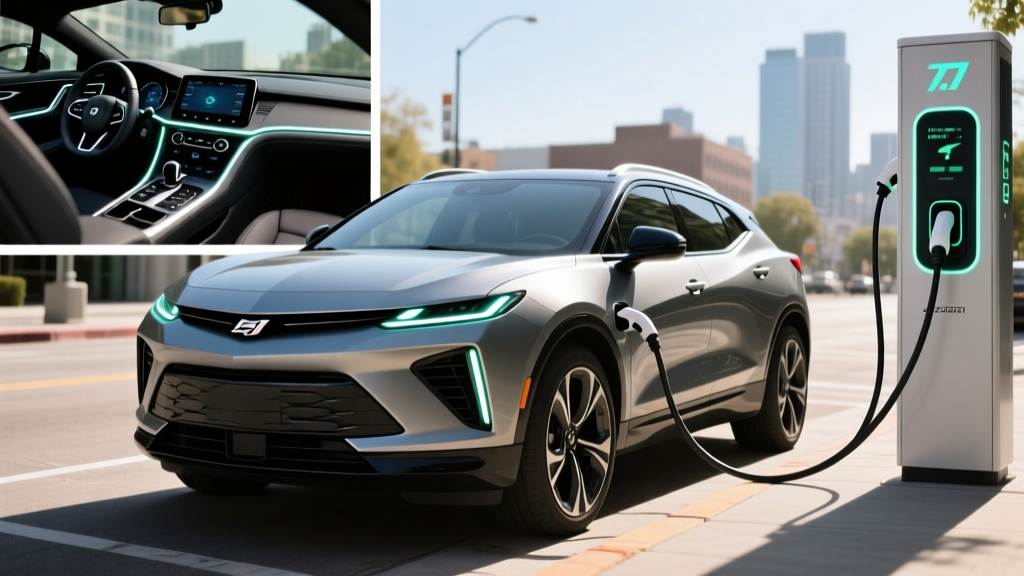
The 2026 Chevrolet Blazer EV slots into one of the most competitive segments in the electric-vehicle market: the midsize electric crossover. After a rocky 2024 launch plagued by software glitches and a stop-sale order, Chevrolet spent the 2025 and 2026 model years overhauling the Blazer EV's Ultifi software platform, stabilizing infotainment, and refining battery thermal management. The result for 2026 is a substantially more polished product that competes directly with the Hyundai Ioniq 5, Ford Mustang Mach-E, and Tesla Model Y on range, charging speed, and interior space — though not without trade-offs.
This review covers every number that matters: EPA range versus real-world expectations, DC fast-charging curves, battery chemistry and degradation outlook, exact MSRP by trim, and federal tax credit eligibility under current IRS §30D rules. If you're cross-shopping the Blazer EV, this is the data you need.
2026 Blazer EV at a Glance: Key Specifications
| Specification | Value |
|---|---|
| EPA Range | 279–324 miles (varies by trim/drivetrain) |
| Battery Capacity (usable) | 85 kWh (102 kWh gross), NMC lithium-ion |
| Max DC Fast Charge Rate | 190 kW peak |
| 10–80% DC Fast Charge Time | ~28 minutes (estimated) |
| Level 2 Home Charging Rate | 11.5 kW (up to 48A) |
| Level 2 Miles Added per Hour | ~35–38 mi/hr |
| 0–60 mph | 7.6 sec (2LT AWD); 4.0 sec (SS AWD) |
| Horsepower | 288 hp (2LT AWD); 557 hp (SS) |
| Drivetrain | RWD, AWD (dual-motor), or SS (performance AWD) |
| Combined MPGe | 89–92 MPGe (AWD trims) |
| Efficiency | ~36 kWh/100 mi (AWD) |
| Cargo Volume (rear seats up) | 25.5 cu ft |
| Cargo Volume (rear seats folded) | 58.2 cu ft |
| Rear Legroom | 38.9 inches |
| Battery/Powertrain Warranty | 8 years / 100,000 miles |
| Base MSRP (2LT RWD) | $44,600 (before destination) |
| Towing Capacity (AWD/SS) | 1,500 lbs |
Range and Efficiency: EPA Sticker vs. Real-World Driving
The 2026 Blazer EV is offered in several range configurations depending on trim and drivetrain. The maximum EPA-estimated range is 324 miles, available on the 2LT RWD trim with the full 102 kWh gross (85 kWh usable) battery pack. AWD trims drop to approximately 279–293 miles EPA, and the high-performance SS trim falls further to an estimated 260–270 miles due to its more aggressive power output and weight.
EPA 324 mi (2LT RWD): Expect approximately 270–290 miles on highway-heavy trips at 70–75 mph, where aerodynamic drag hits this crossover's boxy profile harder than in city driving. In cold weather (below 32°F), plan for a 15–25% range reduction, bringing effective highway range down to roughly 220–245 miles. The AWD trims with 279–293 EPA miles will realistically deliver 230–255 miles highway in moderate conditions. City and suburban driving with regenerative braking will keep you closer to or slightly above EPA figures.
Efficiency lands at roughly 36 kWh per 100 miles for AWD trims, translating to about 89–92 MPGe combined per fueleconomy.gov. That's competitive with the Ford Mustang Mach-E AWD (37 kWh/100 mi) but trails the Hyundai Ioniq 5 AWD (34 kWh/100 mi) and Tesla Model Y Long Range (28 kWh/100 mi). The Blazer EV's heavier curb weight — approximately 5,700 lbs for AWD trims — is the primary efficiency penalty.
Battery Chemistry, Capacity, and Longevity
The 2026 Blazer EV uses General Motors' Ultium platform with an NMC (nickel manganese cobalt) lithium-ion battery pack. The gross capacity is 102 kWh, with approximately 85 kWh usable — GM reserves a buffer at the top and bottom of the pack to protect against degradation and extend cycle life.
NMC chemistry offers higher energy density than LFP (lithium iron phosphate), which is why the Blazer EV achieves over 300 miles in RWD form. The trade-off: NMC cells are more sensitive to sustained high state-of-charge storage and extreme temperatures. For daily driving, GM recommends setting the charge limit to 80% and only charging to 100% before long road trips — a practice that significantly slows long-term degradation.
GM backs the battery with an 8-year / 100,000-mile warranty covering defects and capacity loss below a specified retention threshold (typically 60–70% of original capacity, per GM's warranty documentation). Based on Ultium platform data from the Cadillac Lyriq and GMC Hummer EV, early degradation curves suggest approximately 8–12% capacity loss over the first 5 years / 75,000 miles under normal use patterns. Battery replacement costs, if ever needed out of warranty, are estimated in the $15,000–$22,000 range based on current Ultium pack pricing — though this figure is expected to decline as GM scales production.
Charging Speed: DC Fast Charging and Home Level 2
Charging capability is where the Blazer EV shows both its strengths and its limitations relative to 800V-architecture competitors.
| Charging Level | Power / Voltage | Speed | Notes |
|---|---|---|---|
| Level 1 (120V household) | ~1.4 kW | ~4–5 mi/hr | Emergency/top-up only; full charge takes 60+ hours |
| Level 2 (240V home) | 11.5 kW (48A) | ~35–38 mi/hr | Full 0–100% in ~9 hours; overnight-ready |
| DC Fast Charge | 190 kW peak | 10–80% in ~28 min | Peak rate not sustained; tapers significantly above 80% |
The 190 kW peak DC fast-charge rate is the Blazer EV's most notable charging limitation. Competitors like the Hyundai Ioniq 5 (800V architecture, 240 kW peak, 10–80% in ~18 minutes) and the Tesla Model Y (250 kW peak on V3 Superchargers) replenish considerably faster on road trips. The Blazer EV's charge curve peaks around 190 kW at low state-of-charge (roughly 10–25%) and tapers progressively, averaging closer to 130–140 kW across the full 10–80% session. That translates to approximately 28 minutes for 10–80%, which is adequate but not class-leading.
On the home front, the 11.5 kW onboard charger is a genuine strength. With a properly installed 240V / 60A circuit and a Level 2 wall connector (such as the ChargePoint Home Flex or Emporia Vue), you'll add roughly 35–38 miles of range per hour of charging. A full overnight session easily replenishes a day's worth of driving. Home Level 2 installation typically costs $800–$2,000 depending on panel proximity and whether your electrical panel needs a service upgrade — budget toward the higher end if your panel is older or distant from the garage.
The Blazer EV uses the NACS (North American Charging Standard) connector as standard equipment for 2026, meaning native access to Tesla's Supercharger network without an adapter. This is a significant practical advantage over CCS-equipped vehicles that still require adapters for Supercharger access.
Performance, Drivetrain, and Ride Quality
The 2026 Blazer EV offers three distinct powertrain configurations:
- 2LT RWD: Single rear motor, 220 hp, 266 lb-ft torque. 0–60 mph in approximately 8.2 seconds. Adequate for commuting but not exciting.
- 2LT AWD / RS AWD: Dual-motor all-wheel drive, 288 hp, 355 lb-ft. 0–60 mph in 7.6 seconds. The volume seller and the sweet spot for most buyers.
- SS AWD: Performance dual-motor, 557 hp, 648 lb-ft. 0–60 mph in a claimed 4.0 seconds with WOW (Wide Open Watts) mode engaged. Genuinely quick, but the price premium is steep and range drops significantly.
Ride quality in the 2LT and RS trims is composed and comfortable, with GM's multilink rear suspension absorbing road imperfections effectively. The SS trim's sport-tuned suspension firms things up noticeably — rewarding on back roads but less forgiving on broken pavement. Steering feel across all trims is numb and over-assisted, a common EV trait that prioritizes low-effort maneuvering over feedback. The Blazer EV's ~5,700-lb curb weight is perceptible during hard cornering, with noticeable body roll that reminds you this is a heavy crossover, not a sports sedan.
Towing capacity is limited to 1,500 pounds across AWD trims — enough for a small utility trailer or a pair of dirt bikes, but not suitable for boat or camper towing. If you need serious tow capability, the Rivian R1S or Ford F-150 Lightning are in a different league.
Interior, Cargo, and Technology
The Blazer EV's cabin takes a modern, screen-forward approach with a 17.7-inch diagonal infotainment touchscreen angled toward the driver and an 11-inch digital instrument cluster. The 2026 model year benefits from GM's updated Ultifi software stack, which resolved the lag, reboot, and connectivity issues that plagued early 2024 models. Wireless Apple CarPlay and Android Auto are standard, along with built-in Google services (Google Maps navigation, Google Assistant, Play Store apps).
Material quality is mid-pack for the segment: soft-touch surfaces on the dashboard and door uppers, but harder plastics on the lower door panels and center console. The RS trim upgrades to perforated leather seats with ventilation, which is a welcome addition. Rear seat comfort is good, with 38.9 inches of legroom — competitive with the Mach-E and slightly behind the Ioniq 5's flat-floor spaciousness.
Cargo capacity is a Blazer EV strength: 25.5 cubic feet behind the second row and 58.2 cubic feet with the rear seats folded. That's more practical than the Mach-E (29.9 cu ft max) and close to the Model Y. However, the Blazer EV does not offer a front trunk (frunk), which is a missed opportunity given the Ultium platform's packaging flexibility.
Driver-assistance technology includes GM's Super Cruise on RS and SS trims — a hands-off, eyes-on Level 2 highway driving system operational on over 750,000 miles of pre-mapped divided highways in North America. Super Cruise remains one of the best-executed Level 2 systems available, with robust driver monitoring via an infrared camera on the steering column. However, it is emphatically not self-driving: you must remain attentive, and the system will not operate on unmapped surface streets or in construction zones without clear lane markings.
Super Cruise is a Level 2 driver-assistance system per SAE J3016 standards. The driver must remain engaged and ready to take over at any time. Full self-driving capability (Level 4+) is not available on any consumer vehicle sold today — only on commercial robotaxi services like Waymo in geofenced urban areas.
Pricing, Trims, and Federal Tax Credit Eligibility
| Trim | Drivetrain | MSRP (incl. destination) | Est. After §30D Credit* |
|---|---|---|---|
| 2LT | RWD | $45,395 | $37,895 |
| 2LT | AWD | $48,195 | $40,695 |
| RS | AWD | $52,595 | $45,095 |
| SS | AWD | $61,395 | $53,895 |
*Estimated prices assume full $7,500 federal tax credit eligibility. Actual credit depends on individual tax liability, income limits, battery sourcing compliance, and point-of-sale transfer rules. Verify eligibility at IRS.gov §30D and consult a tax professional.
The federal EV tax credit under IRS §30D provides up to $7,500 for qualifying new clean vehicles, but eligibility is not automatic. For the 2026 Blazer EV, several factors apply:
- MSRP Cap: The Blazer EV is classified as an SUV/crossover, so the MSRP cap is $80,000. All trims fall under this threshold.
- Buyer Income Limits: Modified adjusted gross income must not exceed $300,000 (married filing jointly), $225,000 (head of household), or $150,000 (single filers).
- Battery Sourcing Requirements: The $7,500 credit is split into two halves — $3,750 for critical minerals sourcing and $3,750 for battery component manufacturing. GM has worked to shift Ultium battery supply chains to North America and free-trade-agreement partner nations. As of the 2026 model year, most Blazer EV trims are expected to qualify for the full $7,500, but battery sourcing compliance is subject to change based on supply chain shifts. Always verify at fueleconomy.gov before purchasing.
- Point-of-Sale Transfer: As of 2024, buyers can transfer the credit to the dealer at purchase, reducing the upfront price rather than waiting for a tax refund. This requires the dealer to be registered with the IRS Energy Credits Online portal.
How the 2026 Blazer EV Stacks Up Against Competitors
| Attribute | Blazer EV 2LT AWD | Hyundai Ioniq 5 AWD | Ford Mustang Mach-E AWD | Tesla Model Y LR AWD |
|---|---|---|---|---|
| EPA Range | 293 mi | 290 mi | 290 mi | 320 mi |
| Battery (usable kWh) | 85 kWh (NMC) | 77.4 kWh (NMC) | 75.7 kWh (NMC) | ~78 kWh (NMC) |
| Peak DC Charge kW | 190 kW | 240 kW (800V) | 150 kW | 250 kW |
| 10–80% Time | ~28 min | ~18 min | ~35 min | ~22 min |
| 0–60 mph | 7.6 sec | 5.1 sec | 5.5 sec | 4.8 sec |
| Base MSRP (AWD) | $48,195 | $50,100 | $46,995 | $49,990 |
| Cargo (rear up) | 25.5 cu ft | 27.2 cu ft | 29.9 cu ft | 30.2 cu ft |
| NACS Native | Yes | No (adapter req.) | No (adapter req.) | Yes |
| Hands-Free Highway ADAS | Super Cruise (RS+) | None | BlueCruise (optional) | None (FSD Supervised) |
Strengths
- Native NACS connector — direct Supercharger access
- Super Cruise hands-free highway driving (RS/SS)
- Strong cargo capacity (25.5 cu ft / 58.2 cu ft)
- 11.5 kW Level 2 home charging — fast overnight replenishment
- 324-mile max EPA range (RWD trim)
- GM's extensive dealer network for service
Drawbacks
- 190 kW DC peak lags 800V competitors (Ioniq 5, Model Y)
- Heavy at ~5,700 lbs — impacts efficiency and handling
- No front trunk (frunk)
- SS trim is expensive and range-compromised
- 1,500-lb tow rating is low for the segment
- Software platform, while improved, still trails Tesla's UX polish
Who Should Buy the 2026 Blazer EV?
Best For:
- Daily commuters with home Level 2 charging who prioritize comfortable ride quality and a proven dealer network over sporty handling.
- Families who need strong cargo capacity, good rear-seat space, and want Super Cruise for highway road trips.
- Buyers committed to the Supercharger network who want native NACS access without carrying an adapter.
- GM loyalists transitioning from a gas-powered Blazer, Equinox, or Traverse who want familiar styling and dealership relationships.
Look Elsewhere If:
- You frequently road-trip and want the fastest possible DC charging (consider the Ioniq 5 or Model Y).
- You need towing capability above 1,500 lbs (consider the F-150 Lightning or Rivian R1S).
- You prioritize driving dynamics and acceleration-per-dollar (the Mach-E GT or Ioniq 5 N are sharper).
- You want a frunk for additional storage.
Frequently Asked Questions
What is the real-world range of the 2026 Blazer EV?
The EPA rates the Blazer EV at up to 324 miles (2LT RWD) and 279–293 miles for AWD trims. In real-world highway driving at 70–75 mph, expect roughly 270–290 miles from the RWD and 230–255 miles from AWD trims. Cold weather (below freezing) reduces range by an additional 15–25%. Plan conservatively for road trips and use preconditioning to optimize battery temperature before fast-charging stops.
How fast does the 2026 Blazer EV charge?
On DC fast chargers, the Blazer EV peaks at 190 kW and charges from 10–80% in approximately 28 minutes, though the charge rate tapers progressively above 50% state-of-charge. At home on a 240V Level 2 charger (11.5 kW), you'll add about 35–38 miles per hour, fully replenishing the battery in roughly 9 hours. Level 1 (120V) adds only 4–5 miles per hour and is suitable only for emergency top-ups.
Does the 2026 Blazer EV qualify for the federal EV tax credit?
The Blazer EV is expected to qualify for up to $7,500 under IRS §30D for the 2026 model year, as its MSRP falls under the $80,000 SUV cap and GM has worked to meet battery sourcing requirements. However, eligibility depends on your income (caps: $300K joint / $225K head of household / $150K single), the specific vehicle's battery mineral and component sourcing at time of delivery, and your federal tax liability. The credit can be transferred to the dealer at point of sale. Always verify current eligibility on IRS.gov and consult a tax professional.
Is the 2026 Blazer EV worth buying vs. the competition?
The Blazer EV makes the most sense if you value Super Cruise, native Supercharger access, strong cargo space, and GM's dealer network. If fast DC charging is your top priority, the Hyundai Ioniq 5's 800V architecture (10–80% in ~18 minutes) is significantly quicker on road trips. The Tesla Model Y remains the efficiency and charging-speed benchmark, though its interior is more minimal and it lacks Super Cruise-style hands-free driving. The Ford Mustang Mach-E offers sportier driving dynamics but slower charging and no native NACS connector.
How reliable is the 2026 Blazer EV's software?
The 2024 Blazer EV suffered from serious software instability that led to a stop-sale order. GM has since overhauled the Ultifi platform, and 2025–2026 models show substantially improved stability, faster boot times, and fewer connectivity drops. However, GM's infotainment UX still trails Tesla's in responsiveness and over-the-air update frequency. Early owner forums and long-term reviews suggest the 2026 model year is a meaningfully better experience, but it's worth test-driving the specific software build before committing.