Is a 2026 Audi e-tron Lease the Right Move?
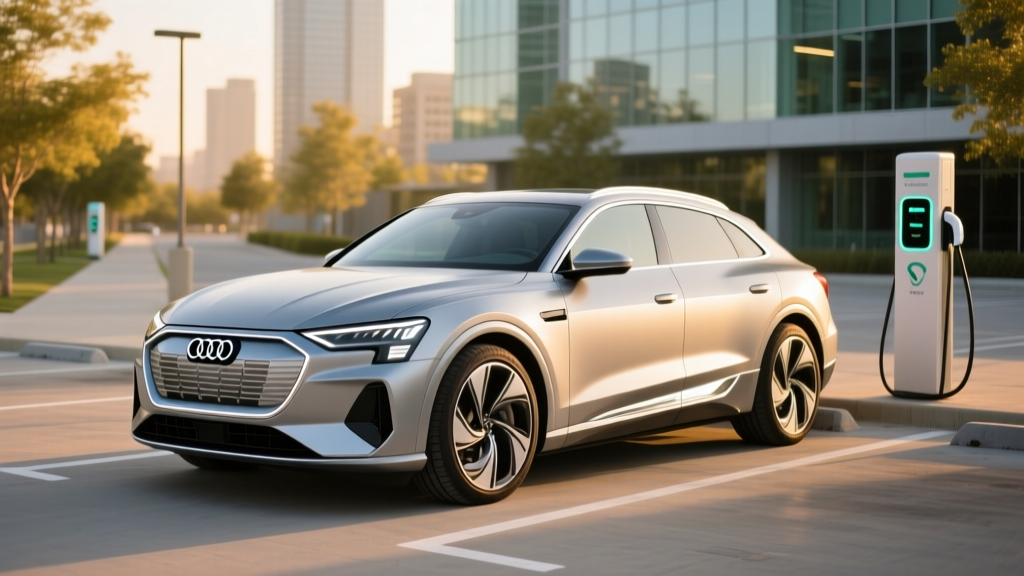
Audi's flagship electric SUV — now officially badged as the Audi Q8 e-tron since the 2024 model year refresh — occupies a specific niche in the luxury EV market: understated, supremely comfortable, and built like a bank vault. If you've been searching for an Audi e-tron lease, you're likely weighing this SUV against the BMW iX, Mercedes EQE SUV, and Tesla Model X. This review gives you the exact numbers — range, charging speeds, pricing, and federal tax credit rules — so you can decide whether leasing or buying makes financial sense in 2026.
| Spec | Q8 55 e-tron | SQ8 e-tron |
|---|---|---|
| EPA Range | 252 miles | 236 miles |
| Battery (Usable) | 106 kWh (NMC) | 106 kWh (NMC) |
| Drivetrain | Dual-motor AWD (quattro) | Dual-motor AWD (quattro) |
| Horsepower | 402 hp (boost mode) | 496 hp (boost mode) |
| 0–60 mph | 5.5 seconds | 4.4 seconds |
| Peak DC Fast Charge | 170 kW | 170 kW |
| 10–80% DCFC Time | ~31 minutes | ~31 minutes |
| Level 2 Charge Rate | 11.5 kW (~22 mi/hr) | 11.5 kW (~22 mi/hr) |
| MPGe (Combined) | 81 MPGe | 73 MPGe |
| kWh/100 mi | 42 kWh | 46 kWh |
| Base MSRP | $74,200 | $96,800 |
| Battery Warranty | 8 yr / 100,000 mi | 8 yr / 100,000 mi |
Source: fueleconomy.gov and Audi USA specifications.
Real-World Range: What the EPA Sticker Doesn't Tell You
EPA Estimated Range: 252 miles (Q8 55 e-tron)
Real-World Expectation: Plan for roughly 220–235 miles on highway-heavy trips at 70–75 mph, and as low as 180–200 miles in sub-freezing winter conditions with cabin heating active. Around town in mild weather, you can stretch to 260+ miles thanks to regenerative braking.
The Q8 e-tron's 106 kWh usable battery (114 kWh gross, NMC chemistry) is one of the largest in its class, but this SUV prioritizes comfort over efficiency. At 42 kWh per 100 miles, it consumes noticeably more energy per mile than a Tesla Model X (~35 kWh/100 mi) or a BMW iX xDrive50 (~38 kWh/100 mi). That translates directly to real-world range consequences on long road trips.
The good news: Audi's battery thermal management system is among the best in the industry. The Q8 e-tron preconditioning works effectively, and the battery's large gross-to-usable buffer (roughly 8 kWh reserved) helps protect against long-term degradation and gives you a safety margin below 0% displayed.
Charging Speed: DC Fast Charging and Home Level 2
| Charging Level | Power | Connector | Speed | Notes |
|---|---|---|---|---|
| Level 1 (120V) | 1.4 kW | J1772 / NACS adapter | ~3 mi/hr | Emergency/trickle only |
| Level 2 (240V) | 11.5 kW | J1772 or NACS (2025+) | ~22 mi/hr | Full charge in ~10 hours |
| DC Fast Charge | 170 kW peak | CCS1 or NACS | ~180 mi in 30 min | 10–80% in ~31 minutes |
The Q8 e-tron's 170 kW peak DC fast-charge rate is respectable but not class-leading. Competitors like the Hyundai Ioniq 5 (peak 240 kW, 10–80% in ~18 minutes) and the Porsche Macan Electric (peak 270 kW) charge substantially faster. The Audi's charging curve is, however, remarkably flat — it sustains close to 150 kW through 60% State of Charge before tapering, which means actual charging stops on road trips feel predictable.
For home Level 2 charging, the onboard 11.5 kW charger means a full 0–100% session takes roughly 10 hours on a 48-amp hardwired unit. This is adequate for overnight replenishment but worth knowing if you have a shorter charging window. A standard NEMA 14-50 outlet on a 40-amp circuit delivers about 9.6 kW, adding roughly 18 miles of range per hour.
Audi began transitioning to the NACS connector starting with the 2025 model year. If you're leasing a 2026 Q8 e-tron, it should ship with a NACS port, granting native access to Tesla Superchargers via the Supercharger network — a significant road-trip advantage.
Performance, Ride, and Daily Drivability
The Q8 55 e-tron delivers 402 horsepower in boost mode (355 hp continuous) with Audi's electric quattro all-wheel drive. The 0–60 mph time of 5.5 seconds isn't sportscar territory, but the instantaneous torque and whisper-quiet cabin make it feel effortless. The SQ8 e-tron bumps output to 496 hp and drops the 0–60 time to 4.4 seconds for those who want genuine performance-SUV acceleration.
Where the Q8 e-tron genuinely excels is ride quality. The standard adaptive air suspension soaks up highway imperfections with a composure that the stiffer BMW iX and Tesla Model X can't match. The cabin noise isolation is among the best of any vehicle — electric or otherwise — that we've tested at highway speed.
Cargo and passenger space:
- Cargo behind rear seats: 28.5 cu ft
- Cargo with rear seats folded: 56.4 cu ft
- Front legroom: 41.6 inches
- Rear legroom: 38.1 inches
- No front trunk (frunk) — the space houses electronics
The lack of a frunk is a minor but notable omission in a luxury EV at this price. Cargo volume trails the BMW iX (35.5 cu ft behind rear seats) and the Tesla Model X substantially.
2026 Pricing, Lease Deals, and Federal Tax Credit Eligibility
| Trim | Base MSRP | As-Tested (Typical) | Federal Tax Credit (§30D) | Est. Monthly Lease (36 mo, $5K down) |
|---|---|---|---|---|
| Q8 55 e-tron Premium | $74,200 | $78,500 | Check eligibility* | $850–$1,050 |
| Q8 55 e-tron Premium Plus | $79,600 | $85,000 | Check eligibility* | $950–$1,150 |
| Q8 55 e-tron Prestige | $85,200 | $91,000 | Check eligibility* | $1,050–$1,300 |
| SQ8 e-tron Premium Plus | $96,800 | $103,000 | Check eligibility* | $1,200–$1,500 |
Federal tax credit (§30D) eligibility for the Q8 e-tron is complex in 2026. Under current IRS rules, the $7,500 credit requires the vehicle to meet critical-mineral and battery-component sourcing thresholds, which have tightened annually. The Q8 e-tron is assembled in Brussels, Belgium — and foreign-assembled vehicles are ineligible for the purchase credit when bought outright.
However, leasing changes the equation. Under the commercial clean vehicle credit (§45W), leased EVs can pass through a $7,500 credit to the leasing company, which may be reflected as a capitalized-cost reduction (effectively lowering your monthly payment). Many Audi dealers in 2026 are advertising "lease cash" or "lease bonus cash" that reflects this pass-through. Always confirm with the dealer whether the lease quote already includes this credit.
§30D Purchase Credit Requirements (if buying outright):
- Vehicle must have final assembly in North America (Q8 e-tron does NOT qualify — assembled in Belgium)
- Buyer income caps: $150K single / $300K joint (modified AGI)
- MSRP cap: $80,000 for SUVs (Q8 55 e-tron base qualifies; loaded trims and SQ8 may exceed)
- Battery critical-mineral and component sourcing thresholds (phased up annually through 2026)
- Point-of-sale transfer available at participating dealers
Leasing under §45W bypasses the North American assembly requirement — this is the primary financial argument for leasing a Q8 e-tron over purchasing.
Technology, Safety, and Driver Assistance
The 2026 Q8 e-tron runs Audi's latest MMI infotainment system on dual touchscreens (10.1" upper, 8.6" lower). Wireless Apple CarPlay and Android Auto are standard. The virtual cockpit digital instrument cluster is configurable and includes a dedicated range/efficiency display with real-time energy flow visualization.
Driver assistance (SAE Level 2 — driver must remain engaged):
- Adaptive cruise control with stop-and-go
- Lane centering assist (Audi Active Lane Assist)
- Traffic sign recognition
- Park assist with surround-view cameras
- Intersection assist and turn assist
Important: Audi's driver-assistance suite is SAE Level 2 — it provides steering and speed assistance simultaneously, but the driver must keep hands on the wheel and eyes on the road at all times. This is not autonomous or "self-driving" capability. Level 4 driverless operation (like Waymo) is not available in any consumer Audi vehicle.
Safety ratings are strong: the Q8 e-tron earned a 5-star overall rating from NHTSA and top marks from IIHS in crashworthiness testing.
Pros, Cons, and the Verdict
Pros
- Exceptionally quiet, refined cabin — best-in-class NVH
- Air suspension delivers outstanding ride comfort
- Large 106 kWh usable battery with excellent thermal management
- Flat DC fast-charge curve (sustained ~150 kW to 60% SoC)
- NACS connector on 2026 models enables Supercharger access
- Lease structure may capture $7,500 credit despite Belgian assembly
- Build quality and materials rival anything in the luxury SUV segment
Cons
- Range (252 mi EPA) trails competitors — BMW iX gets 324 mi
- Efficiency (42 kWh/100 mi) is the worst in its class
- No frunk — missed utility opportunity
- Cargo volume (28.5 cu ft) is modest for the vehicle's footprint
- 170 kW peak DCFC is slower than rivals (Ioniq 5: 240 kW, iX: 200+ kW)
- Infotainment dual-screen layout requires more taps than competitors
- Ineligible for §30D purchase credit due to foreign assembly
Who Should Lease the Q8 e-tron — And Who Shouldn't
Lease the Audi Q8 e-tron if:
- You value ride comfort and cabin quietness above maximum range
- Your daily driving is under 120 miles round-trip with reliable home Level 2 charging
- You want luxury badge prestige without Tesla ubiquity
- You prefer leasing to capture the §45W commercial credit pass-through on a foreign-assembled EV
- You take occasional road trips and value NACS/Supercharger access
Look elsewhere if:
- Maximum range is your priority (BMW iX xDrive50: 324 mi EPA, Rivian R1S: 352 mi)
- You regularly drive 250+ miles between charging stops
- You need maximum cargo space (Tesla Model X: 88 cu ft max)
- You want the fastest charging on road trips (Hyundai/Kia E-GMP platform, Porsche Macan EV)
Frequently Asked Questions
What is the real-world range of the Audi Q8 e-tron?
The EPA rates the Q8 55 e-tron at 252 miles. In real-world highway driving at 70–75 mph, expect 220–235 miles. In cold weather (below 32°F) with cabin heat active, range can drop to 180–200 miles. City driving with regenerative braking can extend range slightly beyond the EPA figure in mild conditions.
How fast does the Q8 e-tron charge at home and on the road?
At home on a Level 2 (240V, 48A) charger, the Q8 e-tron accepts up to 11.5 kW, adding about 22 miles of range per hour — a full charge takes roughly 10 hours. On DC fast chargers, it peaks at 170 kW and charges from 10–80% in approximately 31 minutes. The charging curve stays strong through 60% SoC, making stops predictable.
How much does a Q8 e-tron lease cost per month in 2026?
Typical 36-month leases with $5,000 due at signing range from roughly $850/month (Q8 55 Premium) to $1,500/month (SQ8 Premium Plus), depending on dealer incentives, money factor, and whether the $7,500 lease credit is applied as a cap-cost reduction. Always negotiate the selling price (capitalized cost) before discussing monthly payments.
Does the Audi Q8 e-tron qualify for the federal EV tax credit?
If you purchase outright, no — the Q8 e-tron is assembled in Belgium and fails the North American final assembly requirement under §30D. If you lease, the dealer/leasing company may claim the $7,500 commercial clean vehicle credit (§45W) and pass it to you as a lower monthly payment. Confirm this with your dealer before signing.
Is the Q8 e-tron worth it vs. the BMW iX or Tesla Model X?
It depends on priorities. The BMW iX xDrive50 offers 324 miles of EPA range, faster 200+ kW charging, and more cargo space — making it the more practical EV. The Tesla Model X wins on range, Supercharger ecosystem (though the gap is closing), and cargo volume. The Q8 e-tron wins on ride comfort, cabin quietness, and traditional luxury feel. If comfort is your top metric and range is secondary, the Audi is the strongest choice.
What is the battery warranty on the Q8 e-tron?
Audi covers the high-voltage battery for 8 years or 100,000 miles (whichever comes first), guaranteeing a minimum of 70% capacity retention over that period. The general vehicle warranty is 4 years / 50,000 miles. Audi's battery degradation track record on the e-tron platform has been solid, aided by the large buffer between gross and usable capacity.