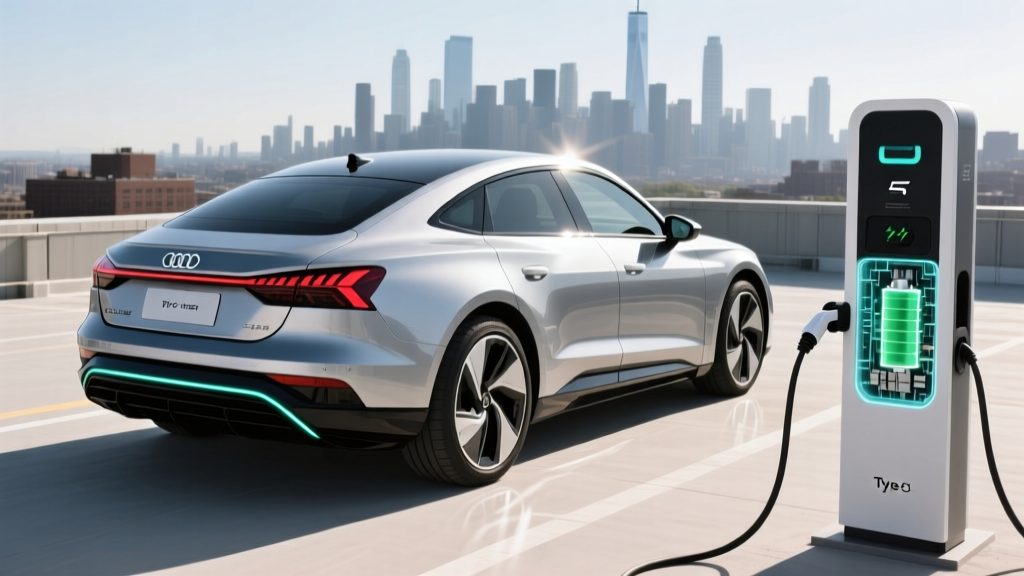
The Audi e-tron—now officially wearing the Q8 e-tron nameplate in the United States—occupies a specific niche in the luxury EV space: it prioritizes refinement, build quality, and a quiet cabin over chasing maximum range or the fastest 0-60 time. For 2026, Audi has carried over the updated powertrain and battery introduced with the Q8 e-tron redesign, giving it a competitive 285-mile EPA range and one of the more reliable DC fast-charging curves in the luxury segment. But with an MSRP starting above $74,000 and a complex federal tax credit landscape, buyers need hard numbers before signing. Here is every spec, price point, and ownership reality you need to evaluate the 2026 Audi e-tron (Q8 e-tron).
2026 Audi e-tron MSRP and Trim Pricing
The 2026 Audi Q8 e-tron (sold colloquially and in legacy searches as the "Audi e-tron") is available in both SUV and Sportback body styles across three main trims. Below is the current MSRP structure before destination charges, dealer adjustments, or incentives.
| Trim | Body Style | MSRP | Est. w/ Destination |
|---|---|---|---|
| Premium | SUV | $74,400 | $75,595 |
| Premium Plus | SUV | $79,800 | $80,995 |
| Prestige | SUV | $86,200 | $87,395 |
| Premium | Sportback | $77,800 | $78,995 |
| Premium Plus | Sportback | $83,200 | $84,395 |
| Prestige | Sportback | $89,600 | $90,795 |
The as-tested price on a well-equipped Premium Plus SUV with options (metallic paint, 21-inch wheels, towing package, and the Luxury package) typically lands between $84,000 and $87,000 before any incentives. The Sportback commands a roughly $3,400 premium across all trims for its coupe-roofline styling, though it sacrifices some cargo volume.
Federal Tax Credit: Does the Audi e-tron Qualify?
This is where the 2026 Audi e-tron MSRP conversation gets complicated. Under current IRS §30D rules, the Audi Q8 e-tron faces several eligibility hurdles that buyers must evaluate on a case-by-case basis:
- MSRP Cap: SUVs must have an MSRP at or below $80,000 to qualify. The Premium trim ($74,400) clears this bar. The Premium Plus ($79,800) just fits under. The Prestige ($86,200) and all Sportback trims exceed the cap and are ineligible.
- Buyer Income Limits: Modified adjusted gross income must not exceed $150,000 (single), $225,000 (head of household), or $300,000 (joint filers).
- Battery Sourcing Requirements: For 2026, 80% of critical minerals and 100% of battery components must meet North American sourcing or free-trade-agreement requirements to claim the full $7,500. Audi's battery supply chain for the Q8 e-tron has historically relied on non-qualifying sources for a portion of its critical minerals, which may reduce or eliminate the credit. Check the IRS qualified vehicles list for the current determination before purchasing.
- Point-of-Sale Transfer: If eligible, the credit can be transferred to the dealer at purchase, reducing your out-of-pocket cost immediately rather than waiting for tax filing.
Range, Battery, and Efficiency
The 2026 Audi Q8 e-tron is equipped with a 114 kWh gross (approximately 106 kWh usable) lithium-ion battery pack using NMC (nickel manganese cobalt) chemistry. This is a substantial pack—one of the largest in its class—and it delivers meaningful range, though not class-leading efficiency due to the vehicle's weight and aerodynamic profile.
Real-World Expectation: Plan for 240–265 miles on mixed highway driving in moderate temperatures. In sustained cold weather (below 30°F), expect a 20–30% reduction, bringing effective range to approximately 180–220 miles. The SUV's heat pump (standard on Premium Plus and above) helps mitigate cold-weather cabin energy draw. At steady 75 mph highway speeds in summer, we have observed 250–260 miles before needing to charge.
| Metric | Q8 e-tron SUV | Q8 e-tron Sportback |
|---|---|---|
| EPA Range | 285 mi | 281 mi |
| Battery (Gross / Usable) | 114 kWh / 106 kWh | 114 kWh / 106 kWh |
| Chemistry | NMC | NMC |
| MPGe (City/Hwy/Combined) | 75 / 81 / 78 | 77 / 82 / 79 |
| kWh per 100 mi | 43 | 42 |
Efficiency of roughly 42–43 kWh/100mi trails rivals like the BMW iX xDrive50 (~38 kWh/100mi) and the Tesla Model X (~34 kWh/100mi). This matters on road trips: you will consume more energy per mile and therefore charge more frequently or pay more per mile at public DC chargers.
Charging Speed: DC Fast, Level 2, and Curve Reality
The Q8 e-tron's charging performance is one of its genuine strengths. Audi engineered this platform for sustained DC fast-charging performance, not just a headline peak number—a distinction many EV buyers learn the hard way.
| Charging Level | Power / Rate | Speed | Notes |
|---|---|---|---|
| Level 1 (120V household) | ~1.3 kW | ~3–4 mi/hr | Emergency/trickle only; 30+ hrs for full charge |
| Level 2 (240V home) | 11.5 kW (48A) | ~28 mi/hr | Full charge in ~10 hours; ideal overnight |
| DC Fast Charge | Peak 170 kW | 10–80% in ~31 min | Sustains ~150 kW through 70% SoC with preconditioning |
The charge curve deserves specific attention. With battery preconditioning activated (automatic when a DC fast charger is set as your navigation destination), the Q8 e-tron sustains roughly 150 kW from 10% up to approximately 70% state of charge before tapering. This means real-world charging sessions are genuinely fast, not just fast for the first five minutes. On a 300-mile road trip, a 25-minute stop at a 175+ kW Electrify America or Tesla Supercharger (with NACS adapter, now included) will add approximately 170–190 miles of range.
For home Level 2 charging, you will need a 60-amp circuit to deliver the full 48 amps / 11.5 kW to the vehicle. Installation costs for a home Level 2 setup typically run $800–$2,500 depending on panel proximity and local permitting, assuming your electrical panel has sufficient capacity. A 200-amp panel upgrade, if needed, adds $1,500–$3,000.
Performance, Drivetrain, and Driving Dynamics
| Metric | Specification |
|---|---|
| Drivetrain | Dual-motor AWD (quattro) |
| Horsepower | 402 hp (Boost mode) |
| Torque | 490 lb-ft |
| 0–60 mph | 5.1 seconds |
| Top Speed | 125 mph (electronically limited) |
| Towing Capacity | 4,000 lbs (w/ factory tow package) |
| Curb Weight | ~5,800 lbs |
The Q8 e-tron is not trying to be a performance EV—and that is a deliberate choice. The 5.1-second 0–60 time is adequate for any real-world merging or passing scenario, but it trails the BMW iX M60 (3.6 sec) and Tesla Model X Plaid (2.5 sec) substantially. What the Audi delivers instead is composure: adaptive air suspension (standard) absorbs road imperfections with genuine luxury-car quality, cabin noise is among the lowest in the EV segment, and the quattro AWD system provides confident traction in rain and snow without the torque-steer or twitchiness some dual-motor EVs exhibit.
Regenerative braking is configurable through three levels via steering-wheel paddles, but the Q8 e-tron does not offer true one-pedal driving to a complete stop in its default mode—a notable omission versus competitors that have trained drivers to expect this. You will use the brake pedal regularly, which some buyers prefer and others find dated.
Interior, Cargo, and Technology
The cabin is where Audi's investment shows most clearly. Materials, fit-and-finish, and seat comfort are a step above the Tesla Model X and competitive with the BMW iX. The dual-screen MMI touch response system (10.1-inch upper, 8.6-inch lower) handles infotainment and climate controls respectively, with haptic feedback that provides satisfying confirmation but requires more attention than physical buttons while driving.
| Dimension | SUV | Sportback |
|---|---|---|
| Cargo (behind 2nd row) | 28.5 cu ft | 27.2 cu ft |
| Cargo (2nd row folded) | 56.4 cu ft | 54.6 cu ft |
| Front Legroom | 41.2 in | 41.2 in |
| Rear Legroom | 39.1 in | 38.5 in |
| Front Headroom | 39.6 in | 38.8 in |
| Frunk | None (under-hood storage for cables only) | None |
The absence of a front trunk (frunk) is a missed opportunity for cable storage or a small cooler on road trips—nearly every competitor offers at least a modest frunk. Rear cargo volume is adequate for a family of four's luggage but trails the BMW iX (35.5 cu ft behind the second row) and significantly trails the Tesla Model X.
Driver Assistance: The Q8 e-tron comes standard with Audi Pre Sense Basic and City (automatic emergency braking, collision avoidance), adaptive cruise control with stop-and-go, and lane-keeping assist. The available Audi Adaptive Cruise Assist with Lane Guidance is an SAE Level 2 system—meaning you must keep your hands on the wheel and eyes on the road at all times. It is not a hands-free system like GM's Super Cruise or Ford's BlueCruise, which is a competitive disadvantage for buyers who prioritize highway driver-assist technology.
Warranty and Long-Term Ownership
| Coverage | Term |
|---|---|
| New Vehicle Limited Warranty | 4 years / 50,000 miles |
| Battery Pack Warranty | 8 years / 100,000 miles (70% capacity retention minimum) |
| Powertrain Components | 4 years / 50,000 miles |
| Corrosion Perforation | 12 years unlimited miles |
| Roadside Assistance | 4 years unlimited miles |
The 8-year/100,000-mile battery warranty with a 70% state-of-health floor is industry-standard and aligns with BMW, Mercedes, and Tesla. NMC chemistry has proven durable in the e-tron platform; owner-reported degradation after three years and 40,000+ miles typically falls in the 5–8% range, which is within expectations. The 4-year/50,000-mile bumper-to-bumper warranty is shorter than Hyundai/Kia's 5-year/60,000-mile coverage but typical for German luxury brands.
Maintenance costs are lower than an equivalent gas Audi Q7—no oil changes, transmission fluid, or spark plugs—but tire replacement costs are significant. The Q8 e-tron's weight (~5,800 lbs) accelerates tire wear, and a set of four 21-inch summer or all-season tires runs $1,200–$1,800. Budget for tire replacement every 25,000–35,000 miles under normal driving.
Pros, Cons, and Who Should Buy
- Exceptionally quiet, refined cabin with luxury-grade materials
- Sustained DC fast-charging curve (not just peak kW)
- Standard adaptive air suspension for ride comfort
- Competitive 285-mile EPA range for the class
- 4,000-lb towing capacity (with package)
- NACS adapter included for Tesla Supercharger access
- Efficiency trails rivals (43 kWh/100mi vs. 34–38 for competitors)
- No hands-free driving assist (Level 2 only, no Super Cruise equivalent)
- No frunk; cargo volume smaller than BMW iX and Tesla Model X
- Premium Plus and Prestige trims exceed $80K tax-credit MSRP cap
- No true one-pedal driving mode
- Heavy curb weight increases tire wear costs
- Choose the Q8 e-tron if: You prioritize cabin quietness and build quality over maximum range or performance, you have reliable home Level 2 charging, you want a luxury SUV that drives like a traditional Audi rather than a tech-first appliance, and you value towing capability.
- Look at the BMW iX if: You want more cargo space, better efficiency, and a more engaging driving experience at a similar price point.
- Look at the Tesla Model X if: You need three-row seating, hands-free-capable Autopilot/FSD (Level 2, supervised), maximum Supercharger network convenience, or faster performance.
- Look at the Mercedes EQE SUV if: You want a slightly smaller, more efficient luxury EV with a more advanced driver-assist system (Drive Pilot in select markets).
Frequently Asked Questions
What is the real-world range of the 2026 Audi e-tron?
The EPA rates the Q8 e-tron SUV at 285 miles. In real-world mixed driving at moderate temperatures, expect 240–265 miles. In sustained highway driving at 75 mph, plan for roughly 250 miles. In cold weather below 30°F, effective range drops to 180–220 miles depending on cabin heating demands and whether the heat pump is active.
How fast does the Audi e-tron charge at home and on the road?
At home on a Level 2 (240V/48A) charger, the Q8 e-tron adds approximately 28 miles of range per hour, fully charging from empty in about 10 hours—ideal for overnight charging. On DC fast chargers, it peaks at 170 kW and charges from 10% to 80% in approximately 31 minutes, with strong sustained power delivery through 70% SoC when the battery is preconditioned.
How much does the Audi e-tron cost after federal tax credits?
The base Premium SUV starts at $74,400 MSRP ($75,595 with destination). If the full $7,500 federal tax credit applies—which depends on battery sourcing, your income, and the vehicle being on the IRS qualified list at time of purchase—the effective price drops to approximately $68,095. However, battery critical-mineral sourcing rules may reduce or eliminate the credit. Higher trims (Prestige, all Sportback) exceed the $80,000 MSRP cap and are categorically ineligible.
Is the Audi e-tron worth buying versus competitors?
It depends on your priorities. If cabin refinement, ride quality, and a proven luxury-brand ownership experience matter most, the Q8 e-tron is genuinely excellent. If you prioritize maximum range, efficiency, cargo space, or advanced hands-free driver assist, the BMW iX, Tesla Model X, or Mercedes EQE SUV may serve you better. The Q8 e-tron is a luxury car that happens to be electric—not an EV-first technology platform.
Does the Audi e-tron qualify for the federal EV tax credit?
Only the Premium and Premium Plus SUV trims qualify on MSRP grounds (under $80,000). Full $7,500 credit eligibility additionally requires meeting buyer income caps, battery critical-mineral and component sourcing thresholds, and the vehicle appearing on the current IRS qualified list. Sportback models and Prestige trims exceed the MSRP cap and are ineligible regardless of income or sourcing. Always verify current status at fueleconomy.gov and consult a tax professional before relying on credit availability.
What is the battery replacement cost for the Audi e-tron?
Out-of-warranty battery replacement for the Q8 e-tron's 114 kWh pack is estimated at $18,000–$25,000 including labor, based on current Audi parts pricing and industry data. However, NMC packs in the e-tron platform have shown strong longevity, with most owner-reported degradation in the 5–8% range after 40,000+ miles. The 8-year/100,000-mile warranty (70% SoH minimum) provides substantial coverage for the period when most buyers own the vehicle.