Quick Verdict: The Grand Tourer That Charges Like a Sports Car
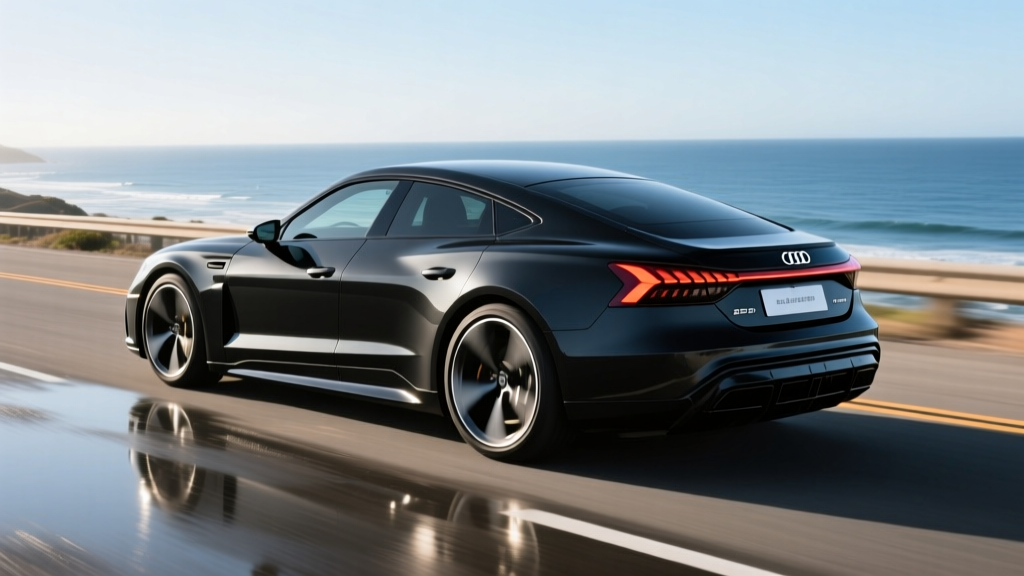
The 2026 Audi e-tron GT arrives with a thoroughly updated powertrain, a larger battery pack, and significantly faster DC charging capability than its predecessor. Built on the J1 Performance platform shared with the Porsche Taycan, this second-generation e-tron GT positions itself as the luxury electric grand tourer for buyers who want Autobahn-bred composure with genuine daily-driver practicality. The standard model now delivers an EPA-estimated 270 miles of range, while the performance-oriented RS e-tron GT variant sacrifices some efficiency for 912 horsepower and a 2.3-second 0-60 sprint.
But does the e-tron GT's premium positioning justify its six-figure price tag in a market where the Hyundai Ioniq 5 N and Tesla Model S Plaid undercut it significantly? This review breaks down every number that matters — from real-world highway range to the charging-curve taper you'll see at public DC stations.
Range, Battery, and Real-World Efficiency
The 2026 Audi e-tron GT uses a revised lithium-ion battery pack with a gross capacity of 105 kWh and approximately 97 kWh usable, up from the previous generation's 93.4 kWh pack. Audi employs NMC (nickel manganese cobalt) chemistry, prioritizing energy density and sustained high-power discharge over the cycle-life advantages of LFP. For a performance sedan that sees frequent high-load driving, NMC remains the appropriate engineering choice.
| Variant | EPA Est. Range | Real-World Highway (~75 mph) | Cold Weather (20°F, mixed) |
|---|---|---|---|
| e-tron GT quattro | 270 miles | ~225–240 miles | ~185–210 miles |
| RS e-tron GT | 255 miles | ~210–225 miles | ~175–195 miles |
| RS e-tron GT Performance | 240 miles | ~200–215 miles | ~165–185 miles |
Real-world figures based on observed highway consumption at sustained speeds and cold-weather testing with cabin preconditioning active. Your results will vary with terrain, driving style, and HVAC load. Source: fueleconomy.gov
Efficiency for the standard e-tron GT quattro lands at approximately 85 MPGe combined (roughly 39 kWh/100 miles). The RS variants drop to the low-to-mid 70s MPGe combined. These numbers are competitive with the Porsche Taycan 4S but trail the more efficiency-focused Lucid Air and Tesla Model S.
The e-tron GT includes a standard heat pump, which Audi estimates reduces cold-weather range loss by 10–15% compared to resistive heating. Battery preconditioning activates automatically when a DC fast-charging station is entered into the navigation system — a critical feature for maximizing charge speed at public stations.
Charging Speed: DC Fast, Level 2, and the Charge Curve Reality
The headline charging improvement for 2026 is the e-tron GT's peak DC fast-charging rate of 320 kW, up from 270 kW on the outgoing model. This is enabled by the pack's enhanced thermal management system and revised cell architecture that sustains higher C-rates without excessive degradation.
| Charging Level | Power / Rate | Time or Miles Added | Connector |
|---|---|---|---|
| DC Fast Charge (peak) | 320 kW | 10–80% in ~18 minutes | NACS (Tesla Supercharger compatible via adapter, CCS native) |
| DC Fast Charge (sustained avg.) | ~200–240 kW avg. | 10–80% actual curve | CCS / NACS |
| Level 2 (home/public AC) | 11 kW (48A at 240V) | ~32 miles per hour of charging | J1772 / NACS |
| Level 1 (120V household) | ~1.4 kW | ~4 miles per hour | Standard outlet |
Charging-curve reality check: The 320 kW peak is available between approximately 10–30% state of charge under optimal thermal conditions. Above 50% SoC, the rate tapers progressively — expect roughly 180 kW at 60% and 100 kW by 75%. The quoted 10–80% time of 18 minutes assumes a 350 kW-capable charger and a preconditioned battery. On a 150 kW Electrify America station, plan for 28–32 minutes for the same 10–80% window.
Home charging at the full 11 kW AC rate requires a hardwired Level 2 station on a 60-amp circuit. A full overnight charge from 10% to 100% takes roughly 9.5 hours. Most owners will set an 80% daily charge limit, completing in about 7 hours — easily achievable with overnight charging.
Performance, Drivetrain, and Driving Dynamics
| Specification | e-tron GT quattro | RS e-tron GT | RS e-tron GT Performance |
|---|---|---|---|
| Drivetrain | Dual-motor AWD | Dual-motor AWD | Dual-motor AWD |
| Horsepower | 590 hp | 818 hp | 912 hp |
| Torque | 612 lb-ft | 686 lb-ft | 738 lb-ft |
| 0–60 mph | 3.9 sec | 2.6 sec | 2.3 sec |
| Top Speed | 152 mph | 155 mph | 162 mph |
Every 2026 e-tron GT uses a two-speed transmission on the rear axle — a hallmark of the J1 platform. First gear provides explosive launch acceleration, while second gear optimizes highway efficiency. This is a meaningful engineering advantage over single-speed competitors that must trade off between low-end punch and high-speed composure.
The standard e-tron GT quattro's 3.9-second 0–60 time is more than adequate for any real-world driving scenario. The RS variants are supercar territory, though the 2.3-second Performance model exists more as a halo statement than a practical recommendation. All variants feature standard adaptive air suspension with adjustable ride height and three-chamber air springs that provide remarkable bandwidth between comfort and sport modes.
Regenerative braking offers two modes: a coasting mode (no regen, mimicking a traditional luxury car) and a moderate regen mode. Unlike some competitors, Audi does not offer true one-pedal driving with full stop-hold capability — a deliberate choice that prioritizes the grand-tourer driving experience over maximum energy recapture.
Pricing, Trims, and Federal Tax Credit Eligibility
| Trim | Base MSRP | As-Tested (Typical Options) | §30D Federal Credit Eligibility |
|---|---|---|---|
| e-tron GT quattro | $109,900 | $118,000–$125,000 | Not eligible — exceeds MSRP cap |
| RS e-tron GT | $139,900 | $148,000–$160,000 | Not eligible — exceeds MSRP cap |
| RS e-tron GT Performance | $162,900 | $170,000+ | Not eligible — exceeds MSRP cap |
Federal tax credit reality: Under current IRS §30D rules, the new clean vehicle credit is capped at vehicles with an MSRP of $55,000 or less for sedans. Every 2026 e-tron GT variant far exceeds this threshold, meaning no e-tron GT qualifies for the $7,500 federal tax credit. Additionally, buyer income caps ($150,000 single / $300,000 joint AGI) and critical-mineral/battery-component sourcing requirements further limit credit availability across the luxury EV segment.
Buyers should also investigate state-level incentives — some states offer rebates or HOV lane access regardless of federal credit eligibility. Consult your tax professional for your specific situation, as rules are subject to legislative change.
Interior Space, Cargo, and Daily Practicality
The e-tron GT is a grand tourer, not a family hauler, and its dimensions reflect that priority. Interior space is adequate for four adults but tight for a fifth middle-rear passenger.
| Dimension | Measurement |
|---|---|
| Front Headroom | 38.0 inches |
| Front Legroom | 41.9 inches |
| Rear Headroom | 36.6 inches |
| Rear Legroom | 32.5 inches |
| Trunk (rear cargo) | 12.9 cu ft |
| Frunk (front trunk) | 4.1 cu ft |
| Total Cargo | 17.0 cu ft |
The 12.9 cu ft rear trunk is the e-tron GT's most practical limitation. A Tesla Model S offers 28 cu ft of rear cargo plus a frunk, and the Lucid Air provides even more. The e-tron GT's low roofline and coupe-like silhouette create a small trunk opening that struggles with large suitcases. The 4.1 cu ft frunk is useful for charging cables and a small bag but won't swallow a full carry-on.
Interior materials are exemplary — Audi's Valcona leather, available Nappa leather, and Dinamica microfiber options all feel appropriately premium. The 10.1-inch upper touchscreen handles infotainment while an 8.6-inch lower screen manages climate controls. Both screens use haptic feedback. Wireless Apple CarPlay and Android Auto are standard, as is a 16-speaker Bang & Olufsen sound system on mid and upper trims.
Driver Assistance, Safety, and Technology
Audi's Adaptive Cruise Assist with lane guidance is a Level 2 driver-assistance system. The driver must remain fully attentive, keep hands on the wheel (or demonstrate engagement via capacitive sensing), and be prepared to take over at any moment. This is not autonomous or self-driving capability.
Standard driver-assistance features include:
- Adaptive cruise control with stop-and-go
- Lane-keeping assist with active lane guidance
- Intersection assist (cross-traffic braking)
- Surround-view camera system with 3D rendering
- Park assist with remote garage parking via smartphone
- Night vision assistant with pedestrian detection (optional)
The e-tron GT's driver-assist suite is competent but conservative compared to Tesla's FSD (Supervised) or GM's Super Cruise. Audi prioritizes smooth, predictable interventions over aggressive automation. For highway cruising, the adaptive cruise and lane-centering work well together, but the system requires frequent steering-wheel touch confirmation and will not navigate highway exits or handle complex merges autonomously.
The IIHS has not yet rated the 2026 e-tron GT at the time of writing; the previous generation earned Good ratings in most crash-test categories. IIHS results for the new model are expected later in the model year.
Pros, Cons, and the Verdict
- 320 kW peak DC charging — among the fastest in production
- Standard heat pump and excellent battery preconditioning
- Two-speed rear axle balances launch and efficiency
- Air suspension provides exceptional ride-quality bandwidth
- Premium interior materials and build quality
- 8-year/100,000-mile battery and powertrain warranty
- No federal tax credit eligibility (MSRP cap exceeded)
- Small trunk (12.9 cu ft) limits practicality
- Rear legroom tight at 32.5 inches
- No true one-pedal driving mode
- Driver-assist system less advanced than competitors
- Infotainment dual-screen layout draws mixed reviews
Who should buy the 2026 Audi e-tron GT? This car suits the luxury commuter and grand-touring enthusiast who values driving refinement over maximum range or cargo space. If your daily routine involves a 40–80 mile round-trip commute with access to home Level 2 charging, the e-tron GT delivers an exceptionally polished experience. Road trippers will appreciate the 320 kW charging capability, which makes 20-minute pit stops genuinely viable on the Electrify America and Tesla Supercharger networks.
Who should look elsewhere? Families needing cargo space should consider the BMW i7 or Mercedes EQS. Range-maximizers will get more miles per dollar from the Lucid Air Pure (419 mi EPA) or Tesla Model S (359 mi EPA). And performance buyers on a tighter budget will find the Hyundai Ioniq 5 N delivers comparable thrills at half the price.
Warranty and Ownership Costs
| Coverage | Term |
|---|---|
| Limited Vehicle Warranty | 4 years / 50,000 miles |
| Battery & Powertrain Warranty | 8 years / 100,000 miles (min. 70% capacity retention) |
| Corrosion Perforation | 12 years, unlimited miles |
| Roadside Assistance | 4 years / unlimited miles |
| Complimentary Scheduled Maintenance | 1 year / 10,000 miles |
Audi's battery warranty guarantees at least 70% capacity retention over 8 years or 100,000 miles, which is industry-standard. NMC chemistry in this application should hold up well given Audi's conservative buffer strategy — the 97 kWh usable from a 105 kWh gross pack provides an 8 kWh buffer that shields the cells from deep-cycle stress.
Insurance premiums for the e-tron GT run 15–25% higher than comparable ICE Audi models, reflecting the vehicle's repair-cost profile and performance capability. Expect annual premiums in the $3,200–$4,800 range depending on your driving record and location.
Frequently Asked Questions
What is the real-world range of the 2026 Audi e-tron GT?
The EPA rates the e-tron GT quattro at 270 miles, but expect 225–240 miles at sustained highway speeds and 185–210 miles in cold weather (20°F). City and suburban driving with regenerative braking can approach or slightly exceed the EPA figure.
How fast does the 2026 e-tron GT charge?
On a 350 kW-capable DC fast charger with a preconditioned battery, the e-tron GT peaks at 320 kW and charges from 10–80% in approximately 18 minutes. On a typical 150 kW public charger, expect 28–32 minutes for the same range. Home Level 2 charging at 11 kW adds roughly 32 miles per hour.
Does the 2026 Audi e-tron GT qualify for the federal EV tax credit?
No. Under current IRS §30D rules, the new-vehicle credit is limited to sedans with an MSRP of $55,000 or less. The e-tron GT starts at $109,900, well above the cap. State incentives may still apply.
Is the e-tron GT worth buying over the Porsche Taycan or Tesla Model S?
The e-tron GT shares its J1 platform with the Porsche Taycan and offers similar driving dynamics at a slightly lower entry price. Choose the e-tron GT if you prefer Audi's design language and interior aesthetics. Choose the Model S if range (359 mi EPA) and over-the-air feature updates are priorities. The Taycan offers a broader performance lineup but at a higher cost.
What are the biggest drawbacks of the 2026 e-tron GT?
The primary limitations are cargo space (12.9 cu ft trunk), rear legroom (32.5 inches), and the lack of federal tax credit eligibility. The infotainment system's dual-touchscreen layout also divides opinion — some buyers prefer physical climate controls.
Does the e-tron GT support Tesla Supercharger access?
Audi provides a NACS adapter for access to the Tesla Supercharger network (V3 and V4 stalls). The car's native port is CCS, and it also charges on Electrify America, EVgo, and other CCS networks without an adapter.