Quick Answer: Is the 2026 Acura RSX EV Real?
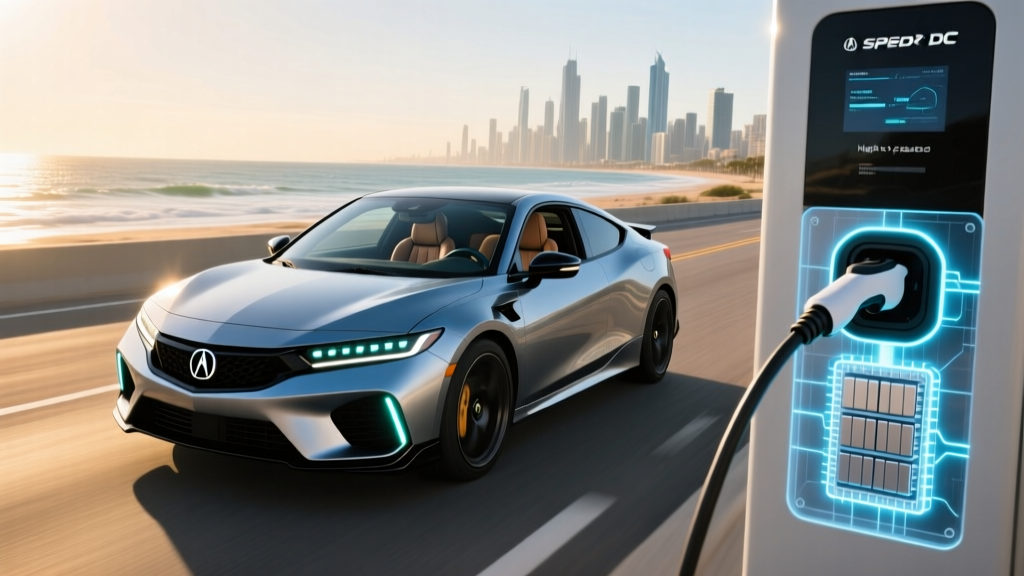
As of early 2026, Acura has not officially confirmed a production RSX EV. However, Honda has strongly signaled an electric performance coupe under the Acura badge, built on its new dedicated EV architecture. If greenlit, expect a targeted EPA range of 280–320 miles, peak DC fast charging around 200–250 kW, and a starting MSRP near $50,000–$55,000. This article breaks down the preliminary specs, ownership economics, and what buyers should watch for before committing to a deposit.
Honda's Electric Performance Ambitions: The RSX Nameplate Returns
The original Acura RSX (2002–2006) was a lightweight, front-wheel-drive sport coupe beloved for its high-revving K20 engine and precise shifter. Honda has teased a spiritual successor in electric form, most notably through design concepts and executive statements at events like the 2024 Tokyo Mobility Show. The concept pointed toward a sleek, low-slung coupe riding on Honda's next-generation EV platform — distinct from the current Ultium-based Prologue and ZDX, which are GM-derived.
If the production RSX EV materializes for the 2027 model year (with possible late-2026 reveals), it would represent Acura's first ground-up electric vehicle, not a rebadged partner product. That distinction matters for everything from packaging and weight distribution to software integration and charging architecture.
Estimated Specs: Range, Battery, and Charging
Because Honda/Acura has not released final specifications, the numbers below are educated estimates based on the brand's published platform targets, competitive positioning against vehicles like the Polestar 4 and forthcoming electric BMW 2 Series, and industry-standard battery densities for 2026–2027 model-year vehicles.
| Attribute | Estimated Figure |
|---|---|
| Battery Capacity (usable) | ~80–90 kWh (NMC chemistry) |
| EPA Range (target) | 280–320 miles |
| Real-World Highway Range | ~230–270 miles (75 mph, moderate temps) |
| Cold-Weather Range (20°F) | ~200–240 miles (estimated 20–25% loss) |
| Peak DC Fast Charge Rate | 200–250 kW (NACS connector expected) |
| 10–80% DC Charge Time | ~20–25 minutes (estimated) |
| Level 2 AC Charge Rate | ~11.5 kW (~33 miles/hr added) |
| 0–60 mph | ~4.5–5.5 seconds (single motor); ~3.5 sec (dual motor AWD) |
| Horsepower | ~280 hp (single); ~400+ hp (dual) |
| Drivetrain | RWD standard; AWD available |
| Starting MSRP (est.) | $50,000–$55,000 |
| Federal Tax Credit (§30D) | Eligibility uncertain — depends on battery sourcing |
Real-World Range Reality Check
EPA estimates are measured under controlled conditions. In real-world driving — particularly sustained highway speeds above 70 mph, headwinds, or cold weather — expect 15–25% less range than the sticker. A 300-mile EPA rating typically translates to 240–260 miles of usable highway range in mild weather, and potentially under 220 miles in sub-freezing conditions. Plan charging stops accordingly.
Charging Architecture: NACS, Speeds, and Network Access
Honda has committed to adopting the North American Charging Standard (NACS) for its future EVs, meaning the RSX EV should arrive with a native Tesla-style connector. This grants access to the Tesla Supercharger network — currently the most reliable and extensive DC fast-charging network in the U.S. — without an adapter.
| Level | Power (kW) | Miles Added per Hour | Typical Use Case |
|---|---|---|---|
| Level 1 (120V) | ~1.4 kW | ~4–5 mi/hr | Emergency/overnight trickle |
| Level 2 (240V, 48A) | ~11.5 kW | ~33 mi/hr | Home/workplace daily charging |
| DC Fast (peak) | 200–250 kW | ~180 mi in 15 min | Road trips |
Charge curve note: Peak kW is never sustained across the entire session. Expect the RSX EV to hold peak rate from roughly 10–40% State of Charge, then taper progressively. A 10–80% session will average closer to 130–170 kW even if the peak is 250 kW. This is normal lithium-ion behavior driven by thermal and voltage limits — not a defect.
EV vs. Gas Sports Coupe: Cost Comparison
How would an RSX EV compare to the kind of gas-powered sport coupe it would spiritually replace — say, a Subaru BRZ or Toyota GR86, or even a used Honda S2000? Let's look at a 5-year ownership projection.
| Category | RSX EV (est.) | Gas Coupe (e.g., BRZ) |
|---|---|---|
| Purchase Price (base MSRP) | $52,000 | $33,000 |
| Federal Tax Credit (§30D) | –$0 to –$7,500* | $0 |
| Fuel/Energy (5 yrs, 12k mi/yr) | $3,500–$5,500 | $9,500–$11,000 |
| Maintenance (5 yrs) | $1,200–$1,800 | $3,500–$4,500 |
| Insurance (avg. 5 yrs) | $9,000–$11,000 | $7,000–$8,500 |
| Estimated Depreciation | $18,000–$22,000 | $12,000–$15,000 |
| Total 5-Year Cost | $55,200–$72,800 | $53,000–$57,000 |
*§30D credit eligibility depends on battery component sourcing, critical mineral origin, buyer income caps ($150k single / $300k joint), and MSRP caps ($55,000 for sedans/coupes). Verify current rules at irs.gov. Consult a tax professional.
Key takeaway: The RSX EV will likely cost more upfront and may not fully qualify for the federal credit. However, energy and maintenance savings are substantial — roughly $5,000–$7,000 over five years — particularly if you charge at home on off-peak utility rates. Insurance premiums for EVs tend to run 10–20% higher due to repair complexity and parts cost.
Common Misconceptions About the RSX EV
| Myth | Fact |
|---|---|
| "It's just a rebadged Honda." | The RSX EV is expected to ride on Honda's own dedicated EV platform — not the GM Ultium architecture used for the Prologue/ZDX. This means different packaging, battery integration, and likely better weight distribution for a performance coupe. |
| "EVs can't be sporty." | Electric motors deliver instant torque and a low center of gravity (battery pack in the floor). Vehicles like the Hyundai Ioniq 5 N and Porsche Taycan prove EVs can be engaging. The trade-off is weight — expect the RSX EV to be 400–600 lbs heavier than the original gas RSX. |
| "I'll get the full $7,500 tax credit." | Under current IRS §30D rules, credits are split: $3,750 for battery components and $3,750 for critical minerals. Japanese-sourced batteries face sourcing hurdles. Eligibility is not guaranteed and changes annually. |
| "300 miles of range means I can drive 300 miles." | EPA range assumes mixed driving. Sustained 75+ mph highway driving, cold temperatures, and elevation changes reduce range 15–25%. Always plan with a buffer. |
| "Fast charging is always fast." | Peak kW only applies in a narrow SoC window. Charging slows dramatically above 80%. A "250 kW" car might average 150 kW over a 10–80% session. |
Ownership Considerations: Is This EV Right for You?
Before placing a deposit on any new EV — especially an unconfirmed model — honestly assess your situation:
- Home charging access: Do you have a garage or driveway where a Level 2 (240V) charger can be installed? Level 2 installation typically costs $800–$2,500 depending on panel capacity and run length. Without home charging, daily EV ownership becomes significantly less convenient and more expensive (public DC fast charging costs 2–4× more per kWh than home rates).
- Climate: If you live where winters regularly drop below 30°F, expect 20–30% range reduction. A heat pump (expected on the RSX EV based on Honda's platform statements) mitigates cabin-heating energy draw but doesn't eliminate cold-weather battery chemistry limitations.
- Driving patterns: If your daily commute is under 60 miles round-trip, virtually any modern EV covers you with margin. If you regularly drive 200+ miles one-way, you'll need to plan DC fast-charging stops — roughly one 20-minute stop per 180–220 miles of highway driving.
- Electrical panel capacity: Older homes with 100A panels may need a $2,000–$4,000 service upgrade to support a 48A Level 2 charger alongside existing loads. Have a licensed electrician assess before purchasing.
Decision Framework: Should You Wait for the RSX EV?
Wait for the RSX EV if:
- You want a premium electric sport coupe and aren't in a rush to buy
- You value Honda/Acura's build quality and dealer network
- You have home charging and your daily driving is under 100 miles
- You're willing to accept first-model-year risk (potential software bugs, limited initial production)
Look elsewhere now if:
- You need a vehicle within 6 months (RSX EV is unconfirmed; production timing uncertain)
- You require guaranteed §30D tax credit eligibility (sourcing rules are unpredictable for Japanese OEMs)
- Your budget is firm below $45,000
- You want proven long-term battery degradation data (unavailable for a new model)
Alternatives Available Now
If you want an electric sport coupe or premium EV today, several established options exist:
| Model | EPA Range | Peak DC kW | 0–60 mph | Base MSRP |
|---|---|---|---|---|
| BMW i4 eDrive40 | 301 mi | 205 kW | 5.5 sec | $52,200 |
| Polestar 4 (LRSM) | 300 mi (est.) | 200 kW | 4.5 sec | $56,000 |
| Hyundai Ioniq 5 N | 221 mi | 240 kW | 3.4 sec | $66,000 |
| Tesla Model 3 Performance | 315 mi | 250 kW | 2.9 sec | $52,990 |
Each of these is available for purchase or order today, with established charging networks, known battery degradation profiles, and — in some cases — partial or full §30D credit eligibility.
What First-Time EV Buyers Should Know
If the RSX EV would be your first electric vehicle, here are the non-obvious realities experienced owners learn quickly:
- kWh vs. kW: kWh (kilowatt-hours) measures battery capacity — like gallons in a gas tank. kW (kilowatts) measures power flow — like the diameter of a fuel hose. An 85 kWh battery charged at 11.5 kW takes roughly 7.5 hours from empty. Never confuse the two.
- Preconditioning matters: Batteries charge fastest when warm. If your EV offers battery preconditioning (navigating to a charger often activates it), use it — especially in cold weather. Skipping preconditioning can cut DC fast-charge speed by 30–50%.
- The 80% rule: Daily charging to 80% (rather than 100%) significantly extends NMC battery lifespan. Save 100% charges for road-trip days. (LFP batteries are an exception — they tolerate 100% daily charges better, but performance coupes typically use NMC for energy density.)
- Regenerative braking: EVs recover energy during deceleration. One-pedal driving — where lifting the accelerator slows the car substantially — reduces brake wear dramatically. Expect brake pads to last 100,000+ miles.
- Tire wear is higher: EVs are heavy and torque-rich. Expect tire replacement every 25,000–35,000 miles rather than the 40,000–50,000 typical of gas cars. Budget $800–$1,400 per set.
Battery Warranty and Longevity
Honda's existing EV warranty covers the battery for 8 years / 100,000 miles against capacity loss below a threshold (typically 70% of original capacity, per Honda's warranty documentation). For the RSX EV, expect similar or slightly improved terms given the premium Acura positioning.
Real-world degradation data from similar NMC packs (e.g., Hyundai/Kia E-GMP, Tesla 2170 cells) shows typical capacity loss of 8–12% over the first 100,000 miles, with degradation slowing thereafter. A well-maintained pack should retain 80–85% capacity at 150,000 miles. Full battery replacement — rarely needed — would likely cost $12,000–$18,000 out of warranty.
Frequently Asked Questions
Has Acura officially confirmed the RSX EV for production?
No. As of early 2026, Honda/Acura has shown concepts and made public statements about electric performance vehicles, but has not issued a formal production confirmation, pricing, or on-sale date for an RSX EV. All specifications in this article are estimates based on available platform information.
Will the RSX EV qualify for the $7,500 federal tax credit?
It's uncertain. The IRS §30D credit requires that battery components and critical minerals meet specific North American or free-trade-agreement sourcing thresholds. Japanese-manufactured batteries have historically struggled with these requirements. Check the fueleconomy.gov tax credit database closer to the vehicle's release for confirmed eligibility.
What connector will the RSX EV use?
Honda has committed to NACS (North American Charging Standard) for future EVs. This means native compatibility with Tesla Superchargers and the growing number of NACS-equipped public chargers from Electrify America, EVgo, and others.
How much will home charging installation cost?
A typical Level 2 (240V, 48A) home charger installation ranges from $800 to $2,500 for equipment and electrician labor, assuming your electrical panel has sufficient capacity. Homes needing a panel upgrade (100A → 200A) should budget an additional $2,000–$4,000. Always get a quote from a licensed electrician before purchasing equipment.
Is an electric sport coupe practical as a daily driver?
Yes, with caveats. If you have home charging and your daily round-trip is under 100 miles, an EV sport coupe is an excellent daily driver — quiet, quick, and low-maintenance. The compromises come on long road trips (charging stops every ~200 miles) and in extreme cold (reduced range). Cargo space in a coupe body style will also be limited compared to a crossover.
Should I wait or buy an available EV now?
If you need a vehicle within 6 months, buy now — the RSX EV is unconfirmed and may not reach dealers until late 2027 or 2028. If you can wait and are specifically drawn to the Acura brand and sport-coupe form factor, monitoring Honda's official announcements through 2026 is worthwhile. Just don't delay a necessary purchase for a vehicle that may never reach production.