Quick Answer: Is the 2026 Acura EV Worth Waiting For?
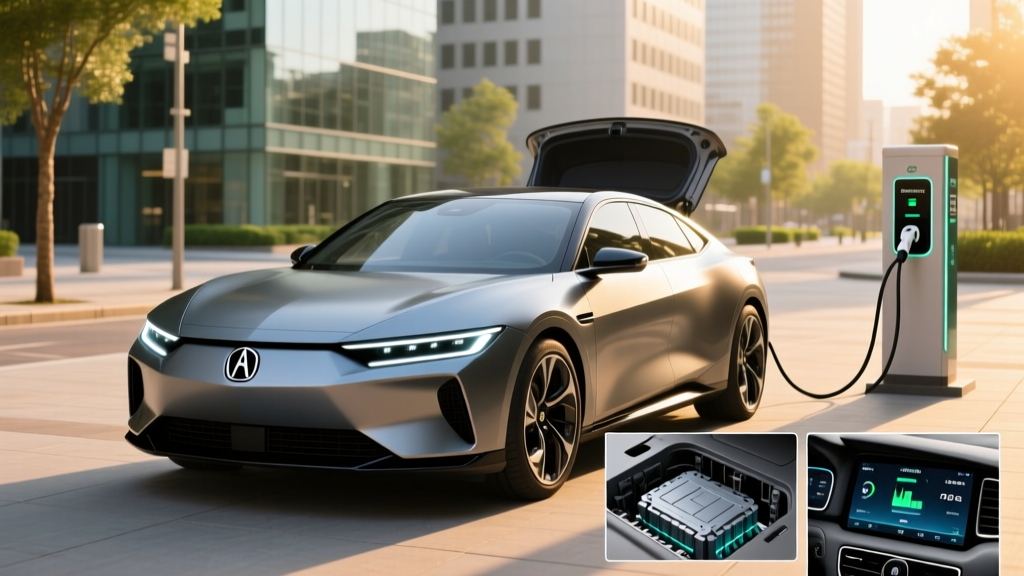
Acura's first dedicated battery-electric vehicle for the U.S. market is the Acura RSX prototype, unveiled in early 2025 and expected to reach dealerships in the first half of 2026. Built on Honda's new 0 Series EV platform with a thin, high-density battery pack and rear-biased all-wheel drive, the production RSX is targeting an EPA range near 300–320 miles, a 0–60 mph time in the low-to-mid 4-second range, and a starting MSRP estimated between $50,000 and $55,000. A larger three-row SUV (likely badged as a production version of the Acura SUV concept shown alongside the RSX) is expected to follow in late 2026 or 2027.
Bottom line: If you want a sporty, premium electric coupe-crossover with Acura styling and Honda's next-gen EV architecture, the RSX is worth tracking — but it is still pre-production. Pricing, exact range, and federal tax-credit eligibility under IRS §30D rules will not be confirmed until closer to launch. If you need an EV today, the Genesis GV60, BMW iX, or Tesla Model Y remain confirmed alternatives with published specs.
What Is the 2026 Acura EV, Exactly?
When people search for "2026 Acura EV," they are usually referring to one of two vehicles Acura has previewed:
- Acura RSX Prototype (Production Version Expected 2026): A performance-oriented, low-slung electric coupe/crossover. This is Acura's first ground-up EV, riding on Honda's new 0 Series platform that emphasizes a thin battery, low center of gravity, and steer-by-wire capability.
- Acura Three-Row Electric SUV (Expected Late 2026 or 2027): A larger family vehicle previewed by the Acura SUV concept, also on the 0 Series architecture.
Neither vehicle is on sale as of this writing. Specs below are based on Honda/Acura disclosures, platform engineering presentations, and industry analysis of the 0 Series architecture. Treat all numbers as preliminary estimates until Acura publishes final EPA and MSRP figures.
| Attribute | Estimated / Target |
|---|---|
| Platform | Honda 0 Series (dedicated BEV) |
| Battery Chemistry | NMC (nickel manganese cobalt) — thin-pack design |
| Usable Battery Capacity | ~85–100 kWh (estimated) |
| EPA Range (Target) | 300–320 miles |
| Drivetrain | Dual-motor AWD, rear-biased torque vectoring |
| Horsepower | ~400–500 hp (estimated) |
| 0–60 mph | ~4.0–4.8 seconds (estimated) |
| Peak DC Fast Charge Rate | ~200–250 kW (estimated) |
| 10–80% DC Charge Time | ~22–28 minutes (estimated) |
| Level 2 Home Charging | ~11.5 kW onboard charger |
| Starting MSRP (Est.) | $50,000–$55,000 |
| Federal Tax Credit (§30D) | Eligibility TBD — depends on battery sourcing |
| Warranty (Expected) | 4 yr/50,000 mi basic; 8 yr/100,000 mi battery |
2026 Acura EV vs. Gas Acura: Cost of Ownership Compared
A common question from current Acura owners: does going electric actually save money versus a gas-powered Acura TLX or RDX? Here is a five-year comparison using the estimated RSX EV pricing against the 2025 Acura TLX A-Spec (2.0L turbo, AWD, EPA 24 MPG combined).
| Cost Category | Acura RSX EV (Est.) | Acura TLX A-Spec AWD |
|---|---|---|
| Base MSRP | $52,000 | $48,500 |
| Federal Tax Credit (§30D) | Up to $7,500 (if eligible)* | $0 |
| Effective Purchase Price | ~$44,500 | $48,500 |
| Fuel/Energy (5 yr, 75,000 mi) | ~$4,500 (home charging avg)** | ~$11,250 (gas at $3.60/gal, 24 MPG) |
| Maintenance (5 yr) | ~$1,200 | ~$3,500 |
| Insurance (5 yr avg) | ~$10,500 | ~$8,500 |
| Estimated Depreciation | ~$18,000 | ~$20,000 |
| Total 5-Year Cost | ~$78,700 | ~$91,750 |
* §30D credit eligibility depends on battery component and critical-mineral sourcing, buyer income caps ($150K single / $300K joint), and MSRP caps ($55,000 for sedans/coupes, $80,000 for SUVs/vans). Verify at irs.gov before purchase. Point-of-sale transfer available at participating dealers.
** Assumes 80% home Level 2 charging at $0.16/kWh national average, 20% public DC fast charging at $0.40/kWh, and vehicle efficiency of ~3.0 mi/kWh. Your rate varies by utility and state.
The EV comes out ahead on a five-year basis primarily because of lower energy and maintenance costs — no oil changes, no transmission fluid, fewer brake replacements thanks to regenerative braking. Insurance is typically 15–25% higher for EVs due to repair cost data, which partially offsets the savings.
Real-World Range: What to Actually Expect
Acura targets 300–320 miles of EPA-rated range for the RSX. That is a competitive number, but EPA stickers assume a mix of city and highway driving at moderate temperatures. Here is what real-world conditions do to that number:
Real-World Range Expectations (Based on 310-Mile EPA Target)
- Mild weather, mixed driving: ~280–310 miles
- Highway-only at 75 mph: ~250–270 miles (aerodynamic drag increases energy consumption ~15–20% over combined EPA)
- Cold weather (below 32°F), cabin heating: ~200–240 miles (LFP packs lose more; NMC packs with a heat pump fare better — expect ~20–30% reduction)
- Mountain driving with elevation gain: Consumption spikes on climbs; regen recovers some on descents
The 0 Series platform uses a thin, high-density battery pack positioned low in the chassis. Honda has emphasized aerodynamic efficiency as a core design pillar, which should help highway range. Whether the production RSX includes a heat pump (critical for cold-climate efficiency) has not been confirmed — this is a spec worth watching when final details drop.
Charging Speed and Infrastructure Reality
Charging is where most first-time EV buyers have the biggest gap between expectation and reality. Here is what the 2026 Acura RSX EV should offer based on the 0 Series platform's engineering targets:
| Charging Level | Power | Miles Added per Hour | Use Case |
|---|---|---|---|
| Level 1 (120V household) | ~1.4 kW | ~4–5 mi/hr | Emergency / overnight top-off only |
| Level 2 (240V home) | ~11.5 kW | ~34–38 mi/hr | Daily charging — full charge in ~8–9 hours |
| DC Fast Charge (peak) | ~200–250 kW | ~600–750 mi/hr (peak) | Road trips; 10–80% in ~22–28 min |
The Charge Curve Matters More Than Peak kW
A 250 kW peak charge rate sounds impressive, but EV batteries cannot sustain peak power for the entire session. The charge curve typically looks like this:
- 10–40% SoC: Near peak rate (~200–250 kW)
- 40–60% SoC: Tapers to ~150–180 kW
- 60–80% SoC: Further taper to ~80–120 kW
- Above 80% SoC: Slow trickle, ~20–40 kW (this is why road-trip strategy targets 10–80% stops)
Honda has stated the 0 Series platform supports fast-charging optimization through thermal preconditioning. If the RSX includes route-based battery preconditioning (warming the pack when you navigate to a charger), real-world charge times will be closer to the optimistic end of estimates.
Connector Standard: NACS
Honda has confirmed that its North American EVs will use the NACS (North American Charging Standard) connector — the same plug used by Tesla. This gives Acura EV owners access to Tesla Supercharger stations (now open to NACS-equipped non-Tesla vehicles via adapter or native port), plus Electrify America, EVgo, and other networks adopting NACS. This is a significant practical advantage over the CCS1 connector, which has seen declining network investment.
Home Charging Installation Costs
Most EV owners do 80%+ of their charging at home. Budget for a Level 2 installation:
- Level 2 charger hardware: $400–$700 (ChargePoint Home Flex, Emporia Level 2, Wallbox Pulsar Plus)
- Electrician labor (240V/50A circuit): $800–$2,500 depending on panel proximity
- Electrical panel upgrade (if needed): $1,500–$3,500 (common in older homes with 100A service)
- Permit: $50–$200
- Total typical range: $1,250–$3,500 (without panel upgrade); $3,000–$6,000+ with panel upgrade
Consult a licensed electrician for your specific situation — panel capacity, conduit run length, and local code all affect the final price.
Federal Tax Credit: Will the 2026 Acura EV Qualify?
This is the most fluid variable in the ownership equation. Under current IRS §30D rules, a new clean vehicle can qualify for up to $7,500 in federal tax credits, split into two halves:
§30D Eligibility Requirements (Current Rules)
- $3,750 — Battery Components: Battery components must be manufactured or assembled in North America (percentage threshold increases annually)
- $3,750 — Critical Minerals: Critical minerals must be sourced from the U.S. or a free-trade-agreement partner (threshold increases annually)
- Buyer Income Cap: AGI must not exceed $150,000 (single), $225,000 (head of household), or $300,000 (joint)
- MSRP Cap: Vehicle MSRP must not exceed $55,000 (sedans/coupes) or $80,000 (SUVs/vans/pickups)
- Point-of-Sale Transfer: Eligible buyers can transfer the credit to the dealer at purchase, reducing the out-of-pocket price immediately
- Final Assembly: Vehicle must undergo final assembly in North America
For the Acura RSX, the critical unknowns are:
- Where will the battery cells and pack be made? Honda's new EV hubs in Ohio (the Anna Engine Plant and a new dedicated EV battery line with LG Energy Solution) are positioned to meet North American sourcing requirements, but final supply-chain certification is not yet published.
- Will the MSRP stay under $55,000? If the RSX is classified as a sedan/coupe, the $55,000 MSRP cap is tight given the estimated pricing. If classified as an SUV (possible given its crossover stance), the cap rises to $80,000 — much more achievable.
Check the official IRS clean vehicle credit page and fueleconomy.gov for the confirmed eligible-vehicle list closer to launch.
Common Misconceptions About the 2026 Acura EV
| Myth | Fact |
|---|---|
| "Acura already sells an EV." | The Acura ZDX (2024–2025) was built on GM's Ultium platform and was discontinued. The 2026 RSX is Acura's first in-house EV on Honda's own 0 Series platform — a fundamentally different vehicle. |
| "It will be self-driving." | Acura's driver-assist system will be SAE Level 2 — meaning the driver must remain attentive with hands on or near the wheel at all times. It is not autonomous. Only Level 4 services like Waymo operate without a human driver. |
| "300 miles of range means I can drive 300 miles before stopping." | Real-world highway range at 75 mph in mild weather is typically 80–87% of EPA. Plan for ~250–270 miles of usable range on road trips, and charge at 20–25% remaining for battery health and charging-speed optimization. |
| "I don't need home charging — I'll just use public stations." | Public DC fast charging costs 2–3× more per mile than home Level 2 charging. Relying solely on public charging also adds time (25–40 min per stop) and exposure to broken or occupied chargers. Home charging is strongly recommended for cost and convenience. |
| "EV batteries need replacing every few years." | Modern NMC and LFP packs are designed for 1,000–2,000+ full charge cycles with ~10–15% degradation over 8 years/100,000 miles. Honda/Acura is expected to warranty the battery for 8 years/100,000 miles at a minimum 70% capacity retention threshold. |
Decision Framework: Should You Wait or Buy Now?
Wait for the 2026 Acura RSX EV if:
- You are a current Acura owner who values brand loyalty and dealer relationships
- You want a sporty, low-slung electric coupe/crossover — a segment with few premium options
- Your current vehicle has 12+ months of life left, giving you time for production to begin
- You want NACS native charging and access to the Supercharger network without adapters
- Acura's Ohio-built battery sourcing may help you qualify for the full $7,500 §30D credit
Buy an Available EV Now if:
- You need a vehicle within the next 3–6 months
- You want confirmed EPA range, pricing, and tax-credit eligibility before committing
- You need a three-row family SUV (the Acura electric SUV is likely 2027+)
- You prefer proven service history and parts availability — first-year EVs can have early-production quirks
- Alternatives to consider now: Tesla Model Y (320 mi EPA, ~$44,990), Genesis GV60 (294 mi EPA, ~$53,350), BMW iX xDrive50 (324 mi EPA, ~$87,250), or Hyundai Ioniq 5 N (280 mi EPA, ~$67,500) for performance
What First-Time EV Buyers Should Know Before Any Purchase
Whether you wait for the Acura or buy something available today, these ownership realities apply to every EV:
- Home charging is non-negotiable for most owners. Without it, your fuel cost doubles or triples, and your weekly time investment jumps significantly. Confirm your electrical panel can support a 240V/50A circuit before committing.
- Cold weather reduces range 20–35%. If you live in the upper Midwest or Northeast, plan your road-trip expectations around the worst-case number, not the EPA sticker.
- Insurance will be higher. Get a quote before purchasing — EV premiums average 15–25% above comparable gas vehicles due to battery repair costs and specialized labor.
- Maintenance is minimal but not zero. Tire rotations, cabin air filters, brake fluid checks, and wiper blades still apply. Tires wear 15–25% faster on EVs due to instant torque and higher vehicle weight.
- Depreciation is still uncertain. EV resale values have been volatile. Leasing can mitigate this risk if you are concerned about long-term value retention.
- Public charging reliability varies. Tesla Superchargers consistently report 95%+ uptime. Non-Tesla networks (Electrify America, EVgo) have improved but still experience occasional connector or payment-system failures. Carry a NACS-to-CCS adapter if your vehicle supports it.
Frequently Asked Questions
When will the 2026 Acura RSX EV go on sale?
Acura has indicated a production launch in the first half of 2026, with pre-orders potentially opening in late 2025. Exact timing has not been confirmed. The three-row Acura electric SUV is expected later, likely as a 2027 model.
Will the 2026 Acura EV qualify for the $7,500 federal tax credit?
It is too early to confirm. Eligibility depends on battery component manufacturing location, critical-mineral sourcing, final assembly location, MSRP classification, and buyer income. Honda's Ohio battery plant investment positions the RSX favorably, but IRS certification is required per model. Check irs.gov closer to launch.
What platform is the Acura EV built on?
The Honda 0 Series platform — a dedicated BEV architecture with a thin battery pack, low center of gravity, rear-biased AWD capability, and steer-by-wire readiness. This replaces the GM Ultium platform used in the discontinued Acura ZDX.
How does the Acura RSX EV compare to the Tesla Model Y Performance?
The Model Y Performance offers 303 miles EPA range, 0–60 in 3.5 seconds, and a base price around $48,990 — all confirmed and available now. The RSX targets similar range with a more premium, coupe-oriented design and potentially better build quality, but at a likely higher price and with no confirmed availability yet. The Model Y also benefits from mature Supercharger infrastructure and established service centers.
Do I need to upgrade my electrical panel for home EV charging?
Possibly. Homes with 100-amp electrical service often need a panel upgrade to 200 amps to safely support a 50-amp EV circuit alongside existing loads (HVAC, dryer, oven). Homes with 200-amp service usually have sufficient headroom. An electrician can assess your panel for $100–$250 — get this done before ordering any EV.
Will the Acura EV have one-pedal driving?
Honda's 0 Series platform supports adjustable regenerative braking, and one-pedal driving (where lifting off the accelerator brings the car to a near-stop without touching the brake) is expected. Final drive-mode details have not been published.