The Verdict: Jeep's Electric Luxury SUV Enters a Crowded Arena
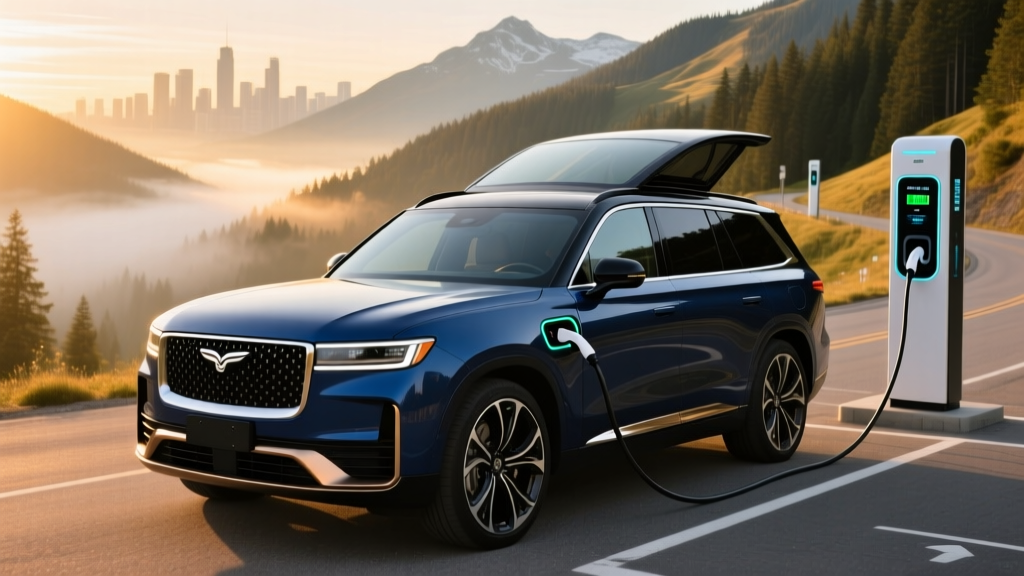
The 2025 Wagoneer S is Stellantis's first dedicated electric SUV for the North American market, wearing the Wagoneer badge but riding on the STLA Large platform. It arrives with a 100-kWh battery, 600 horsepower, and a promise of 300 miles of EPA-estimated range. But in a segment dominated by the Tesla Model X, BMW iX, and the Hyundai Ioniq 5 (for those cross-shopping downmarket on price), does the Wagoneer S earn its premium positioning?
After reviewing the specs, charging profile, and ownership economics, the Wagoneer S is a compelling luxury EV for buyers who want Jeep-adjacent styling, dual-motor AWD, and a usable 300-mile range — but its DC fast-charging speed of 150 kW is a notable weak point in 2025, and federal tax credit eligibility depends on specific buyer circumstances and battery sourcing rules that continue to tighten.
Spec Table: 2025 Wagoneer S at a Glance
| Specification | 2025 Wagoneer S Launch Edition |
|---|---|
| EPA Range | 300 miles |
| Battery Capacity | 100 kWh (usable) |
| Battery Chemistry | NMC (Nickel Manganese Cobalt) |
| Drivetrain | Dual-motor AWD |
| Horsepower | 600 hp |
| Torque | 617 lb-ft |
| 0–60 mph | 3.4 seconds |
| MPGe (combined) | ~88 MPGe (est.) |
| Max DC Fast Charge | 150 kW |
| 10–80% DC Charge Time | ~23 minutes |
| Level 2 Home Charging | 11 kW (~33 mi/hr) |
| Cargo Volume (rear seats up) | 30.2 cu ft |
| Cargo Volume (rear seats folded) | 61.8 cu ft |
| Front Legroom | 40.9 in |
| Rear Legroom | 38.5 in |
| Base MSRP | $65,995 |
| Battery/Powertrain Warranty | 8 years / 100,000 miles |
Range and Efficiency: 300 Miles EPA, But What About the Real World?
EPA estimate: 300 miles. In mixed highway driving at 70–75 mph, expect approximately 250–270 miles. In cold weather (below 32°F), range can drop to 210–230 miles due to battery resistance and cabin heating loads. City driving with regenerative braking can approach or slightly exceed the EPA figure.
The Wagoneer S carries a 100-kWh usable NMC (nickel manganese cobalt) battery pack. NMC chemistry offers higher energy density than LFP (lithium iron phosphate), which helps achieve 300 miles in a package that keeps the vehicle's floor relatively low — but NMC is more sensitive to sustained high state-of-charge storage and degrades slightly faster over thousands of cycles than LFP. For most owners, this is a non-issue within the 8-year warranty window, but it's worth noting if you plan to hold the vehicle past 150,000 miles.
The estimated 88 MPGe combined figure (roughly 34 kWh/100 miles) places the Wagoneer S behind the BMW iX xDrive50 (~89 MPGe) and well behind the Tesla Model X (~102 MPGe). The dual-motor, 600-hp setup and the SUV's aerodynamic profile explain the gap. If efficiency is your priority, the iX delivers more miles per kilowatt-hour. If power is the draw, the Wagoneer S holds its own.
For context on how the EPA calculates electric range and efficiency, see the EPA's EV testing methodology on fueleconomy.gov.
Charging: 150 kW DC Fast Charging Is the Bottleneck
This is where the Wagoneer S reveals its most significant limitation in 2025. The peak DC fast-charge rate of 150 kW is below the class standard. Competitors like the Hyundai Ioniq 5 (240 kW peak), Kia EV6 (240 kW), and the Tesla Model X (250 kW at V3 Superchargers) charge substantially faster on the same public infrastructure.
| Charging Level | Power / Rate | Time or Miles Added |
|---|---|---|
| Level 1 (120V household) | ~1.4 kW | ~4 miles per hour |
| Level 2 (240V, 48A home charger) | 11 kW | ~33 miles per hour / full charge in ~9.5 hrs |
| DC Fast Charge (peak) | 150 kW | 10–80% in ~23 minutes |
| DC Fast Charge (sustained avg.) | ~110 kW | 80–100% tapers significantly; add 15+ min |
What this means in practice: On a road trip, you'll spend roughly 23 minutes at a 150+ kW DC fast charger to go from 10% to 80%. That's adequate for a lunch stop, but it's 5–8 minutes longer than what the Ioniq 5 or EV6 require, and nearly double the stop time of a Tesla Model X on a V3 Supercharger. The charge curve also tapers steeply above 80%, so don't plan to charge past 80% on road trips unless you're at your destination.
At home on a Level 2 charger (240V, 48-amp hardwired unit), the 11 kW onboard charger replenishes roughly 33 miles of range per hour. A full 0–100% charge takes approximately 9.5 hours, making overnight charging straightforward. Most owners will plug in each night and wake up with a full battery — the 11 kW rate is competitive for the class.
Connector note: The 2025 Wagoneer S uses the CCS1 connector standard. Stellantis has committed to adopting NACS (the Tesla connector) on future models, but for 2025, you'll rely on CCS-compatible networks: Electrify America, EVgo, and ChargePoint DC stations. Adapters for Tesla Supercharger access (via third-party CCS-to-NACS adapters) are available but add a step.
Performance and Driving Dynamics
The dual-motor AWD powertrain produces 600 horsepower and 617 lb-ft of torque, launching the Wagoneer S to 60 mph in 3.4 seconds. That's genuinely quick — quicker than the BMW iX xDrive50 (4.4 seconds) and comparable to the Tesla Model X Plaid territory (though the Plaid is in another league at 2.5 seconds).
The instant torque delivery makes highway merging and passing effortless. The air suspension (standard on the Launch Edition) adjusts ride height for efficiency at speed and provides up to 8.3 inches of ground clearance. However, at roughly 5,800 pounds, the Wagoneer S is heavy, and that mass is noticeable in cornering. This is a straight-line luxury cruiser, not a canyon carver.
Regenerative braking offers multiple levels selectable through the infotainment system, but the Wagoneer S does not offer true one-pedal driving that brings the vehicle to a complete stop. You'll still use the brake pedal at low speeds — a minor frustration for EV veterans accustomed to full one-pedal operation in vehicles like the Tesla Model Y or Ford Mustang Mach-E.
Interior, Tech, and Cargo Space
The Wagoneer S cabin positions itself squarely in luxury territory: a 12.3-inch driver display, a 12.3-inch passenger screen, and a 12.3-inch center touchscreen dominate the dash. The infotainment system runs Stellantis's Uconnect 5, which supports wireless Apple CarPlay and Android Auto, over-the-air updates, and integrated navigation with real-time charger routing.
Driver-assist features include adaptive cruise control with stop-and-go, lane-centering assist, automatic emergency braking, and a 360-degree camera. These constitute SAE Level 2 driver assistance — the driver must remain engaged with hands on the wheel at all times. This is not autonomous driving. Stellantis has not yet deployed a hands-off highway system comparable to GM's Super Cruise or Ford's BlueCruise in the Wagoneer S.
Cargo space is adequate for the class: 30.2 cubic feet behind the second row and 61.8 cubic feet with the rear seats folded flat. Front legroom is generous at 40.9 inches; rear legroom at 38.5 inches is comfortable for adults but trails the BMW iX (40.2 inches rear). There is no front trunk (frunk), which is a missed opportunity for additional storage on a dedicated EV platform.
Pricing, Trims, and Federal Tax Credit Eligibility
| Trim | Base MSRP | Est. After Federal Credit* |
|---|---|---|
| Launch Edition | $65,995 | ~$58,495 (if eligible) |
| Future trims (announced) | TBA — expected lower base | Varies |
*Federal tax credit eligibility is not guaranteed and depends on multiple factors. See checklist below.
The 2025 Wagoneer S launches exclusively in the Launch Edition trim at $65,995 (before destination). Stellantis has indicated additional, lower-priced trims will follow, but as of this writing, only the Launch Edition is orderable. The MSRP is below the IRS §30D cap of $80,000 for SUVs, which is a prerequisite for credit eligibility.
- MSRP cap: Vehicle MSRP must not exceed $80,000 (SUV classification). Wagoneer S Launch Edition qualifies at $65,995. ✓
- Buyer income cap: Adjusted gross income must not exceed $150,000 (single), $225,000 (head of household), or $300,000 (joint filing).
- Battery sourcing: Increasing percentages of critical minerals and battery components must be sourced from the U.S. or free-trade-agreement countries. These thresholds tighten annually — verify current-year requirements on IRS.gov's qualified vehicle list.
- Point-of-sale transfer: As of 2024, eligible buyers can transfer the credit to the dealer at purchase, reducing the sale price directly rather than waiting for a tax refund.
- Final assembly: Must occur in North America. The Wagoneer S is assembled in the U.S. ✓
Always confirm eligibility with a tax professional and check the IRS qualified vehicles list before purchase — sourcing rules change and can disqualify a previously eligible vehicle mid-year.
If you qualify for the full $7,500 credit and apply it at point of sale, the effective price drops to roughly $58,495. If battery-sourcing requirements disqualify the vehicle or your income exceeds the cap, you pay full MSRP. This is a significant variable in the purchase decision.
Warranty and Long-Term Ownership
Stellantis provides an 8-year / 100,000-mile warranty on the battery pack and electric powertrain components. The warranty guarantees the battery will retain at least 70% of its original capacity during the coverage period — a typical threshold for the industry, matching Hyundai and Kia, though below Tesla's 70% guarantee over 8 years/120,000 miles on the Model X.
The bumper-to-bumper warranty covers 3 years / 36,000 miles. For a vehicle at this price point, the basic coverage is average. Extended warranty options are available through Stellantis dealers.
NMC battery degradation data from similar platforms suggests owners can expect roughly 8–12% capacity loss over the first 100,000 miles under normal use (avoiding repeated DC fast charging to 100% and prolonged storage at full charge). The 100-kWh pack provides a buffer: even at 85% state of health, you'd still have roughly 255 miles of range.
Who Should Buy the 2025 Wagoneer S?
- You want a 600-hp dual-motor luxury SUV with distinctive American styling
- Your daily driving is under 200 miles and you charge at home overnight
- You value Uconnect 5 infotainment and prefer Stellantis's brand ecosystem
- You qualify for the full $7,500 federal tax credit, bringing the effective price to ~$58,500
- You don't frequently road-trip distances exceeding 250 miles between stops
- You road-trip frequently and need the fastest possible DC charging (consider Ioniq 5, EV6, or Tesla Model X)
- Rear-seat legroom is a priority (BMW iX offers more)
- You want hands-off highway driving assist (GM Super Cruise in the Cadillac Lyriq, Ford BlueCruise in the Mustang Mach-E)
- You need three rows of seating (the Wagoneer S is strictly a two-row, five-passenger SUV)
- Maximum cargo volume matters (the Model X offers significantly more with the frunk and larger rear area)
Pros and Cons
Pros
- 600 hp / 3.4-sec 0–60 is thrilling for a luxury SUV
- 300-mile EPA range is practical for most daily use
- Air suspension provides a smooth, adjustable ride
- Uconnect 5 is one of the better OEM infotainment systems
- MSRP under $80K SUV cap keeps §30D credit on the table
- Distinctive styling sets it apart from the Tesla/BMW crowd
Cons
- 150 kW peak DC charging is slow for the 2025 class
- No front trunk (frunk) wastes EV platform potential
- Rear legroom trails key competitors
- Only one trim available at launch (Launch Edition at $65,995)
- No hands-off highway driving assist system
- Heavy at ~5,800 lbs — efficiency suffers accordingly
- CCS1 connector limits Supercharger access without an adapter
Frequently Asked Questions
What is the real-world range of the 2025 Wagoneer S?
The EPA rates it at 300 miles. In real-world highway driving at 70–75 mph, expect 250–270 miles. In cold weather below freezing, plan for 210–230 miles. City driving with regenerative braking can match or slightly exceed the EPA figure.
How fast does the Wagoneer S charge?
On DC fast chargers, it peaks at 150 kW, achieving a 10–80% charge in approximately 23 minutes. At home on a Level 2 (240V/48A) charger, it adds about 33 miles per hour, fully charging in roughly 9.5 hours. The 150 kW peak rate is the vehicle's weakest spec relative to competitors.
Does the 2025 Wagoneer S qualify for the $7,500 federal EV tax credit?
It meets the MSRP cap ($65,995 vs. the $80,000 SUV limit) and North American assembly requirements. However, eligibility depends on your income (must be under $150K single / $300K joint), and the battery must meet critical-mineral and component-sourcing thresholds that tighten each year. Check the IRS qualified vehicle list and consult a tax professional before purchasing.
Is the Wagoneer S worth buying over the Tesla Model X or BMW iX?
If you value American luxury branding, 600-hp performance, and qualify for the tax credit, the Wagoneer S at ~$58,500 effective price is competitive. However, the Model X charges faster (250 kW), has more cargo space and a frunk, and offers access to the Supercharger network. The BMW iX is more efficient, has more rear legroom, and charges faster. The Wagoneer S's 150 kW charging rate is the most significant trade-off.
Does the Wagoneer S have a third row?
No. The Wagoneer S is a two-row, five-passenger SUV. If you need three rows, consider the Tesla Model X (available with a third row) or wait for potential future STLA Large platform variants from Stellantis.
What connector does the Wagoneer S use?
The 2025 model uses the CCS1 connector. You can charge at Electrify America, EVgo, ChargePoint, and other CCS networks. For Tesla Supercharger access, you'll need a third-party CCS-to-NACS adapter. Stellantis has signaled a future transition to NACS but not for the 2025 model year.