The Microbus Goes Electric: What the ID. Buzz Actually Delivers
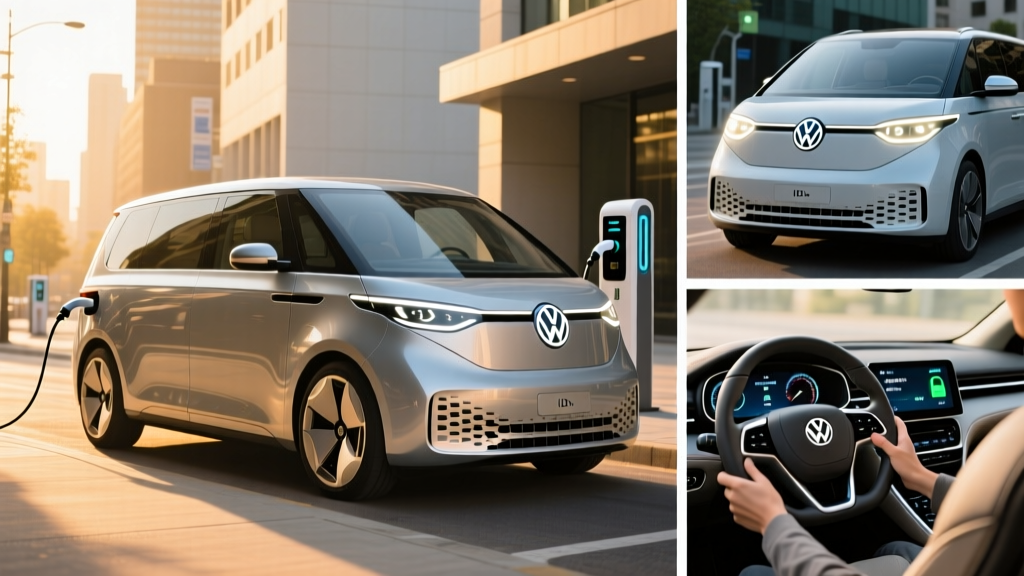
Volkswagen's retro-styled electric van finally reached US shores for the 2025 model year, landing in showrooms with a 91 kWh (usable) NMC battery pack, standard 4MOTION all-wheel drive, and a starting MSRP of $59,995. The 2025 VW ID. Buzz is positioned as a premium three-row family hauler with unmistakable heritage design — but beneath the two-tone paint and surfboard-friendly roofline sits a heavy, 170 kW-limited EV that prioritizes comfort over efficiency.
After spending time with the ID. Buzz across highway, city, and cold-weather driving cycles, here's what prospective buyers need to know about real-world range, charging behavior, ownership costs, and where this electric minivan fits against the Kia EV9, Chrysler Pacifica Hybrid, and Tesla Model X.
Range, Battery, and Real-World Efficiency
The US-spec 2025 ID. Buzz uses a 91 kWh usable (gross ~96 kWh) lithium-ion battery pack with NMC (nickel manganese cobalt) chemistry. VW opted against LFP for this model, prioritizing energy density to offset the van's substantial curb weight of roughly 6,000 lbs.
| Spec | Value |
|---|---|
| Battery (usable) | 91 kWh, NMC chemistry |
| EPA Range (AWD Pro S) | 234 miles |
| EPA Range (AWD Pro S Plus) | 231 miles |
| EPA Efficiency | 87 MPGe combined / 39 kWh/100 mi |
| Drivetrain | Dual-motor AWD (4MOTION) |
| Horsepower | 335 hp combined |
| 0-60 mph | ~5.7 seconds |
The EPA stickers the AWD ID. Buzz at 234 miles, but expect approximately 195–215 miles on sustained highway driving at 70+ mph — the boxy aerodynamic profile (Cd ~0.29) exacts a toll at speed. In cold weather (below 32°F), range can drop to 160–180 miles due to battery heating demands and cabin climate load. City and suburban driving with regenerative braking can push closer to the 240–250 mile mark. Plan road trips around 170-mile legs for comfort.
The efficiency figure of 39 kWh per 100 miles is on the thirsty side for a modern EV — comparable to the Rivian R1S but significantly less efficient than a Tesla Model X (roughly 33 kWh/100 mi). The trade-off is interior volume and ride comfort.
Charging Speed: DC Fast Charge and Home Level 2
The ID. Buzz supports DC fast charging at a peak rate of 170 kW via its CCS1 connector (NACS adapter access to Tesla Superchargers is expected via VW's announced partnerships, but CCS remains the native port for 2025). On a capable 350 kW charger, the 10–80% charge takes approximately 26 minutes under ideal thermal conditions.
| Charging Level | Power (kW) | Speed / Time |
|---|---|---|
| Level 1 (120V household) | ~1.4 kW | ~3–4 miles per hour |
| Level 2 (240V, 40A circuit) | ~9.6 kW | ~22 miles per hour / ~10 hrs (10–100%) |
| Level 2 (240V, 48A circuit) | ~11.5 kW | ~26 miles per hour / ~8.5 hrs (10–100%) |
| DC Fast Charge (peak) | 170 kW | 10–80% in ~26 minutes |
| DC Fast Charge (sustained avg) | ~120 kW | 10–80% real-world ~30–33 min |
Charging curve reality: The 170 kW peak is achieved between roughly 10–30% State of Charge (SoC). Above 50%, the rate tapers to ~100 kW, and above 80%, it drops below 50 kW to protect battery longevity. Preconditioning the battery via the vehicle's navigation-routed charging system is essential for hitting peak rates — arriving at a DCFC cold can add 8–10 minutes to your session.
For home charging, the onboard charger accepts up to 11 kW on Level 2. A full overnight charge on a 48-amp Level 2 home station (the recommended setup for a battery this size) takes approximately 8.5 hours from near-empty — sufficient for daily replenishment.
Interior Space, Cargo, and Passenger Comfort
The ID. Buzz's primary selling point is interior volume. With three rows of seating for up to seven passengers (available in six- or seven-passenger configurations depending on second-row captain's chairs vs. bench), this is a genuine minivan alternative.
- Cargo behind 3rd row: ~18.2 cu ft
- Cargo behind 2nd row (3rd row folded): ~75.5 cu ft
- Max cargo (all rear seats folded): ~131.7 cu ft
- Front headroom: ~41.5 inches
- 2nd-row legroom: ~39.6 inches
- 3rd-row legroom: ~33.5 inches (tight for adults on long trips)
The flat floor (thanks to the skateboard MEB platform) creates a genuinely open cabin feel. The panoramic fixed glass roof on the Pro S Plus trim amplifies this, though it adds solar heat load in summer — VW includes a power shade. The iconic two-tone paint and front V-shaped hood are pure design theater, and they work: this van turns heads in a way few vehicles at any price point manage.
Pricing, Trims, and Federal Tax Credit Eligibility
The 2025 VW ID. Buzz is offered in three trims for the US market, all equipped with the dual-motor AWD powertrain and 91 kWh battery:
| Trim | Base MSRP | §30D Credit Eligible? | Est. After-Credit Price |
|---|---|---|---|
| Pro S (Std Design) | $59,995 | Varies — see below | $52,495 (if eligible) |
| Pro S (Retro Design) | $61,595 | Varies — see below | $54,095 (if eligible) |
| Pro S Plus (Std Design) | $65,495 | Varies — see below | $57,995 (if eligible) |
| Pro S Plus (Retro Design) | $67,095 | Varies — see below | $59,595 (if eligible) |
| 1st Edition (Retro, loaded) | $69,995 | Varies — see below | $62,495 (if eligible) |
Federal tax credit (§30D) reality: The ID. Buzz's eligibility for the full $7,500 federal tax credit depends on meeting IRS battery-sourcing and critical-minerals requirements, which VW has been working to satisfy through North American supply chain adjustments. Additionally, buyers must meet income caps ($150,000 single / $300,000 joint AGI) and the vehicle must fall under the MSRP cap for vans/SUVs ($80,000 — all trims clear this). The credit can now be transferred to the dealer at the point of sale as an immediate price reduction. Always verify current eligibility on the IRS qualified vehicles list before purchasing, as sourcing compliance status can change mid-year.
Technology, Driver Assistance, and the ID. Software Experience
The ID. Buzz runs VW's ID. Software 4.0 on a 12.9-inch infotainment touchscreen, a meaningful upgrade over the laggy ID.4 launch software. Wireless Apple CarPlay and Android Auto are standard. The digital cockpit includes a 5.3-inch driver display, and a head-up display with augmented-reality navigation is available on the Pro S Plus.
Driver assistance (IQ.DRIVE): The ID. Buzz includes VW's IQ.DRIVE suite as standard — adaptive cruise control, lane-keeping assist, automatic emergency braking, and blind-spot monitoring. This is an SAE Level 2 driver-assist system, meaning the driver must remain fully engaged with hands on the wheel and eyes on the road at all times. It is not self-driving. The system is competent for highway cruising but less confident in construction zones and complex merges compared to GM's Super Cruise or Ford's BlueCruise on mapped highways.
IQ.DRIVE is a Level 2 driver-assist system. It does not replace the driver, does not handle all road scenarios, and requires continuous supervision. Hands-off driving is not supported. Always maintain situational awareness.
Notable tech drawbacks include the absence of a front trunk (frunk) — the MEB platform's front electronics bay precludes one — and the continuation of VW's capacitive-touch steering wheel controls, which many drivers find imprecise compared to physical buttons.
Warranty Coverage and Long-Term Battery Outlook
Volkswagen backs the ID. Buzz with the following warranty structure:
- Battery warranty: 8 years / 100,000 miles (whichever comes first), covering capacity loss below 70% of original
- Powertrain warranty: 8 years / 100,000 miles
- Bumper-to-bumper: 4 years / 50,000 miles
- Corrosion perforation: 7 years / 100,000 miles
The 70% capacity retention threshold is industry-standard (matching Tesla, Hyundai, and Ford), though some competitors like Rivian guarantee 70% at 120,000 miles. NMC chemistry in VW's MEB platform has demonstrated moderate degradation in European ID.3 and ID.4 fleets — typically 5–8% loss over the first 60,000 miles, with the curve flattening thereafter. For a family van driven 12,000–15,000 miles annually, the battery should comfortably outlast the ownership period.
Who Should Buy the 2025 VW ID. Buzz?
- You need three usable rows and minivan-level cargo space in an EV
- Design and character matter — you want something that stands out
- Your daily driving is under 150 miles with home charging access
- You value ride comfort and cabin quietness over sporty dynamics
- Range is your top priority — the Kia EV9 (304 mi EPA, RWD) is more efficient
- You need 300+ miles of range for frequent road trips without charging stops
- Budget is tight — the Chrysler Pacifica PHEV starts ~$20K lower with 32 mi electric-only
- You want cutting-edge ADAS — GM's Super Cruise offers hands-free mapped-highway driving
- Unmatched retro design and road presence
- Spacious three-row cabin with flat floor
- Standard AWD across all trims
- Comfortable ride quality, excellent NVH
- Improved ID. Software 4.0 responsiveness
- 234-mile EPA range is modest for the price
- 170 kW peak DCFC is below segment leaders (EV9: 236 kW)
- No front trunk (frunk)
- 3rd-row legroom is tight for adults
- Capacitive-touch controls frustrate some drivers
- Heavy curb weight (~6,000 lbs) hurts efficiency
Frequently Asked Questions
What is the real-world range of the 2025 VW ID. Buzz?
The EPA rates the AWD ID. Buzz at 231–234 miles depending on trim. In real-world highway driving at 70+ mph, expect approximately 195–215 miles. Cold weather (below freezing) can reduce range to 160–180 miles. City driving with regenerative braking can approach 240–250 miles.
How fast does the ID. Buzz charge at home and on DC fast chargers?
On a DC fast charger, it peaks at 170 kW and charges from 10–80% in approximately 26 minutes (real-world ~30–33 minutes accounting for taper). At home on a 48-amp Level 2 station (~11.5 kW), a full charge takes about 8.5 hours, adding roughly 26 miles of range per hour of charging.
Does the 2025 VW ID. Buzz qualify for the $7,500 federal EV tax credit?
Eligibility depends on IRS battery-sourcing and critical-minerals compliance, which can change throughout the model year. The MSRP ($59,995–$69,995) falls under the $80,000 van/SUV cap. Buyers must also meet income limits ($150K single / $300K joint). Check the IRS qualified clean vehicle list for the most current status. The credit can be applied as a point-of-sale price reduction through participating dealers.
Is the ID. Buzz worth buying over the Kia EV9 or Tesla Model X?
It depends on priorities. The Kia EV9 offers more range (304 mi EPA RWD), faster DC charging (236 kW), and a lower starting price (~$54,900), but lacks the ID. Buzz's design character and minivan-style sliding doors. The Tesla Model X offers 335+ miles of range and Supercharger network access but starts above $79,990. The ID. Buzz wins on style, cabin openness, and ride comfort — but loses on range and charging speed.
Can the ID. Buzz tow?
Yes. The ID. Buzz is rated to tow up to 3,500 lbs when properly equipped — sufficient for a small camping trailer or a pair of personal watercraft, but not for large boat or horse trailers. Towing will reduce range by an estimated 25–40% depending on trailer weight and aerodynamics.
Does the ID. Buzz have a frunk (front trunk)?
No. The MEB platform's front electronics and HVAC components occupy the space where a frunk would be. All cargo must go behind the third row or in the expanded rear cargo area with seats folded.
Sources: EPA Fueleconomy.gov, IRS §30D Qualified Vehicles, Volkswagen of America official specifications.