Quick Verdict: A Luxury Plug-In Hybrid That Commutes on Electrons
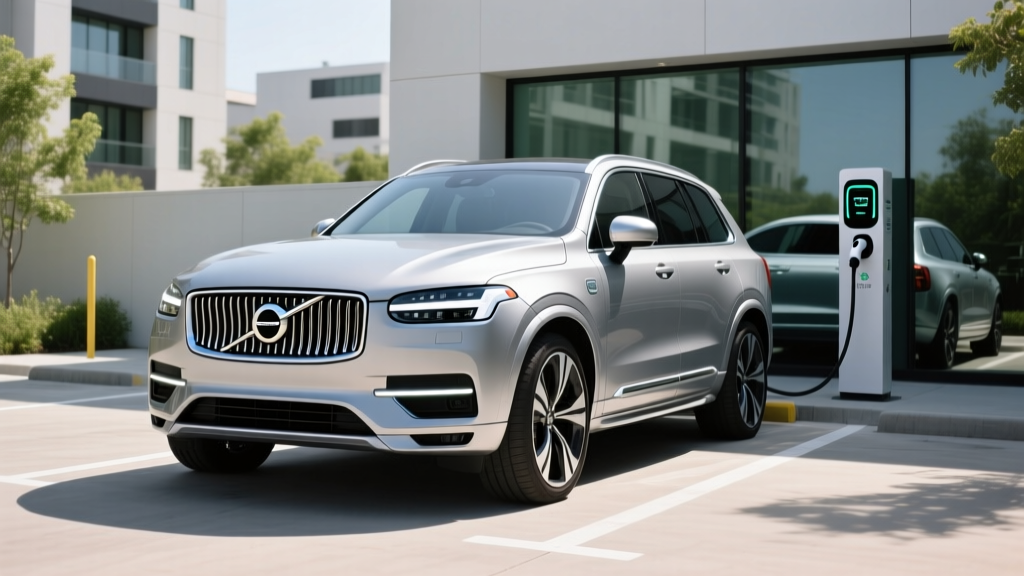
The 2025 Volvo XC90 Recharge is not a battery-electric vehicle — it's a plug-in hybrid (PHEV) that pairs a turbocharged and supercharged 2.0-liter four-cylinder with a rear-axle electric motor and an 18.8 kWh lithium-ion battery. The result: 33 miles of EPA-rated electric-only range, 455 combined horsepower, and a luxury three-row SUV that can handle most weekday commutes without burning a drop of gasoline. For families who want electric daily driving but need gasoline flexibility for road trips, the XC90 Recharge occupies a compelling middle ground between full EVs like the BMW iX and conventional hybrids like the Toyota Grand Highlander Hybrid.
But with a starting MSRP above $80,000 and a federal tax credit that phases based on income and sourcing rules, the value proposition requires careful calculation. This review breaks down every number that matters.
Electric Range, Battery, and Real-World Efficiency
| Spec | Value |
|---|---|
| EPA Electric-Only Range | 33 miles |
| Battery Capacity (Gross / Usable) | 18.8 kWh / ~14.9 kWh |
| Battery Chemistry | NMC (Nickel Manganese Cobalt) |
| EPA Combined MPGe (Electric + Gas) | 58 MPGe |
| Gas-Only Combined MPG (after battery depletion) | 27 MPG |
| Total Range (Electric + Gasoline) | ~430 miles |
| Fuel Tank Capacity | 18.8 gallons |
The 18.8 kWh NMC battery is positioned low in the chassis between the front and rear axles. Volvo uses a portion of the gross capacity as a buffer to protect long-term battery health — you'll see roughly 14.9 kWh of usable energy when the battery is fully charged. This is typical NMC management strategy and helps explain why the battery warranty extends to 8 years/100,000 miles with a 70% capacity retention guarantee, per Volvo's official documentation.
Efficiency in electric mode averages about 43 kWh/100 miles (equivalent to roughly 78 MPGe in pure electric driving). Once the battery is depleted, the 2.0L turbo-supercharged engine takes over, delivering 27 MPG combined — respectable for a 5,000-pound three-row luxury SUV, though it trails the non-plug-in XC90 B6 mild hybrid only marginally on long highway trips where the battery advantage disappears.
Charging Speed: DC Fast Charge, Level 2, and Level 1
| Charging Level | Power / Rate | 0–100% Time | Practical Notes |
|---|---|---|---|
| DC Fast Charging | Not supported | N/A | No CCS or NACS port; PHEV battery too small to justify DCFC hardware |
| Level 2 (240V, 32A) | 7.4 kW onboard charger | ~2.5 hours (0–100%) | Full charge overnight; adds ~15 miles of electric range per hour |
| Level 1 (120V, 12A) | ~1.4 kW | ~11 hours (0–100%) | Adequate for overnight top-up if you drive less than 30 miles daily |
The XC90 Recharge does not support DC fast charging — a deliberate engineering choice. With only 18.8 kWh to fill, a 7.4 kW Level 2 charger replenishes the battery in roughly 2.5 hours, making DCFC infrastructure unnecessary for most owners. At a home Level 2 station (the kind you'd install in a garage on a 40-amp circuit), you'll wake up to a full battery every morning.
On a standard 120V household outlet (Level 1), a full charge takes approximately 11 hours. This works if your daily commute is under 30 miles and you plug in every evening, but it won't recover a fully depleted battery in a single overnight window during short winter nights.
Home charging setup cost: Expect $500–$1,200 for a quality Level 2 charger (ChargePoint Home Flex, Emporia Vue, or Volvo's Wallbox partner unit) plus $800–$2,500 for electrician installation depending on panel proximity and local permit fees. A 200-amp electrical panel is usually sufficient; older homes with 100-amp service may require a panel upgrade ($2,000–$4,000).
Performance: 455 HP and a 4.5-Second Sprint
| Performance Spec | Value |
|---|---|
| Combined Horsepower | 455 hp |
| Combined Torque | 523 lb-ft |
| 0–60 mph | 4.5 seconds |
| Drivetrain | eAWD (front wheels: gas engine; rear wheels: electric motor) |
| Transmission | 8-speed automatic |
| Towing Capacity | 5,000 lbs (braked) |
The XC90 Recharge's powertrain is clever: the gasoline engine drives the front axle while a 143-hp electric motor drives the rear axle, creating an all-wheel-drive system with no mechanical link between the two. In "Pure" mode, the SUV runs exclusively on electric power (rear-wheel drive) up to approximately 80 mph. Switch to "Power" mode and both systems combine for 455 hp and a 4.5-second 0–60 mph run — genuinely quick for a vehicle with three rows and over 100 cubic feet of passenger volume.
The eAWD system also provides confident traction in rain and light snow without the efficiency penalty of a traditional mechanical AWD system. However, this is not an off-road vehicle — ground clearance and approach/departure angles are tuned for suburban life, not trail use.
Interior, Cargo, and Technology
The XC90 seats up to seven passengers in a 2-3-2 configuration (six-passenger captain's chairs are optional on higher trims). Interior materials remain among the best in the luxury SUV segment: open-pore wood, Nappa leather, and genuine metal trim throughout.
| Dimension | Measurement |
|---|---|
| Cargo (behind 3rd row) | 12.6 cu ft |
| Cargo (3rd row folded) | 41.8 cu ft |
| Cargo (all rear rows folded) | 85.7 cu ft |
| Front Legroom | 41.4 in |
| 2nd Row Legroom | 37.4 in |
| 3rd Row Legroom | 31.9 in |
The third row is best suited for children or occasional short-trip adults — 31.9 inches of legroom is tight for anyone over 5'8". Cargo space behind the third row (12.6 cu ft) accommodates a few grocery bags or a stroller but not much more. Fold the third row and you get a practical 41.8 cu ft, competitive with midsize luxury crossovers.
Infotainment: The XC90 runs Google Built-in on an 11.2-inch vertical touchscreen — meaning Google Maps, Google Assistant, and Play Store apps are native. Wireless Apple CarPlay and Android Auto are supported. The system is responsive, though the reliance on touchscreen controls for climate and seat heating means more fingerprints and fewer physical buttons than some buyers prefer.
Driver Assistance (SAE Level 2): Volvo's Pilot Assist combines adaptive cruise control with lane-centering steering on highways. It is a Level 2 driver-assistance system — the driver must remain engaged with hands on the wheel and eyes on the road at all times. This is not autonomous or "self-driving" technology. Pilot Assist is smooth and predictable, though it lacks the hands-free highway capability of GM's Super Cruise or Ford's BlueCruise.
Pricing, Trims, and Federal Tax Credit Eligibility
| Trim | MSRP | Est. After §30D Credit* |
|---|---|---|
| Core | $80,100 | $72,600 |
| Plus | $84,350 | $76,850 |
| Ultra | $88,950 | $81,450 |
| Ultimate (top) | $93,550 | $86,050 |
*Federal tax credit estimates assume full eligibility. Destination charge ($1,295) not included.
The 2025 XC90 Recharge qualifies for a partial or full federal plug-in hybrid tax credit under IRS §30D. Because the battery capacity is 18.8 kWh (well above the 7 kWh minimum threshold), the maximum credit of $7,500 is potentially available — but only if you meet all current-year eligibility requirements:
- MSRP Cap: The vehicle's MSRP must not exceed $80,000 for SUVs. The Core trim at $80,100 is right at the line — confirm the exact as-delivered price with your dealer, as destination charges and dealer-installed options can push it over.
- Buyer Income Limits (2025 tax year): Modified adjusted gross income must not exceed $150,000 (single), $225,000 (head of household), or $300,000 (married filing jointly).
- Battery Component Sourcing: A percentage of battery components must be manufactured or assembled in North America, and critical minerals must meet sourcing thresholds. Volvo has confirmed that the XC90 Recharge (built in Torslanda, Sweden, and Ridgeville, South Carolina depending on production batch) meets partial sourcing requirements — the exact credit amount ($3,750 or $7,500) depends on the specific VIN's battery supply chain. Check fueleconomy.gov for the most current qualified vehicle list.
- Point-of-Sale Transfer: As of 2024, you can transfer the credit to the dealer at purchase, reducing your out-of-pocket cost immediately rather than waiting to claim it on your tax return.
Important caveat: Tax credit rules change frequently. Consult a tax professional and verify eligibility on IRS.gov before purchasing. State-level incentives (California, Colorado, New York, and others) may stack on top of the federal credit.
Ownership Costs, Warranty, and Maintenance
| Ownership Factor | Details |
|---|---|
| Basic Warranty | 4 years / 50,000 miles |
| Powertrain Warranty | 4 years / 50,000 miles |
| Hybrid Battery Warranty | 8 years / 100,000 miles (70% capacity retention) |
| Corrosion Warranty | 12 years / unlimited miles |
| Complimentary Maintenance | 3 years / 36,000 miles (factory scheduled) |
| Estimated Annual Insurance | $2,400–$3,200 (varies by state and driving record) |
The 8-year/100,000-mile hybrid battery warranty is federally mandated and provides peace of mind for the high-voltage pack. If the battery degrades below 70% of original capacity within that window, Volvo will repair or replace it. In practice, NMC batteries in PHEV applications (which undergo shallower charge/discharge cycles than full EVs) tend to retain 85–90% capacity at 100,000 miles based on fleet data from similar Volvo and BMW PHEV platforms.
Maintenance costs are moderate for the luxury segment. The gasoline engine still requires oil changes, spark plug replacements, and transmission fluid service — unlike a full BEV. Expect $800–$1,200 annually after the complimentary maintenance period ends.
Pros and Cons
Pros
- 33 miles of electric range covers most commutes without gasoline
- 455 hp and 4.5-second 0–60 — genuinely fast for a three-row SUV
- Premium interior materials and Google Built-in infotainment
- 5,000-lb towing capacity exceeds most electric SUV competitors
- Eligible for up to $7,500 federal tax credit (subject to sourcing/income rules)
- No range anxiety — gasoline backup for road trips
Cons
- No DC fast charging — impractical to recharge on road trips
- Third row is cramped for adults (31.9" legroom)
- MSRP near $80K threshold risks tax credit ineligibility with options
- Electric-only range drops to ~20–24 miles in cold weather
- Gasoline engine still requires conventional maintenance (oil, plugs, filters)
- Pilot Assist is competent but lacks hands-free highway capability
Who Should Buy the 2025 Volvo XC90 Recharge?
Choose the XC90 Recharge if:
- Your daily round-trip commute is under 30 miles and you can charge at home every night
- You need three rows and 5,000-lb towing but want to minimize weekday fuel consumption
- You frequently drive long distances where EV charging infrastructure is sparse
- You value Scandinavian design, safety engineering, and Google-native infotainment
Look elsewhere if:
- You want zero gasoline use — consider the BMW iX, Tesla Model X, or Rivian R1S (full BEVs)
- You need a usable adult third row — the Kia EV9 or Toyota Grand Highlander offer more space
- Your budget is under $60,000 — the Toyota RAV4 Prime or Hyundai Tucson PHEV deliver similar electric range at half the price
Frequently Asked Questions
What is the real-world electric range of the 2025 Volvo XC90 Recharge?
The EPA rates it at 33 miles electric-only. In real-world driving, expect 28–31 miles on the highway, 33–36 miles in city driving with regen braking, and as low as 20–24 miles in freezing temperatures when cabin heating draws heavily from the battery.
How fast does the XC90 Recharge charge?
On a Level 2 home charger (7.4 kW), a full charge takes approximately 2.5 hours. On a standard 120V outlet (Level 1), expect about 11 hours. The XC90 Recharge does not support DC fast charging.
Does the 2025 Volvo XC90 Recharge qualify for the federal EV tax credit?
It qualifies for up to $7,500 under IRS §30D, but eligibility depends on your income (under $300K joint), the vehicle's MSRP (must not exceed $80,000 for SUVs), and battery component sourcing. The Core trim sits right at the MSRP threshold — verify with your dealer and consult IRS.gov before purchasing.
Is the XC90 Recharge worth buying over a full electric SUV?
It depends on your use case. If you can charge at home and your commute is under 33 miles, you'll drive electric most weekdays while retaining gasoline flexibility for road trips. If you want zero tailpipe emissions and lower long-term maintenance, a full EV like the BMW iX or Tesla Model X eliminates oil changes and offers faster DC charging — but at the cost of range planning on long trips.
What is the biggest drawback of the XC90 Recharge?
The lack of DC fast charging means you cannot meaningfully recharge the battery during road-trip stops. Once the 33 miles of electric range are depleted, you're driving a very capable but conventional hybrid for the remainder of the trip.
How long will the hybrid battery last?
Volvo warranties the high-voltage battery for 8 years or 100,000 miles against degradation below 70% capacity. Based on data from similar NMC PHEV batteries, expect 85–90% capacity retention at 100,000 miles under normal use. Full battery replacement (if ever needed outside warranty) is estimated at $8,000–$12,000.