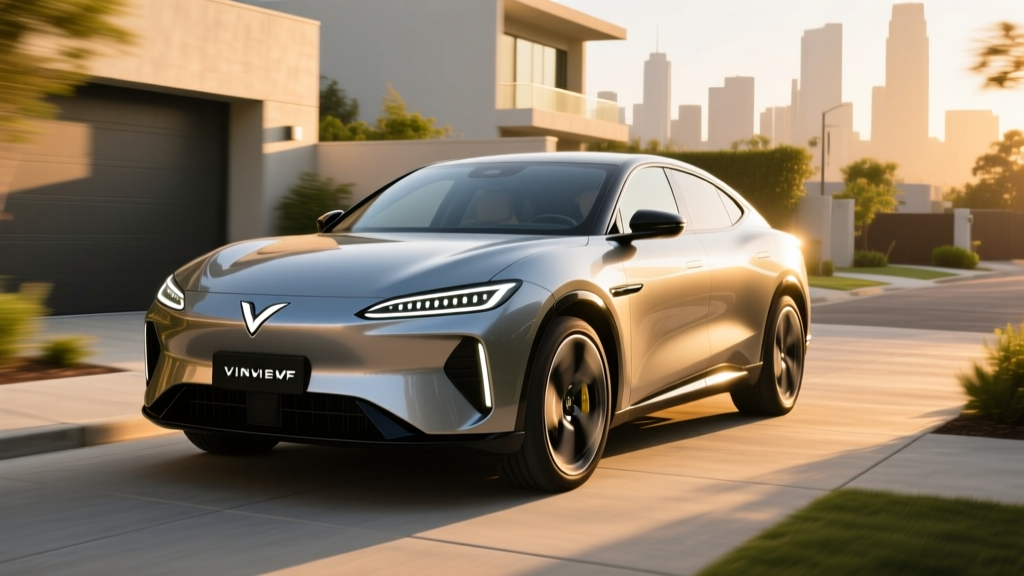
The 2025 VinFast VF 8 is the Vietnamese automaker's mid-size electric SUV aimed squarely at the Tesla Model Y and Hyundai Ioniq 5 segment. After a rocky 2023 launch plagued by software complaints, VinFast returned for 2025 with updated battery software, a revised suspension tune, and a more competitive price structure. But does the spec sheet translate to a compelling real-world EV? We dissect every number that matters.
Quick Verdict: Who the VF 8 Is For
The 2025 VF 8 targets buyers who want a dual-motor AWD electric SUV with premium aspirations and a standout warranty, but who are willing to accept a less-proven dealer network and an infotainment system that still trails Korean and American rivals in polish. If you prioritize warranty coverage and distinctive styling over charging-speed benchmarks, the VF 8 deserves a test drive. If you need the fastest DC charging in the segment or rock-solid software, competitors still hold an edge.
2025 VinFast VF 8 Specs at a Glance
| Spec | VF 8 Eco | VF 8 Plus |
|---|---|---|
| Base MSRP | $46,000 | $51,800 |
| EPA Range | 264 mi | 243 mi |
| Battery (usable) | 77 kWh (NMC) | 87.7 kWh (NMC) |
| Drivetrain | Dual-Motor AWD | Dual-Motor AWD |
| Horsepower | 348 hp / 368 lb-ft | 402 hp / 457 lb-ft |
| 0–60 mph | ~5.5 sec | ~4.5 sec |
| Max DC Charge Rate | ~155 kW | ~155 kW |
| 10–80% DCFC Time | ~31 min | ~35 min |
| Level 2 (AC) Rate | 11 kW (~33 mi/hr) | 11 kW (~33 mi/hr) |
| MPGe (combined) | 83 MPGe | 77 MPGe |
| kWh/100 mi | 40 | 44 |
| Cargo (behind 2nd row) | ~18.5 cu ft | ~18.5 cu ft |
| Cargo (seats folded) | ~52 cu ft | ~52 cu ft |
| Battery Warranty | 10 yr / 125,000 mi | 10 yr / 125,000 mi |
| Bumper-to-Bumper | 10 yr / 125,000 mi | 10 yr / 125,000 mi |
Source: fueleconomy.gov and VinFast USA official specifications.
Range and Efficiency: EPA vs. Reality
The VF 8's efficiency is the weakest line on its spec sheet. At 40 kWh/100 miles (Eco) and 44 kWh/100 miles (Plus), it trails the Hyundai Ioniq 5 AWD (~34 kWh/100 mi) and the Tesla Model Y Long Range (~28 kWh/100 mi). The heavier curb weight — roughly 5,200 lbs — and less aerodynamic profile explain much of the deficit. On a road trip, that efficiency gap means more frequent charging stops and higher per-mile electricity costs.
For daily commuting under 60 miles round-trip, the range is more than adequate. But if your use case involves frequent 300+ mile highway trips, the VF 8's combination of middling efficiency and moderate DC charging speeds means you'll spend noticeably more time at chargers than you would in a Model Y or Ioniq 5.
Charging Speeds: DC Fast, Level 2, and Home Setup
VinFast quotes a peak DC fast-charge rate of approximately 155 kW for both trims. Here's what that means in practice:
| Charging Level | Power | Estimated Speed | Notes |
|---|---|---|---|
| Level 1 (120V household) | ~1.4 kW | ~4 mi/hr | Emergency/top-up only |
| Level 2 (240V home) | 11 kW | ~33 mi/hr | Full charge overnight (~8–9 hrs) |
| DC Fast Charge (peak) | 155 kW | ~140 mi in 30 min | Peak rate held briefly; tapers above 60% SoC |
| DC Fast 10–80% | Variable | ~31–35 min | Eco ~31 min, Plus ~35 min (larger pack) |
Charging curve reality: The VF 8's 155 kW peak is modest for 2025. Competitors like the Ioniq 5 (up to 240 kW on its 800V architecture) and the Kia EV6 hit 10–80% in roughly 18 minutes. The VF 8's charge curve tapers noticeably after 60% State of Charge (SoC), meaning the last 20% (60–80%) takes nearly as long as the first 50%. For road-trippers, this is a meaningful disadvantage — you'll spend 30–35 minutes at a DC fast charger where rivals finish in 18–20.
At home on a Level 2 charger (11 kW / 48A), the VF 8 Eco's 77 kWh pack charges from empty to full in roughly 7.5 hours; the Plus's 87.7 kWh pack takes about 8.5 hours. Most owners charging overnight will wake to a full battery. Home Level 2 installation typically costs $800–$2,000 depending on panel capacity and run length — consult a licensed electrician for your specific setup.
The VF 8 uses the CCS1 connector for DC fast charging. VinFast has committed to adopting the NACS (Tesla-style) connector in future models, but as of the 2025 model year, CCS1 remains the standard. This means access to Electrify America, EVgo, and ChargePoint DC networks natively; Tesla Supercharger access requires an approved adapter (verify compatibility with VinFast before relying on it).
Performance and Driving Dynamics
Both VF 8 trims use a dual-motor all-wheel-drive layout. The Eco produces 348 hp and 368 lb-ft of torque, while the Plus bumps output to 402 hp and 457 lb-ft. The Plus's 0–60 mph time of approximately 4.5 seconds is genuinely quick for a family SUV, and the Eco's ~5.5-second run is more than adequate for merging and passing.
The driving experience improved noticeably for 2025. VinFast recalibrated the suspension damping and steering weighting after early reviews criticized the 2023 model's floaty ride and vague steering. The 2025 VF 8 feels more planted in corners, though it still doesn't match the sharpness of a Model Y Performance or the composed ride of an Ioniq 5. Regenerative braking offers multiple levels selectable via paddle shifters, including a strong one-pedal-driving mode that can bring the SUV to a complete stop.
Towing capacity is rated at approximately 3,300 lbs when properly equipped — enough for a small utility trailer or a pair of jet skis, but well short of the Ford F-150 Lightning or Rivian R1S. If towing is a priority, the VF 8 is not the right tool.
Interior, Tech, and Driver Assistance
The VF 8's cabin presents a modern, minimalist aesthetic with a large 15.6-inch central touchscreen dominating the dashboard. There is no traditional instrument cluster; instead, a slim secondary display and a head-up display (HUD) relay speed and navigation info. This arrangement takes adjustment — some drivers find the HUD sufficient, while others miss a conventional gauge cluster at eye level.
Infotainment: The 2025 software is improved over the buggy 2023 launch version, with faster response times and fewer glitches. Wireless Apple CarPlay and Android Auto are standard. However, the native navigation and voice assistant still lag behind the responsiveness of Hyundai's or Tesla's systems. The absence of physical climate controls (everything routes through the touchscreen) remains a point of frustration for some drivers.
Driver assistance: The VF 8 ships with VinFast's ADAS suite including adaptive cruise control, lane-keeping assist, blind-spot monitoring, and automatic emergency braking. This is an SAE Level 2 system — it provides steering and speed assistance but requires the driver to remain fully engaged at all times. It is not self-driving. The system performs adequately on highways but lacks the lane-change confidence and mapping sophistication of Tesla Autopilot or GM Super Cruise.
Passenger space: Front legroom is generous at approximately 41 inches. Rear legroom measures roughly 37 inches — adequate for adults on shorter trips but tighter than a Model Y's rear seat. The panoramic glass roof creates an airy feel, though it reduces headroom slightly for taller passengers.
Pricing, Trims, and Federal Tax Credit Eligibility
The 2025 VF 8 is offered in two trims:
- VF 8 Eco: $46,000 MSRP (destination included)
- VF 8 Plus: $51,800 MSRP (destination included)
Both trims fall under the IRS §30D MSRP cap of $80,000 for SUVs, which is the first prerequisite for federal tax credit eligibility. However, qualifying for the full $7,500 credit depends on several additional factors that change frequently:
- Vehicle MSRP must be ≤ $80,000 for SUVs ✓ (both trims qualify)
- Buyer AGI must not exceed $150K single / $300K joint filers
- Battery components must meet North American manufacturing thresholds (increasing yearly)
- Critical minerals must meet sourced-from-FTA-partner thresholds (increasing yearly)
- Credit may be applied at point of sale to reduce purchase price, or claimed on your tax return
With the full $7,500 credit, the VF 8 Eco could drop to an effective price of approximately $38,500 — genuinely competitive with a base Model Y. Without the credit, the VF 8 is priced at a premium to similarly equipped rivals, making credit eligibility a pivotal factor in the purchase decision.
Warranty: The VF 8's Strongest Card
VinFast backs the 2025 VF 8 with one of the most comprehensive warranties in the EV market:
- Battery & Powertrain: 10 years / 125,000 miles
- Bumper-to-Bumper: 10 years / 125,000 miles
- Roadside Assistance: 10 years / 125,000 miles
For context, Tesla offers 8 years / 120,000 miles on the Model Y battery, and Hyundai provides 10 years / 100,000 miles on the Ioniq 5 powertrain. VinFast's coverage exceeds both in mileage and bumper-to-bumper duration. For buyers concerned about long-term reliability of a newer brand, this warranty provides meaningful peace of mind — though it's worth noting that warranty value depends on VinFast's continued US service presence.
Pros, Cons, and Competitor Comparison
✓ Pros
- Class-leading 10-year/125,000-mile warranty
- Strong dual-motor performance (4.5s 0–60 on Plus)
- Distinctive, head-turning design
- Competitive pricing after potential tax credit
- Improved ride and software for 2025
✗ Cons
- Below-average efficiency (40–44 kWh/100 mi)
- Moderate DC charging speed (155 kW peak, ~31–35 min 10–80%)
- Tight rear legroom for the segment
- No conventional instrument cluster (HUD-only)
- Smaller, less-established dealer and service network
- Uncertain full $7,500 tax credit eligibility
VF 8 vs. Key Competitors
| Spec | VF 8 Eco | Tesla Model Y LR | Hyundai Ioniq 5 AWD |
|---|---|---|---|
| Base MSRP | $46,000 | ~$48,000 | ~$50,000 |
| EPA Range | 264 mi | ~310 mi | ~260 mi |
| Efficiency | 40 kWh/100mi | ~28 kWh/100mi | ~34 kWh/100mi |
| DCFC 10–80% | ~31 min | ~25 min | ~18 min |
| 0–60 mph | ~5.5 sec | ~5.0 sec | ~5.1 sec |
| Battery Warranty | 10yr/125K mi | 8yr/120K mi | 10yr/100K mi |
Decision Framework: Should You Buy the 2025 VF 8?
Choose the VF 8 if:
- You value the longest warranty in the segment and plan to keep the vehicle 8+ years
- Your daily commute is under 80 miles and you charge at home nightly
- You confirm eligibility for at least $3,750 in federal tax credits at purchase
- You want a distinctive design that stands out from the growing Model Y crowd
Look elsewhere if:
- You take frequent road trips and need the fastest DC charging (choose Ioniq 5/EV6)
- Maximum range and efficiency are top priorities (choose Model Y Long Range)
- You need spacious rear seating for adults (choose Kia EV9 or Model Y)
- You want the most mature software and Supercharger network access (choose Tesla)
Frequently Asked Questions
What is the real-world range of the 2025 VinFast VF 8?
The EPA rates the VF 8 Eco at 264 miles and the Plus at 243 miles. In real-world mixed driving, expect 230–250 miles (Eco) and 210–230 miles (Plus). Highway-only driving at 75 mph reduces this to roughly 220 and 200 miles respectively. Cold weather (below freezing) can cut range by 20–30%, so plan for 170–190 miles in winter conditions.
How fast does the VF 8 charge at home and on the road?
At home on a 240V Level 2 charger (11 kW), the VF 8 adds roughly 33 miles of range per hour, achieving a full charge overnight in 7.5–8.5 hours. On a DC fast charger, it peaks at approximately 155 kW, reaching 10–80% in about 31 minutes (Eco) or 35 minutes (Plus). This is slower than the segment's best (Ioniq 5 at ~18 minutes) but comparable to many 400V-architecture EVs.
Does the 2025 VF 8 qualify for the $7,500 federal EV tax credit?
Both trims are under the $80,000 SUV MSRP cap. However, full $7,500 credit eligibility depends on battery-component manufacturing and critical-mineral sourcing requirements that tighten annually. As of early 2025, the VF 8 may qualify for $3,750 (half credit) or the full $7,500 depending on the production batch. Buyer income caps also apply ($150K single / $300K joint). Verify current status at irs.gov before purchasing.
Is the VF 8 worth buying over a Tesla Model Y or Hyundai Ioniq 5?
It depends on priorities. The VF 8 wins on warranty length and distinctive styling. The Model Y wins on range, efficiency, charging infrastructure, and software maturity. The Ioniq 5 wins on DC charging speed and interior practicality. If you can secure the tax credit and your driving is mostly local, the VF 8's effective ~$38,500 price (Eco) is compelling. For road-trip-heavy owners, the Model Y or Ioniq 5 remain stronger choices.
What connector does the VF 8 use?
The 2025 VF 8 uses the CCS1 connector for DC fast charging and the J1772 connector for Level 2 AC charging. Tesla Supercharger access may be possible with a NACS-to-CCS adapter, but confirm compatibility with VinFast before relying on this for trip planning.
How much cargo space does the VF 8 offer?
The VF 8 provides approximately 18.5 cubic feet behind the second row and roughly 52 cubic feet with the rear seats folded. There is no front trunk (frunk). Cargo volume trails the Model Y (~30 cu ft behind rear seats, ~76 cu ft folded) significantly, which is a notable drawback for families hauling gear.