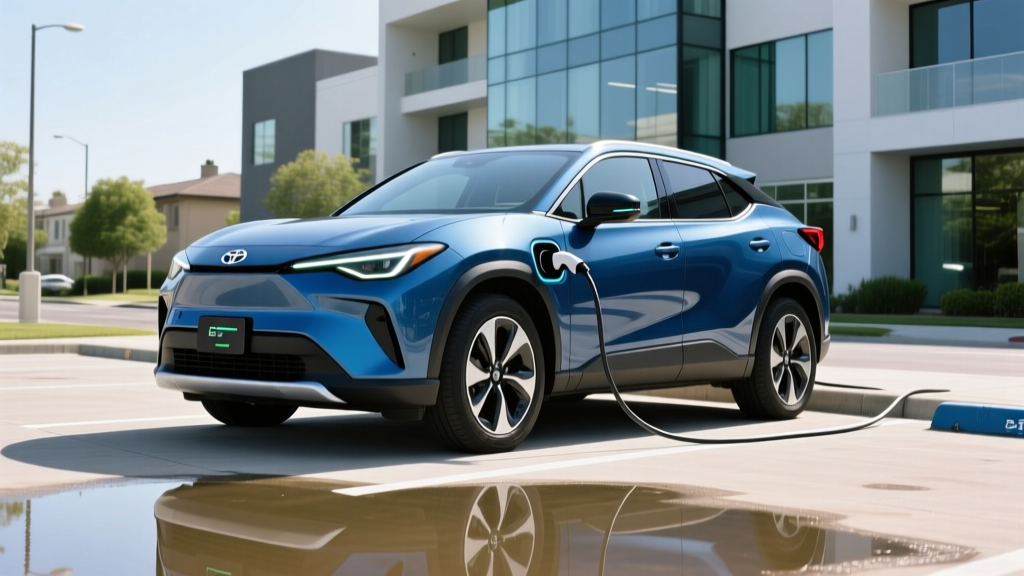
The 2025 Toyota bZ4X electric SUV occupies an unusual position in the EV market: it's the world's largest automaker's first dedicated battery-electric vehicle, yet it trails several rivals in range and charging speed. After spending time with the bZ4X across highway and city driving, we've compiled the exact numbers buyers need — from its EPA-rated 252 miles to the real-world charging-curve behavior that determines how long you'll actually wait at a DC fast charger.
This review covers the 2025 model year bZ4X, which Toyota updated with faster charging, a revised battery thermal management system, and a significant price cut compared to the original 2023 launch. If you're cross-shopping compact electric crossovers like the Hyundai Ioniq 5, Ford Mustang Mach-E, or Volkswagen ID.4, here's exactly how the bZ4X measures up.
2025 Toyota bZ4X Key Specifications at a Glance
| Specification | XLE FWD | XLE AWD | Limited FWD | Limited AWD |
|---|---|---|---|---|
| EPA Range | 252 mi | 228 mi | 236 mi | 222 mi |
| Battery (usable) | 71.4 kWh, Lithium-Ion (NMC chemistry) | |||
| Horsepower | 201 hp | 214 hp | 201 hp | 214 hp |
| 0–60 mph | 7.1 sec | 6.5 sec | 7.1 sec | 6.5 sec |
| Peak DC Fast Charge | 150 kW (CCS1) | |||
| 10–80% DC Charge Time | ~30 minutes (optimal conditions) | |||
| Level 2 Charge Rate | 6.6 kW (~22 mi/hr) | |||
| MPGe (combined) | 131 MPGe | 119 MPGe | 121 MPGe | 113 MPGe |
| kWh/100 mi | 26 | 28 | 28 | 30 |
| Base MSRP | $37,070 | $39,120 | $43,070 | $45,120 |
Sources: fueleconomy.gov, Toyota Motor Corporation. Prices include destination charge. Specifications reflect 2025 model year.
Real-World Range: What the EPA Sticker Doesn't Tell You
Real-World Expectation: ~200–230 miles highway; ~170–200 miles in freezing weather
The bZ4X's EPA-rated range of 252 miles applies to the front-wheel-drive XLE trim on 18-inch wheels. Step up to the Limited with its 20-inch alloys and the rating drops to 236 miles due to increased rolling resistance and weight. All-wheel-drive variants sacrifice another 10–14 miles, landing at 228 (XLE) or 222 (Limited).
In real-world highway driving at sustained 70–75 mph speeds, expect to use roughly 30–32 kWh/100 mi in the FWD model — translating to approximately 210–225 miles before the low-battery warning. This is a meaningful reduction from the EPA combined figure, which blends city regenerative-braking gains with highway consumption.
Cold weather is where the bZ4X shows a notable limitation. Unlike competitors such as the Hyundai Ioniq 5 or Tesla Model Y, the bZ4X does not offer a heat pump on any US-spec trim. Toyota relies on resistive PTC cabin heating, which draws significantly more energy from the battery in sub-40°F conditions. In winter testing at 20–30°F, range loss of 30–40% is realistic, meaning an AWD Limited could deliver as little as 130–155 miles on a full charge in harsh cold. This is a critical consideration for buyers in northern climates.
The 71.4 kWh usable battery capacity (from a ~74.4 kWh gross pack) uses conventional NMC (nickel manganese cobalt) lithium-ion chemistry. Toyota has not adopted LFP (lithium iron phosphate) for this model, which means the battery should not be routinely charged to 100% for daily use — Toyota recommends an 80% daily charge ceiling to maximize longevity.
Charging Speed: DC Fast Charging and Home Level 2
| Charging Level | Power / Voltage | Speed | Notes |
|---|---|---|---|
| Level 1 (120V household) | ~1.4 kW | ~4–5 mi/hr | Emergency / trickle only |
| Level 2 (240V home/public) | 6.6 kW | ~22 mi/hr (full in ~11 hr) | Standard J1772 connector |
| DC Fast Charge (CCS1) | Up to 150 kW | 10–80% in ~30 min | Peak rate not sustained; tapers above 60% |
For the 2025 model year, Toyota improved the bZ4X's DC fast-charging capability from the disappointing launch figures. The SUV now peaks at approximately 150 kW on a CCS1 connector — up from roughly 100 kW on early 2023 models thanks to revised battery thermal preconditioning software.
However, the charge curve tells the full story. The bZ4X reaches its peak rate only between roughly 10% and 35% State of Charge (SoC). Above 60%, the rate tapers significantly, dropping below 50 kW by 80%. The result is a 10–80% session of approximately 30 minutes under ideal conditions (warm battery, high-power charger). This is competitive with the Volkswagen ID.4 but noticeably slower than the Hyundai Ioniq 5, which can achieve 10–80% in around 18 minutes on its 800V architecture.
Preconditioning note: The bZ4X does offer battery preconditioning when you set a DC fast charger as your navigation destination. This warms the battery to optimize charge acceptance. Skipping this step — for instance, by driving to a charger without entering it in the nav system — can add 5–10 minutes to your session, especially in cooler weather.
At home, the 6.6 kW onboard charger means a full charge from empty takes approximately 11 hours on a Level 2 (240V) circuit. For most owners charging overnight from a 20–30% residual, expect 7–9 hours to reach a full or 80% charge. A standard 48-amp Level 2 home charger (requiring a 60-amp circuit) will deliver the full 6.6 kW rate.
Performance, Efficiency, and Driving Impressions
The front-wheel-drive bZ4X produces 201 horsepower and 196 lb-ft of torque from a single front-mounted motor, achieving a 0–60 mph time of 7.1 seconds. The all-wheel-drive model adds a rear motor for a combined 214 hp and 248 lb-ft, cutting the sprint to 6.5 seconds. Neither figure is class-leading — the Ioniq 5 RWD hits 60 in roughly 7.0 seconds, while dual-motor variants of the Mach-E and Ioniq 5 are substantially quicker — but the bZ4X delivers adequate acceleration for highway merging and around-town driving.
Where the bZ4X earns points is ride comfort. Toyota tuned the suspension for compliance over sportiness, and the result is a quiet, composed ride that absorbs rough pavement well. The 2,100+ pound battery pack sits low in the chassis, keeping the center of gravity down and body roll manageable through corners. Steering is light and precise if somewhat numb — a typical EV trait.
Regenerative braking offers multiple levels selectable via paddle shifters behind the steering wheel, but the bZ4X does not provide true one-pedal driving to a full stop. Even at maximum regen, the vehicle will creep at low speeds, requiring brake-pedal use. This is a deliberate Toyota design choice but frustrates drivers accustomed to the one-pedal feel in a Tesla or Chevrolet Bolt.
Efficiency varies notably by trim. The FWD XLE's 131 MPGe combined (26 kWh/100 mi) is respectable for a compact SUV, but the AWD Limited's 113 MPGe (30 kWh/100 mi) is less competitive. Heavier wheels, the AWD system's parasitic losses, and added equipment weight all contribute to the drop.
Interior, Cargo Space, and Technology
The bZ4X seats five passengers with 35.7 inches of rear legroom — adequate for adults on shorter trips but tighter than the Ioniq 5's generous 39.4 inches. The front seats are comfortable with available synthetic leather (SofTex) on the Limited trim, and the flat floor (a benefit of the dedicated EV platform) improves foot room for the middle rear passenger.
Cargo volume measures 27.7 cubic feet behind the rear seats and 56.9 cubic feet with the 60/40 rear seatbacks folded. There is no front trunk (frunk); the space under the hood houses electronics and HVAC components. Competitors like the Mustang Mach-E (29.7 cu ft / 59.7 cu ft) and Ioniq 5 (27.2 cu ft / 59.3 cu ft) offer similar total volume, though the Mach-E adds a small frunk.
The infotainment system centers on a 12.3-inch touchscreen running Toyota's latest Audio Multimedia platform with wireless Apple CarPlay and Android Auto, cloud-based navigation, and a "Hey Toyota" voice assistant. The interface is responsive, with physical volume and tuning knobs retained — a usability win over touch-only systems. Available features include a panoramic fixed glass roof, heated and ventilated front seats, a heated steering wheel, and a 360-degree camera.
Toyota Safety Sense 3.0 comes standard on every trim and includes:
- Pre-Collision System with Pedestrian Detection
- Lane Departure Alert with Steering Assist
- Lane Tracing Assist (centering)
- Full-Speed Range Dynamic Radar Cruise Control
- Road Sign Assist
- Proactive Driving Assist (gentle braking/deceleration support)
Pricing, Trims, and Federal Tax Credit Eligibility
| Trim | Drivetrain | Base MSRP | Est. After §30D Credit* |
|---|---|---|---|
| XLE | FWD | $37,070 | ~$29,570 |
| XLE | AWD | $39,120 | ~$31,620 |
| Limited | FWD | $43,070 | ~$35,570 |
| Limited | AWD | $45,120 | ~$37,620 |
*Estimated prices assume full $7,500 federal tax credit under IRS §30D. Actual eligibility depends on buyer income, battery sourcing, and MSRP caps. See details below.
Toyota significantly repositioned the bZ4X for 2025, cutting the base price to $37,070 (including destination) — a reduction of over $6,000 from the 2023 launch MSRP. The two-tier lineup keeps things simple: the well-equipped XLE and the premium Limited, each available in FWD or AWD.
The XLE includes 18-inch alloy wheels, a 12.3-inch touchscreen, wireless CarPlay/Android Auto, heated front seats, six USB-C ports, and the full Toyota Safety Sense 3.0 suite. The Limited adds 20-inch wheels, SofTex upholstery, ventilated front seats, a panoramic glass roof, a 360-degree camera, and a premium JBL audio system.
- MSRP Cap: SUVs must have an MSRP at or below $80,000 — all bZ4X trims qualify.
- Buyer Income Cap: Modified AGI must not exceed $150,000 (single), $225,000 (head of household), or $300,000 (joint filers).
- Battery Sourcing: Full $7,500 credit requires meeting both critical-minerals and battery-component sourcing thresholds set by the IRS. Partial credit ($3,750) may apply if only one requirement is met.
- Point-of-Sale Transfer: Eligible buyers can transfer the credit to the dealer at purchase for an immediate price reduction, rather than waiting to claim it on their tax return.
- Assembly: The bZ4X is assembled in Japan. Under current §30D rules, this does not disqualify it for the credit (the North American final assembly requirement applies to the new-vehicle credit for leased vehicles under §45W, but purchased vehicles follow §30D rules which have different requirements).
Rules are subject to change. Verify current eligibility at IRS.gov or consult a tax professional before purchase.
Warranty and Long-Term Ownership
Toyota backs the bZ4X with its standard new-vehicle warranty of 3 years / 36,000 miles and a powertrain warranty of 5 years / 60,000 miles. The high-voltage battery carries an 8-year / 100,000-mile warranty against defects and excessive capacity loss (typically defined as dropping below 70% state of health). In California and states adopting CARB emissions standards, the battery warranty extends to 10 years / 150,000 miles.
Toyota also includes 2 years of complimentary maintenance (at 10,000-mile intervals) and 2 years of roadside assistance. Long-term battery degradation data for the bZ4X is still limited given the model's 2023 launch, but Toyota's hybrid battery track record (with millions of Prius and RAV4 Hybrid packs in service) suggests conservative battery management engineering. The bZ4X's liquid-cooled thermal management system is designed to protect cell health during fast charging and extreme temperatures.
Insurance costs for the bZ4X tend to run 10–15% higher than a comparably priced gas RAV4, reflecting the higher repair costs common to EVs. Get quotes from your insurer before committing.
How the bZ4X Stacks Up Against Competitors
The compact electric SUV segment is crowded, and the bZ4X faces strong alternatives. Here's how it compares on the metrics that matter most:
| Metric | Toyota bZ4X XLE FWD | Hyundai Ioniq 5 SE Std Range | VW ID.4 Pro | Ford Mach-E Select RWD |
|---|---|---|---|---|
| EPA Range | 252 mi | 245 mi | 275 mi | 250 mi |
| Battery (usable) | 71.4 kWh | 58 kWh | 82 kWh | 72 kWh |
| Peak DC Charge | 150 kW | 175 kW | 175 kW | 150 kW |
| 10–80% DC Time | ~30 min | ~20 min | ~28 min | ~32 min |
| 0–60 mph | 7.1 sec | 7.5 sec | 7.7 sec | 6.3 sec |
| MPGe (combined) | 131 | 114 | 115 | 104 |
| Cargo (rear seats up) | 27.7 cu ft | 27.2 cu ft | 30.3 cu ft | 29.7 cu ft |
| Base MSRP | $37,070 | $42,600 | $44,045 | $42,495 |
| Heat Pump | No | Yes | Yes | Optional |
The bZ4X's primary advantage in 2025 is price. At $37,070 to start, it undercuts the Ioniq 5, ID.4, and Mach-E by $5,000–$7,000. When the $7,500 federal credit applies, the effective price drops to roughly $29,570 — a compelling entry point for a well-equipped electric crossover from a mainstream brand.
Where it falls short: charging speed is mid-pack, cold-weather capability suffers without a heat pump, rear-seat space is tighter than the Ioniq 5, and the absence of a frunk limits practicality. The VW ID.4 offers more cargo room and range; the Ioniq 5 charges faster and handles winter better; the Mach-E delivers more performance and a frunk.
- You want the lowest entry price in the segment after tax credits
- You prioritize ride comfort and quietness over sporty handling
- You live in a mild climate where the lack of a heat pump is less consequential
- You value Toyota's dealer network and reputation for reliability
- Your daily commute fits comfortably within 180–200 real-world miles
- You regularly face sub-freezing winters (Ioniq 5 or ID.4 with heat pump)
- You need maximum DC fast-charging speed for frequent road trips (Ioniq 5)
- Rear-seat passenger space is a priority (Ioniq 5)
- You want one-pedal driving capability (Mach-E, Ioniq 5, Tesla)
Pros and Cons Summary
- Competitive base price, especially after federal tax credit
- Comfortable, quiet ride quality tuned for daily commuting
- Standard Toyota Safety Sense 3.0 with comprehensive ADAS
- Strong efficiency (131 MPGe) on the FWD XLE trim
- Physical infotainment knobs and proven Toyota interface
- 8-year/100,000-mile battery warranty (10 yr in CARB states)
- No heat pump — significant cold-weather range penalty
- DC fast-charging speed is mid-pack; taper is aggressive above 60% SoC
- No front trunk (frunk)
- Rear legroom trails key competitors
- No true one-pedal driving mode
- Limited trim availability at some dealers
Frequently Asked Questions
What is the real-world range of the 2025 Toyota bZ4X?
The EPA rates the FWD XLE at 252 miles and AWD trims between 222 and 228 miles. In real-world highway driving at 70+ mph, expect approximately 200–230 miles. In freezing temperatures (20–30°F), range can drop to 130–175 miles due to the lack of a heat pump and resistive cabin heating drawing heavily from the battery.
How fast does the bZ4X charge at home and on the road?
On a Level 2 home charger (240V), the bZ4X charges at 6.6 kW, adding about 22 miles of range per hour and reaching a full charge in roughly 11 hours. On a DC fast charger, it peaks at 150 kW and can go from 10–80% in about 30 minutes under optimal conditions. The charge rate tapers significantly above 60% SoC, so charging from 80–100% on DC is slow and not recommended for road trips.
Does the 2025 Toyota bZ4X qualify for the federal EV tax credit?
The bZ4X is eligible for the federal §30D clean vehicle credit, potentially up to $7,500, but eligibility depends on the buyer's income (capped at $150K single / $300K joint), battery critical-mineral and component sourcing requirements, and the vehicle's MSRP (all bZ4X trims fall under the $80K SUV cap). The credit can be transferred to the dealer at point of sale for an immediate price reduction. Verify current eligibility at IRS.gov.
Is the Toyota bZ4X worth buying over the Hyundai Ioniq 5 or VW ID.4?
The bZ4X's strongest argument is value: it starts $5,000–$7,000 below most rivals, and with the federal credit, the XLE FWD can land near $29,570. If you live in a mild climate, commute under 200 miles daily, and prioritize a comfortable ride and low price, it's a strong choice. If you need fast DC charging for road trips, face harsh winters, or want more rear-seat space, the Ioniq 5 or ID.4 are better fits despite higher starting prices.
Does the bZ4X have one-pedal driving?
No. The bZ4X offers adjustable regenerative braking via steering-wheel paddles, but even at the maximum regen setting, the vehicle will not come to a complete stop without brake-pedal input. Toyota has stated this is an intentional design choice for predictable braking behavior.
How long will the bZ4X battery last?
Toyota warranties the high-voltage battery for 8 years or 100,000 miles (10 years / 150,000 miles in CARB states) against capacity loss below approximately 70%. Long-term degradation data is still limited for this specific pack, but Toyota's conservative battery management and liquid-cooling system are designed for longevity. Keeping daily charges to 80% and avoiding repeated DC fast charging in extreme heat will help maximize battery life.
Is the bZ4X available with all-wheel drive?
Yes. Both the XLE and Limited trims offer a dual-motor all-wheel-drive system producing 214 hp and 248 lb-ft of torque. AWD trims carry a $2,050 premium and a range reduction of approximately 10–14 miles compared to their FWD counterparts.