The Short Answer on 2025 Toyota Electric Vehicles
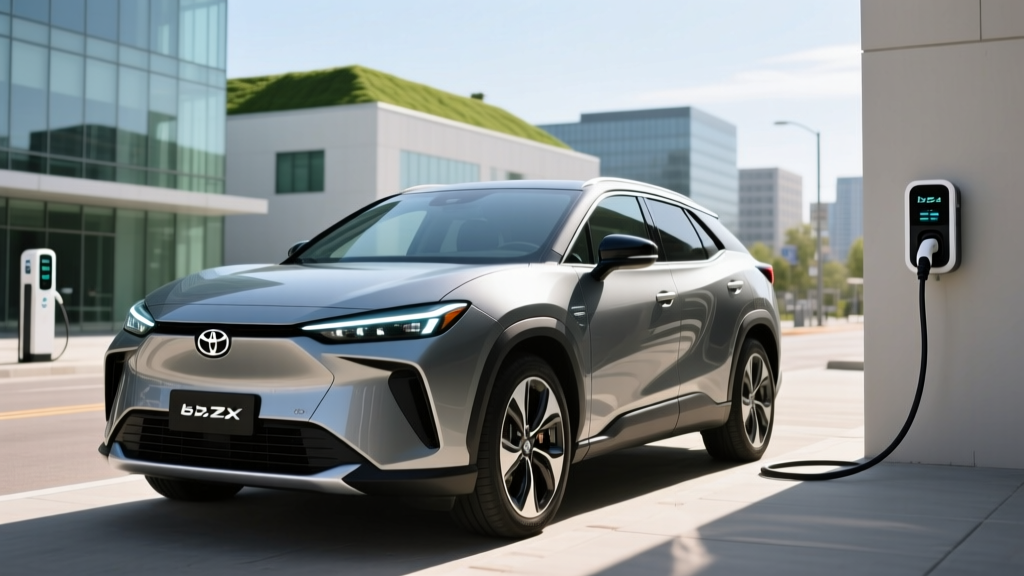
Toyota's battery-electric lineup for 2025 centers on a single model: the bZ4X compact SUV. It offers an EPA-estimated 252 miles of range (FWD Limited), a 71.4 kWh usable battery, DC fast charging up to ~150 kW (10–80% in roughly 30 minutes), and starts at approximately $37,070 MSRP before destination. The bZ4X qualifies for a partial federal tax credit (up to $7,500 via point-of-sale transfer) depending on your income, battery sourcing, and MSRP caps under current IRS §30D rules. If you need more range, faster charging, or a larger vehicle, Toyota's 2025 strategy still leans heavily on hybrids and plug-in hybrids — and that's a deliberate choice worth understanding before you buy.
What Toyota Actually Sells as a Pure EV in 2025
Unlike Hyundai, Tesla, or Ford, Toyota has not rushed to fill every segment with a battery-electric vehicle (BEV). For the 2025 model year, the bZ4X remains Toyota's only mass-market all-electric vehicle available in the United States. The bZ3X sedan exists in China but is not sold here. Toyota has announced a next-generation EV platform and additional bZ models, but as of early 2026, nothing beyond the bZ4X is available for purchase at US dealers.
This matters for buyers cross-shopping 2025 Toyota electric vehicles against competitors. If you want a three-row electric SUV, a long-range sedan, or a truck from Toyota, you won't find one. What you will find is a compact crossover aimed at urban and suburban drivers who want Toyota reliability branding with zero tailpipe emissions.
| Spec | FWD | AWD |
|---|---|---|
| EPA Range (Limited trim) | 252 mi | 228 mi |
| EPA Range (XLE trim) | 252 mi | 236 mi |
| Usable Battery | 71.4 kWh (NMC chemistry) | |
| Peak DC Fast Charge | ~150 kW (CCS1 connector) | |
| 10–80% DC Fast Charge Time | ~30 minutes | |
| Level 2 Charging Rate | 7.2 kW (onboard charger) | |
| Horsepower | 201 hp | 214 hp |
| 0–60 mph | ~7.1 sec | ~6.5 sec |
| Combined MPGe | 119 MPGe | 104 MPGe |
| Starting MSRP (XLE) | ~$37,070 | |
| Battery Warranty | 8 yr / 100,000 mi | |
Real-World Range: What to Actually Expect
The EPA sticker says 252 miles for FWD, but real-world conditions change that number significantly. In mixed highway driving at 70+ mph, expect ~210–230 miles. In cold weather (below 32°F), range can drop to ~175–200 miles due to battery heating demands and cabin climate load. The bZ4X uses a resistive PTC heater rather than a heat pump on most US trims, which increases winter energy consumption compared to EVs equipped with heat pumps (like the Hyundai Ioniq 5 or Tesla Model Y). Plan your road trips around 180–200 miles of usable range to maintain a comfortable buffer.
EV vs Gas vs Hybrid: How the bZ4X Compares to Toyota's Own Lineup
The most honest comparison for a Toyota shopper isn't bZ4X vs Tesla Model Y — it's bZ4X vs RAV4 Hybrid and RAV4 Prime (PHEV). Toyota's hybrid dominance means many buyers are choosing between electrification levels within the same brand.
| Metric | bZ4X (BEV) | RAV4 Hybrid (HEV) | RAV4 Prime (PHEV) |
|---|---|---|---|
| Starting MSRP | ~$37,070 | ~$33,975 | ~$43,690 |
| EPA Range / Efficiency | 252 mi / 119 MPGe | 39 MPG combined | 42 mi electric + 38 MPG gas |
| Annual Fuel/Energy Cost* | ~$620 | ~$1,450 | ~$900 (mixed) |
| Federal Tax Credit | Up to $7,500 (§30D) | None | Up to $7,500 (§30D) |
| Home Charging Needed? | Strongly recommended | No | Recommended for EV range |
| Maintenance Cost (5-yr est.) | ~$1,800 | ~$3,200 | ~$2,900 |
| Towing Capacity | Not rated | 1,500 lb | 1,500 lb |
*Annual fuel/energy cost estimates based on 15,000 miles/year, $0.16/kWh national average electricity, and $3.50/gallon gasoline. Your actual costs vary by local utility rates and gas prices. Source: fueleconomy.gov
The data reveals Toyota's positioning clearly: the bZ4X wins on operating cost if you have affordable home charging. The RAV4 Hybrid wins on flexibility, lower upfront cost, and zero infrastructure dependency. The RAV4 Prime splits the difference — 42 miles of electric-only driving covers most commutes, and the gas engine eliminates range anxiety on road trips.
The Real Cost of Owning a bZ4X: 5-Year Breakdown
Sticker price is only the entry point. Here's what five years of bZ4X ownership actually costs, compared to a gas-powered RAV4.
| Cost Category | bZ4X (BEV) | RAV4 Gas (AWD) |
|---|---|---|
| Purchase Price (base MSRP) | $37,070 | $32,075 |
| Federal Tax Credit (§30D) | −$3,750 to −$7,500 | $0 |
| Home Charger Install (Level 2) | $1,200–$2,500 | $0 |
| Fuel / Energy (5 years) | $3,100 | $7,250 |
| Maintenance (5 years) | $1,800 | $3,500 |
| Insurance (5-year avg.) | $9,500 | $7,800 |
| Estimated Depreciation | $16,000 | $13,500 |
| Total (before credit) | $68,670 | $64,125 |
| Total (after max credit) | $61,170 | $64,125 |
Key takeaways from this breakdown:
- Energy savings are real: You'll spend roughly $4,150 less on fuel over five years with the bZ4X, assuming national average electricity and gas prices.
- Maintenance savings add up: No oil changes, no spark plugs, no transmission fluid, and regenerative braking extends brake pad life significantly.
- Insurance is higher: EV insurance premiums run 15–25% higher than comparable gas vehicles due to repair costs and battery replacement risk. Get quotes before purchasing.
- Depreciation is a wildcard: Early EVs have seen steeper depreciation than Toyota gas models, partly due to rapid battery tech improvements and Tesla price cuts compressing used EV values. Toyota's brand strength may help, but plan conservatively.
- The tax credit is pivotal: With the full $7,500 point-of-sale credit, the bZ4X breaks even or beats the gas RAV4 over five years. Without it, the gas RAV4 costs less overall. Check current eligibility at IRS.gov.
Charging the bZ4X: What First-Time EV Buyers Must Know
If you've never owned an EV, charging logistics are the single biggest adjustment. The bZ4X supports three charging levels:
| Level | Power | Miles Added Per Hour | Where |
|---|---|---|---|
| Level 1 (120V outlet) | ~1.2 kW | ~4–5 miles | Any standard outlet |
| Level 2 (240V) | 7.2 kW (max) | ~25–28 miles | Home wallbox, public Level 2 |
| DC Fast Charge | ~150 kW (peak) | ~150+ mi in 30 min | Public DCFC stations |
Home charging is essential for most owners. Level 1 charging (a standard 120V outlet) adds only about 4–5 miles per hour — enough to replenish ~50 miles overnight, which works if your daily commute is short. For real usability, a Level 2 home charger (240V, like a dryer outlet) is the standard. Expect to pay $1,200–$2,500 for a quality Level 2 wallbox plus professional installation, assuming your electrical panel has capacity. A panel upgrade (to 200A service) can add $1,500–$3,000+ — get a quote from a licensed electrician before committing.
DC fast charging reality check: The bZ4X peaks at ~150 kW, but like all EVs, it doesn't sustain that rate. The charge curve tapers significantly above 80% state of charge. A 10–80% session takes approximately 30 minutes at a capable 150+ kW charger. However, 80–100% can take another 20+ minutes. On road trips, plan to charge to 80% and move on — that's the efficiency sweet spot. The bZ4X uses the CCS1 connector, which is compatible with Electrify America, EVgo, and most non-Tesla DC fast networks. Note that Toyota has announced future NACS adoption, but 2025 models ship with CCS1.
Federal Tax Credit Eligibility: The §30D Details That Matter
The federal clean vehicle credit under IRS §30D can reduce your effective purchase price by up to $7,500, but eligibility is not automatic. Here's the checklist for the bZ4X:
- MSRP cap: The bZ4X must have an MSRP at or below $80,000 for SUVs. All current trims qualify.
- Buyer income limits: Modified AGI must not exceed $150,000 (single), $225,000 (head of household), or $300,000 (joint). You can use either the current tax year or the prior year's income.
- Battery sourcing requirements: The credit is split into two halves — $3,750 for critical minerals sourcing and $3,750 for battery component manufacturing. Sourcing rules tighten annually. For 2025 models, the bZ4X's eligibility for each half depends on where its battery materials and components originate. Check the latest list at fueleconomy.gov before purchasing.
- Point-of-sale transfer: You can transfer the credit to the dealer at purchase, reducing your out-of-pocket cost immediately rather than waiting for a tax refund. The dealer must be IRS-registered.
- One credit per vehicle, one per taxpayer: You can only claim the credit once per vehicle (VIN), and you cannot exceed one new EV credit per tax year per taxpayer.
Important: Tax credit rules change frequently. Always verify current eligibility on IRS.gov and consult a tax professional for your specific situation.
Common Misconceptions About the bZ4X — Addressed with Data
| Myth | Fact |
|---|---|
| "The battery will need replacing in a few years." | Toyota warranties the bZ4X battery for 8 years / 100,000 miles against defects and excessive capacity loss. NMC batteries in modern EVs typically retain 85–90%+ capacity after 100,000 miles based on industry degradation data. |
| "I can charge it at any Tesla Supercharger." | Not yet. The 2025 bZ4X uses CCS1. Toyota has committed to NACS adoption in future models, and some networks offer adapters, but native Supercharger access is not available for this model year. |
| "It charges as fast as competitors." | At ~150 kW peak, the bZ4X charges slower than the Hyundai Ioniq 5 (~240 kW, 10–80% in ~18 min) or Tesla Model Y (~250 kW). The difference is roughly 12 minutes per fast-charge session on road trips. |
| "EVs cost more to insure always." | Generally 15–25% higher premiums, but this varies by insurer, state, driving record, and trim. Some insurers offer EV-specific discounts. Always get personalized quotes. |
| "I'll never be able to take a road trip." | With DC fast charging adding ~150 miles in 30 minutes, road trips are feasible with planning. Apps like PlugShare and A Better Routeplanner map charging stops. The constraint is trip time, not possibility. |
Decision Framework: Is the 2025 bZ4X Right for You?
Choose the bZ4X if:
- You have access to home Level 2 charging (garage or driveway with 240V capability)
- Your daily driving is under 80 miles round-trip, with occasional longer trips
- You want a compact EV SUV with Toyota's dealer network and reliability reputation
- You qualify for the federal tax credit (income + sourcing requirements met)
- You live in a mild to moderate climate — the lack of a heat pump makes cold-weather efficiency a real concern below 32°F
Choose the RAV4 Prime (PHEV) instead if:
- You can't install a home charger (apartment, street parking, HOA restrictions)
- You regularly drive 300+ miles between stops and don't want to plan around chargers
- You need towing capability (1,500 lb rated)
- You live in an area with limited public DC fast charging infrastructure
Choose a competitor BEV (Ioniq 5, Model Y, EV6) instead if:
- You need 300+ miles of EPA range — the bZ4X tops out at 252
- Fast charging speed matters to you (road-trip-heavy lifestyle)
- You want a larger vehicle or three-row seating
- You need Tesla Supercharger network access today
Frequently Asked Questions
Does Toyota make any other electric vehicles besides the bZ4X for 2025?
No. For the US market, the bZ4X is Toyota's only all-electric vehicle for the 2025 model year. Toyota offers extensive hybrid (HEV) and plug-in hybrid (PHEV) options across its lineup, including the RAV4 Hybrid, Camry Hybrid, Highlander Hybrid, and RAV4 Prime. Additional bZ-series EVs have been announced globally but are not yet available in the United States.
How long does it take to fully charge the bZ4X at home?
On a Level 2 home charger (7.2 kW), a full 0–100% charge takes approximately 10–11 hours. Most owners charge from 20–80% overnight, which takes about 6 hours. Level 1 charging (120V) would take roughly 60+ hours for a full charge and is only practical as a trickle-charge supplement.
What happens if the bZ4X battery degrades?
Toyota's battery warranty covers 8 years or 100,000 miles. If the battery loses capacity beyond the warranty threshold (typically below 70% state of health), Toyota will repair or replace it under warranty. Out-of-warranty battery replacement costs are estimated at $12,000–$18,000 including labor, though prices are expected to decrease as the battery supply chain matures. In practice, modern NMC batteries rarely need full replacement within the warranty period — degradation is gradual and most owners report 85–90%+ capacity retention at 100,000 miles.
Can the bZ4X handle winter driving?
The AWD variant provides competent winter traction, and the bZ4X has a ground clearance of 8.1 inches. However, cold weather significantly impacts range — expect a 20–30% range reduction in sustained below-freezing temperatures. This is because the bZ4X uses PTC resistive heating rather than a more efficient heat pump. Preconditioning the battery while plugged in (using the Toyota app) helps mitigate both range loss and slow charging in cold weather.
Is the bZ4X eligible for the full $7,500 federal tax credit?
It depends on current sourcing requirements. The §30D credit is split into two $3,750 halves — one for battery component manufacturing and one for critical minerals sourcing. The bZ4X's eligibility for each half can change as supply chains shift. As of early 2026, check the specific VIN eligibility on fueleconomy.gov and verify your income is within limits ($150K single / $300K joint). The point-of-sale transfer option lets you apply the credit directly at the dealership.
How does bZ4X insurance cost compare to a gas RAV4?
Expect to pay roughly 15–25% more for bZ4X insurance compared to a similarly priced gas RAV4. National average EV insurance runs approximately $1,800–$2,200/year vs $1,400–$1,700/year for comparable gas vehicles. The gap is driven by higher repair costs for battery-adjacent damage and specialized technician requirements. Shop quotes from multiple insurers — some (like Progressive and State Farm) have narrowed the EV premium gap.