Quick Verdict: The Benchmark Compact Electric SUV Gets Lighter and Sharper
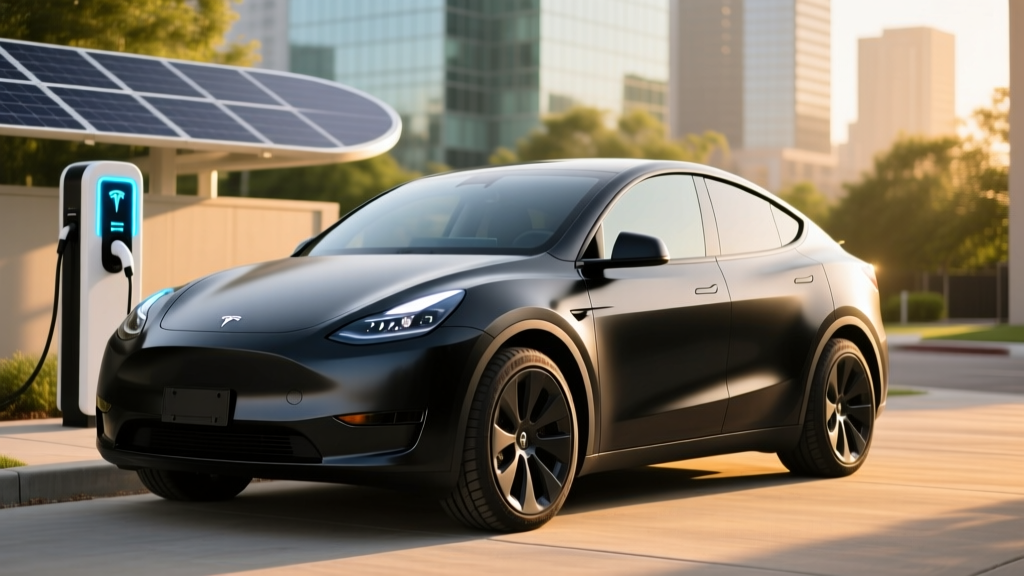
The 2025 Tesla Model Y arrives with a thoroughly reworked platform — lighter body structure, revised battery packs, and a redesigned interior that addresses years of criticism about cabin quality. For buyers researching the 2025 Tesla Model Y curb weight, the numbers tell a story of meaningful engineering progress: Tesla has shaved roughly 50–80 pounds off the outgoing generation depending on trim, improving both efficiency and dynamics without sacrificing cargo volume or passenger space.
With three powertrain configurations spanning rear-wheel drive to the dual-motor Performance variant, the Model Y continues to set the pace in the compact electric SUV segment. But spec-sheet dominance only matters if the real-world experience matches. We break down every number that matters — from exact curb weights to sustained DC fast-charging curves — so you can make a data-driven purchase decision.
| Specification | Long Range RWD | Long Range AWD | Performance AWD |
|---|---|---|---|
| Curb Weight | 4,331 lbs | 4,461 lbs | 4,498 lbs |
| EPA Range | 320 mi | 305 mi | 285 mi |
| Battery (usable) | ~75 kWh (NMC) | ~75 kWh (NMC) | ~75 kWh (NMC) |
| Drivetrain | Rear-Wheel Drive | Dual-Motor AWD | Dual-Motor AWD |
| Horsepower | 346 hp | 456 hp | 510 hp |
| 0–60 mph | 5.8 sec | 4.6 sec | 3.5 sec |
| Max DC Fast Charge | 250 kW | 250 kW | 250 kW |
| 10–80% DC Time | ~25 min | ~25 min | ~25 min |
| Level 2 Home Rate | 11.5 kW (~44 mi/hr) | 11.5 kW (~44 mi/hr) | 11.5 kW (~44 mi/hr) |
| MPGe (combined) | 122 MPGe | 117 MPGe | 111 MPGe |
| kWh/100 mi | 28 | 29 | 30 |
| Base MSRP | $44,990 | $47,990 | $52,990 |
Source: fueleconomy.gov and Tesla official specifications. Figures reflect 2025 model-year EPA data.
Why the 2025 Tesla Model Y Curb Weight Matters for Range and Handling
Vehicle mass is the single most consequential factor in EV efficiency after aerodynamics. Every pound an electric SUV carries requires more energy to accelerate, more braking force to decelerate, and more thermal management to keep the battery in its optimal temperature window. The 2025 Model Y's weight reduction — achieved through a mix of high-strength steel stampings, revised subframe castings, and a more energy-dense cell format in the battery pack — directly translates to the range gains Tesla claims this year.
Consider the physics: the Long Range RWD variant at 4,331 lbs is approximately 60 lbs lighter than the equivalent 2024 model. At highway speeds, where aerodynamic drag dominates, that mass savings is modest. But in stop-and-go city driving, where kinetic energy is repeatedly converted to heat in the brakes (or recaptured via regen), the lighter curb weight compounds into measurable efficiency gains. Tesla's combined MPGe improves by 2–3 MPGe year-over-year, and real-world energy consumption drops by roughly 1–2 kWh/100 mi in mixed driving.
Weight distribution also improves. The 2025 Model Y retains a near 50/50 front-rear balance across AWD trims, with the battery pack mounted low in the chassis contributing to a center of gravity that rivals sports sedans. The lighter overall mass reduces tire wear — a frequent ownership cost that EV critics rarely quantify. Expect tire life to extend by 3,000–5,000 miles compared to the heavier outgoing model under similar driving patterns.
Real-World Range vs. EPA Estimates: What to Actually Expect
EPA Sticker: 305 miles
Real-World Highway (70 mph, 72°F): ~255–275 miles
Real-World Highway (70 mph, 30°F): ~215–240 miles
Real-World City/Commuter: ~280–300 miles
Highway driving at sustained speeds above 65 mph consumes significantly more energy than the EPA mixed cycle. Cold temperatures reduce battery efficiency and increase cabin heating load. Preconditioning the battery while plugged in mitigates cold-weather range loss by 10–15%.
The EPA's test cycle blends low-speed city and moderate-speed highway segments at controlled temperatures — conditions that rarely match a 300-mile road trip at 75 mph through the Rockies in January. For the 2025 Model Y Long Range AWD, the 305-mile EPA figure is achievable in suburban commuting with generous regenerative braking. On the highway, expect to use 320–340 Wh/mi rather than the rated 290 Wh/mi, bringing practical range to approximately 255–275 miles in fair weather.
Cold weather compounds the deficit. Lithium-ion cells become more resistive below 40°F, and cabin heating (even with the Model Y's standard heat pump) draws 2–4 kW continuously. In sub-freezing conditions, plan for 215–240 miles of usable range before needing to charge. The RWD Long Range variant, with its 320-mile EPA rating and lighter curb weight, provides a more comfortable buffer — making it the smarter pick for buyers in northern climates who don't need all-wheel-drive traction.
Tesla's navigation system accounts for elevation, temperature, wind, and traffic in its range predictions, and the onboard trip planner remains the most accurate in the industry. If you precondition the battery while still plugged in at home — a feature accessible through the Tesla app or scheduled departure settings — you can recover much of the cold-weather deficit on your daily commute.
Charging Speed: DC Fast Charging and Home Level 2 Breakdown
Charging speed is where kW (power — how fast energy flows) and kWh (energy — how much the battery holds) diverge, and the distinction matters enormously for trip planning. The 2025 Model Y supports a peak DC fast-charge rate of 250 kW at V3 and V4 Supercharger stations. However, peak rate is not sustained rate — the charge curve tapers significantly above 50% state of charge to protect cell longevity.
| Charging Method | Power (kW) | Miles Added per Hour | Typical Use Case |
|---|---|---|---|
| Level 1 (120V household) | 1.4 kW | ~5 mi/hr | Emergency / trickle top-off |
| Level 2 (240V, 48A Wall Connector) | 11.5 kW | ~44 mi/hr | Daily home charging (overnight) |
| Level 2 (240V, 32A Mobile Connector) | 7.7 kW | ~30 mi/hr | Home charging w/ standard outlet adapter |
| DC Fast (Tesla V3 Supercharger) | Up to 250 kW | ~162 mi in 15 min | Road trips, highway corridors |
| DC Fast (CCS adapter + 350 kW station) | Up to 250 kW | ~162 mi in 15 min | Non-Tesla networks (EA, EVgo) |
10–80% DC fast-charge time: approximately 25 minutes at a V3 Supercharger (ambient temps 60–80°F, battery preconditioned). The first 10–30% charges at or near peak 250 kW, then the curve steps down to ~170 kW through 50%, ~100 kW through 70%, and below 50 kW above 85%. Charging from 80–100% adds another 20+ minutes and is rarely worth the wait on a road trip — plan to charge to 80% and drive.
For home charging, Tesla's Gen 2 Wall Connector on a 60A circuit delivers 11.5 kW (48A continuous), adding roughly 44 miles of range per hour. An overnight session from 20% to 80% takes approximately 5–6 hours — more than sufficient for daily driving needs up to 200 miles. Installation costs for a dedicated 60A circuit typically range from $500 to $2,000 depending on panel proximity and local permitting, though a panel upgrade to 200A service can add $1,500–$3,000 if your home has older 100A service. Always consult a licensed electrician for final specifications.
Tesla now includes a CCS adapter with new Model Y deliveries, opening access to Electrify America, EVgo, and other non-Tesla DC networks. As Tesla opens its Supercharger network to other brands under the NACS standard, the competitive advantage of Tesla-exclusive charging infrastructure narrows — but Supercharger reliability and ease of use (plug-and-charge with no app required) remain industry-leading.
Performance, Drivetrain, and the Weight-to-Power Advantage
The 2025 Model Y's reduced curb weight amplifies the performance of its carryover powertrain architecture. The Performance AWD variant, at 4,498 lbs with 510 hp, achieves a weight-to-power ratio of roughly 8.8 lbs/hp — competitive with the BMW M3 and significantly better than the outgoing Model Y Performance at 9.2 lbs/hp. The result is a 3.5-second 0–60 mph time that feels effortless rather than violent, thanks to instant electric torque delivery and all-wheel-drive traction.
The Long Range AWD splits the difference at 4.6 seconds to 60 mph with 456 hp, while the RWD Long Range focuses on efficiency at 5.8 seconds and 346 hp. All trims feature Tesla's adaptive damping suspension (new for 2025), which noticeably improves ride quality over the firm, sometimes crashy setup of prior years. The lighter body structure reduces unsprung mass reactions, meaning the suspension can respond faster to road imperfections without transmitting harshness into the cabin.
Towing capacity remains rated at 3,500 lbs across AWD trims. The RWD variant is not rated for towing. For buyers planning to tow a small camper or utility trailer, note that towing at maximum capacity will reduce range by 40–50% at highway speeds — plan charging stops accordingly.
Pricing, Trim Levels, and Federal Tax Credit Eligibility
The 2025 Model Y lineup simplifies to three trims, eliminating the prior Standard Range option and positioning the Long Range RWD as the entry point. Tesla's direct-to-consumer model means no dealer markups, though delivery fees and destination charges add approximately $1,390 to the MSRP figures below.
| Trim | Base MSRP | Est. As-Tested* | §30D Credit Eligibility | Effective Price (with credit) |
|---|---|---|---|---|
| Long Range RWD | $44,990 | $46,380 | Eligible (up to $7,500) | ~$38,880 |
| Long Range AWD | $47,990 | $49,380 | Eligible (up to $7,500) | ~$41,880 |
| Performance AWD | $52,990 | $54,380 | Eligible (up to $7,500) | ~$46,880 |
*As-tested includes $1,390 destination/delivery. Additional options (paint, wheels, FSD) increase price.
Federal tax credit rules (IRS §30D) for 2025: The full $7,500 credit requires meeting both critical-mineral sourcing and battery-component manufacturing requirements. As of the 2025 tax year, the Model Y is assembled at Tesla's Fremont, CA and Austin, TX factories (domestic assembly requirement met). However, battery sourcing rules tighten annually — buyers should verify current-year eligibility on the IRS Clean Vehicle Credits page before purchase.
- MSRP Cap: SUVs/vans/pickups must be under $80,000 MSRP — all Model Y trims qualify.
- Buyer Income Cap: Modified AGI must not exceed $150,000 (single), $225,000 (head of household), or $300,000 (joint filing).
- Battery Sourcing: Critical minerals and battery components must meet escalating domestic/free-trade-partner thresholds — verify annually on IRS.gov.
- Point-of-Sale Transfer: Eligible buyers can transfer the credit to the dealer (Tesla) at purchase, reducing the upfront price rather than waiting for a tax refund.
- New Vehicle Only: Credit applies to new purchases only; leases follow different §45W commercial credit rules.
Interior, Cargo Space, and Technology
The 2025 Model Y interior represents the most significant cabin overhaul since the model's 2020 launch. Tesla has added ventilated front seats, ambient lighting, a rear-seat touchscreen for climate and entertainment controls, improved sound insulation, and higher-quality soft-touch materials on the dashboard and door panels. The minimalist aesthetic remains — there are still no physical buttons, and all controls route through the 15.4-inch center touchscreen — but execution quality now competes with the Genesis GV60 and BMW iX3 rather than falling short of them.
Cargo volume: 30.2 cu ft behind the second row, expanding to 72.1 cu ft with the 60/40 rear seats folded. The front trunk (frunk) adds 4.1 cu ft of secure, weather-sealed storage — ideal for charging cables and groceries. Total cargo capacity of 76.2 cu ft trails the Hyundai Ioniq 5 (79.4 cu ft max) but exceeds the Ford Mustang Mach-E (65.4 cu ft max).
Passenger space: Front legroom measures 41.8 inches; rear legroom is 38.4 inches. Headroom is generous at 40.3 inches front and 38.6 inches rear, aided by the full glass roof. Three adults can fit across the rear bench for short trips, though the center position lacks a dedicated seat contour.
Driver assistance: The Model Y ships with Tesla's Basic Autopilot (lane centering, adaptive cruise, emergency braking) as standard. Enhanced Autopilot ($6,000) adds automatic lane changes, navigate-on-autopilot, and smart summon. Full Self-Driving (Supervised) at $8,000 adds traffic-light and stop-sign recognition with city-street autosteer. Important: All Tesla driver-assist features are SAE Level 2 — the driver must remain fully engaged and supervising at all times. This is not autonomous driving. NHTSA continues to monitor Tesla's Autopilot/FSD safety record, and buyers should understand the system's limitations in construction zones, poor weather, and unmapped areas.
Warranty, Ownership Costs, and Long-Term Battery Outlook
Tesla's warranty structure remains competitive but not class-leading:
- Basic Vehicle: 4 years / 50,000 miles
- Battery & Drive Unit: 8 years / 120,000 miles (Long Range & Performance AWD); 8 years / 100,000 miles (RWD)
- Battery Capacity Retention: Tesla warrants a minimum of 70% capacity retention over the warranty period
The 70% retention threshold is standard across the industry, though real-world data from Tesla's fleet suggests NMC packs in the Model Y typically retain 85–90% capacity after 100,000 miles when charged primarily on Level 2 and kept between 20–80% state of charge. Battery replacement outside warranty currently costs between $12,000 and $16,000 including labor — a figure that has decreased roughly 30% since 2020 and is expected to continue declining.
Insurance: Model Y insurance premiums run 15–25% higher than comparable gas-powered SUVs, averaging $2,200–$2,800 annually depending on state, driving record, and coverage level. Tesla's own insurance product (available in most states) uses real-time driving data to set premiums and can be 10–20% cheaper for low-mileage, safe-driving owners.
Charging cost vs. gas: At the national average electricity rate of $0.16/kWh and the Model Y's consumption of 29 kWh/100 mi, home charging costs approximately $4.64 per 100 miles. The average gas SUV at 25 MPG and $3.40/gallon costs $13.60 per 100 miles — a savings of roughly $9 per 100 miles, or $1,350 annually at 15,000 miles/year. DC fast-charging on road trips costs more ($0.32–$0.48/kWh at public stations) but represents a minority of total charging for home-charging-capable owners.
2025 Tesla Model Y vs. Key Competitors
The compact electric SUV segment has matured considerably. Here's how the Model Y stacks up against its primary rivals on the metrics that matter:
| Metric | Tesla Model Y LR AWD | Hyundai Ioniq 5 Limited AWD | Ford Mustang Mach-E Premium AWD |
|---|---|---|---|
| EPA Range | 305 mi | 290 mi | 290 mi |
| Curb Weight | 4,461 lbs | 4,655 lbs | 4,700 lbs |
| Max DC Charge | 250 kW | 238 kW | 150 kW |
| 10–80% Time | ~25 min | ~18 min | ~38 min |
| 0–60 mph | 4.6 sec | 5.1 sec | 5.1 sec |
| Cargo (max) | 72.1 cu ft | 79.4 cu ft | 65.4 cu ft |
| Base MSRP (AWD) | $47,990 | $52,600 | $48,995 |
| Charging Network | Supercharger (native) | NACS adapter req. | NACS adapter req. |
The Ioniq 5 charges faster from 10–80% thanks to its 800V architecture, and offers more cargo space. The Mach-E provides a more traditional driving feel and Ford dealer service access. But the Model Y's combination of range, Supercharger network access, over-the-air updates, and Tesla's energy ecosystem (Powerwall, solar) creates an ownership experience that neither rival fully replicates. For buyers who prioritize charging convenience on road trips and long-term software evolution, the Model Y retains a structural advantage.
- Choose Long Range RWD if: You live in a mild climate, commute under 60 miles daily, want maximum range (320 mi EPA), and don't need AWD traction. Best value in the lineup.
- Choose Long Range AWD if: You need all-weather capability, regularly carry passengers or cargo, and want strong acceleration without the Performance premium. The volume seller for good reason.
- Choose Performance AWD if: You prioritize acceleration (3.5 sec 0–60), want the track-mode feature, and don't mind sacrificing 20 miles of range and $5,000 for the privilege.
Pros and Cons: The Honest Assessment
- Class-leading Supercharger network access with plug-and-charge simplicity
- Reduced curb weight improves efficiency, tire wear, and ride quality
- Best-in-class energy efficiency (28–30 kWh/100 mi)
- Over-the-air updates continuously add features post-purchase
- Strong resale value — Model Y holds ~65% of value at 3 years
- Excellent cargo versatility with frunk + folding rear seats
- Heat pump standard for cold-weather efficiency
- No physical buttons — all controls through touchscreen (turn signals on steering wheel removed)
- FSD (Supervised) remains SAE Level 2 despite the "self-driving" marketing name
- Insurance premiums 15–25% above segment average
- Rear visibility compromised by sloping roofline and no rear wiper
- Service center wait times can stretch 2–4 weeks in high-volume markets
- 250 kW peak charge rate trails Ioniq 5's 800V architecture
- Ride quality improved but still firm on 20-inch wheels
Frequently Asked Questions
What is the curb weight of the 2025 Tesla Model Y?
The 2025 Tesla Model Y curb weight varies by trim: 4,331 lbs for the Long Range RWD, 4,461 lbs for the Long Range AWD, and 4,498 lbs for the Performance AWD. All trims are lighter than their 2024 equivalents due to structural and battery-pack revisions.
What is the real-world range of the 2025 Tesla Model Y?
The EPA rates the Long Range RWD at 320 miles, Long Range AWD at 305 miles, and Performance at 285 miles. In real-world highway driving at 70 mph, expect 255–275 miles (AWD) in fair weather and 215–240 miles in freezing temperatures. City commuting with regenerative braking can approach or slightly exceed the EPA figure.
How fast does the 2025 Model Y charge at home and on the road?
On a Tesla V3 Supercharger (250 kW DC), the Model Y charges from 10–80% in approximately 25 minutes. At home on a Level 2 Wall Connector (11.5 kW / 48A), it gains roughly 44 miles of range per hour, fully replenishing overnight from typical daily driving.
Does the 2025 Tesla Model Y qualify for the $7,500 federal tax credit?
The Model Y is currently eligible for up to $7,500 under IRS §30D, subject to buyer income limits ($150K single / $300K joint), the $80K SUV MSRP cap, and battery sourcing requirements that tighten annually. The credit can be transferred at point of sale to reduce the purchase price directly. Always verify current eligibility at irs.gov and consult a tax professional.
Is the 2025 Model Y worth buying over the Hyundai Ioniq 5 or Ford Mach-E?
The Model Y wins on range efficiency, Supercharger network access, and software ecosystem. The Ioniq 5 charges faster (18 min 10–80%) and offers more cargo space. The Mach-E provides a more conventional driving feel and Ford dealer service. If road-trip charging convenience and long-term OTA feature updates matter most, the Model Y remains the strongest overall package in 2025.
How long will the 2025 Model Y battery last?
Tesla warrants the battery for 8 years / 120,000 miles (AWD) or 8 years / 100,000 miles (RWD) with a minimum 70% capacity retention guarantee. Fleet data suggests NMC packs in the Model Y typically retain 85–90% capacity at 100,000 miles with proper charging habits (Level 2 primary, 20–80% daily range). Full battery replacement outside warranty costs $12,000–$16,000.