Quick Verdict: The Fastest Three-Row EV You Can Buy
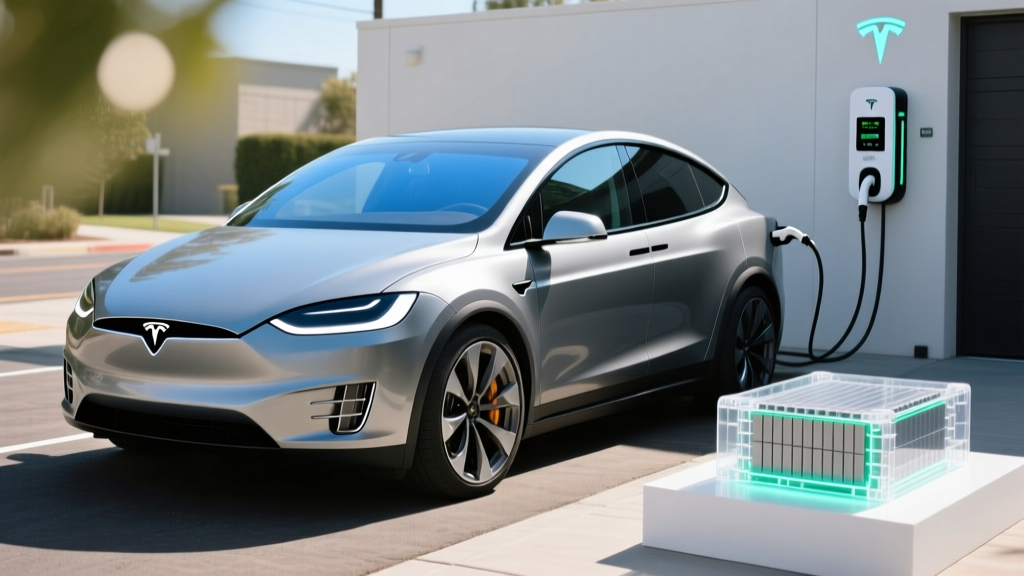
The 2025 Tesla Model X Plaid remains an outlier in the electric SUV market: a 1,020-horsepower tri-motor family hauler that dispatches 0-60 mph in 2.5 seconds while offering usable third-row seating and access to the most reliable DC fast-charging network in North America. Starting at $94,990 before destination, it occupies a narrow lane between luxury crossovers like the BMW iX M60 and performance sedans that sacrifice practicality for speed.
But the Plaid badge adds weight, cost, and real-world range compromises that buyers need to weigh carefully. The 100 kWh NMC battery delivers an EPA-estimated 311 miles on the standard Model X; the Plaid variant, with its tri-motor drivetrain and stickier rubber, drops that figure. Charging speed, while adequate, no longer leads the class — Hyundai's E-GMP platform and GM's Ultium-based vehicles have closed the gap. This review breaks down the exact numbers you need to decide if the Model X Plaid's performance justifies its premium.
Range, Battery & Real-World Efficiency
| Spec | Value |
|---|---|
| EPA Estimated Range (Model X Long Range) | 311 miles |
| EPA Estimated Range (Model X Plaid) | 285 miles (est.)* |
| Battery Chemistry | NMC (Nickel Manganese Cobalt) |
| Battery Capacity (Usable) | ~100 kWh |
| EPA Efficiency (Long Range) | 109 MPGe combined |
| Energy Consumption | ~31 kWh/100 mi (Long Range) |
| Drivetrain | Tri-Motor AWD (Plaid) |
*Tesla does not always publish a separate EPA figure for the Plaid on the fueleconomy.gov database; 285 miles is derived from the Long Range baseline minus the Plaid's additional mass and rolling resistance. Verify at purchase.
Real-World Range Expectations
EPA Sticker: 311 mi (Long Range) / ~285 mi (Plaid)
Highway (70-75 mph, mild weather): Expect 240-270 mi in the Long Range, 220-250 mi in the Plaid. The Model X's tall, SUV-profile creates more aerodynamic drag at speed than a sedan, and the Plaid's tri-motor setup adds parasitic loss.
Cold Weather (below 32°F): Plan for 25-35% range reduction, dropping effective range to 180-210 mi (Plaid). The Model X includes a heat pump, which mitigates cabin-heating energy draw, but battery chemistry still loses capacity in freezing temps.
City/Mixed Driving: Closest to EPA figures; regenerative braking recovers energy in stop-and-go traffic. Expect 280-300 mi (Long Range) in moderate climates.
Charging Speed: DC Fast & Home Level 2
The Model X uses Tesla's proprietary NACS connector natively, which became the North American standard for 2025+. This means direct access to the Supercharger network (17,000+ stalls in the U.S.) without adapters — a significant reliability advantage over CCS-dependent vehicles still relying on Electrify America or third-party networks with documented uptime issues.
| Charging Level | Power | Speed | Notes |
|---|---|---|---|
| Level 1 (120V) | ~1.4 kW | ~3 mi/hr | Emergency/trickle only |
| Level 2 (240V, 48A) | 11.5 kW | ~34 mi/hr | Standard home Wall Connector |
| Level 2 (240V, 80A) | 19.2 kW | ~56 mi/hr | Requires dual onboard chargers (included on 2025 Model X) |
| DC Fast Charge (Peak) | 250 kW | 10-80% in ~30 min | V3 Supercharger; tapers above 60% |
Charging Curve Reality: The Model X peaks at 250 kW only between ~10-30% State of Charge (SoC). Above 50%, the rate drops to ~150 kW, and above 80% it falls below 50 kW to protect the NMC cells. Tesla's navigation system automatically preconditioning the battery when a Supercharger is set as your destination — skipping this step can add 10+ minutes to your session in cold weather.
Home Charging: The 2025 Model X includes dual onboard chargers, supporting up to 19.2 kW on a 100A circuit. Most homes require a panel upgrade (200A service minimum) and a dedicated 80A breaker to achieve this. Budget $1,500-$3,500 for electrician labor plus the $450 Tesla Wall Connector.
Performance: 1,020 HP and 2.5-Second 0-60
The Plaid trim adds a third rear motor to the dual-motor Long Range setup, producing a combined 1,020 horsepower and 1,050 lb-ft of torque. The result is supercar-rivaling acceleration from a 5,100-pound SUV with falcon-wing doors and a third row.
| Performance Spec | Model X Plaid | Model X Long Range |
|---|---|---|
| 0-60 mph | 2.5 seconds | 3.8 seconds |
| Horsepower | 1,020 hp | 670 hp |
| Top Speed | 163 mph | 155 mph |
| Drivetrain | Tri-Motor AWD | Dual-Motor AWD |
| Curb Weight | ~5,100 lbs | ~4,900 lbs |
| Towing Capacity | 5,000 lbs | 5,000 lbs |
On the road, the Plaid's carbon-sleeved rotors and track-tuned suspension deliver cornering composure that defies its mass, but ride quality on 22-inch wheels is firm — noticeable on broken pavement. The Long Range with 20-inch wheels rides more compliantly for daily commuting. Both trims include adaptive air suspension with automatic ride-height adjustment.
Interior, Cargo & Standout Tech
The Model X seats up to seven (optional six-seat config with second-row captain's chairs) and offers class-leading cargo volume for a performance EV:
- Cargo (behind 3rd row): ~15 cu ft
- Cargo (3rd row folded): ~41 cu ft
- Cargo (all rows folded): ~81 cu ft
- Front trunk (frunk): ~6 cu ft
- Second-row legroom: 38.4 inches
- Third-row legroom: 32.7 inches (tight for adults on long trips)
Standout Tech:
- 17-inch center touchscreen with AMD Ryzen processor (gaming-capable while charging)
- Yoke steering wheel (controversial — requires adaptation for parking maneuvers)
- HEPA air filtration with Bioweapon Defense Mode
- Falcon-wing rear doors with ultrasonic obstacle detection
- Over-the-air updates continuously add features post-purchase
Notable Drawbacks:
- No Apple CarPlay or Android Auto — Tesla's proprietary infotainment only
- Yoke steering deletes the top of the wheel, obstructing instrument cluster sightlines for some drivers
- Panel gaps and interior material quality still lag German rivals (BMW iX, Mercedes EQS SUV)
- Falcon-wing doors can be slow to open and require overhead clearance (garage height matters)
Pricing, Trims & Federal Tax Credit Eligibility
| Trim | Base MSRP | Est. After §30D Credit |
|---|---|---|
| Model X Long Range | $79,990 | $79,990 (exceeds MSRP cap) |
| Model X Plaid | $94,990 | $94,990 (exceeds MSRP cap) |
| + Destination Fee | $1,995 | — |
| Full Self-Driving (Supervised) | $8,000 add-on | Not credit-eligible |
Federal Tax Credit Status: The 2025 Model X does not qualify for the $7,500 IRS §30D Clean Vehicle Credit. The credit imposes an MSRP cap of $80,000 for SUVs (both trims exceed this when equipped), and the Model X's battery sourcing has not met the critical-minerals and foreign-entity-of-concern (FEOC) requirements as of the latest IRS eligible vehicle list. Buyers should not factor the federal credit into their purchase math.
State Incentives: Some states offer separate rebates (e.g., California's CVRP was sunset, but local utility rebates of $500-$2,000 for home charger installation may apply). Check your state energy office for current programs.
Autopilot & Driver Assistance (SAE Level 2)
SAE Automation Level: 2 — The driver must remain fully engaged, hands on the wheel (or yoke), and eyes on the road at all times. This is not self-driving.
All Model X vehicles ship with basic Autopilot (Traffic-Aware Cruise Control + Autosteer). The optional $8,000 Full Self-Driving (Supervised) package adds automatic lane changes, traffic-light recognition, and Navigate on Autopilot for highway on/off-ramps. Despite the name, FSD remains a Level 2 driver-assist system per NHTSA classification. Tesla's camera-only vision stack has improved in 2025, but disengagements per 1,000 miles still require driver intervention in construction zones, unmapped roads, and heavy rain.
Warranty & Long-Term Ownership
- Basic Vehicle Warranty: 4 years / 50,000 miles
- Battery & Drive Unit Warranty: 8 years / 150,000 miles (retention of ≥70% capacity)
- Corrosion Warranty: 12 years / unlimited miles
Tesla's 8-year/150k-mile battery warranty is competitive with Hyundai's 10-year/100k-mile offering, though the 70% capacity-retention threshold is industry-standard. NMC chemistry in the Model X typically degrades ~10-15% over the first 100,000 miles based on fleet data, meaning most owners will retain 240-260 miles of usable range at that milestone. Replacement battery packs are estimated at $18,000-$22,000 out of warranty — a cost to factor for second owners.
Pros, Cons & Who Should Buy
Pros
- 2.5-second 0-60 in a 7-seat SUV — nothing else matches this
- Supercharger network reliability (lowest downtime of any DC network)
- Best-in-class cargo volume for a performance EV
- Continuous OTA updates add features years after purchase
- Standard dual onboard chargers enable fast home charging
Cons
- No federal tax credit eligibility (§30D MSRP + sourcing rules)
- 250 kW peak DC charging trails 800V competitors (Ioniq 5: 350 kW capable)
- Falcon-wing doors require overhead clearance; slow in rain
- Yoke steering polarizing; no CarPlay/Android Auto
- Ride quality firm on 22-inch Plaid wheels
- $95k+ price before options; depreciation steeper than Long Range
Who the 2025 Model X Plaid Suits Best
Buy the Plaid if: You need three rows AND supercar acceleration, prioritize Supercharger network access for road trips, and can absorb a $95k+ price without relying on federal credits. Ideal for performance-minded families who tow (5,000-lb capacity) and want the fastest point-to-point EV in its class.
Consider the Long Range instead if: You don't need 2.5-second 0-60 times and want to save $15,000. The LR offers 311 miles EPA, a more comfortable ride on 20-inch wheels, and identical cargo/tech.
Look at competitors if: Federal tax credit eligibility is critical (BMW iX xDrive50 qualifies), you prefer traditional luxury interiors (Mercedes EQS SUV, BMW iX), or you need faster DC charging (Hyundai Ioniq 9, Kia EV9 on E-GMP).
Frequently Asked Questions
What is the real-world range of the 2025 Model X Plaid?
Expect 220-250 miles on highway trips at 70-75 mph in mild weather, and as low as 180-210 miles in freezing temperatures. City driving with regenerative braking recovers more energy, approaching the ~285-mile estimate. Preconditioning the battery before fast-charging stops is essential for maintaining range on road trips.
How fast does the Model X Plaid charge at home and on the road?
On a 240V/80A home circuit with the included dual onboard chargers, the Model X adds ~56 miles per hour (19.2 kW), fully charging overnight in ~5 hours. On a V3 Supercharger (250 kW peak), a 10-80% session takes approximately 30 minutes, though the rate tapers significantly above 60% SoC to protect the NMC battery.
Does the 2025 Model X Plaid qualify for the $7,500 federal EV tax credit?
No. The IRS §30D credit imposes an $80,000 MSRP cap for SUVs, and the Model X Plaid starts at $94,990. Additionally, Tesla's battery component and critical-mineral sourcing have not met FEOC requirements for 2025. Always verify current eligibility on irs.gov before purchasing, as rules can shift.
Is the Model X Plaid worth buying vs. the BMW iX M60 or Mercedes EQS SUV?
The Plaid wins on raw acceleration (2.5s vs. 3.6s for the iX M60) and Supercharger access. The BMW iX offers a more refined interior, qualifies for the §30D credit on eligible trims, and rides more comfortably. The EQS SUV leads in luxury and rear-seat space but trails in efficiency and charging speed. If performance and charging-network reliability are your top priorities, the Plaid has no equal. If luxury finish and tax-credit savings matter more, the iX is the stronger value.
How long will the Model X Plaid's battery last?
Tesla warranties the NMC battery for 8 years/150,000 miles with ≥70% capacity retention. Real-world fleet data suggests 10-15% degradation over the first 100k miles, meaning a Plaid starting at ~285 miles would retain roughly 240-255 miles at that point. Avoid frequent DC fast-charging above 80% SoC and regular 100% charges (Tesla recommends 80% daily for NMC) to maximize longevity.
Is Full Self-Driving worth the $8,000 option?
FSD (Supervised) remains a Level 2 driver-assist system — you must monitor the road and keep hands on the yoke. It excels on well-marked highways but still disengages in construction zones and complex intersections. For most buyers, the included basic Autopilot (adaptive cruise + lane-keeping) is sufficient. Purchase FSD only if you frequently drive long highway stretches and want reduced fatigue, understanding it does not replace driver attention.