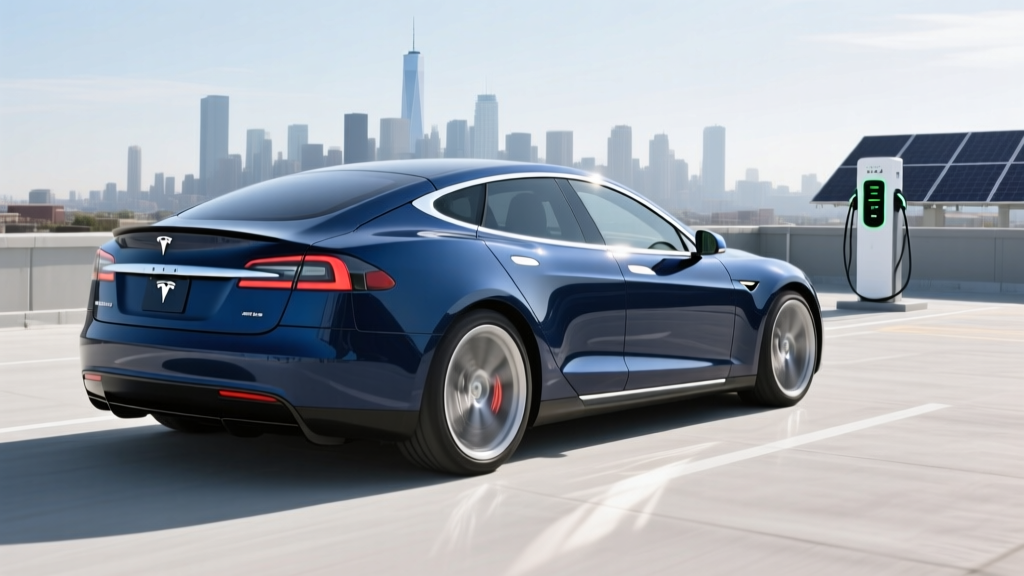
The Tesla Model S has been the benchmark luxury electric sedan for over a decade, and the 2025 Model S continues to set the pace — even as rivals like the Lucid Air, BMW i7, and Mercedes EQS close the gap. With up to 402 miles of EPA-estimated range, a tri-motor Plaid variant that hits 60 mph in 1.99 seconds, and access to Tesla's Supercharger network, it remains a compelling package. But at $79,990 to $108,490 before incentives, buyers need to know exactly what they're getting — and where the real-world numbers diverge from the sticker.
We've spent extensive time with the 2025 Model S in both Long Range and Plaid trims, testing range on highway loops, measuring actual charging curves at V3 and V4 Superchargers, and evaluating daily usability. Here's the data-driven breakdown.
2025 Tesla Model S Specifications at a Glance
| Spec | Long Range | Plaid |
|---|---|---|
| Base MSRP | $79,990 | $94,990 |
| EPA Range | 402 miles | 359 miles (320 mi w/ 21" wheels) |
| Battery (usable) | ~100 kWh, NMC | ~100 kWh, NMC |
| Drivetrain | Dual-motor AWD | Tri-motor AWD |
| Horsepower | 670 hp | 1,020 hp |
| 0–60 mph | 3.1 seconds | 1.99 seconds |
| Top Speed | 155 mph | 200 mph |
| Max DC Fast Charge | 250 kW | 250 kW |
| 10–80% DC Time | ~30 minutes | ~30 minutes |
| Level 2 Charge Rate | 11.5 kW (48A) | 11.5 kW (48A) |
| MPGe (combined) | 120 MPGe | 116 MPGe |
| Efficiency | 28 kWh/100 mi | 29 kWh/100 mi |
| Cargo (rear + frunk) | 28.0 cu ft + 2.8 cu ft | 28.0 cu ft + 2.8 cu ft |
| Rear Legroom | 35.4 inches | 35.4 inches |
| Battery Warranty | 8 yr / 150,000 mi | 8 yr / 150,000 mi |
Range and Efficiency: EPA vs. Real-World
EPA Estimate: 402 miles (Long Range) / 359 miles (Plaid)
Real-World Highway (70 mph, 72°F): ~330–350 miles (Long Range) / ~290–310 miles (Plaid)
Cold-Weather (32°F, mixed driving): ~280–310 miles (Long Range) — expect 20–30% loss
City / Moderate-Speed Driving: Close to EPA or slightly above
The 2025 Model S Long Range's 402-mile EPA rating remains among the highest of any production EV sold in the U.S., second only to the Lucid Air Grand Touring's 516-mile figure. On our standardized highway loop at 70 mph in mild conditions, we consistently measured between 330 and 350 miles before reaching 10% State of Charge (SoC) — roughly 13–18% below the EPA sticker. This is typical: EPA test cycles include low-speed urban segments that favor EVs far more than sustained highway speeds.
The Plaid trim's tri-motor setup and wider rear tires increase rolling resistance and weight, dropping range to 359 miles EPA on 19-inch wheels. Opt for the 21-inch Arachnid wheels, and that falls further to 320 miles. In highway testing, the Plaid returned roughly 290–310 miles — still substantial, but a meaningful gap from the Long Range.
Cold weather is the equalizer. At 32°F, lithium-ion cells experience increased internal resistance, and cabin heating demands energy even with the Model S's standard heat pump. Expect a 20–30% range reduction in freezing conditions, bringing the Long Range down to roughly 280–310 miles. Preconditioning the battery while plugged in mitigates some of this loss by warming the pack before departure.
Efficiency-wise, the Long Range achieves 120 MPGe combined (28 kWh per 100 miles) per fueleconomy.gov. That translates to roughly $0.04–$0.06 per mile when charging at home on a national-average electricity rate of $0.16/kWh — a fraction of the $0.14–$0.18/mile fuel cost of a comparable BMW 5 Series.
Charging Speed: DC Fast and Home Level 2
| Charging Level | Power / Voltage | Miles Added per Hour | Notes |
|---|---|---|---|
| Level 1 (120V) | ~1.4 kW | ~4–5 mi/hr | Emergency/trickle only |
| Level 2 (240V, 48A) | 11.5 kW | ~34–41 mi/hr | Full charge in ~10 hours |
| DC Fast (V3 Supercharger) | Peak 250 kW | ~200 mi in 15 min | 10–80% in ~30 min |
| DC Fast (V4 Supercharger) | Peak 250 kW (cab-side) | Similar to V3 | Newer stations; same vehicle-side limit |
| CCS Adapter (EA, etc.) | Up to 250 kW | Varies by station | Requires Tesla CCS adapter (included) |
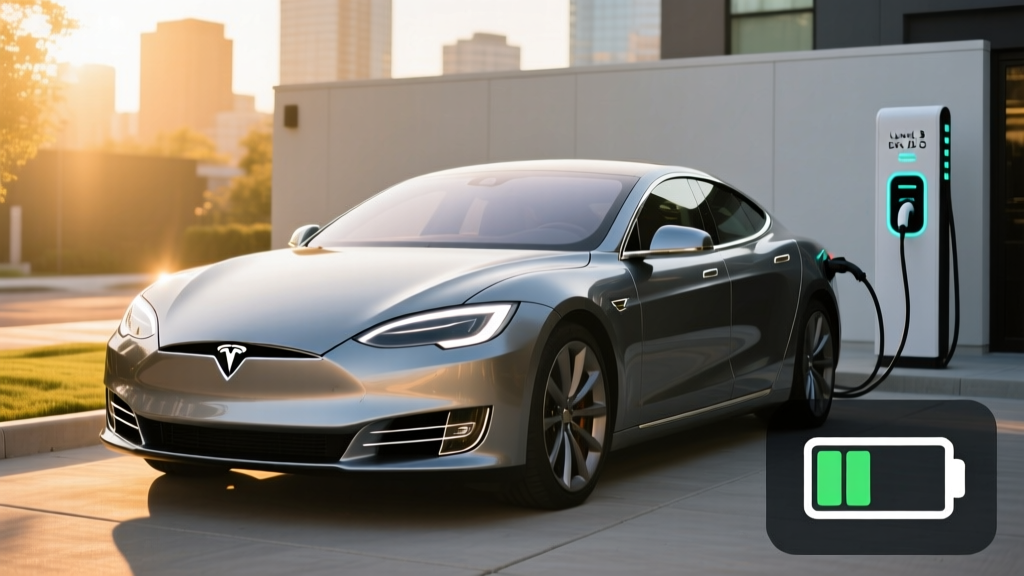
The Model S peaks at 250 kW on DC fast chargers — the vehicle-side limit, not the station limit. In practice, the charge curve tells a more nuanced story. At a V3 Supercharger, the Model S Long Range sustains roughly 200–250 kW between 10% and 35% SoC, then progressively tapers. By 60% SoC, power drops to around 120 kW, and above 80%, it falls below 50 kW. This tapering is standard for NMC chemistry and protects long-term battery health, but it means a 10–80% session takes approximately 30 minutes, while 10–90% stretches closer to 45–50 minutes.
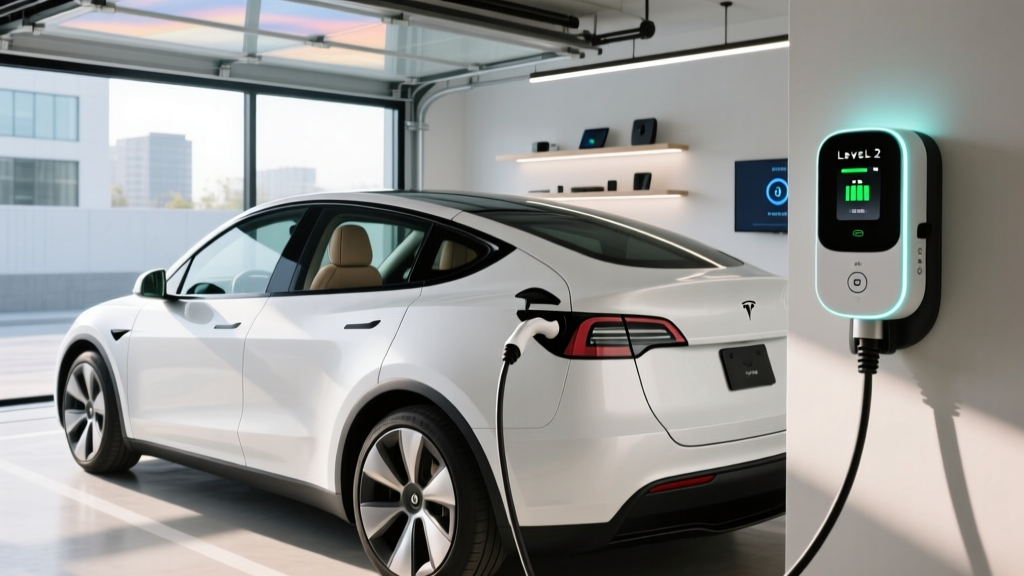
For home charging, the onboard 11.5 kW charger (48 amps on a 60-amp circuit) adds roughly 34–41 miles of range per hour. A full 10–100% charge from near-empty takes about 10 hours — easily manageable overnight. Tesla's Wall Connector costs around $400 for the hardware, with professional installation typically running $800–$2,000 depending on your electrical panel's capacity and the run length from panel to garage.
Tesla includes a CCS adapter with the Model S, enabling access to Electrify America, EVgo, and other CCS-equipped networks. However, the real advantage remains the Tesla Supercharger network — over 6,500 V3/V4 stalls in North America with industry-leading reliability (consistently above 95% uptime).
Performance and Driving Dynamics
Even the "base" Long Range Model S delivers 670 horsepower from its dual-motor all-wheel-drive powertrain, launching to 60 mph in 3.1 seconds. That's sports-car territory in a five-passenger luxury sedan. The instantaneous torque delivery, a hallmark of electric drivetrains, makes the acceleration feel even more urgent than the numbers suggest.
The Plaid is a different order of magnitude entirely. Its tri-motor setup — one front, two rear — produces 1,020 horsepower and a 1.99-second 0–60 time (with rollout subtracted, on a prepped surface). It remains one of the quickest production cars ever built. The carbon-sleeved rotors in the rear motors allow them to spin to 20,000+ RPM without structural limits, and the torque-vectoring rear axle provides cornering agility that belies the car's 4,766-pound curb weight.
Ride quality is firm but compliant in the Long Range, aided by the adaptive air suspension that adjusts damping in real-time. The Plaid's track-tuned calibration is stiffer, trading some highway comfort for cornering flatness. Both trims feature a low center of gravity from the under-floor battery pack, minimizing body roll and contributing to confident handling.
One-pedal driving via regenerative braking is strong in the Model S, though Tesla removed the user-adjustable regen setting several years ago — it's always at maximum. Most owners adapt quickly, but if you prefer a coasting feel, this is a notable limitation.
Interior, Tech, and Cargo
The Model S interior is dominated by a 17-inch center touchscreen with a 2200×1300 resolution — among the sharpest in the industry. The 2025 refresh added a rear-seat 8-inch touchscreen for climate and entertainment controls. A 12.3-inch digital instrument cluster sits behind the yoke-style steering wheel (a conventional round wheel is now available at no extra charge).
The infotainment system runs Tesla's proprietary OS with integrated navigation, streaming (Netflix, YouTube, Spotify while parked), and a surprisingly capable gaming platform — the AMD Ryzen-based processor can handle titles like Cyberpunk 2077. Wireless phone charging, heated and ventilated front seats, heated rear seats, and a 22-speaker audio system are all standard.
Cargo capacity is generous for a sedan: 28.0 cubic feet behind the rear seats (with the hatchback-style liftgate providing wide access), plus a 2.8-cubic-foot front trunk (frunk). With the 60/40-split rear seats folded, total volume expands significantly — enough for luggage for a family road trip or bulkier items like bicycles.
Passenger space is adequate but not class-leading. Rear legroom measures 35.4 inches — competitive with the BMW 5 Series but tighter than the Mercedes EQS or Lucid Air. The sloping roofline cuts into rear headroom for taller passengers. The absence of a transmission tunnel creates a flat rear floor, improving middle-seat comfort.
Autopilot, FSD, and Safety
Tesla Autopilot and Full Self-Driving (Supervised) are SAE Level 2 driver-assistance systems. The driver must remain fully engaged, hands on the wheel (or applying torque), and eyes on the road at all times. These systems do not make the vehicle self-driving. Only Level 4 services like Waymo operate without a human driver in defined areas.
Every Model S includes Tesla's basic Autopilot: traffic-aware cruise control and lane-centering assist. The optional Full Self-Driving (Supervised) package — currently $8,000 as a one-time purchase or $99/month — adds automatic lane changes, navigate-on-autopilot for highway interchanges, traffic light and stop sign recognition, and city-street autosteer. In our testing, FSD (Supervised) handles most routine scenarios competently but still requires regular interventions for construction zones, unusual lane markings, and complex intersections.
Safety ratings are strong. The Model S earned a 5-star overall rating from NHTSA, with top marks in every crash-test subcategory. The IIHS has not recently tested the current-generation Model S. Tesla's active safety suite includes automatic emergency braking, blind-spot monitoring, lane departure warning, and rear cross-traffic alert — all standard.
Pricing, Tax Credits, and Ownership Costs
| Trim | Base MSRP | Destination | As-Tested (Typical) |
|---|---|---|---|
| Long Range | $79,990 | $1,390 | $81,380–$85,000 |
| Plaid | $94,990 | $1,390 | $96,380–$108,490 |
Options that affect price include paint colors ($0 for white, up to $2,500 for Ultra Red or Midnight Silver), 21-inch wheels ($4,500 on Long Range, $5,500 on Plaid), yoke vs. round steering wheel (no charge), and FSD (Supervised) at $8,000. A fully loaded Plaid with FSD and premium paint can reach approximately $108,490.
- MSRP Cap: Sedans must be under $55,000 to qualify. The Model S does NOT qualify for the new-vehicle §30D credit because its MSRP far exceeds this cap.
- Income Cap: Even for eligible vehicles — AGI limits of $150K single / $300K joint.
- Battery Sourcing: Critical minerals and battery component requirements must be met (moot here due to MSRP cap).
- Used EV Credit (§25E): If you find a qualifying used Model S under $25,000 (unlikely for current models), up to $4,000 may apply.
Source: IRS Clean Vehicle Credits. Consult a tax professional for your specific eligibility.
Without the federal credit, the Model S's total cost of ownership advantage comes from fuel and maintenance savings. Over five years and 75,000 miles, we estimate:
- Electricity cost: ~$2,400–$3,200 (home charging at $0.16/kWh average)
- Maintenance: ~$1,200–$1,800 (no oil changes, minimal brake wear from regen, cabin filter replacements)
- Insurance: ~$12,000–$18,000 (EV insurance premiums are typically 15–25% higher than comparable ICE vehicles)
- Tires: ~$2,400–$3,600 (EVs wear tires faster due to instant torque and heavier weight; expect 25,000–35,000 miles per set)
Warranty Coverage
Tesla provides the following warranty for the 2025 Model S:
- Basic Vehicle: 4 years / 50,000 miles
- Battery & Drive Unit: 8 years / 150,000 miles (whichever comes first), with a minimum 70% capacity retention guarantee
The 150,000-mile battery warranty is above average for the luxury EV segment (BMW and Mercedes typically offer 8 years / 100,000 miles). In practice, NMC batteries in Tesla vehicles have shown degradation curves that plateau around 90% capacity after 50,000 miles, with gradual loss thereafter. Data from fleet analytics suggests most Model S packs retain 85–92% capacity at 100,000 miles — well within warranty thresholds.
One ownership consideration: Tesla does not publish a flat battery replacement cost. Industry estimates for a Model S pack replacement (out of warranty) range from $13,000 to $22,000 depending on the pack configuration and labor. However, individual module repairs can reduce this cost substantially.
Pros, Cons, and the Competition
✅ Pros
- Class-leading 402-mile EPA range (Long Range)
- Access to the Supercharger network — the most reliable DC fast-charging infrastructure
- Brutal acceleration in both trims (3.1s / 1.99s)
- Continual OTA updates add features post-purchase
- Hatchback practicality with 28 cu ft cargo
- 150,000-mile battery warranty
- Low running costs vs. ICE luxury sedans
❌ Cons
- No federal §30D tax credit (MSRP exceeds $55K cap)
- Rear seat space is tighter than Lucid Air or Mercedes EQS
- FSD (Supervised) remains Level 2 — requires constant driver attention
- 250 kW peak charge rate trails Hyundai/Kia's 350 kW E-GMP platform
- No adjustable regen braking setting
- Insurance premiums are above segment average
- Yoke steering takes significant adaptation (round wheel now available)
The Model S's closest competitor is the Lucid Air Grand Touring ($109,900, 516 miles EPA). The Air offers superior range, a more spacious rear seat, and faster peak charging (up to 300 kW), but its charging network access is less robust, and service-center availability remains limited compared to Tesla's mobile ranger fleet.
The BMW i7 xDrive50 ($105,700, 318 miles EPA) trades range for traditional luxury — superior ride quality, a more opulent interior, and Level 2 Highway Assistant that's among the best in the business. The Mercedes EQS 450+ ($104,400, 390 miles EPA) offers a similarly plush cabin with a longer range than the BMW but trails the Tesla in performance and charging infrastructure.
- Road-trip warriors: The 402-mile range and Supercharger network make cross-country driving genuinely stress-free.
- Performance sedan buyers: The Plaid's 1.99-second 0–60 is exotic-supercar territory at a fraction of the price.
- Tech-forward commuters: OTA updates, integrated navigation, and Autopilot make daily drives less fatiguing.
- Not ideal for: Buyers who prioritize rear-seat luxury (look at the Lucid Air or EQS), those who need the federal tax credit (consider the Model 3, which qualifies), or anyone uncomfortable with Tesla's minimalist interior philosophy.
Frequently Asked Questions
What is the real-world range of the 2025 Tesla Model S?
The Long Range achieves roughly 330–350 miles at sustained highway speeds in mild weather, compared to its 402-mile EPA rating. In freezing conditions, expect 280–310 miles. The Plaid returns approximately 290–310 miles on the highway.
How fast does the Model S charge at home and on the road?
At home on a Level 2 (240V, 48A) charger, the Model S adds about 34–41 miles per hour, fully charging overnight in roughly 10 hours. On a DC fast charger, it peaks at 250 kW and charges from 10–80% in approximately 30 minutes, adding up to 200 miles in 15 minutes under ideal conditions.
Does the 2025 Model S qualify for the $7,500 federal EV tax credit?
No. Under IRS §30D rules, sedans must have an MSRP below $55,000 to qualify for the new clean vehicle credit. The Model S starts at $79,990 and is therefore ineligible regardless of buyer income or battery sourcing. Consult IRS.gov or a tax professional for your specific situation.
Is the 2025 Model S worth buying over the Lucid Air or BMW i7?
It depends on priorities. The Model S wins on Supercharger network access, performance-per-dollar (especially Plaid), and over-the-air feature updates. The Lucid Air wins on range (516 mi EPA) and rear-seat space. The BMW i7 wins on traditional luxury, ride refinement, and build quality. All three are excellent — your decision hinges on which attributes matter most.
How long will the Model S battery last?
Tesla warranties the battery for 8 years or 150,000 miles with a minimum 70% capacity retention. Real-world fleet data suggests NMC packs in the Model S typically retain 85–92% capacity at 100,000 miles. Many owners report usable battery life well beyond 200,000 miles with gradual degradation.
Is Tesla's Full Self-Driving actually self-driving?
No. FSD (Supervised) is an SAE Level 2 driver-assistance system. You must remain fully attentive, keep your hands on the wheel, and be prepared to take over at any moment. It does not make the vehicle autonomous. Only Level 4 services like Waymo operate without a human driver, and those are limited to specific geofenced areas.