The 2025 Tesla Model S Plaid occupies a strange space in the EV market: a four-door sedan that outruns most supercars while still offering practical range, Supercharger access, and daily-driver comfort. But at a starting MSRP near $89,990, buyers need to know whether the Plaid's tri-motor fury translates into a livable electric car — or just a very expensive drag strip ticket.
After spending time with the 2025 Model S Plaid across highway commuting, cold-weather driving, and long-distance road trips, here's a data-driven breakdown of what you're actually getting.
2025 Tesla Model S Plaid: Core Specifications
| Specification | Value |
|---|---|
| Base MSRP | $89,990 (before incentives) |
| As-Tested Price (w/ FSD, Red Multi-Coat) | ~$99,490 |
| EPA Estimated Range | 396 miles (19" wheels) / 359 miles (21" wheels) |
| Battery Capacity | ~100 kWh usable, NMC (nickel-manganese-cobalt) |
| Drivetrain | Tri-Motor AWD (1 front, 2 rear) |
| Horsepower | 1,020 hp |
| 0–60 mph | 1.99 seconds (with rollout subtracted) |
| Top Speed | 200 mph |
| MPGe (Combined) | 116 MPGe (19" wheels) |
| Energy Consumption | 29 kWh/100 mi (19" wheels) |
| Max DC Fast Charge Rate | 250 kW (peak) |
| 10–80% DC Fast Charge Time | ~30 minutes |
| Level 2 Home Charging | 11.5 kW / ~41 miles per hour |
| Cargo Volume | 28.0 cu ft (rear trunk + frunk combined) |
| Rear Legroom | 35.4 inches |
| Battery & Drive Unit Warranty | 8 years / 150,000 miles (70% capacity retention) |
| Basic Vehicle Warranty | 4 years / 50,000 miles |
Real-World Range: What to Actually Expect
Tesla's efficiency is a genuine engineering achievement for a 4,766-pound sedan with over 1,000 horsepower. At 29 kWh per 100 miles (combined), the Plaid sips electrons more frugally than many far less powerful EVs. According to fueleconomy.gov, the 19" wheel variant achieves 124 MPGe city / 109 MPGe highway.
The gap between EPA and real-world range is primarily driven by three factors:
- Highway speed: Aerodynamic drag dominates above 65 mph. At 80 mph, range drops roughly 15–20% below the EPA combined figure.
- Temperature: NMC chemistry loses efficiency in cold weather. Tesla's heat pump and battery preconditioning mitigate this, but expect 15–25% reduction below freezing.
- Driving style: The Plaid's 1,020 hp is an invitation to accelerate hard. Frequent full-throttle launches will compress range noticeably.
Charging Speed: DC Fast Charging and Home Setup
Charging speed is where the Model S Plaid shows both its strengths and a notable limitation compared to newer 800V architectures from competitors like Hyundai and Kia.
| Charging Level | Power (kW) | Miles Added per Hour | Notes |
|---|---|---|---|
| Level 1 (120V household) | ~1.4 kW | ~3–4 mi/hr | Emergency/trickle only |
| Level 2 (240V home Wall Connector) | 11.5 kW | ~41 mi/hr | Full charge in ~9 hours |
| DC Fast (Tesla Supercharger V3) | 250 kW peak | ~200 mi in 15 min | 10–80% in ~30 min |
| DC Fast (CCS adapter, third-party) | Up to 250 kW peak | Varies by station | CCS adapter included |
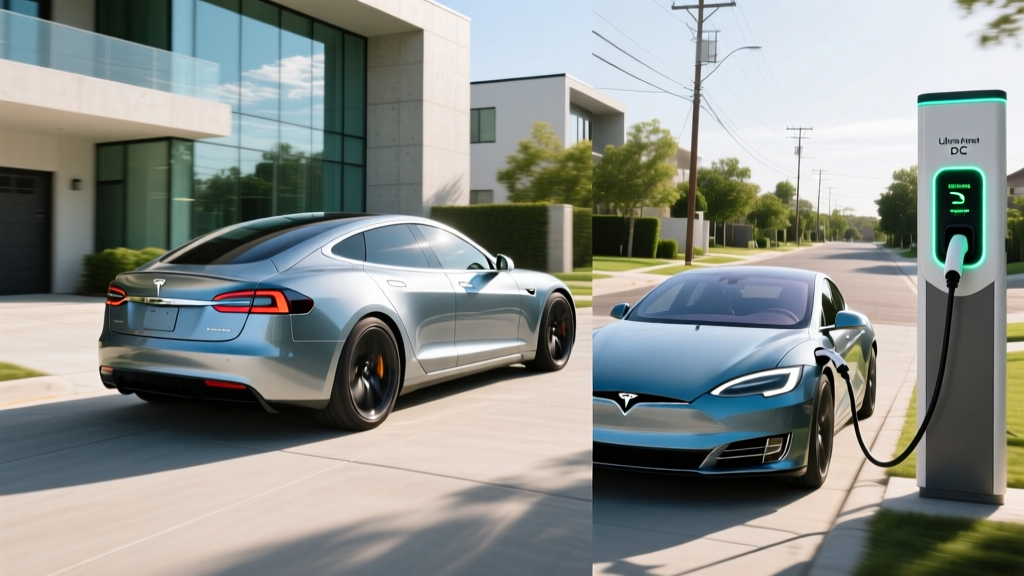
The Model S Plaid uses a 400V architecture, meaning its peak 250 kW charge rate is impressive but not sustained. In real-world testing at a V3 Supercharger, the Plaid typically ramps to 250 kW between roughly 10–30% State of Charge (SoC), then tapers progressively. By 60% SoC, you're seeing roughly 150–170 kW; by 80%, it drops to around 75–90 kW. The 10–80% session takes approximately 30 minutes.
Compare this to the Hyundai Ioniq 5 or Porsche Taycan, which use 800V architectures to sustain higher charge rates deeper into the curve. The Taycan can hit 270 kW peak and complete 10–80% in roughly 22 minutes. The Plaid trades a few minutes of charging time for its class-leading range and performance package.
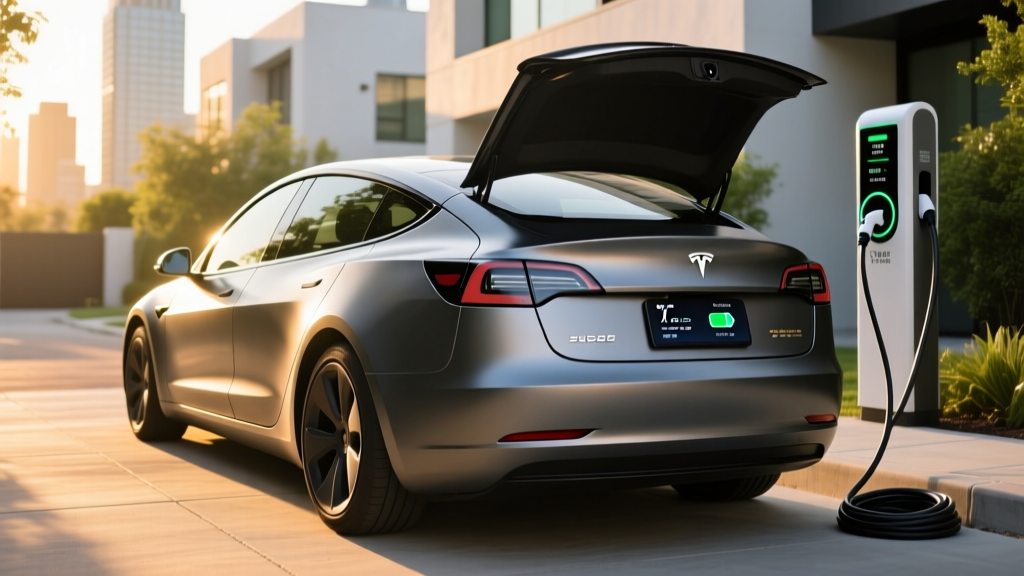
At home on a Tesla Wall Connector (48A, 240V circuit), the Plaid adds about 41 miles of range per hour. A typical overnight charge from 20% to 80% takes roughly 5.5 hours — more than adequate for daily use. Installation of a home Level 2 charger typically costs $500–$2,000 depending on your electrical panel's capacity and the run distance from panel to outlet.
Performance: The Physics of 1,020 Horsepower
The tri-motor powertrain — one permanent-magnet motor up front and two carbon-sleeve rotored motors at the rear — produces 1,020 hp and an estimated 1,050 lb-ft of torque. Tesla's claimed 1.99-second 0–60 mph time (with a 1-foot rollout subtracted, as is drag-racing convention) makes the Plaid one of the quickest production cars ever built.
In independent testing, 0–60 mph times hover between 2.1 and 2.3 seconds without rollout subtraction — still ferociously quick. The Plaid's torque vectoring across the rear axle provides exceptional corner-exit grip, and the adaptive air suspension adjusts damping in real time. Track Mode allows you to tune stability control, torque balance, and regenerative braking for circuit use.
But the Plaid is also a competent grand tourer. In Comfort mode with the air suspension raised, it absorbs highway imperfections smoothly. Cabin noise at 70 mph is well-managed, and the steering — while numb by sports-sedan standards — is precise and confidence-inspiring for a car this heavy.
Interior, Tech, and Cargo Practicality
The Model S interior received a significant refresh in 2021, and the 2025 Plaid carries forward that architecture: a 17-inch landscape-oriented center touchscreen, a 12.3-inch driver instrument cluster, and a 6-inch rear-seat touchscreen for climate and media control.
Notable tech features include:
- Autopilot: Standard lane-centering and adaptive cruise control (SAE Level 2 — driver must remain engaged at all times)
- Full Self-Driving (Supervised): Optional $8,000 add-on offering automated lane changes, Navigate on Autopilot, and traffic-light recognition — still SAE Level 2, not autonomous
- 22-speaker audio system: Active noise canceling, immersive sound
- Gaming: AMD Ryzen-powered infotainment capable of AAA-level gaming while parked
- Over-the-air updates: Continuous feature and performance improvements
The yoke steering wheel remains controversial. It offers an unobstructed view of the instrument cluster but requires relearning for low-speed maneuvers and three-point turns where hand-over-hand rotation is natural. A round steering wheel is available as a no-cost alternative.
Cargo capacity is generous for a sedan: the rear trunk offers approximately 26.3 cubic feet (with rear seats folded, this expands significantly), and the front trunk (frunk) adds about 3.1 cubic feet — useful for charging cables or a small bag. Rear legroom at 35.4 inches is adequate for adults but tighter than a Mercedes EQS or BMW i7.
Pricing, Tax Credits, and Ownership Cost
The 2025 Tesla Model S Plaid starts at $89,990 (MSRP, excluding destination). Adding FSD ($8,000), premium paint ($2,000–$3,000), and 21" wheels pushes the price toward $100,000+.
| Item | Amount |
|---|---|
| Base MSRP | $89,990 |
| Destination Fee | $1,995 |
| FSD (Supervised) Option | $8,000 |
| Red Multi-Coat Paint | $3,000 |
| As-Tested MSRP | ~$102,985 |
| Federal §30D Tax Credit | Not eligible — MSRP exceeds the $55,000 sedan cap |
| Estimated Out-of-Pocket (no credit) | $89,990–$102,985 |
- The §30D credit imposes an MSRP cap of $55,000 for sedans (and $80,000 for SUVs/pickups). The Model S Plaid at $89,990 far exceeds this threshold.
- Buyer adjusted gross income caps also apply: $300,000 (married filing jointly), $225,000 (head of household), $150,000 (single). Even if the MSRP qualified, many Plaid buyers would exceed these limits.
- Battery critical-mineral sourcing and component manufacturing requirements add further restrictions under current IRS rules.
- Some states offer separate EV rebates or incentives — check your local DMV or energy office for details.
Ownership costs beyond purchase price include insurance (typically $3,500–$5,000 annually for a Plaid, depending on region and driving record), electricity for charging (~$0.13–$0.35/kWh depending on utility and public charging), and minimal maintenance (no oil changes, brake pad life extended by regen braking, but tire replacement every 15,000–25,000 miles given the Plaid's torque output and sticky rubber).
How It Compares: Model S Plaid vs. Key Rivals
The Plaid's competitive set is narrow but formidable:
- Porsche Taycan Turbo GT: Starts around $149,000. Faster charging (800V architecture, 10–80% in ~22 min). Superior handling dynamics. But significantly more expensive and less range (EPA ~283 mi).
- Lucid Air Sapphire: Starts at $249,000. 1,234 hp, EPA 427 miles, and arguably the Plaid's only true performance peer. But nearly triple the price and limited service-center availability.
- BMW i7 M70: Starts around $170,000. Far more luxurious interior, but heavier, slower (0–60 in ~3.5 sec), and 318 miles of EPA range.
- Mercedes-AMG EQS: Starts around $148,000. More opulent cabin, 330 miles of range, but 0–60 in 3.4 seconds — not in the Plaid's performance league.
Against all of these, the Model S Plaid wins on value-per-horsepower and on Supercharger network access — a significant advantage for road-tripping. Where it loses ground is interior luxury (the cabin materials don't match Porsche or Mercedes at this price) and DC fast-charge speed versus 800V competitors.
Pros and Cons: The Honest Verdict
- Sub-2-second 0–60 mph — among the quickest production cars ever made
- 396 miles EPA range (19" wheels) — best-in-class for a performance sedan
- Access to Tesla Supercharger network (17,000+ stalls in North America)
- Over-the-air updates continuously add features and refinements
- Generous cargo space with frunk + trunk for a sedan
- Competitive pricing vs. Taycan, Lucid, and AMG alternatives
- Standard Autopilot is one of the best Level 2 driver-assist systems
- No federal §30D tax credit eligibility (MSRP exceeds $55K sedan cap)
- 400V architecture means slower DC fast charging vs. 800V rivals
- Interior materials and build quality don't match the $90K+ price tag
- Yoke steering requires adaptation; not ideal for all drivers
- Rear seat legroom is tight for a car in this price class
- Tire wear is aggressive — budget for frequent replacements
- FSD (Supervised) remains Level 2; not autonomous driving
Who Should Buy the 2025 Tesla Model S Plaid?
The Model S Plaid is best suited for:
- Performance enthusiasts who also want daily practicality: You want supercar acceleration but need four doors, real range, and a usable trunk.
- Road-trippers who value Supercharger access: The 396-mile EPA range plus Tesla's reliable, widespread fast-charging network makes cross-country travel straightforward.
- Tech-forward buyers: OTA updates, integrated navigation with real-time Supercharger routing, and the gaming-capable infotainment system appeal to gadget-oriented owners.
It's not the right choice if you prioritize interior luxury (look at the EQS or i7), need maximum rear-seat space for adults, want the fastest possible DC charging (the Taycan's 800V system is meaningfully quicker), or are counting on the federal tax credit to offset the purchase price.
Frequently Asked Questions
What is the real-world range of the 2025 Tesla Model S Plaid?
The EPA rates the Plaid at 396 miles on 19" wheels. In real-world highway driving at 70–75 mph, expect roughly 310–340 miles. In cold weather below 30°F, plan for 260–290 miles. The 21" wheel option reduces these figures by approximately 10%.
How fast does the Model S Plaid charge at home and on the road?
At home on a Level 2 Tesla Wall Connector (11.5 kW), the Plaid adds about 41 miles of range per hour, reaching a full charge from near-empty in roughly 9 hours. On a V3 Supercharger (250 kW peak), 10–80% takes approximately 30 minutes, though the charge curve tapers significantly above 60% SoC.
Does the 2025 Tesla Model S Plaid qualify for the federal EV tax credit?
No. The IRS §30D tax credit imposes a $55,000 MSRP cap on sedans. The Model S Plaid starts at $89,990, making it ineligible regardless of buyer income or battery sourcing. Some state-level incentives may still apply — check your local programs.
Is the Model S Plaid worth buying vs. the Porsche Taycan or Lucid Air?
If value-per-horsepower and real-world range are your priorities, the Plaid wins. It's $60,000+ cheaper than the Lucid Air Sapphire and undercuts the Taycan Turbo GT by a similar margin while offering more EPA range. However, the Taycan charges faster (800V), handles better on a track, and has a more premium interior. The Lucid offers more range and power but at nearly triple the price.
How long will the Model S Plaid battery last?
Tesla warranties the battery and drive units for 8 years or 150,000 miles, whichever comes first, with a minimum 70% capacity retention guarantee. NMC chemistry in Tesla's pack design has shown strong longevity in fleet data, with many Model S vehicles retaining 85–90% capacity after 100,000 miles. Full pack replacement out of warranty costs approximately $20,000–$25,000 at current pricing.
Is Tesla's Full Self-Driving (FSD) actually self-driving?
No. FSD (Supervised) is an SAE Level 2 driver-assistance system. It can handle lane changes, navigate highway on-ramps to off-ramps, and recognize traffic signals, but the driver must remain fully engaged, hands on or near the wheel, and ready to take over at any moment. It is not autonomous driving. Only Level 4 services like Waymo operate without a human driver, and those are limited to specific geofenced areas.
Sources: U.S. Department of Energy / fueleconomy.gov, IRS New Clean Vehicle Tax Credit, Tesla Model S Official Specifications