The Tesla Model S launched the premium electric sedan segment over a decade ago, and for 2025 it remains one of the longest-range, quickest-accelerating sedans you can buy. But with rivals like the Lucid Air, Porsche Taycan, and Mercedes EQS closing the gap on luxury and refinement, the question buyers ask most is no longer just about range — it's about what it's like to live with. This review examines the 2025 Tesla Model S interior, real-world range, charging behavior, ownership economics, and where it stands against a now-crowded field.
2025 Tesla Model S Interior: Materials, Layout, and Tech
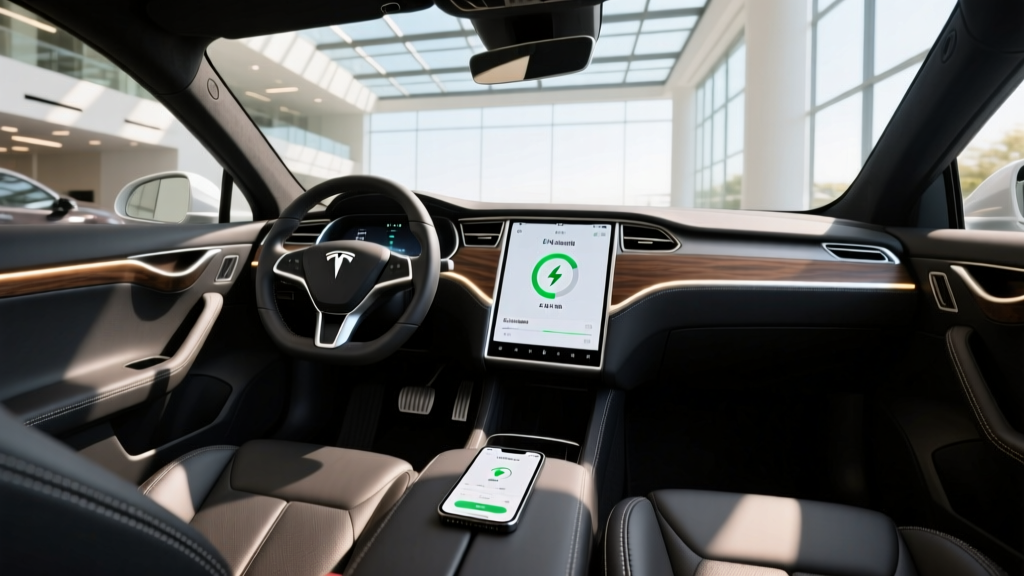
The 2025 Model S cabin represents Tesla's most refined interior to date, though it takes a fundamentally different approach from traditional luxury sedans. The dashboard is dominated by a 17-inch center touchscreen (3840 × 2400 resolution) that tilts left or right for driver or passenger viewing. A secondary 8-inch rear touchscreen gives back-seat passengers climate and entertainment controls. The 12.3-inch digital instrument cluster sits behind the yoke-style steering wheel (a conventional round wheel is available at no cost).
Material quality has improved meaningfully over earlier generations. The dashboard and door panels use soft-touch vegan leather with real aluminum or open-pore wood trim accents. Seats are upholstered in synthetic leather standard, with genuine Nappa leather available on higher trims. Build consistency — historically a Tesla weak point — is noticeably better on 2025 Fremont-built units, with tighter panel gaps and fewer rattles than pre-2023 examples we've tested.
The minimalist design philosophy means virtually no physical buttons. Glovebox release, mirror adjustments, vent direction, and even windshield wiper intensity are controlled through the touchscreen. This is polarizing: some owners adapt within a week, while others find it distracting on long trips. Voice commands ("Open the glovebox," "Set cabin to 70 degrees") help mitigate the learning curve.
Passenger and Cargo Dimensions
| Measurement | Specification |
|---|---|
| Front Headroom | 38.8 in |
| Rear Headroom | 35.4 in |
| Front Legroom | 42.7 in |
| Rear Legroom | 35.4 in |
| Cargo Volume (behind rear seats) | 28.0 cu ft |
| Cargo Volume (rear seats folded) | 64.9 cu ft |
| Front Trunk (Frunk) | 3.1 cu ft |
| Seating Capacity | 5 passengers |
The rear seat is the Model S's most debated interior space. Legroom is adequate for adults up to about 6'1", but the low floor (battery pack underneath) forces a knees-up seating position that compromises thigh support on longer journeys. The Lucid Air offers roughly 2 inches more rear legroom and a more traditional seat cushion angle, making it the stronger choice if you regularly carry adult passengers.
Cargo versatility is a genuine strength. The liftback design provides a wide opening, and the 28 cu ft behind the rear seats outpaces the Taycan sedan (14.3 cu ft) and rivals the Mercedes EQS (22 cu ft). Fold the 60/40 rear seats and you get nearly 65 cu ft — enough for a week-long family road trip or a Costco run.
Range, Battery, and Efficiency
The 2025 Model S Long Range uses a ~100 kWh battery pack (approximately 95 kWh usable) with NMC (nickel-manganese-cobalt) cell chemistry supplied primarily by Panasonic. Unlike the Model 3/Y Standard Range variants that use LFP (lithium iron phosphate), Tesla reserves NMC for its performance and long-range vehicles due to its higher energy density. The trade-off: NMC cells are more sensitive to sustained 100% state-of-charge storage. Tesla recommends daily charging to 80–90% for longevity, reserving 100% for road trips.
| Spec | Long Range | Plaid |
|---|---|---|
| EPA Range | 405 mi | 396 mi |
| Battery (usable) | ~95 kWh NMC | ~95 kWh NMC |
| Efficiency (combined) | 120 MPGe / 28 kWh/100mi | 116 MPGe / 29 kWh/100mi |
| Drivetrain | Dual-Motor AWD | Tri-Motor AWD |
| Horsepower | 670 hp | 1,020 hp |
| 0–60 mph | 3.1 sec | 1.99 sec |
| Top Speed | 155 mph | 200 mph |
| Base MSRP | $79,990 | $94,990 |
Efficiency is a Model S hallmark. At 120 MPGe combined (roughly 28 kWh per 100 miles), it sips electricity more sparingly than the heavier EQS (97 MPGe) and matches the Taycan 4S (roughly 83 MPGe — though the Taycan's 800V architecture gives it a charging-speed edge). Over 15,000 miles of annual driving, the Model S Long Range will consume approximately 4,200 kWh, which at the U.S. average residential rate of $0.17/kWh translates to about $714 per year in home charging — roughly one-third the fuel cost of a comparable 22-MPG gas sedan.
Charging Speed: DC Fast, Level 2, and the Supercharger Advantage
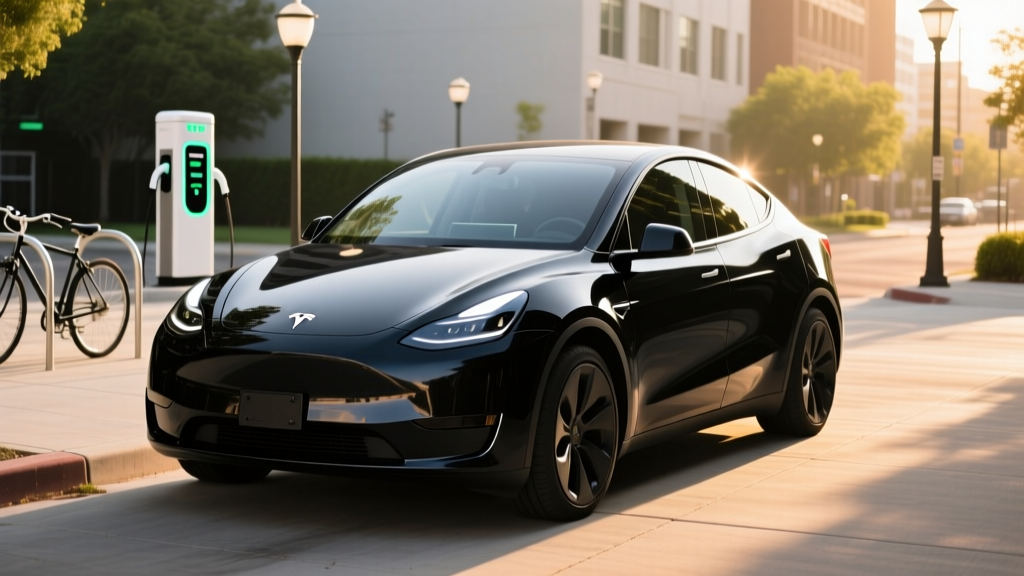
The Model S supports a peak DC fast-charge rate of 250 kW on V3 Superchargers and compatible CCS stations (via adapter, now included with new vehicles). In practice, the charging curve is aggressive in the low state-of-charge range but tapers meaningfully above 60%. Expect a 10–80% charge in approximately 27–30 minutes at a V3 Supercharger under optimal battery preconditioning conditions.
Preconditioning is critical. If you navigate to a Supercharger using the car's built-in routing, the battery thermal management system begins warming the pack miles before arrival, enabling peak charge rates immediately upon plugging in. Arriving at a Supercharger without preconditioning (for example, using a third-party app to find the station) can add 5–10 minutes to your session, especially in cold weather.
| Charging Level | Power | Rate (mi/hr added) | 10–80% Time |
|---|---|---|---|
| Level 1 (120V household) | ~1.4 kW | ~3–4 mi/hr | Not practical |
| Level 2 (240V, 48A Wall Connector) | 11.5 kW | ~34 mi/hr | ~7.5 hours |
| DC Fast (V3 Supercharger) | 250 kW peak | ~200 mi in 15 min | ~27–30 min |
| DC Fast (CCS adapter, 350-kW station) | ~250 kW peak | Similar to V3 | ~28–32 min |
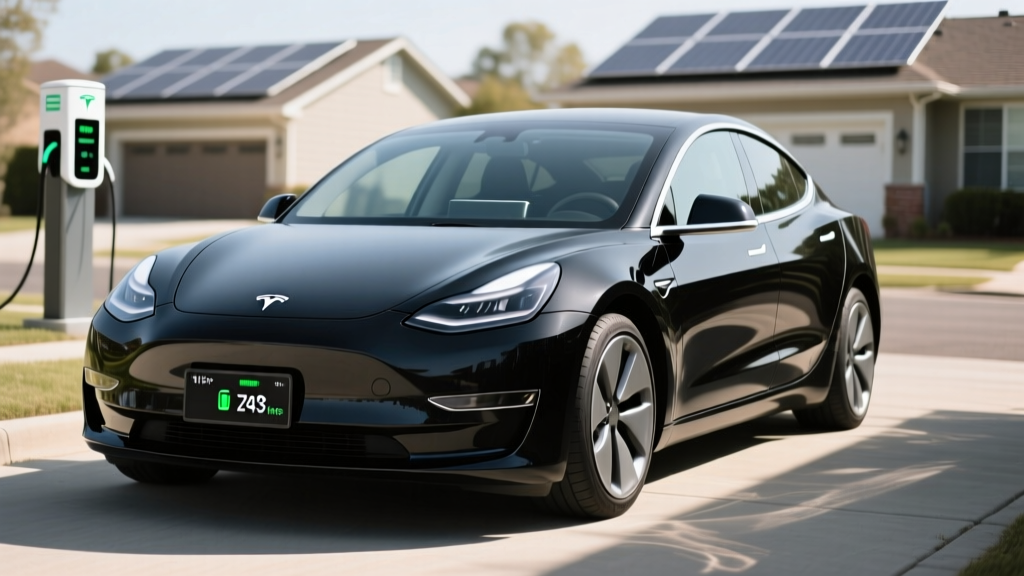
Home charging on the Tesla Wall Connector at 48 amps delivers 11.5 kW — enough to fully replenish the battery overnight (roughly 8 hours from near-empty). Most owners who charge nightly from 20% to 80% need only 4–5 hours on Level 2. The Model S's onboard charger maxes at 11.5 kW (48A), so installing a 60A or 80A circuit provides no additional speed benefit for this vehicle.
Compared to the Porsche Taycan (which peaks at 270 kW on 800V architecture and charges 10–80% in roughly 22 minutes) and the Lucid Air (which peaks at over 300 kW with a ~20-minute 10–80%), the Model S's charging speed is competent but no longer class-leading. For frequent road-trippers, this 5–8 minute difference per stop can add up on multi-day drives.
Performance and Driving Dynamics
The Long Range Model S delivers 670 horsepower from its dual-motor all-wheel-drive powertrain, launching to 60 mph in 3.1 seconds. That's supercar-rivaling acceleration from a five-seat sedan with 405 miles of range — a combination that still has no equal in its price bracket.
The Plaid variant's tri-motor setup (one front, two rear) produces 1,020 horsepower and a claimed 1.99-second 0–60 mph time, making it one of the quickest production cars ever built. However, the Plaid's 396-mile EPA range and $94,990 starting price make it a niche pick. Both trims feature adaptive air suspension that adjusts ride height based on speed and GPS-remembered locations (useful for steep driveways and speed bumps).
Ride quality is firm but compliant in the default "Comfort" setting. Road noise is well-suppressed at highway speeds, though not quite at the vault-like level of the Mercedes EQS or Lucid Air. The steering is precise but numb — a common Tesla trait — and the regenerative braking (now adjustable between "Standard" and "Low") provides strong one-pedal driving capability in its highest setting.
Pricing, Tax Credits, and Total Cost
The 2025 Model S Long Range starts at $79,990 (plus $1,390 destination, for a total of $81,380). The Plaid starts at $94,990. Popular options include the $1,500 Full Self-Driving (Supervised) capability subscription or one-time purchase, premium paint colors ($1,500–$2,500), and 21-inch Arachnid wheels ($4,500, which reduce EPA range to approximately 375 miles).
| Trim | Base MSRP | Federal Credit | Effective Price |
|---|---|---|---|
| Long Range | $79,990 | $0 (MSRP cap) | $79,990 |
| Plaid | $94,990 | $0 (MSRP cap) | $94,990 |
Five-year total cost of ownership benefits from low fueling costs and minimal scheduled maintenance (no oil changes, no brake pad replacements under normal driving due to regen). Tesla's battery warranty covers 8 years or 150,000 miles (whichever comes first) with a minimum 70% capacity retention threshold — one of the longer coverage periods in the industry. The basic vehicle limited warranty is 4 years/50,000 miles, and the drive unit warranty matches the battery at 8 years/150,000 miles.
Driver Assistance and Standout Technology
Every Model S comes with Tesla's Basic Autopilot, which includes traffic-aware cruise control and autosteer (lane centering). This is an SAE Level 2 driver-assistance system — it requires continuous driver supervision and does not make the car self-driving.
The optional FSD (Supervised) package ($8,000 one-time or $99/month subscription as of 2025) adds features like automatic lane changes on highways, navigation-guided on-ramp-to-off-ramp driving, traffic light and stop sign recognition, and Smart Summon (the car navigates a parking lot to you). FSD has improved substantially in v12+ with its end-to-end neural network approach, but it remains a driver-supervision system. It performs best on well-marked highways and struggles with construction zones, complex urban intersections, and adverse weather.
Other standout tech includes the built-in gaming system (capable of running Cyberpunk 2077 and other AAA titles via the AMD Ryzen processor), a 22-speaker audio system with active noise cancellation, Sentry Mode (360-degree security recording), and over-the-air software updates that regularly add new features. The Model S also offers a HEPA air filtration system with a "Bioweapon Defense Mode" — genuinely useful in wildfire-smoke regions.
How It Compares: Model S vs. Lucid Air vs. Taycan
The Model S occupies a unique position: it offers the most range and the lowest starting price in the premium electric sedan segment, but competitors now surpass it in specific areas.
- Maximum EPA range (405 mi) is your top priority
- You rely on the Supercharger network for road trips
- You want supercar-level acceleration at a relative bargain
- Liftback cargo versatility matters to you
- Rear-seat comfort and luxury materials are priorities
- You want the absolute longest range available (Air Grand Touring: 516 mi EPA)
- Faster DC charging (~300 kW peak) matters for road trips
- You prefer a more traditional luxury sedan experience
- Driving dynamics and steering feel are paramount
- 800V architecture and ~270 kW charging speed matter
- Build quality and dealer service experience are high priorities
- You're willing to accept lower range (Taycan 4S: ~246–288 mi EPA)
Against the Mercedes EQS, the Model S wins on range, efficiency, and price but trails in rear-seat luxury, ride isolation, and dealer-supported service infrastructure. The EQS 450+ offers 352 miles of EPA range starting around $76,000 but is a heavier, less efficient vehicle overall.
Pros and Cons
Pros
- Class-leading 405-mile EPA range
- Brutal acceleration (3.1s 0–60) in Long Range trim
- Supercharger network access — still the most reliable DC network
- Spacious liftback cargo area (28 cu ft / 64.9 cu ft folded)
- Excellent efficiency (120 MPGe) keeps charging costs low
- Continuous OTA updates add real features post-purchase
- 8-year/150,000-mile battery warranty
Cons
- No federal tax credit eligibility (MSRP exceeds $55K sedan cap)
- Charging speed (250 kW peak) trails Lucid Air and Taycan
- Minimalist interior controls frustrate some drivers
- Rear seat comfort lags Lucid Air and Mercedes EQS
- Yoke steering wheel is an acquired taste (round wheel available)
- Service center wait times can be long in some metro areas
- FSD remains Level 2 despite the "Full Self-Driving" name
Who the 2025 Model S Is For
The 2025 Model S is best suited for tech-forward commuters and road-trippers who prioritize range, acceleration, and Supercharger access over traditional luxury markers. It excels as a daily driver for someone with home Level 2 charging who also takes regular long-distance trips and values minimal charging stops. Families with young children will appreciate the cargo space and rear-seat entertainment screen, though families who regularly carry teenagers or adults in back should test the rear seats against the Lucid Air.
It is not the best choice for buyers who prioritize button-operated simplicity, dealership service convenience, or the most opulent interior materials available. For those priorities, the Mercedes EQS, BMW i7, or Lucid Air are stronger fits.
Frequently Asked Questions
What is the real-world range of the 2025 Tesla Model S?
The EPA rates the Long Range at 405 miles. Real-world highway driving at 70–75 mph typically yields 320–350 miles. In freezing weather, expect 270–300 miles. City driving with regenerative braking can approach or slightly exceed the EPA figure.
How fast does the Model S charge at home and on the road?
At home on a 48A Level 2 Tesla Wall Connector, it charges at 11.5 kW — adding roughly 34 miles of range per hour, or a full charge in about 7.5 hours. On a V3 Supercharger (250 kW peak), it charges from 10–80% in approximately 27–30 minutes with proper battery preconditioning.
Does the 2025 Model S qualify for the federal EV tax credit?
No. The IRS §30D credit imposes a $55,000 MSRP cap for sedans, and the Model S starts at $79,990. It does not qualify regardless of buyer income or battery sourcing. State incentives may still apply — check your state energy office or the DOE's alternative fuels site for details.
Is the Model S worth buying over the Lucid Air or Porsche Taycan?
If range, value, and Supercharger access are your top priorities, the Model S remains compelling at $79,990 with 405 miles. If rear-seat luxury, faster charging, or superior driving dynamics matter more, the Lucid Air or Taycan may be better fits despite higher prices or lower range.
What is the battery warranty on the 2025 Model S?
Tesla covers the battery and drive unit for 8 years or 150,000 miles (whichever comes first) with a guaranteed minimum 70% capacity retention. The basic vehicle warranty is 4 years/50,000 miles.
Is Tesla's FSD actually self-driving?
No. FSD (Supervised) is an SAE Level 2 driver-assistance system. It requires the driver to remain fully attentive and ready to take control at all times. It is not autonomous driving.