Quick Verdict: The Performance Sedan Benchmark Gets Sharper
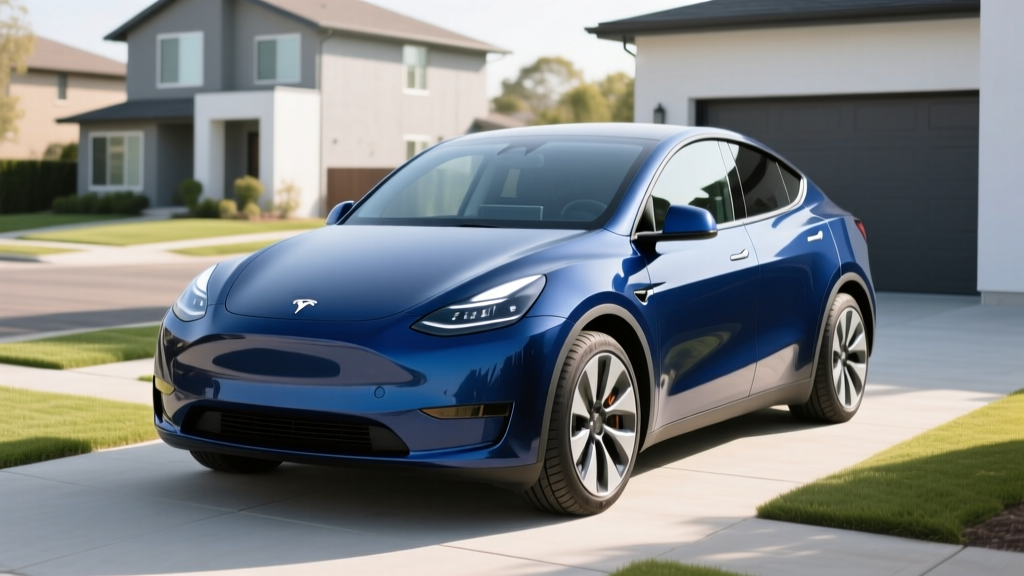
The 2025 Tesla Model 3 Performance (internally designated "Highland" refresh) is not just the fastest Model 3 — it is Tesla's most refined sedan to date. With 510 horsepower, a revised dual-motor all-wheel-drive system, adaptive dampers, and a heavily reworked cabin, this trim answers the criticism leveled at the pre-refresh Model 3 while retaining the efficiency and charging advantages that made the platform dominant. At a base MSRP of $54,990 (including destination), it undercuts the BMW i4 M50 and Porsche Taycan 4S by tens of thousands while delivering supercar-adjacent acceleration. The question is no longer whether it is fast — it is whether the real-world range, charging practicality, and ownership experience justify the badge.
| Spec | Value |
|---|---|
| EPA Range | 315 miles |
| Battery (usable) | ~79 kWh, NMC (2170 cells) |
| Drivetrain | Dual-motor AWD |
| Horsepower | 510 hp (combined) |
| Torque | 546 lb-ft |
| 0–60 mph | 2.9 seconds |
| Top Speed | 163 mph |
| Max DC Fast Charge | 250 kW (peak) |
| 10–80% DC Charge | ~25 minutes |
| Level 2 Home Charge | 11.5 kW / ~44 mi/hr |
| MPGe (combined) | 121 MPGe |
| Efficiency | 28 kWh/100 mi |
| Cargo (trunk + frunk) | 23.1 cu ft + 3.1 cu ft |
| Rear Legroom | 34.9 inches |
| Battery Warranty | 8 years / 120,000 miles |
| Base MSRP (incl. destination) | $54,990 |
Range and Efficiency: What the EPA Number Doesn't Tell You
The EPA rates the 2025 Model 3 Performance at 315 miles of combined range on its 79 kWh (usable) NMC lithium-ion pack. That is a meaningful figure — it places the Performance trim within 5 miles of the Long Range AWD variant despite wider 20-inch wheels, stickier Pirelli P Zero tires, and 150+ more horsepower. The secret is Tesla's improved inverter efficiency and the new permanent-magnet rear / induction-front motor pairing that reduces parasitic drag under light-load cruising.
Real-World Range Expectations
EPA Sticker: 315 miles
Highway (70–80 mph, 65°F): ~265–280 miles
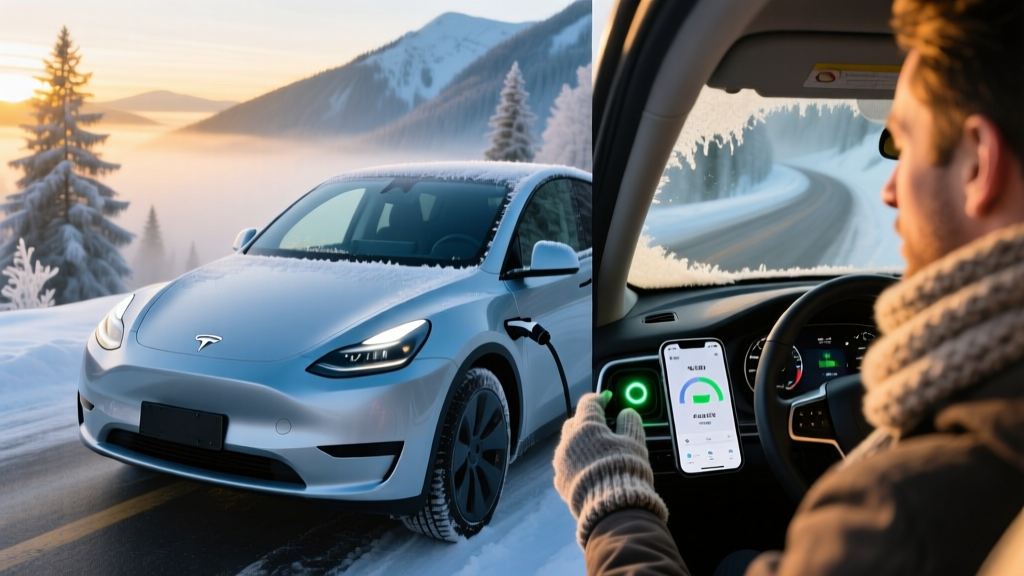
Cold Weather (30°F, highway): ~220–245 miles
Mixed Commute (city/suburban, mild temps): ~300–310 miles
The Performance model's wider tires and sport-tuned alignment increase rolling resistance slightly. On a 75-mph interstate loop in moderate temperatures, expect to consume roughly 30–32 kWh/100 mi, yielding about 265–280 miles before the buffer warning. In freezing conditions, the heat pump helps — but cabin heating, battery preconditioning, and reduced regenerative braking efficiency still clip 20–30% off the EPA figure. For daily commuting under 60 mph, regen recapture pushes efficiency closer to the sticker number.
According to fueleconomy.gov, the combined MPGe stands at 121 — competitive with the Hyundai Ioniq 6 and slightly behind the standard Model 3 Long Range (132 MPGe). If you drive aggressively — and the 2.9-second 0–60 time is an invitation — expect efficiency to drop into the mid-20s kWh/100mi, compressing range toward 240 miles on a full charge.
Charging Speed: DC Fast, Level 2, and the Curve Reality
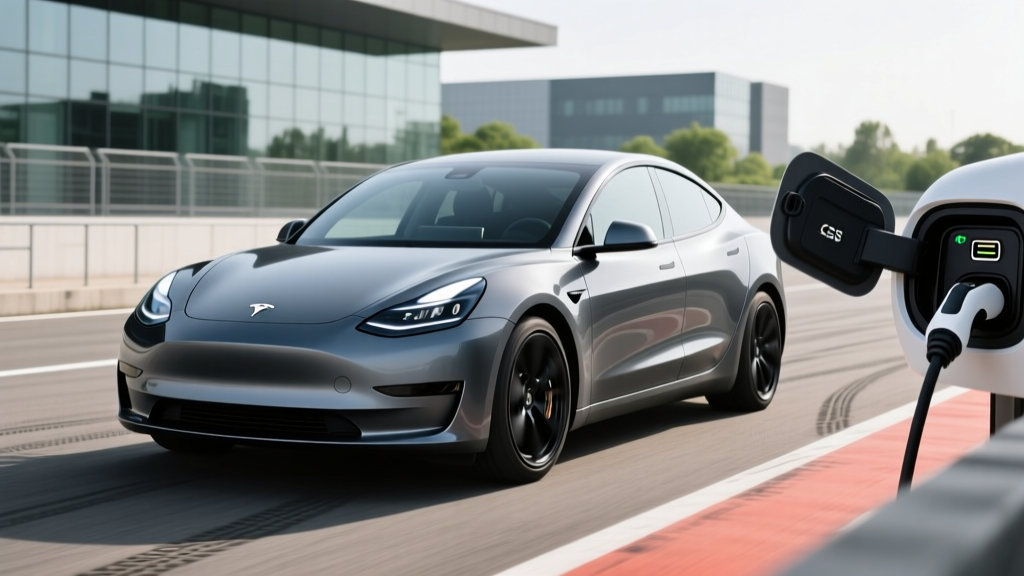
Tesla's Supercharger network remains the gold standard for public charging reliability, and the 2025 Model 3 Performance takes full advantage. The pack can accept a peak of 250 kW at a V3 (or newer V4) Supercharger stall, though — as with all lithium-ion packs — that peak is not sustained.
| Charging Level | Power | Speed / Time |
|---|---|---|
| Level 1 (120V household) | ~1.4 kW | ~5 mi/hr |
| Level 2 (240V, 48A home charger) | 11.5 kW | ~44 mi/hr (full charge ~7–8 hr) |
| DC Fast (Tesla Supercharger V3/V4) | Up to 250 kW peak | 10–80% in ~25 min; ~175 mi in 15 min |
| DC Fast (CCS adapter, Electrify America) | Up to ~200 kW typical | 10–80% in ~30 min |
Understanding the charge curve: The 250 kW peak occurs only between roughly 10–30% state of charge (SoC) with a preconditioned battery. By 50% SoC, the rate tapers to approximately 150 kW, and above 80% it drops below 60 kW. This is why Tesla (and every other automaker) quotes 10–80% times rather than 0–100%. For road trips, the practical strategy is to charge to 80% and move on — the last 20% takes nearly as long as the first 60%.
At home on a Tesla Wall Connector (48 amps / 11.5 kW), a full charge from 10% takes roughly 7–8 hours — easily achievable overnight. If your home electrical panel supports a 60-amp dedicated circuit, this is the optimal setup. Homes with older 100-amp panels may need a service upgrade ($1,500–$3,000) or a lower-amperage charger. Always consult a licensed electrician for your specific installation.
Performance and Driving Dynamics: Beyond the 0–60 Number
The headline number is 2.9 seconds to 60 mph — identical to the pre-refresh Model 3 Performance and quicker than a Porsche 911 Carrera. But the 2025 Highland refresh delivers improvements that matter more on real roads:
- Adaptive dampers: New frequency-selective damping replaces the previous passive setup. The ride is noticeably more compliant over broken pavement while retaining flat cornering composure. Track Mode adjusts damping profiles alongside torque distribution and regen mapping.
- Revised steering: The variable-ratio rack is retuned. It remains quick but communicates more through the wheel — a persistent criticism of prior Model 3s.
- Front-seat bolstering: The new sport seats feature more aggressive side bolsters and ventilated cushions, addressing the flat-seat complaint that plagued earlier Performance models.
- NVH reduction: Acoustic glass on all four doors, additional sound deadening, and redesigned suspension bushings cut cabin noise significantly. At 70 mph, the Highland Model 3 measures roughly 2–3 dB quieter than its predecessor — a perceptible difference.
The dual-motor AWD system uses a permanent-magnet synchronous motor on the rear axle and an induction motor up front. Under light loads, the front motor freewheels to eliminate drag; under hard acceleration or low-traction conditions, it engages instantly. This architecture is key to the Performance model's efficiency advantage over competitors with dual permanent-magnet setups.
Interior, Tech, and Daily Practicality
The Highland interior overhaul is the most significant since the Model 3 launched in 2017. The minimalist philosophy remains, but material quality and feature content have jumped substantially.
Infotainment and Controls
A 15.4-inch center touchscreen handles all vehicle functions — climate, navigation, media, vehicle settings, and the optional Full Self-Driving (Supervised) visualization. There is no instrument cluster; speed and navigation prompts appear in the upper-left corner of the main display. The controversial turn-signal buttons on the steering wheel remain, though Tesla has added capacitive haptic feedback to improve usability. A rear 8-inch touchscreen for passengers controls climate and media — a welcome addition.
Driver Assistance
SAE Automation Level: Level 2
Tesla's Autopilot and Full Self-Driving (Supervised) are SAE Level 2 driver-assistance systems. They provide steering, acceleration, and braking support but require continuous driver supervision. You must keep your hands on or near the wheel and your eyes on the road. This is not autonomous driving. Only Level 4 services like Waymo operate without a human driver in geofenced areas.
The standard Autopilot package includes Traffic-Aware Cruise Control and Autosteer. The $8,000 FSD (Supervised) upgrade adds automatic lane changes, Navigate on Autopilot (highway on/off-ramp routing), traffic light and stop sign recognition, and Smart Summon. Tesla's vision-only approach (no LiDAR or radar) continues to show impressive capability in highway scenarios but exhibits occasional hesitation in unprotected left turns and construction-zone lane merges. FSD remains a polarizing purchase — capable but not infallible, and not yet a hands-off system.
Space and Cargo
The Model 3 remains a compact executive sedan, and interior dimensions reflect that:
- Front headroom: 40.3 inches
- Front legroom: 42.7 inches
- Rear headroom: 37.8 inches (the sloping roofline cuts into space for taller passengers)
- Rear legroom: 34.9 inches — adequate for average adults, tight for anyone over 6 feet behind a tall driver
- Trunk: 23.1 cubic feet (class-competitive, aided by a wide hatchback opening)
- Frunk: 3.1 cubic feet — useful for charging cables and small bags
For families with rear-facing car seats, the Model 3 is workable but snug. The Model Y is the more practical family choice. For couples, commuters, and occasional rear-seat passengers, the Model 3 Performance offers ample space.
Pricing, Tax Credits, and Ownership Cost
| Item | Cost |
|---|---|
| Base MSRP (incl. $1,390 destination) | $54,990 |
| FSD (Supervised) upgrade | +$8,000 |
| Ultra Red paint | +$2,500 |
| As-tested (FSD + paint) | $65,490 |
| Estimated federal tax credit (§30D)* | Up to $7,500 |
| Effective price after max credit | ~$47,490 (base) / ~$57,990 (as-tested) |
*Federal tax credit eligibility depends on buyer income, battery component sourcing, and critical mineral requirements under IRS §30D. See details below.
Federal Tax Credit Eligibility (§30D)
The 2025 Model 3 Performance may qualify for up to $7,500 in federal tax credits, but eligibility is not automatic. Under current IRS §30D rules, the following constraints apply:
- MSRP cap: Sedans must have an MSRP at or below $55,000. The Model 3 Performance base price of $54,990 qualifies, but adding FSD and premium paint pushes the as-tested price above the cap — consult your tax professional on how options affect eligibility.
- Buyer income caps: Adjusted gross income must not exceed $150,000 (single), $225,000 (head of household), or $300,000 (joint filers).
- Battery sourcing: At least 60% of critical minerals and 60% of battery components must be sourced from the US or free-trade-agreement countries (2025 thresholds). Tesla's US-built cells and diversified supply chain position the Model 3 favorably, but specific eligibility can change quarterly — verify at fueleconomy.gov before purchasing.
- Point-of-sale transfer: As of 2024, buyers can transfer the credit to the dealer at purchase, reducing the out-of-pocket price immediately rather than waiting for tax filing. Tesla supports this at checkout.
Important: Tax credit rules are subject to legislative and regulatory change. Always verify current eligibility with a tax professional and the IRS before finalizing your purchase.
Five-Year Ownership Cost Estimate
Compared to a similarly priced BMW 330i xDrive (~$48,000 MSRP), the Model 3 Performance offers lower running costs:
- Electricity vs. fuel: At $0.15/kWh (national average home charging), driving 12,000 miles/year costs roughly $504/year. The BMW at 28 MPG combined and $3.50/gallon costs ~$1,500/year — a ~$1,000/year savings for the Tesla.
- Maintenance: No oil changes, spark plugs, or transmission fluid. Expect brake pad life well beyond 80,000 miles thanks to regenerative braking. Tire replacement is the primary wear cost (performance tires: ~$1,200–$1,600 per set, every 25,000–35,000 miles).
- Insurance: Performance EVs carry higher premiums. Expect $2,400–$3,600/year depending on state, age, and driving record — roughly 20–40% more than a comparable ICE sedan. Get quotes before ordering.
- Depreciation: Tesla depreciation has stabilized but remains steeper than Toyota/Lexus. Expect ~45–55% value retention at 5 years / 60,000 miles, per industry data.
Warranty and Battery Longevity
Tesla covers the Model 3 Performance with:
- Basic vehicle warranty: 4 years / 50,000 miles
- Battery and drive unit warranty: 8 years / 120,000 miles (whichever comes first), with a minimum 70% capacity retention guarantee
The NMC 2170-cell pack in the Performance model has demonstrated strong longevity in fleet data. Real-world degradation studies from sources like Recurrent Auto show Tesla NMC packs retaining approximately 90–93% capacity after 100,000 miles. The 79 kWh usable capacity includes a buffer (total pack capacity is approximately 82 kWh) that protects against deep discharge and extends cycle life.
Maximizing battery life: For daily driving, Tesla recommends charging to 80–90% and avoiding prolonged stays at 100% SoC. For road trips, charging to 100% immediately before departure is fine. The vehicle's thermal management system actively conditions the battery during Supercharger navigation — preconditioning the pack to optimal temperature before arrival is essential for achieving peak 250 kW charge rates.
Pros and Cons
Pros
- 2.9-second 0–60 mph — supercar acceleration at sedan pricing
- 315-mile EPA range is excellent for a performance variant
- 250 kW Supercharger access with reliable, widespread network
- Highland interior is dramatically quieter and better-trimmed
- Adaptive dampers transform ride quality without sacrificing handling
- Class-leading efficiency (121 MPGe) for the power output
- Over-the-air updates continue to add features post-purchase
- Base MSRP qualifies for §30D tax credit (with caveats)
Cons
- Rear seat space is tight for taller passengers (34.9" legroom)
- Turn-signal buttons on steering wheel remain polarizing
- No physical instrument cluster or HUD — all info on center screen
- FSD (Supervised) at $8,000 is expensive for a Level 2 system
- Insurance premiums run 20–40% higher than comparable ICE sedans
- 20-inch wheels and low-profile tires are costly to replace
- No Apple CarPlay or Android Auto — Tesla's ecosystem only
- Adding options can push MSRP above the $55,000 tax credit cap
Who Should Buy the 2025 Model 3 Performance?
Buy This If:
- You want sub-3-second acceleration without spending six figures
- You commute 30–80 miles daily and can charge at home
- You take 2–4 road trips per year and value Supercharger reliability
- You prioritize driving dynamics and technology over rear-seat space
- You want a single-vehicle solution for daily driving and weekend canyon runs
Look Elsewhere If:
- You regularly carry rear-seat adults over 6 feet tall (consider Model Y or Ioniq 5)
- You need towing capability (the Model 3 is not rated for towing)
- You refuse to use a touchscreen for climate and mirror adjustments
- You want Apple CarPlay integration or a traditional instrument cluster
- You live in an apartment without charging access and your area has limited public DC infrastructure
Frequently Asked Questions
What is the real-world range of the 2025 Tesla Model 3 Performance?
The EPA rates it at 315 miles combined. In real-world highway driving at 70–80 mph in moderate temperatures, expect 265–280 miles. In cold weather (below freezing), that drops to 220–245 miles. City and suburban driving with regenerative braking recapture gets you closest to the EPA sticker, around 300–310 miles.
How fast does the Model 3 Performance charge at home and on the road?
On a Tesla Supercharger (V3/V4), it peaks at 250 kW and charges from 10–80% in approximately 25 minutes, adding about 175 miles in 15 minutes. At home on a 240V / 48A Level 2 charger (like the Tesla Wall Connector), it charges at 11.5 kW, adding roughly 44 miles per hour — a full overnight charge from 10% takes 7–8 hours.
Does the 2025 Model 3 Performance qualify for the $7,500 federal tax credit?
It can, but eligibility depends on multiple factors under IRS §30D. The base MSRP of $54,990 falls under the $55,000 sedan cap, but adding options like FSD or premium paint may push it over. Buyer income must be under $150K (single) / $300K (joint). Battery component and critical mineral sourcing requirements must also be met — verify current status at fueleconomy.gov and consult a tax professional before purchasing.
Is the Model 3 Performance worth it over the Long Range AWD?
The Long Range AWD ($47,990 base) offers 341 miles of range, 420 hp, and a 4.2-second 0–60 — more than enough performance for most drivers. The Performance trim's $7,000 premium buys adaptive dampers, sport seats, track mode, 20-inch wheels, and the 2.9-second sprint. If you value handling precision and acceleration thrills, the Performance is justified. If you prioritize maximum range and value, the Long Range AWD is the smarter buy.
How does the Model 3 Performance compare to the BMW i4 M50?
The BMW i4 M50 starts at ~$67,000, offers 270 miles of EPA range, 536 hp, and a 3.7-second 0–60. The Tesla is quicker, goes farther per charge, charges faster, costs $12,000 less, and has access to the Supercharger network. The BMW wins on interior material luxury, traditional control layouts, and a more established dealer service network. If you prioritize driving tech, efficiency, and value, the Tesla wins. If you want a more conventional luxury experience and don't mind the price premium, the BMW is compelling.
What is the battery replacement cost if it fails out of warranty?
Out-of-warranty NMC pack replacement for the Model 3 currently ranges from $12,000 to $16,000 including labor, based on Tesla service center estimates. However, failure rates within the 8-year/120,000-mile warranty period are low, and gradual degradation (not sudden failure) is the norm. Most owners will sell or trade the vehicle before a replacement is needed.
Is Tesla's Full Self-Driving worth the $8,000 upgrade?
FSD (Supervised) is a Level 2 system — it does not drive the car autonomously. It excels at highway driving, automatic lane changes, and navigation-guided routing, but requires constant driver attention and occasionally makes errors in complex urban scenarios. For daily highway commuters, it reduces fatigue. As a financial investment, it does not reliably increase resale value. Test the monthly subscription ($99/month) before committing to the full purchase.