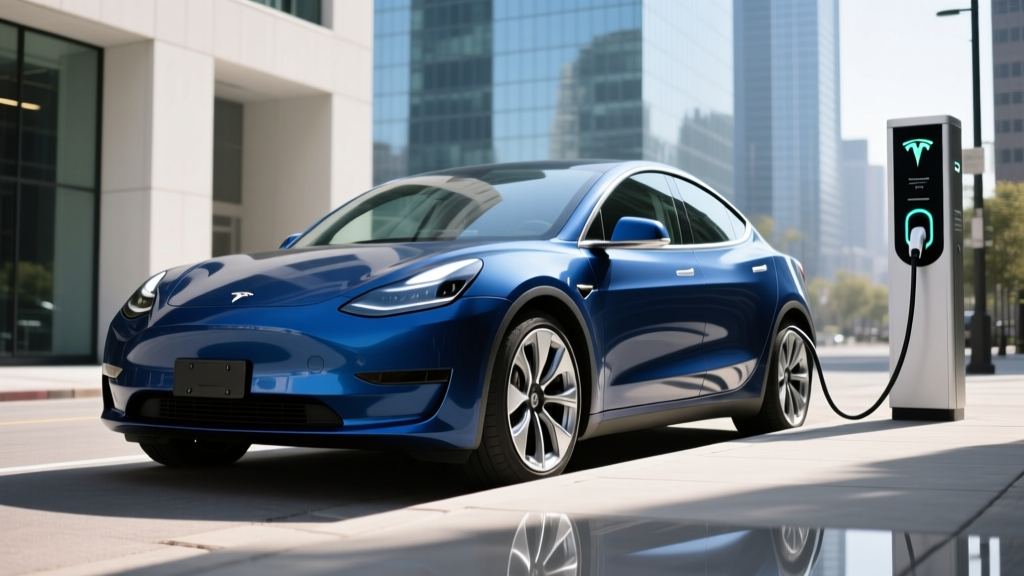
Tesla's long-rumored affordable compact EV — frequently referred to online as the "Tesla Model 2" — has generated enormous search interest and speculation. But before you plan a dealership visit or start configuring one online, here is the critical reality: as of early 2026, Tesla has not officially announced, priced, or opened reservations for a vehicle called the Model 2.
What Tesla has discussed publicly is a next-generation, lower-cost vehicle platform expected to enter production in 2025–2026, potentially leveraging the company's "unboxed" manufacturing process first detailed at its 2023 Investor Day. Industry analysts and supply-chain reports have pointed to a compact crossover or hatchback with a target starting price near $25,000, but official specifications remain unavailable.
This profile compiles everything we know from Tesla's public statements, supply-chain reporting, and competitive positioning — and clearly separates confirmed facts from estimates and speculation. If and when Tesla officially unveils this vehicle, we will update this page with tested data.
What Is the Tesla Model 2 (Next-Gen Platform)?
The name "Model 2" is a media and public shorthand — Tesla has not confirmed this badge. What the company has confirmed is a next-generation vehicle platform designed to dramatically reduce manufacturing cost. At Tesla's 2023 Investor Day, the engineering team outlined an "unboxed" assembly process that Tesla CEO Elon Musk claimed could cut production costs by roughly 50% compared to the Model 3/Y platform.
The expected vehicle would sit below the Model 3 in Tesla's lineup, likely as a compact crossover or hatchback competing directly with vehicles like the Chevrolet Equinox EV, Volvo EX30, and upcoming affordable offerings from legacy automakers. The strategic goal: deliver a Tesla-badged EV at a price point accessible to mainstream buyers without relying on unsustainable margins.
Key manufacturing innovations expected in this platform include:
- Unboxed assembly: Sub-assemblies are built independently and joined late in the process, reducing factory floor space by ~40%
- 48-volt electrical architecture: Replacing the traditional 12V system to reduce wiring harness weight and copper usage
- Ethernet-based vehicle networking: Replacing CAN bus to simplify wiring and enable faster OTA updates
- Increased use of gigacastings: Larger single-piece castings to reduce part count and assembly steps
Estimated Specs: Range, Battery, and Performance
Because Tesla has not published official specifications, the numbers below are analyst estimates derived from supply-chain reporting, Tesla's stated cost-reduction targets, and competitive positioning. Treat these as directional, not definitive.
| Specification | Estimated (Unconfirmed) |
|---|---|
| EPA Range (est.) | ~230–270 miles |
| Battery Capacity (est.) | ~50–60 kWh usable |
| Battery Chemistry | Likely LFP (lithium iron phosphate) |
| Drivetrain | RWD (base), possible AWD variant |
| 0–60 mph (est.) | ~6.0–7.5 seconds |
| Peak DC Fast Charge (est.) | ~150–170 kW |
| 10–80% DC Charge Time (est.) | ~25–30 minutes |
| Level 2 Home Charging (est.) | ~7–11 kW (~25–37 mi/hr) |
| Target Starting MSRP | ~$25,000 (unconfirmed) |
Why LFP Chemistry Is Likely
Tesla has already shifted many standard-range Model 3 and Model Y vehicles to LFP (lithium iron phosphate) battery cells sourced primarily from CATL. LFP offers several advantages for a cost-focused vehicle:
- Lower cost per kWh: No cobalt or nickel, reducing raw material expense
- Longer cycle life: LFP cells typically endure 3,000+ full cycles before significant degradation
- Safety: LFP is more thermally stable and less prone to thermal runaway
- 100% SoC charging: Tesla recommends regular 100% charging for LFP packs (unlike NMC), simplifying ownership
The trade-off: LFP has lower energy density (~160 Wh/kg cell-level vs ~250+ for NMC), meaning a heavier or physically larger pack for equivalent range. For a compact vehicle targeting ~250 miles, this is manageable but constrains how much range Tesla can offer without increasing weight and cost.
Charging: What to Expect from the Next-Gen Platform
Tesla's Supercharger network remains the gold standard for public DC fast charging reliability. A next-gen Tesla compact would almost certainly retain NACS (North American Charging Standard) connectivity and full Supercharger access — a significant advantage over competitors relying on third-party networks.
| Charging Level | Est. Power | Est. Miles Added/Hour |
|---|---|---|
| Level 1 (120V household) | ~1.4 kW | ~4–5 miles |
| Level 2 (240V home, 32A) | ~7.7 kW | ~25–30 miles |
| Level 2 (240V, Wall Connector 48A) | ~11.5 kW | ~37–44 miles |
| DC Fast (Supercharger V3/V4) | ~150–170 kW peak | 10–80% in ~25–30 min |
Charging curve reality: Peak kW rates are never sustained across the full session. Expect the vehicle to hit peak charge rate only between roughly 10–40% SoC, then taper progressively. A 150 kW peak might average 90–110 kW across a 10–80% session. This is normal physics — lithium-ion cells accept charge more slowly as they fill to prevent lithium plating and thermal stress.
For home charging, a Tesla Wall Connector on a 60-amp circuit (48A continuous) would fully replenish a ~55 kWh pack overnight in roughly 5–6 hours — more than adequate for daily use.
Technology and Driver Assistance
Based on Tesla's current product strategy, a next-gen compact would likely feature:
- Minimalist interior: Single central touchscreen (likely 15" or similar), no instrument cluster, steering-wheel-integrated controls
- HW5/AI5 computer: Tesla's next-generation inference chip for improved Autopilot/FSD performance
- Tesla Vision: Camera-only perception (no radar or ultrasonic sensors), consistent with current Model 3/Y
- Over-the-air updates: Full vehicle OTA capability for feature additions and performance improvements
- 48V architecture: Enabling smaller wiring harnesses and more efficient accessory power delivery
FSD (Supervised) currently costs $8,000 as a one-time purchase or $99/month. Whether Tesla bundles or discounts FSD on a lower-cost vehicle remains to be seen, but the subscription model makes it accessible without a large upfront outlay.
Pricing, Tax Credits, and Ownership Economics
The $25,000 price target has been widely reported but never officially confirmed by Tesla. If achieved, it would position this vehicle as one of the most affordable new EVs on the US market, undercutting the Chevrolet Equinox EV (starting ~$33,000) and rivaling used-EV pricing.
| Scenario | Estimated Price |
|---|---|
| Base MSRP (target, unconfirmed) | ~$25,000 |
| After $7,500 §30D credit (if eligible) | ~$17,500 |
| Long-range or AWD variant (est.) | ~$30,000–$35,000 |
Federal Tax Credit Eligibility (§30D)
A ~$25,000 Tesla would fall well under the IRS §30D MSRP cap of $55,000 for sedans/hatchbacks. However, eligibility for the full $7,500 credit depends on several factors that change regularly:
- Buyer income cap: Modified AGI must not exceed $150,000 (single), $225,000 (head of household), or $300,000 (joint) — per IRS §30D rules
- Battery component sourcing: Increasing percentages of battery components must be manufactured or assembled in North America (phasing up yearly through 2029)
- Critical minerals: Increasing percentages of critical minerals must be sourced from the US or FTA partners
- FEOC exclusion: Vehicles with battery components from a "foreign entity of concern" (primarily Chinese companies) lose partial or full credit eligibility — a significant challenge given CATL's role in Tesla's LFP supply
- Point-of-sale transfer: Buyers can transfer the credit to the dealer at purchase, reducing the upfront price directly (available since Jan 2024)
The LFP/CATL complication: Tesla's LFP cells are currently sourced from CATL (China). Under the FEOC provisions that took effect in 2024, battery components from a FEOC disqualify the vehicle from the $3,750 component half of the credit. Critical-mineral sourcing from China triggers a separate exclusion. Tesla would likely need to secure non-Chinese LFP supply (potentially from North American or FTA-partner sources) for this vehicle to qualify for the full $7,500. This is one of the biggest open questions for the vehicle's economics.
Competition: How Would It Compare?
If Tesla delivers a ~$25,000 compact EV with 250+ miles of range and Supercharger access, it would compete in a rapidly growing segment. Here is how the landscape looks based on current and announced competitors:
| Vehicle | Starting Price | EPA Range | DC Fast Charge |
|---|---|---|---|
| Tesla "Model 2" (est.) | ~$25,000 | ~250 mi | ~150–170 kW |
| Chevrolet Equinox EV | ~$33,000 | 319 mi | 150 kW |
| Volvo EX30 | ~$36,000 | 265 mi | 153 kW |
| Nissan Leaf (next-gen) | TBD | TBD | TBD |
| Hyundai Kona Electric | ~$33,000 | 261 mi | ~100 kW |
Tesla's primary advantages would be the Supercharger network (over 6,000 US stalls and growing), OTA update capability, and brand cachet. Its main risk: delivering a $25K vehicle with acceptable quality and margins while competitors offer more interior space and proven build quality at slightly higher prices.
Warranty and Ownership Considerations
While specific warranty terms are unconfirmed, Tesla's current standard coverage provides a useful baseline:
- Basic vehicle warranty: 4 years / 50,000 miles
- Battery and drive unit: 8 years / 100,000 miles (standard range) or 8 years / 120,000 miles (long range), with a minimum 70% capacity retention threshold
LFP batteries are expected to show slower degradation than NMC packs, with many industry analysts projecting 90%+ state of health (SoH) after 150,000 miles based on current CATL LFP cell data. This is a meaningful ownership advantage — lower long-term battery replacement risk.
Insurance costs for Teslas tend to run 15–30% higher than comparable non-Tesla EVs due to repair cost data and collision-frequency analytics. At a $25K price point, however, absolute insurance premiums would likely be lower than for a Model 3 or Model Y simply due to the lower vehicle value.
Who Should Wait — and Who Should Buy Now?
Wait for the Tesla Model 2 if:
- You want a Tesla-badged EV under $30,000 and can wait until late 2025–2026
- Supercharger network access is a top priority for your road-trip habits
- You prefer Tesla's software ecosystem, OTA updates, and minimalist UI
- You're comfortable buying a first-year production vehicle with potential early-build quirks
Buy a competitor now if:
- You need a vehicle within the next 3–6 months
- Proven build quality and dealer service infrastructure matter more than brand
- You want more cargo space and rear-seat room than a compact hatchback offers
- The $7,500 tax credit is essential to your budget — current competitors like the Equinox EV have confirmed eligibility
Frequently Asked Questions
Is the 2025 Tesla Model 2 available to order?
No. As of early 2026, Tesla has not officially unveiled, named, or opened reservations for a vehicle called the Model 2. The company has discussed a next-generation, lower-cost platform, but no production timeline or specifications have been formally published.
What is the estimated real-world range?
If the EPA rating lands near 250 miles, expect approximately 200–220 miles at sustained highway speeds (70–80 mph) and potentially 175–200 miles in freezing temperatures. LFP chemistry is more sensitive to cold than NMC, which is a real-world consideration for northern-climate buyers.
How fast would it charge on a Supercharger?
Estimates suggest a peak rate of 150–170 kW, yielding a 10–80% charge in roughly 25–30 minutes. The smaller battery pack means less total energy to add, but LFP cells typically charge at lower peak C-rates than NMC, which limits the maximum kW.
Will it qualify for the $7,500 federal EV tax credit?
It depends heavily on battery sourcing. If Tesla uses CATL-sourced LFP cells (its current supply chain), the FEOC provisions may disqualify the vehicle from part or all of the credit. Tesla would need to establish North American or FTA-partner LFP supply to maximize eligibility. This is a key variable to watch — consult IRS guidelines and a tax professional before relying on credit eligibility.
How much would it cost after incentives?
If the base price is $25,000 and the full $7,500 credit applies, the effective price could drop to approximately $17,500 — making it one of the cheapest new EVs ever sold in the US. However, state incentives, dealer fees, destination charges, and optional FSD or paint upgrades would increase the actual out-of-pocket cost.
Is it worth waiting vs buying a Chevy Equinox EV or Volvo EX30?
If you need a vehicle now, the Equinox EV offers 319 miles of EPA range and confirmed tax credit eligibility at ~$33,000. The Volvo EX30 provides premium build quality at ~$36,000. The Tesla's appeal hinges on whether it actually hits $25,000, qualifies for credits, and delivers acceptable quality — none of which is confirmed yet.
What are the biggest pros and cons (projected)?
Pros: Ultra-low price point, Supercharger access, Tesla software/OTA ecosystem, LFP battery longevity, strong resale value potential.
Cons: Unreleased and unconfirmed, likely compact interior/cargo space, FEOC credit risk with Chinese LFP cells, first-year production risk, minimal physical controls, uncertain service-center capacity for a high-volume low-margin vehicle.