Tesla's cabin philosophy has always polarized buyers: one screen, zero buttons, and a relentless push toward minimalism. For 2025, the Tesla interior lineup — spanning the refreshed Model 3 "Highland" sedan and the updated Model Y crossover — doubles down on that ethos while quietly addressing long-standing complaints about noise, ride quality, and material finish. This review dissects what it's actually like to live with the 2025 Tesla interior, alongside the powertrain numbers, charging speeds, and ownership economics that matter just as much as stitch quality.
Quick Verdict: Which 2025 Tesla Interior Fits You?
Choose the Model 3 if you prioritize driving dynamics, lower price, and a quieter highway cabin. The Highland refresh transformed it from spartan to genuinely refined.
Choose the Model Y if you need cargo versatility, rear-seat headroom, and the crossover ride height most families prefer. It remains Tesla's volume seller for good reason.
2025 Tesla Interior: What Changed and What Didn't
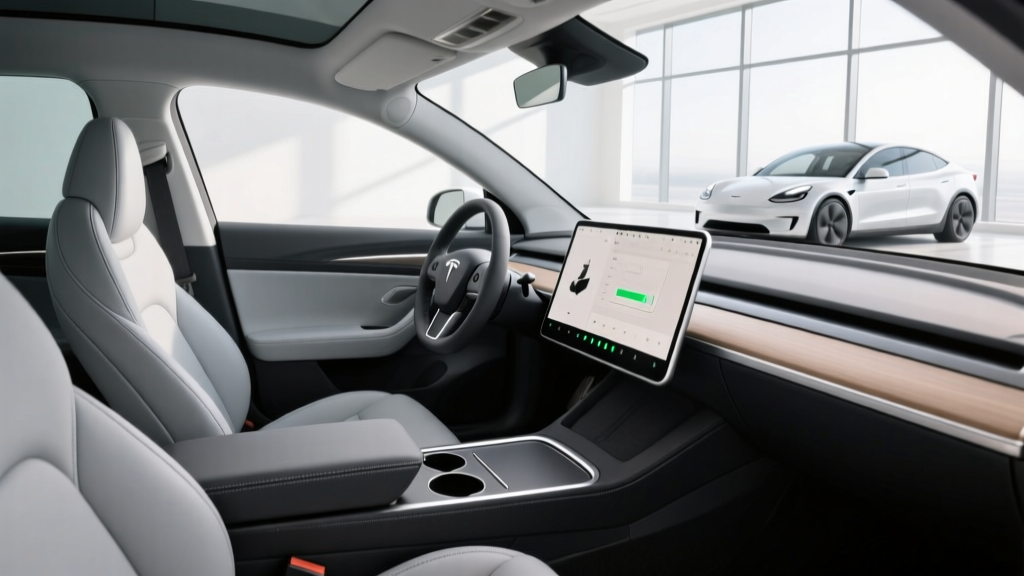
The 2025 Model 3 interior carries over the Highland overhaul introduced in late 2023. The dashboard is wrapped in soft-touch materials with a continuous ambient light strip that runs door-to-door, a far cry from the bare plastic shelf of pre-2024 cars. Ventilated front seats are now standard across all trims, and the 15.4-inch center touchscreen runs Tesla's latest UI with a dedicated climate-control bar that persists at the bottom of the display — reducing the "tap hunt" problem that plagued earlier versions.
The 2025 Model Y interior received a more modest update. New textured dashboard materials, ambient lighting, and a rear-seat 8-inch touchscreen for climate and media controls bring it closer to the Model 3's cabin quality. However, the Model Y still rides on the older pre-Highland architecture, meaning you'll notice more road noise and a firmer ride compared to the Model 3. Tesla has indicated a full "Juniper" refresh is expected, but as of the current model year, the interior remains an evolution, not a revolution.
Both models retain the signature 15.4-inch (Model 3) or 15-inch (Model Y) center display as the sole interface for navigation, media, vehicle controls, and the glovebox release. The steering-wheel-mounted turn-signal buttons and stalkless shifter remain contentious — new owners typically adapt within a week, but renters and frequent car-switchers should budget mental overhead.
Range, Battery & Efficiency: The Numbers That Matter
| Spec | 2025 Model 3 RWD | 2025 Model 3 Long Range AWD | 2025 Model Y Long Range AWD | 2025 Model Y Performance |
|---|---|---|---|---|
| EPA Range | 272 mi | 363 mi | 320 mi | 280 mi |
| Battery (usable) | ~60 kWh (LFP) | ~75 kWh (NMC) | ~75 kWh (NMC) | ~75 kWh (NMC) |
| Efficiency | 132 MPGe / 25 kWh/100mi | 134 MPGe / 25 kWh/100mi | 122 MPGe / 28 kWh/100mi | 111 MPGe / 30 kWh/100mi |
| 0–60 mph | 5.8 sec | 4.2 sec | 4.8 sec | 3.3 sec |
| Horsepower | 271 hp | 346 hp | 384 hp | 456 hp |
| Drivetrain | RWD (single motor) | AWD (dual motor) | AWD (dual motor) | AWD (dual motor) |
Real-World Range Reality Check: The EPA numbers above assume a mix of city and highway driving at moderate temperatures. In sustained 75-mph highway driving at 70°F, expect the Model 3 Long Range to deliver roughly 300–315 miles. In freezing conditions (below 32°F), LFP-equipped RWD models can lose 25–30% of range without preconditioning, dropping the 272-mile sticker to around 190–205 miles. NMC Long Range models fare better, typically losing 15–20% in cold weather thanks to Tesla's heat pump and battery preconditioning. Always precondition before highway trips and DC fast charging — it meaningfully recovers range and charge speed.
The LFP (lithium iron phosphate) battery in the RWD Model 3 is a key differentiator. LFP chemistry sacrifices some energy density — hence the lower range — but offers superior cycle life and can be routinely charged to 100% without accelerating degradation. Tesla recommends 100% daily charges for LFP packs, which effectively narrows the usable-range gap with NMC models for drivers who charge at home every night. NMC (nickel manganese cobalt) packs in Long Range and Performance trims should be charged to 80% daily for longevity, reserving 100% for road trips.
Charging Speed: DC Fast, Level 2 & Home Setup
| Charging Level | Model 3 / Model Y (NMC Long Range) | Model 3 RWD (LFP) |
|---|---|---|
| DC Fast Charge (peak) | 250 kW (Supercharger V3/V4) | 170 kW |
| 10–80% DC Fast Time | ~25–28 min | ~30–35 min |
| Level 2 (240V, 48A) | 11.5 kW / ~44 mi/hr | 11 kW / ~40 mi/hr |
| Level 1 (120V, 12A) | ~1.4 kW / ~5 mi/hr | ~1.4 kW / ~5 mi/hr |
| Connector | NACS (native Tesla) | NACS (native Tesla) |
Tesla's Supercharger network remains the gold standard for DC fast charging reliability. The NACS (North American Charging Standard) connector is native to all 2025 Teslas, and with most legacy CCS chargers now offering NACS adapters or built-in cables, connector compatibility is rarely an issue. On a V3 Supercharger (250 kW peak), the Model 3 Long Range follows a typical charge curve: it sustains near-peak power from 10% to roughly 45% State of Charge, then tapers progressively. The 10–80% time of ~25–28 minutes is real-world achievable with a preconditioned battery — skip preconditioning and that number stretches to 35+ minutes, especially in cold weather.
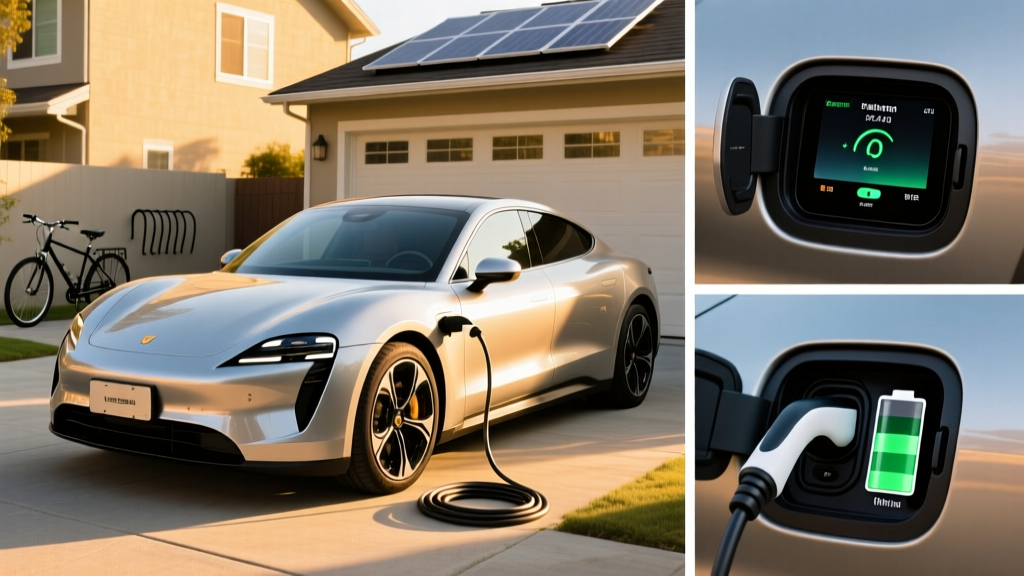
For home charging, a Tesla Wall Connector on a 60-amp circuit (48A continuous) delivers 11.5 kW, adding roughly 44 miles of range per hour. An overnight 8-hour session replenishes about 350 miles — more than enough for any daily commute. Installation costs typically run $500–$1,500 for the electrician work on an existing 200-amp panel; older homes with 100-amp service may need a $1,500–$3,000 panel upgrade. Always get a quote from a licensed electrician before purchasing equipment.
Pricing, Tax Credits & Total Cost
| Trim | Base MSRP | Est. After §30D Credit* | Federal Credit Eligible? |
|---|---|---|---|
| Model 3 RWD | $38,990 | ~$31,490 | Yes (up to $7,500) |
| Model 3 Long Range AWD | $45,990 | ~$38,490 | Yes (up to $7,500) |
| Model Y Long Range AWD | $44,990 | ~$37,490 | Yes (up to $7,500) |
| Model Y Performance | $48,990 | ~$41,490 | Yes (up to $7,500) |
*Federal §30D tax credit eligibility depends on multiple factors. Per IRS rules, the buyer must meet income caps ($150K single / $300K joint MAGI), the vehicle MSRP must not exceed $55,000 for sedans (Model 3) or $80,000 for SUVs/trucks (Model Y), and battery components and critical minerals must meet domestic-sourcing thresholds that tighten annually. As of 2025, both Model 3 and Model Y variants listed above qualify for the full $7,500 credit for eligible buyers, and Tesla supports point-of-sale transfer — meaning the credit reduces your purchase price at delivery rather than waiting for a tax refund. Confirm eligibility with a tax professional before ordering, as sourcing rules change.
Beyond the sticker, factor in Tesla's $1,390 destination fee, potential state incentives (California's CVRP, Colorado's innovative motor vehicle credit, and others vary by jurisdiction — check your state energy office), and insurance. Tesla insurance averages 15–25% higher than comparable non-EV sedans and crossovers, though Tesla's own insurance product (available in most states) can be competitive for clean-record drivers.
Cargo, Passenger Space & Daily Practicality
The Model 3 offers 23 cubic feet of trunk space plus a modest front trunk (frunk) suitable for a charging cable bag and groceries. Rear legroom measures 35.2 inches — adequate for adults under 6 feet but tight for taller passengers on long trips. The Model Y significantly outpaces it with 30.2 cubic feet behind the second row (76.2 cu ft with seats folded) and 40.5 inches of rear legroom. The Model Y's hatchback design and optional third-row seat (small, best for children) make it the clear family pick.
Both vehicles include a HEPA air filtration system ("Bioweapon Defense Mode"), wireless phone charging pad, and USB-C ports front and rear. Neither offers Apple CarPlay or Android Auto — Tesla's native infotainment handles navigation, Spotify, Apple Music, and podcasts directly. The built-in navigation with real-time Supercharger routing remains best-in-class for EV trip planning.
Driver Assistance: Autopilot, FSD, and SAE Level Reality
SAE Automation Level: Level 2. Tesla's Autopilot (included) and Full Self-Driving Supervised ($8,000 option or $99/month subscription) are not self-driving systems. The driver must remain fully engaged, hands on or near the wheel, and eyes on the road at all times. These are advanced driver-assistance systems, comparable to GM's Super Cruise or Ford's BlueCruise in SAE classification. Only Level 4 robotaxi services like Waymo operate without a human driver.
Standard Autopilot includes Traffic-Aware Cruise Control and Autosteer (lane-centering) on highways. FSD Supervised adds automatic lane changes, navigation-guided on/off-ramp handling, traffic-light and stop-sign recognition, and Autopark. In practice, FSD has improved substantially with the v12+ neural-network-based stack, but it still requires active supervision — expect occasional phantom braking, construction-zone hesitation, and the need to take over in complex urban scenarios. For most buyers, standard Autopilot is sufficient; FSD is an enthusiast option, not a necessity.
Warranty & Long-Term Ownership
Tesla's warranty structure is straightforward:
- Basic Vehicle: 4 years / 50,000 miles
- Battery & Drive Unit: 8 years / 100,000 miles (RWD) or 8 years / 120,000 miles (Long Range & Performance)
- Battery Capacity Guarantee: Minimum 70% retention over the warranty period
Tesla's battery degradation track record is strong. Fleet data aggregated by sources like Tesla's Impact Report shows Model 3/Y packs retaining approximately 85% of original capacity at 150,000 miles. Out-of-warranty battery replacement costs range from $12,000–$16,000 depending on pack size, though most owners will never need one within typical ownership periods.
Pros, Cons & How It Compares
Pros
- Supercharger network reliability — still the most dependable DC fast-charging ecosystem in North America
- Class-leading efficiency — Model 3 Long Range hits 134 MPGe, stretching every kWh further than most rivals
- Over-the-air updates continuously add features post-purchase
- Highland Model 3 cabin is genuinely quiet and well-finished
- Strong resale value relative to most EV competitors
- Point-of-sale tax credit transfer simplifies the purchase
Cons
- Model Y interior still lags behind Model 3 Highland in refinement and noise isolation
- No Apple CarPlay / Android Auto — a dealbreaker for some buyers
- Stalkless steering wheel and button turn signals require adaptation
- Insurance premiums run higher than segment average
- FSD subscription cost is steep for a Level 2 system
- Service center wait times can stretch weeks in some metro areas
Against the Hyundai Ioniq 6 (360-mile range, 800V architecture, ~$2,000 less), the Model 3 wins on charging network and software but trails on rear-seat space and ride comfort. The BMW i4 offers a more traditional luxury interior at a higher price. The Model Y's most direct rival, the Ford Mustang Mach-E, offers comparable range and a more conventional cabin layout but can't match Tesla's Supercharger infrastructure advantage — though Ford's NACS adapter now grants Mach-E owners Supercharger access, narrowing that gap.
Frequently Asked Questions
What is the real-world range of the 2025 Tesla Model 3 and Model Y?
The EPA rates the Model 3 Long Range at 363 miles and the Model Y Long Range at 320 miles. In real-world highway driving at 70–75 mph, expect roughly 300–315 miles from the Model 3 LR and 270–285 from the Model Y LR. Cold weather (below freezing) reduces these figures by 15–30% depending on preconditioning and heat-pump usage. The LFP-equipped Model 3 RWD (EPA 272 mi) delivers roughly 230–240 real-world miles in temperate conditions.
How fast does a 2025 Tesla charge at home and on the road?
On a Tesla Supercharger (250 kW peak), the Model 3/Y Long Range charges from 10–80% in approximately 25–28 minutes with a preconditioned battery. At home on a Level 2 Wall Connector (48A / 11.5 kW), you'll add about 44 miles of range per hour — a full overnight charge covers any daily commute. Level 1 (standard 120V outlet) adds roughly 5 miles per hour, suitable only for emergencies or very low-mileage drivers.
Does the 2025 Tesla Model 3 or Model Y qualify for the $7,500 federal tax credit?
Yes — as of 2025, eligible variants of both Model 3 and Model Y qualify for up to $7,500 under IRS §30D, provided the buyer meets income caps ($150K single / $300K joint), the MSRP is within limits ($55K sedan cap / $80K SUV cap), and battery-sourcing requirements are met. Tesla supports point-of-sale transfer, so the credit reduces your delivery price. Always verify current rules at irs.gov and consult a tax professional, as critical-mineral thresholds tighten yearly.
Is the 2025 Tesla interior worth it compared to competitors?
The refreshed Model 3 Highland interior is competitive with entry-level luxury sedans — quiet, well-materials, and tech-forward. The Model Y interior is functional but still a step behind in refinement. If cabin luxury is your top priority, the BMW i4 or Mercedes EQB may appeal more. If you value software integration, Supercharger access, and efficiency above all, Tesla's cabin is purpose-built for that mission.
What's the biggest drawback of owning a 2025 Tesla?
Beyond the polarizing minimalist controls, the most-cited owner frustrations are service-center wait times (Tesla's service footprint hasn't scaled with sales volume), higher-than-average insurance costs, and the lack of Apple CarPlay/Android Auto. The Model Y's ride quality and road noise also trail the Model 3 Highland noticeably — a factor if you do a lot of highway miles.
Who is the 2025 Tesla best suited for?
The Model 3 is ideal for solo commuters and couples who value driving dynamics, efficiency, and a refined cabin at a relatively accessible price. The Model Y fits families needing cargo space, all-weather AWD capability, and road-trip range. Both are strongest for buyers with reliable home charging access and regular access to the Supercharger network for longer trips.
Sources: EPA range and efficiency data via fueleconomy.gov; federal tax credit rules via IRS §30D guidance; Tesla specifications via Tesla's official configurator and press materials.