Quick Verdict: The Solterra Finds Its Footing in 2025
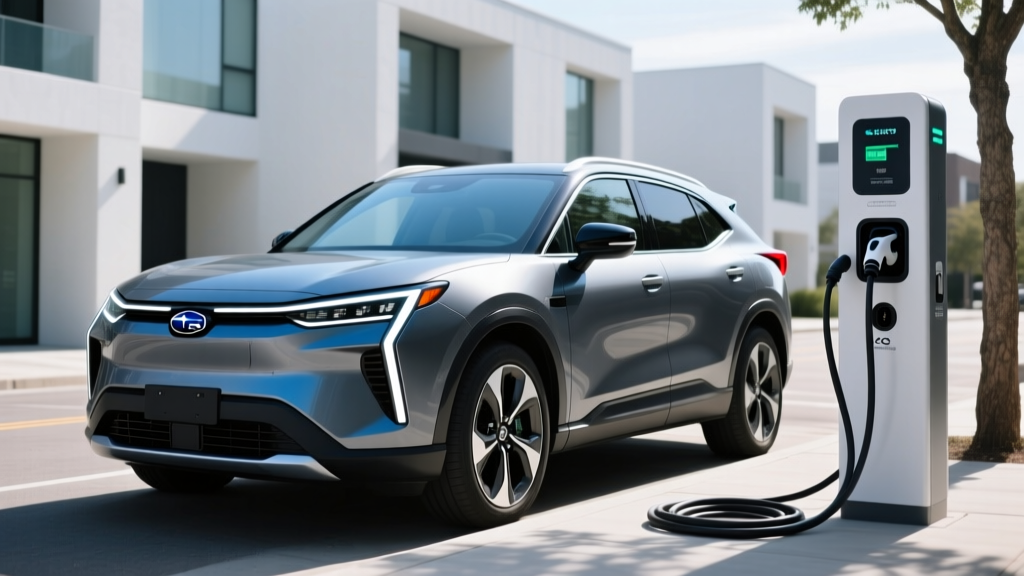
The 2025 Subaru Solterra enters its third model year with the upgrades buyers have been demanding since its 2023 debut: faster DC charging, a functional hands-free driving assist, and a slightly larger battery buffer that pushes EPA range past 220 miles on most trims. Built on the same Toyota-co-developed e-TNGA platform as the bZ4X, the Solterra still differentiates itself with standard dual-motor all-wheel drive, 8.3 inches of ground clearance, and Subaru's X-MODE traction system — making it the most off-road-capable compact electric SUV on the market.
But the Solterra still lives with compromises rooted in its platform. Efficiency lags behind rivals like the Hyundai Ioniq 5 and Tesla Model Y, rear-seat headroom is tight for the segment, and the 227-mile maximum EPA range (on Limited and Touring trims with the smaller 18-inch wheels) means road trips require planning. If you need a daily-driver EV that can handle snow, dirt roads, and genuine all-weather confidence, the Solterra is compelling. If you prioritize maximum range or charging speed above all else, competitors do it better.
Full Spec Sheet: 2025 Subaru Solterra at a Glance
| Specification | Detail |
|---|---|
| EPA Range (Premium, 20" wheels) | 222 miles |
| EPA Range (Limited/Touring, 18" wheels) | 227 miles |
| Usable Battery Capacity | 72.8 kWh (lithium-ion, NMC chemistry) |
| Max DC Fast Charge Rate | 150 kW (peak) |
| 10–80% DC Fast Charge Time | ~35 minutes |
| Level 2 Home Charge Rate | 7.2 kW (approx. 21 mi/hr) |
| Drivetrain | Dual-motor AWD (standard all trims) |
| Horsepower / Torque | 215 hp / 249 lb-ft |
| 0–60 mph | 6.0 seconds |
| EPA Efficiency (combined) | 102 MPGe / 33 kWh/100 mi |
| Ground Clearance | 8.3 inches |
| Cargo Volume (rear seats up / down) | 23.8 / 56.9 cu ft |
| Rear Legroom | 35.7 inches |
| Battery Warranty | 8 years / 100,000 miles (capacity ≥70%) |
| Base MSRP (Premium trim) | $39,995 (incl. $1,495 destination) |
| As-Tested Price (Touring trim) | ~$49,500 |
Range and Efficiency: EPA Numbers vs. Reality
For 2025, Subaru revised the Solterra's battery management system to allow a slightly larger usable buffer from the 72.8 kWh NMC pack. The result is an EPA-estimated 227 miles on the Limited and Touring trims (equipped with 18-inch alloy wheels and all-season tires) and 222 miles on the Premium trim, which rides on larger 20-inch wheels that increase rolling resistance.
EPA Sticker: 222–227 miles depending on trim/wheel size.
Mixed driving (55/45 city/highway, 65°F): Expect 195–215 miles before reaching 10% SoC.
Sustained highway (75 mph, 70°F): Approximately 175–190 miles. The Solterra's boxy shape and standard AWD create aerodynamic and drivetrain drag that hurts highway efficiency relative to RWD competitors.
Cold weather (30°F, highway): Plan for 140–165 miles. The Solterra uses a resistive PTC heater rather than a heat pump, which draws significant energy from the traction battery in winter conditions. Preconditioning while plugged in helps, but cold-weather range loss of 25–35% is realistic.
The efficiency figure of 102 MPGe combined (33 kWh per 100 miles) trails the segment. For comparison, the Hyundai Ioniq 5 RWD achieves 117 MPGe combined, and the Tesla Model Y Long Range returns 122 MPGe. The Solterra's standard dual-motor AWD, higher ride height, and 4,365-pound curb weight all contribute to its thirstier consumption. If you drive primarily in the city at moderate speeds, you'll see results closer to the EPA estimate. Highway-heavy commutes and cold climates will expose the gap.
Sources: EPA fueleconomy.gov — 2025 Subaru Solterra
Charging Speed: 2025 Improvements and Remaining Gaps
The most significant 2025 upgrade is the Solterra's improved DC fast-charging capability. Subaru revised the thermal management and charge protocol to raise peak charge acceptance from the original 100 kW to a claimed 150 kW peak. In practice, the charging curve still tapers aggressively — you'll see 150 kW only briefly at low state-of-charge (around 10–20% SoC), with the rate dropping to roughly 80–100 kW by 50% SoC and falling further above 70%.
| Charging Level | Power / Voltage | Speed (Miles Added) | Time |
|---|---|---|---|
| Level 1 (120V household) | ~1.2 kW | ~3–4 miles per hour | ~60+ hours (0–100%) |
| Level 2 (240V, 32A home charger) | 7.2 kW | ~21 miles per hour | ~10 hours (0–100%) |
| DC Fast Charge (CCS) | Up to 150 kW peak | ~130 miles in 20 min | ~35 min (10–80%) |
The 35-minute 10–80% time is competitive with older 400-volt EVs but trails 800-volt rivals. The Hyundai Ioniq 5 and Kia EV6, both on 800V architectures, complete the same 10–80% session in approximately 18 minutes. On a road trip, that 17-minute gap per stop adds up.
At home, the onboard 7.2 kW charger means a full Level 2 replenishment takes roughly 10 hours. Most owners charging overnight from a typical 20–80% daily window will need 6–7 hours on a Level 2 station. Subaru includes a dual-voltage Level 1 cord with the vehicle, but for daily usability, a 240V Level 2 home installation is effectively mandatory. Expect $500–$1,500 for a quality Level 2 EVSE and $800–$2,500 for professional installation depending on your electrical panel's capacity and proximity to the parking spot.
The Solterra uses a CCS1 connector for DC fast charging. Subaru has not announced a transition to NACS (Tesla's connector) for the Solterra, though access to Tesla Supercharger networks via adapter is available for Subaru EVs as of late 2024 through the industry-wide adapter program.
Performance and Driving Dynamics
Every 2025 Solterra comes with dual electric motors — one on each axle — producing a combined 215 horsepower and 249 lb-ft of torque. The 0–60 mph sprint takes 6.0 seconds, which is adequate for merging and passing but noticeably slower than the Tesla Model Y Long Range (5.0 seconds) or the Ioniq 5 AWD (5.1 seconds). Subaru prioritized traction and low-speed control over straight-line speed.
Where the Solterra genuinely shines is off-pavement. X-MODE, carried over from Subaru's ICE lineup, adjusts torque distribution, traction control, and throttle mapping for snow, dirt, and mud. The 8.3 inches of ground clearance exceeds the Ioniq 5 (6.1 inches) and the Model Y (6.6 inches), giving the Solterra legitimate capability on forest service roads, snowy driveways, and trailheads. This is the EV that Subaru's core buyer base — outdoor-oriented, all-weather drivers — has been asking for.
Ride quality is composed and the steering is well-weighted, but the Solterra's 4,365-pound curb weight is noticeable through corners. Body roll is moderate, and the regenerative braking system, while offering adjustable levels via steering-wheel paddles, does not provide true one-pedal driving that brings the car to a complete stop — you'll still need the friction brakes at low speeds.
Interior, Cargo, and Technology
The cabin uses a 12.3-inch touchscreen (on Limited and Touring trims; the Premium gets an 8-inch display) running Subaru's latest Starlink infotainment software. Wireless Apple CarPlay and Android Auto are standard on upper trims. The interface is functional but not class-leading — response times are slightly sluggish, and the menu hierarchy requires more taps than competitors for common adjustments like climate and drive modes.
New for 2025 is Subaru's hands-free driving assist system, which operates at speeds up to 25 mph in stop-and-go traffic on divided highways. This is an SAE Level 2 driver-assistance system — the driver must remain attentive and keep hands available to resume control at any time. It is not autonomous driving. Subaru's Eyesight suite (adaptive cruise, lane centering, pre-collision braking) remains standard across all trims and continues to be one of the more reliable Level 2 systems in the mainstream market.
Cargo space measures 23.8 cubic feet behind the rear seats and 56.9 cubic feet with the 60/40 split rear seats folded. That trails the Model Y (30.2 / 72.1 cu ft) and the Ioniq 5 (27.2 / 59.3 cu ft). Rear legroom at 35.7 inches is adequate but not generous — taller passengers will find the sloping roofline reduces effective headroom. There is no front trunk (frunk); the space under the hood houses power electronics.
Pricing, Trims, and Federal Tax Credit Eligibility
The 2025 Solterra is offered in three trims:
| Trim | MSRP (incl. destination) | Key Features | Est. After §30D Credit* |
|---|---|---|---|
| Premium | $39,995 | 8" touchscreen, heated front seats, X-MODE, 20" wheels | ~$32,495 |
| Limited | $43,495 | 12.3" touchscreen, power liftgate, 18" wheels, heated steering wheel | ~$35,995 |
| Touring | $47,495 | Harman Kardon audio, ventilated seats, panoramic roof, hands-free assist | ~$39,995 |
*Federal tax credit estimate assumes buyer eligibility. See rules below.
Federal §30D Tax Credit Eligibility (2025 tax year): The Solterra's MSRP falls below the $80,000 SUV cap, and Subaru's parent company (Toyota) has manufacturing agreements that have allowed the vehicle to qualify for at least partial credit under the current battery-sourcing and critical-minerals requirements. However, eligibility depends on several buyer-specific factors:
- Income caps: Modified adjusted gross income must not exceed $150,000 (single), $225,000 (head of household), or $300,000 (joint filers).
- MSRP cap: Vehicle MSRP must be ≤$80,000 for SUVs (all Solterra trims qualify).
- Battery sourcing: A percentage of critical minerals and battery components must be sourced from the U.S. or free-trade-agreement countries. These thresholds increase annually. Confirm current-year compliance on the vehicle's window sticker or at IRS.gov's qualified vehicle list.
- Point-of-sale transfer: As of 2024, buyers can transfer the credit to the dealer at purchase, reducing the out-of-pocket price immediately rather than waiting to claim it on a tax return.
The credit amount can be up to $7,500, but partial credits ($3,750) apply if only one of the two sourcing requirements (critical minerals OR battery components) is met. Always verify the specific VIN's eligibility with your dealer and consult a tax professional before relying on the credit in your purchase decision. Rules can change annually.
Ownership Costs and Warranty
Subaru covers the Solterra's battery pack and electric powertrain with an 8-year/100,000-mile warranty, guaranteeing the battery will retain at least 70% of its original capacity during that period. The limited vehicle warranty is 3 years/36,000 miles, which is average for the segment. Subaru also includes 2 years of complimentary scheduled maintenance and, on some trims, a period of complimentary DC fast charging through partnered networks (terms vary by model year and region).
Insurance premiums for the Solterra tend to run 10–20% higher than comparable gas-powered Subarus due to the higher repair costs associated with EV battery and powertrain components. Expect annual premiums in the $1,800–$2,400 range depending on your state, driving history, and coverage level.
Electricity costs to charge the Solterra will vary significantly by region. At the national average residential rate of approximately $0.16/kWh, fully charging the 72.8 kWh battery costs roughly $11.65, yielding a cost-per-mile of about $0.052. Compare that to a 25 MPG gas vehicle at $3.40/gallon — approximately $0.136 per mile. Over 15,000 miles annually, the Solterra saves roughly $1,260 in fuel costs. Over five years, that's $6,300 in fuel savings, partially offsetting the higher purchase price.
Pros, Cons, and Who Should Buy the 2025 Solterra
- Standard dual-motor AWD with genuine off-road capability (X-MODE, 8.3" clearance)
- Improved 150 kW peak DC charging for 2025
- Strong safety ratings and standard Eyesight Level 2 driver assist
- Comfortable ride quality and good visibility
- Federal tax credit eligible (verify sourcing rules per VIN)
- Competitive pricing in the AWD EV SUV segment
- Below-average efficiency (102 MPGe combined) hurts real-world range
- No heat pump — significant cold-weather range loss
- Cargo space trails key competitors (23.8 cu ft vs 27–30 cu ft)
- 35-minute 10–80% charge time lags 800V rivals
- No front trunk (frunk)
- Infotainment system feels dated compared to Hyundai/Tesla
- Regenerative braking does not offer full one-pedal stop
- You live in a snowy or mountainous region and need AWD with real ground clearance
- You regularly drive on unpaved roads, forest service roads, or to trailheads
- You value Subaru's safety reputation and standard driver-assist features
- Your daily commute is under 150 miles round-trip
- You take frequent road trips exceeding 200 miles and want minimal charging stops
- Maximum cargo space is a priority (consider the Model Y or Kia EV6)
- You live in a very cold climate and need heat-pump efficiency (consider the Ioniq 5 or VW ID.4 with heat pump option)
- Fastest possible DC charging is critical (the Ioniq 5 and EV6 charge nearly twice as fast)
Frequently Asked Questions
What is the real-world range of the 2025 Subaru Solterra?
The EPA rates the Solterra at 222–227 miles depending on trim and wheel size. In mixed real-world driving at moderate temperatures, expect 195–215 miles. Highway driving at 75 mph drops that to roughly 175–190 miles, and cold-weather driving (around 30°F) can reduce range to 140–165 miles due to the lack of a heat pump and increased battery resistance.
How fast does the 2025 Solterra charge?
On a DC fast charger, the 2025 Solterra peaks at 150 kW and completes a 10–80% session in approximately 35 minutes. At home on a Level 2 (240V, 32A) charger, it adds about 21 miles of range per hour, requiring roughly 10 hours for a full charge. Level 1 (120V) charging is only practical for emergencies or very low daily mileage, adding 3–4 miles per hour.
Does the 2025 Subaru Solterra qualify for the federal EV tax credit?
The Solterra's MSRP is below the $80,000 SUV cap, and it has appeared on the IRS qualified vehicle list for partial or full credit depending on the model year and battery-sourcing compliance. However, your personal eligibility depends on income limits ($150K single / $300K joint), and the vehicle's battery component and critical mineral sourcing must meet current-year thresholds. Verify the specific VIN at IRS.gov and consult a tax professional.
Is the Solterra worth buying vs. the Hyundai Ioniq 5 or Tesla Model Y?
It depends on your priorities. The Ioniq 5 offers superior efficiency (117 MPGe), faster charging (~18 min 10–80%), and more cargo space, making it the better road-trip EV. The Model Y leads in range (310+ miles), charging network access, and cargo volume. The Solterra wins on all-weather and off-road capability, ground clearance, and Subaru's safety-first reputation. If you need an EV that handles snow, mud, and trails confidently, the Solterra is the strongest choice in its class.
What is the biggest drawback of the 2025 Solterra?
The Solterra's efficiency is its most significant limitation. At 102 MPGe combined and without a heat pump, it consumes more electricity per mile than most rivals, which compounds into shorter real-world range — especially in cold weather and at highway speeds. For buyers in cold climates or those with long commutes, this efficiency gap is the most consequential trade-off.
Does the Solterra have one-pedal driving?
Not fully. The Solterra offers adjustable regenerative braking via steering-wheel paddles, but the system does not bring the vehicle to a complete stop on its own. You'll still need to apply the friction brake pedal at very low speeds and when coming to a full stop. This is a deliberate engineering choice by Subaru for smoother low-speed behavior, but some EV drivers accustomed to full one-pedal operation find it an adjustment.