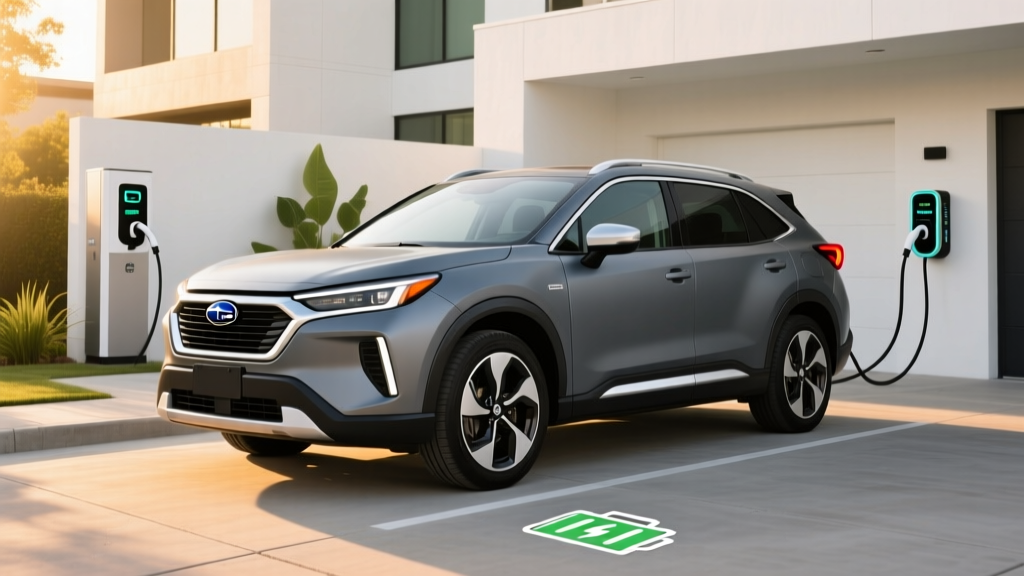
The Subaru Solterra enters its third model year in 2025 with meaningful updates that address the most common criticisms of the original 2023 launch. Faster DC charging, a slightly larger usable battery buffer, and revised pricing make this electric SUV a more compelling proposition — particularly for buyers exploring a 2025 Subaru Solterra lease to take advantage of EV incentives without long-term battery risk.
Built on the e-TNGA platform co-developed with Toyota (the Solterra shares its bones with the bZ4X), the 2025 Solterra is Subaru's only all-electric vehicle and the only EV in its class that comes standard with symmetrical all-wheel drive on every trim. If you need genuine AWD traction for snow and dirt roads but want electric daily driving, this is currently a segment of one.
2025 Subaru Solterra: Full Specifications at a Glance
| Specification | Value |
|---|---|
| EPA Range (Premium/Onyx Edition Touring) | 227 miles |
| EPA Range (Limited trim, 18" wheels) | 222 miles |
| Battery Capacity (usable) | 71.4 kWh (lithium-ion, NMC chemistry) |
| Max DC Fast-Charge Rate | 150 kW |
| 10–80% DC Fast-Charge Time | ~35 minutes |
| Level 2 Home Charge Rate | 7.2 kW (onboard charger) |
| Level 2 Full Charge Time | ~9.5 hours |
| Powertrain | Dual-motor AWD (80 kW front + 80 kW rear) |
| Total System Horsepower | 215 hp |
| Total System Torque | 248 lb-ft |
| 0–60 mph | 6.0 seconds |
| EPA Efficiency (Combined) | 104 MPGe (32 kWh/100 mi) |
| Cargo Volume (behind rear seats) | 27.7 cu ft |
| Cargo Volume (rear seats folded) | 63.5 cu ft |
| Rear Legroom | 35.7 inches |
| Towing Capacity | Not rated for towing |
| Ground Clearance | 8.3 inches |
| Base MSRP (Premium) | $46,345 |
| Battery/Powertrain Warranty | 8 years / 100,000 miles |
Real-World Range: What the EPA Sticker Doesn't Tell You
The Solterra's 71.4 kWh usable battery (NMC lithium-ion chemistry) sits mid-pack for the compact electric SUV segment. Subaru improved thermal management for 2025, which helps preserve range in cold weather and supports the faster charging speeds. However, the efficiency rating of 32 kWh per 100 miles means the Solterra consumes more energy per mile than rivals like the Hyundai Ioniq 5 (29 kWh/100 mi) or Tesla Model Y (28 kWh/100 mi). That additional consumption comes largely from the standard dual-motor AWD system, which adds weight and mechanical drag compared to single-motor competitors.
For daily commuting within a 40-mile round trip, the Solterra's range is more than sufficient even in winter. For road trips, you'll need to plan charging stops roughly every 160–180 miles to maintain a comfortable buffer — which is manageable on corridors with reliable DC fast-charging infrastructure but requires more forethought than longer-range alternatives.
Charging Speed: A Major 2025 Improvement
The biggest hardware upgrade for the 2025 Solterra is its DC fast-charging capability. Subaru increased the peak charge rate from the 2024 model's roughly 100 kW to 150 kW, cutting the 10–80% charging time from approximately 56 minutes down to about 35 minutes.
| Charging Level | Power | Time / Rate | Typical Use Case |
|---|---|---|---|
| Level 1 (120V household) | ~1.4 kW | ~3–4 miles per hour | Emergency / overnight trickle |
| Level 2 (240V home) | 7.2 kW | ~23 miles per hour / ~9.5 hrs full | Daily home charging |
| DC Fast Charge | 150 kW peak | 10–80% in ~35 minutes | Road trips, quick top-ups |
At home on a Level 2 charger, the Solterra's 7.2 kW onboard charger replenishes roughly 23 miles of range per hour. A full charge from near-empty takes about 9.5 hours — plan to plug in when you get home and the car will be topped off by morning. Most owners will rarely need the full 9.5 hours since daily driving typically consumes 30–60 miles of range.
On DC fast chargers, the Solterra's charge curve peaks around 150 kW between 10–40% state of charge, then tapers progressively. Expect roughly 80–100 kW sustained through 60% SoC, dropping further above 70%. This taper is normal for NMC batteries and protects long-term battery health, but it means charging from 80–100% takes considerably longer than 10–80%. For road trips, charging to 80% and driving on is the time-efficient strategy.
The Solterra uses the CCS1 connector for DC fast charging. Subaru has not announced a transition to the NACS (Tesla) connector for the Solterra, so you'll rely on Electrify America, EVgo, ChargePoint, and other CCS-compatible networks. Battery preconditioning is available — activate it via the navigation system when routing to a charger to warm the battery and achieve peak charge rates.
Performance and Driving Dynamics
Every 2025 Solterra comes with dual-motor all-wheel drive producing a combined 215 horsepower and 248 lb-ft of torque. The 0–60 mph sprint takes 6.0 seconds — respectable for a compact SUV and quick enough for confident highway merging. The electric powertrain delivers torque instantly from a stop, which makes the Solterra feel more responsive around town than its horsepower figure suggests.
Subaru's X-MODE with Grip Control carries over, providing selectable terrain modes for snow, dirt, and deep snow/mud. Combined with 8.3 inches of ground clearance, the Solterra offers genuine light-off-road capability that no other electric compact SUV matches. It won't replace a Wrangler on technical trails, but forest service roads, snowy driveways, and camping access roads are well within its comfort zone.
Ride quality is compliant and well-damped. The steering is light and easy for parking but lacks the precision feel of sportier EVs. Cabin noise is low at highway speeds. Regenerative braking offers adjustable levels via paddle shifters behind the steering wheel, though the maximum regen setting doesn't quite achieve true one-pedal driving — you'll still use the friction brake for final stops.
Pricing, Lease Deals, and Federal Tax Credit Eligibility
The 2025 Subaru Solterra is offered in three trims:
- Premium: $46,345 MSRP (includes destination)
- Limited: ~$49,645 MSRP
- Onyx Edition Touring: ~$53,345 MSRP
These prices position the Solterra above the base trims of key competitors but include AWD standard — a feature that costs $2,000–$4,000 extra on most rivals.
Federal Tax Credit (§30D) Eligibility
- Vehicle MSRP must be ≤ $80,000 for SUVs — Solterra qualifies (all trims under cap)
- Buyer AGI limits: $150,000 (single), $225,000 (head of household), $300,000 (joint) — verify with your tax professional
- Battery critical-mineral and component sourcing requirements apply — Subaru's battery sourcing eligibility varies by build date; confirm current status at IRS qualified vehicle list
- Credit can be transferred to dealer at point of sale for an upfront price reduction
- Maximum credit: up to $7,500 ($3,750 for critical minerals + $3,750 for battery components)
Why a Lease May Be the Smartest Path
If the Solterra's battery sourcing disqualifies it from the full $7,500 purchase credit, leasing changes the equation. Under current IRS rules, leased EVs may qualify for the commercial clean vehicle credit (§45W), which the leasing company can pass through as a lease incentive — and this credit has no MSRP cap, no buyer income limit, and no battery-sourcing requirement. Many Subaru dealerships advertise 2025 Solterra leases with $7,500 in lease cash applied, effectively reducing monthly payments by $150–$200 compared to an unsubsidized lease.
A typical 2025 Solterra lease structure might look like: 36 months, 10,000 miles/year, ~$299–$399/month with $2,500–$3,999 due at signing depending on trim and dealer incentives. Compare this to purchasing at $46,345 minus a potential $7,500 credit (if eligible), and the lease often wins on monthly cash flow while also shielding you from long-term battery degradation risk and resale-value uncertainty.
Interior, Technology, and Daily Livability
The 2025 Solterra's interior blends Subaru's utilitarian heritage with modern EV expectations. A 12.3-inch touchscreen (on Limited and Onyx Edition; 8-inch on Premium) runs Subaru's latest Starlink infotainment with wireless Apple CarPlay and Android Auto. The system is responsive and logically organized, though the interface design feels a generation behind the slicker UIs in Hyundai and Tesla products.
Standard features across all trims include heated front seats, a heated steering wheel, dual-zone climate control, and a heat pump — the latter being critical for preserving range in cold weather by heating the cabin more efficiently than resistive elements.
Subaru's EyeSight driver-assistance suite is standard and includes adaptive cruise control, lane-keeping assist, automatic emergency braking, and blind-spot monitoring. This is a Level 2 driver-assist system per SAE classification — it supports steering and speed control but requires the driver to remain fully engaged at all times. It is not autonomous or "self-driving."
Cargo space measures 27.7 cubic feet behind the rear seats and 63.5 cubic feet with the 60/40 split rear seats folded. Rear legroom is 35.7 inches — adequate for adults on shorter trips but tighter than the Hyundai Ioniq 5's generous 39.4 inches. There is no front trunk (frunk); the space under the hood houses drive components.
Pros and Cons
Pros
- Standard AWD on every trim — unique in the segment
- 8.3 inches of ground clearance for genuine dirt/snow capability
- Improved 150 kW DC fast charging for 2025
- Heat pump standard (critical for cold-climate efficiency)
- Strong lease incentives via §45W commercial credit
- Subaru's reputation for long-term reliability and dealer network
Cons
- 227-mile EPA range trails most competitors by 30–80 miles
- Efficiency below segment average (32 kWh/100 mi)
- No frunk; cargo space is mid-pack
- Rear legroom is tight for taller passengers
- Purchase tax credit eligibility uncertain due to battery sourcing
- CCS1 connector only — no native NACS/Supercharger access (adapter TBD)
How the Solterra Stacks Up Against Key Competitors
| Spec | Subaru Solterra | Hyundai Ioniq 5 (AWD) | Tesla Model Y (LR AWD) | VW ID.4 (AWD Pro) |
|---|---|---|---|---|
| EPA Range | 227 mi | 290 mi | 311 mi | 275 mi |
| Battery (usable) | 71.4 kWh | 77.4 kWh | ~75 kWh | 77 kWh |
| DC Fast Charge | 150 kW | 238 kW | 250 kW | 170 kW |
| 10–80% Time | ~35 min | ~18 min | ~20 min | ~30 min |
| Horsepower | 215 hp | 320 hp | 384 hp | 295 hp |
| AWD Standard? | Yes | No ($3,500+ add) | Yes | No ($3,800+ add) |
| Ground Clearance | 8.3 in | 6.1 in | 6.6 in | 6.0 in |
| Base MSRP (AWD) | $46,345 | ~$53,500 | ~$49,990 | ~$49,545 |
The Solterra's range and charging-speed disadvantages are clear on paper. However, when you factor in that AWD is standard (not a costly upgrade), the base Premium trim becomes more price-competitive. The Ioniq 5 and Model Y are superior road-trip vehicles with longer range and faster charging. The Solterra wins if you prioritize off-pavement capability, winter traction, and Subaru's dealer/support ecosystem.
Who Should Lease (or Buy) the 2025 Solterra?
Choose the Solterra if:
- You live in a cold/snowy climate and need reliable AWD year-round
- You regularly drive on unpaved roads, forest service roads, or ski-area access routes
- Your daily commute is under 80 miles round trip
- You want to lease and take advantage of strong dealer incentives
- You value Subaru's safety reputation, dealer network, and long-term reliability
Look elsewhere if:
- You take frequent road trips exceeding 200 miles between stops
- You need maximum cargo space or regularly carry rear-seat adults
- You want the fastest possible DC charging for minimal stop time
- You prefer access to Tesla's Supercharger network without adapters
Frequently Asked Questions
What is the real-world range of the 2025 Subaru Solterra?
The EPA rates the 2025 Solterra at 227 miles (222 on Limited). In real-world mixed driving, expect 190–215 miles. Highway-only driving at 70+ mph reduces this to 175–195 miles. In freezing winter conditions, plan for 155–180 miles depending on heat usage and preconditioning.
How fast does the Solterra charge at home and on the road?
At home on a Level 2 (240V) charger, the 7.2 kW onboard charger adds about 23 miles per hour, fully charging in roughly 9.5 hours. On DC fast chargers, the Solterra peaks at 150 kW and charges from 10–80% in approximately 35 minutes.
How much does the 2025 Solterra cost after tax credits?
The base Premium starts at $46,345. If eligible for the full $7,500 federal credit under §30D (verify battery sourcing on the IRS qualified vehicles list), the effective price drops to ~$38,845. On a lease, the $7,500 commercial credit (§45W) is often passed through as lease cash, significantly reducing monthly payments regardless of your income or the vehicle's battery sourcing.
Does the 2025 Solterra qualify for the federal EV tax credit?
It depends on battery-sourcing compliance, which can change by build date. All Solterra trims fall under the $80,000 SUV MSRP cap. Buyer income limits apply ($150K single / $300K joint). Always check the current IRS qualified clean vehicle list for the specific build you're considering. Leasing bypasses most of these restrictions via the §45W commercial credit.
Is the Solterra worth it compared to the Ioniq 5 or Model Y?
For pure range, charging speed, and performance, the Ioniq 5 and Model Y are objectively better EVs. The Solterra's case rests on its standard AWD, superior ground clearance, cold-weather readiness with a standard heat pump, and strong lease pricing. If your lifestyle involves snow, dirt roads, and outdoor access, the Solterra fills a niche no competitor addresses.
What is the Solterra's battery warranty?
Subaru covers the battery pack and electric powertrain for 8 years or 100,000 miles, whichever comes first. The warranty guarantees the battery will retain a minimum capacity threshold (typically 70% of original capacity) during the coverage period. Subaru's overall vehicle warranty is 3 years/36,000 miles bumper-to-bumper and 5 years/60,000 miles powertrain.
Sources: EPA range and efficiency data via fueleconomy.gov; federal tax credit rules via IRS.gov; manufacturer specifications via Subaru of America.