The GMC Sierra EV has been one of the most anticipated entries in the electric pickup segment, and the 2025 Sierra EV Denali Edition 1 finally delivers on GM's Ultium-platform promises — at a premium. With an EPA-estimated 440 miles of range, 754 horsepower, and a claimed 350 kW peak DC fast-charge rate enabled by its 800-volt architecture, this truck is engineered to address the three biggest concerns EV truck buyers raise: range, charging speed, and capability. But at a starting MSRP of $99,495, the question isn't whether it's impressive on paper — it's whether it justifies its price against the Rivian R1T, Ford F-150 Lightning, and the Chevrolet Silverado EV.
After spending time with the specs, charging data, and real-world ownership variables, here's everything you need to know before putting down a deposit.
2025 Sierra EV Denali: Key Specs at a Glance
| Specification | Value |
|---|---|
| EPA Estimated Range | 440 miles |
| Battery Capacity (Usable) | ~200 kWh (estimated, NMC chemistry) |
| Battery Architecture | 800V Ultium platform |
| Peak DC Fast Charge Rate | 350 kW |
| 10–80% DC Charge Time (claimed) | ~22 minutes |
| Level 2 Home Charging | 19.2 kW onboard charger (~65 mi/hr) |
| Powertrain | Dual-motor AWD (e4WD) |
| Horsepower | 754 hp |
| Torque | 785 lb-ft |
| 0–60 mph | ~4.5 seconds (GM estimate) |
| Max Towing Capacity | 10,000 lbs (12,000 lbs w/ Max Tow pkg, late availability) |
| Payload Capacity | ~1,800 lbs |
| Bed Length (MultiPro Tailgate) | 5 ft 11 in (standard); extends to ~8 ft w/ midgate |
| Base MSRP (Edition 1) | $99,495 (incl. $1,995 destination) |
| Federal Tax Credit (§30D) | Eligibility limited — see tax credit section |
| Battery/Powertrain Warranty | 8 years / 100,000 miles |
Range: What 440 EPA Miles Means in the Real World
EPA Estimate: 440 miles
Expected Highway (70–75 mph): ~340–370 miles
Expected Cold Weather (below 32°F): ~290–330 miles
Towing (5,000+ lb trailer): ~180–230 miles
GMC's 440-mile EPA figure for the Sierra EV Denali Edition 1 is among the highest of any production EV sold in the U.S. as of the 2025 model year, rivaling the Lucid Air Grand Touring. That number is derived from a massive battery pack — estimated at roughly 200 kWh of usable capacity — riding on GM's Ultium platform with pouch-format NMC (nickel manganese cobalt) cells.
But as with every EV, the EPA sticker represents a blended city/highway cycle under moderate conditions. In real-world highway driving at 70–75 mph, expect range to drop to roughly 340–370 miles. That's still exceptional — enough to cover Los Angeles to Las Vegas or Dallas to Houston without a charge stop.
Cold weather is the great equalizer for lithium-ion batteries. Below freezing, without consistent preconditioning, you can expect a 25–35% range reduction, dropping effective range to roughly 290–330 miles. GMC includes a battery preconditioning feature accessible through the infotainment system and the myGMC app, which warms the pack ahead of scheduled departures or DC fast-charging sessions. Use it — it's essential for both range preservation and charge speed in winter.
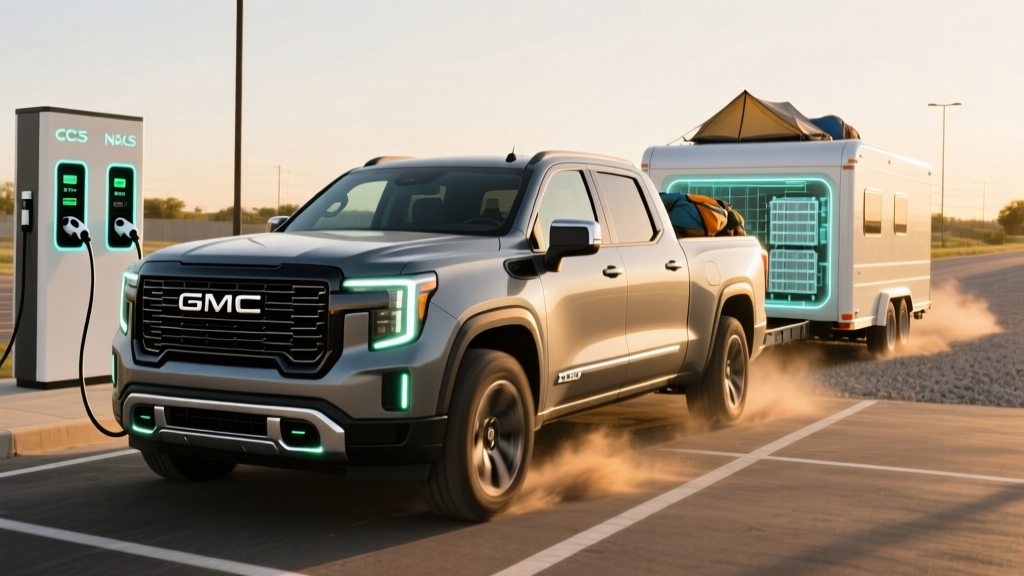
Towing is where electric trucks reveal their Achilles' heel. Pulling a 5,000-pound enclosed trailer at highway speeds, expect range to roughly halve to 180–230 miles. The Sierra EV's aerodynamic profile helps compared to boxier competitors, but physics is unforgiving when you're pushing a wall of air and trailer weight at 70 mph.
Charging Speed: 800V Architecture and the 350 kW Promise
| Charging Level | Power (kW) | Miles Added Per Hour | Notes |
|---|---|---|---|
| Level 1 (120V household) | ~1.4 kW | ~3–4 mi/hr | Emergency/trickle only |
| Level 2 (240V, 48A) | 11.5 kW | ~38 mi/hr | Standard home wall connector |
| Level 2 (240V, 80A) | 19.2 kW | ~65 mi/hr | Requires 100A circuit; full onboard charger utilization |
| DC Fast Charge (peak) | 350 kW | ~1,000+ mi/hr (peak) | Requires 350 kW-capable station (e.g., Electrify America, Tesla Supercharger V4 w/ adapter) |
The Sierra EV Denali's 800-volt architecture is the headline feature for charging. Like the Hyundai Ioniq 5 and Porsche Taycan before it, higher voltage allows faster charging at lower current, reducing heat and improving efficiency. GMC claims a peak rate of 350 kW, which translates to a 10–80% charge in approximately 22 minutes under ideal conditions.
Here's what "ideal conditions" actually means: a DC fast charger capable of delivering 350 kW (fewer than 5% of public chargers in the U.S. currently do), a battery preconditioned to optimal temperature, and a state of charge starting below 20%. In practice, most 150–200 kW chargers will deliver peak rates in the 175–200 kW range to the Sierra EV, extending the 10–80% session to roughly 30–38 minutes.
The charge curve tapers significantly above 80% SoC — a characteristic of NMC chemistry. Charging from 80–100% can add another 20–30 minutes. For road trips, the practical strategy is to charge to 80% and go, which is why the 10–80% metric matters more than a full-charge time.
For home charging, the Sierra EV Denali Edition 1 comes with a 19.2 kW onboard charger — the most powerful in its class. On a properly installed 100-amp, 240-volt circuit with an 80-amp Level 2 charger, you'll recover roughly 65 miles of range per hour. A full charge from 10% to 100% takes roughly 10–11 hours overnight. Most owners will install a 48-amp or 60-amp Level 2 unit (requiring a 60A or 80A breaker respectively), which will still comfortably replenish a day's worth of driving overnight. Budget $1,200–$2,500 for professional Level 2 home installation depending on panel proximity and whether your electrical panel needs an upgrade to 200A service.
GM has adopted the North American Charging Standard (NACS) for the Sierra EV, meaning native access to Tesla's Supercharger network — currently the largest and most reliable DC fast-charging network in the U.S. — without an adapter. This is a significant practical advantage over CCS-only vehicles.
Performance and Drivetrain: 754 Horsepower, Dual-Motor AWD
The Denali Edition 1 pairs a front and rear permanent-magnet electric motor for a combined output of 754 horsepower and 785 lb-ft of torque, routed through GMC's e4WD system. The result is a 0–60 mph time in the neighborhood of 4.5 seconds — remarkable for a truck with an estimated curb weight north of 8,800 pounds.
The instant torque delivery is the real story. Unlike a turbocharged gas V8 that needs revs to build boost, the Sierra EV delivers full torque from zero RPM. Passing maneuvers, highway merges, and towing acceleration are effortlessly immediate. Regenerative braking is configurable through multiple modes, including a one-pedal driving mode that provides enough deceleration for most stop-and-go driving without touching the brake pedal.
Ride quality benefits from the battery pack's low center of gravity and the available Adaptive Air Ride suspension, which can raise the truck for off-road clearance or lower it for highway efficiency and easier bed access. The independent rear suspension (a first for a full-size GM pickup) improves ride comfort over solid-axle competitors, particularly on rough pavement.
Towing capacity for the Edition 1 is rated at 10,000 pounds. GMC has announced a Max Tow package (availability TBD for later production phases) that increases this to 12,000 pounds. The available ProGrade trailering system includes trailer-side camera views, trailer light testing, and an integrated trailer brake controller — essential for anyone pulling serious weight.
Interior, Technology, and Cargo
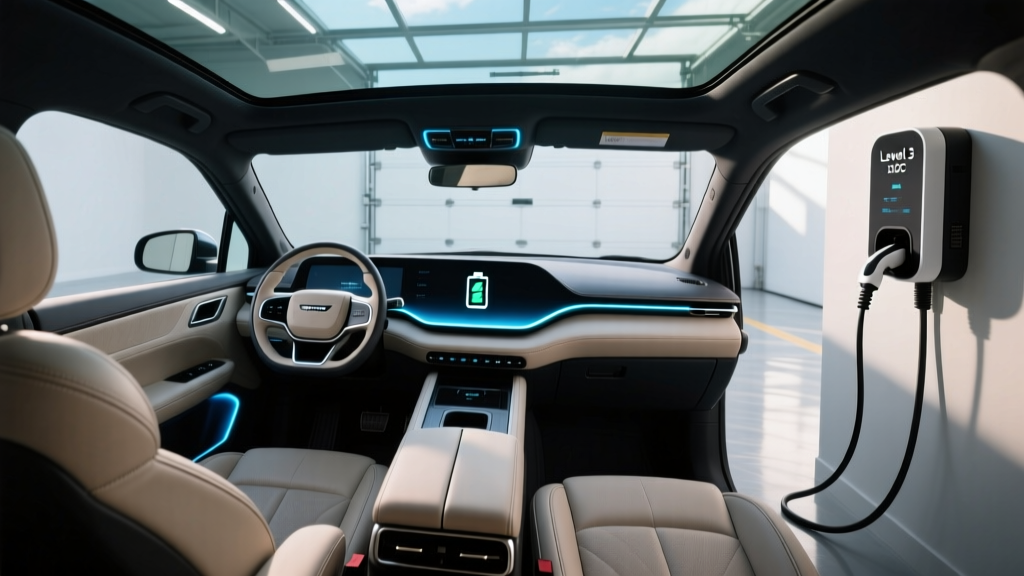
The Denali trim represents GMC's luxury apex, and the Sierra EV cabin delivers accordingly. The centerpiece is a 16.8-inch diagonal infotainment touchscreen running Google Built-In (Google Maps, Google Assistant, and Play Store apps natively). A secondary 11-inch digital instrument cluster and an available head-up display round out the driver's digital environment.
Notable tech features include:
- Super Cruise: GM's hands-free Level 2 driver-assistance system, operational on over 750,000 miles of mapped highways in the U.S. and Canada. This is not autonomous driving — you must remain attentive, and the system monitors your eyes via an infrared camera on the steering column.
- MultiPro Tailgate: A six-function tailgate with a load stop, step, and bed-extending capability.
- eTrunk (front trunk): A weather-sealed, lockable front compartment where the engine would traditionally sit — ideal for charging cables, tools, or a cooler.
- ProPower Onboard: Up to 7.2 kW of exportable power via bed-mounted and cabin outlets, enough to run power tools at a job site or appliances during an outage (with proper transfer switch setup by an electrician).
- CrabWalk (4-Wheel Steer): The rear wheels can turn up to 10 degrees, enabling diagonal movement for tight off-road trails and reducing the turning radius in parking situations.
Super Cruise is a Level 2 driver-assistance system per SAE International classification. The driver must remain engaged and supervising at all times. Hands-free does not mean attention-free. Only Level 4 services (e.g., Waymo in designated zones) operate without a human driver.
Cargo space is competitive. The 5-foot-11-inch bed is shorter than a traditional full-size truck bed, but GMC's MultiPro Midgate allows the rear cabin wall to fold forward, extending the load floor to approximately 8 feet with the tailgate closed — or nearly 10 feet with the tailgate down. Passenger space is generous, with an estimated 43+ inches of rear legroom in the crew cab configuration, rivaling the most spacious sedans.
Pricing, Trims, and Federal Tax Credit Eligibility
| Trim | Base MSRP (incl. destination) | Federal §30D Credit Eligibility |
|---|---|---|
| Denali Edition 1 | $99,495 | Not eligible — exceeds MSRP cap |
| Future: Elevation (announced) | ~$55,000–$65,000 (est.) | May qualify, subject to income + sourcing rules |
The 2025 Sierra EV launches exclusively in the Denali Edition 1 trim at $99,495 including destination. GMC has announced that lower trims (badged Elevation) will follow, with pricing targeted in the $55,000–$65,000 range, but these are not yet available for the 2025 model year.
Federal tax credit reality: Under IRS §30D rules, the Sierra EV Denali Edition 1 does not qualify for the up-to-$7,500 federal EV tax credit because it exceeds the MSRP cap for pickup trucks, which is set at $80,000. Additionally, the buyer must meet modified adjusted gross income (MAGI) caps ($150,000 single / $225,000 head of household / $300,000 married filing jointly), and the vehicle must satisfy critical-mineral and battery-component sourcing requirements that vary by model year. Always verify current eligibility at irs.gov or consult a tax professional before relying on the credit in your purchase decision.
For the future Elevation trims priced below $80,000, credit eligibility will depend on GM's battery sourcing compliance and the buyer's income. The point-of-sale transfer option (available as of 2024) allows eligible buyers to apply the credit as an immediate dealer discount rather than waiting for tax filing.
Sierra EV Denali vs. the Competition
The electric truck market in 2025 gives buyers genuine choices. Here's how the Sierra EV Denali stacks up:
- vs. Ford F-150 Lightning Platinum ($96,995): The Lightning offers less range (EPA ~320 miles extended-range) and slower DC charging (peak ~150 kW), but has a lower starting price, a proven track record since 2022, and broader dealer service infrastructure. The Sierra EV wins on range, charge speed, and tech; the Lightning wins on value and availability.
- vs. Rivian R1T Quad-Motor ($99,000+): The R1T is more agile, with superior off-road capability, a quad-motor tank-turn feature, and a more compact footprint. It sacrifices some range (~352 miles max) and lacks Super Cruise. The Sierra EV is the better highway cruiser and towing platform; the R1T is the adventure lifestyle pick.
- vs. Chevrolet Silverado EV 4WT / RST: The Silverado EV shares the Ultium platform and similar battery architecture. The RST trim is the Sierra's closest mechanical sibling, with similar range and charging. The differentiator is brand positioning: GMC Denali brings premium materials and exclusive tech; Chevy targets the fleet and value buyer.
Pros and Cons
- Class-leading 440-mile EPA range
- 800V architecture enables 350 kW peak charging
- NACS native — direct Supercharger access
- 754 hp / 4.5-sec 0-60 in a full-size truck
- Super Cruise hands-free highway driving
- ProPower Onboard (7.2 kW exportable)
- MultiPro Midgate for extended cargo
- 19.2 kW onboard Level 2 charger
- $99,495 MSRP — no federal tax credit (exceeds $80K cap)
- Heavy curb weight (~8,800+ lbs) impacts tire wear and efficiency
- Towing cuts range roughly in half
- Bed shorter than traditional 6.5-ft without midgate deployed
- Limited initial production — long wait times expected
- Only one trim available at launch (Edition 1)
- Cold-weather range loss still significant (~25-35%)
Who Should Buy the 2025 Sierra EV Denali?
The Sierra EV Denali Edition 1 is best suited for buyers who:
- Need a premium daily-driver truck with genuine long-range capability for commuting and road trips without frequent charge stops.
- Have home Level 2 charging access and can take advantage of the 19.2 kW onboard charger overnight.
- Want Super Cruise for regular highway commutes — this is one of the best Level 2 systems available for long-distance comfort.
- Tow occasionally (under 200 miles round-trip) rather than daily long-haul towing, where range limitations become a real constraint.
- Value the NACS/Supercharger ecosystem and want the most reliable public charging experience available.
It's a less ideal fit for budget-conscious buyers (the upcoming Elevation trims will be better suited), daily heavy-towing users who need 300+ miles between stops with a trailer, or those without access to reliable home or workplace charging.
Frequently Asked Questions
What is the real-world range of the 2025 Sierra EV Denali?
The EPA rates it at 440 miles, but real-world highway driving at 70–75 mph typically yields 340–370 miles. In freezing temperatures, expect 290–330 miles. Towing a 5,000-lb trailer drops range to roughly 180–230 miles.
How fast does the Sierra EV Denali charge?
On a 350 kW DC fast charger, GMC claims 10–80% in approximately 22 minutes. On more common 150–200 kW public chargers, expect 10–80% in 30–38 minutes. At home on a 19.2 kW Level 2 unit, you'll recover about 65 miles of range per hour, with a full charge taking roughly 10–11 hours.
Does the 2025 Sierra EV Denali qualify for the $7,500 federal tax credit?
No. The Denali Edition 1's $99,495 MSRP exceeds the $80,000 MSRP cap for pickup trucks under IRS §30D. Future lower-priced trims may qualify, subject to buyer income limits and battery sourcing requirements. Always check irs.gov for current rules.
What battery chemistry does the Sierra EV use?
The Sierra EV uses GM's Ultium platform with pouch-format NMC (nickel manganese cobalt) cells. NMC offers higher energy density than LFP (lithium iron phosphate), which is essential for achieving 440 miles of range in a truck this size, but it requires careful charge management — GM recommends daily charging to 80% and reserving 100% charges for road trips.
How does the Sierra EV Denali compare to the Ford F-150 Lightning?
The Sierra EV offers significantly more range (440 vs. ~320 miles), faster DC charging (350 kW vs. ~150 kW), and more horsepower (754 vs. 580). The Lightning counters with lower pricing, broader availability, more established service infrastructure, and a longer production track record. Both are excellent trucks — the Sierra EV is the technology and range leader; the Lightning is the value and availability pick.
Is Super Cruise actually self-driving?
No. Super Cruise is an SAE Level 2 driver-assistance system. It provides hands-free steering, acceleration, and braking on mapped highways, but the driver must remain attentive and ready to take over at any time. An infrared camera monitors driver attention and will issue escalating warnings — and eventually disengage — if you look away from the road.
What is the battery warranty on the Sierra EV?
GM covers the Sierra EV's battery and powertrain for 8 years or 100,000 miles, whichever comes first. The warranty guarantees the battery will retain a minimum level of capacity (typically 60–70% of original capacity, per GM's warranty documentation). Given the size of the pack, even 70% retention at 100,000 miles would still yield over 300 miles of range.
Sources: fueleconomy.gov (EPA range and efficiency data), GMC official specifications, IRS §30D Clean Vehicle Credit guidelines.