Quick Verdict: The 2025 Rivian R1T 700 at a Glance
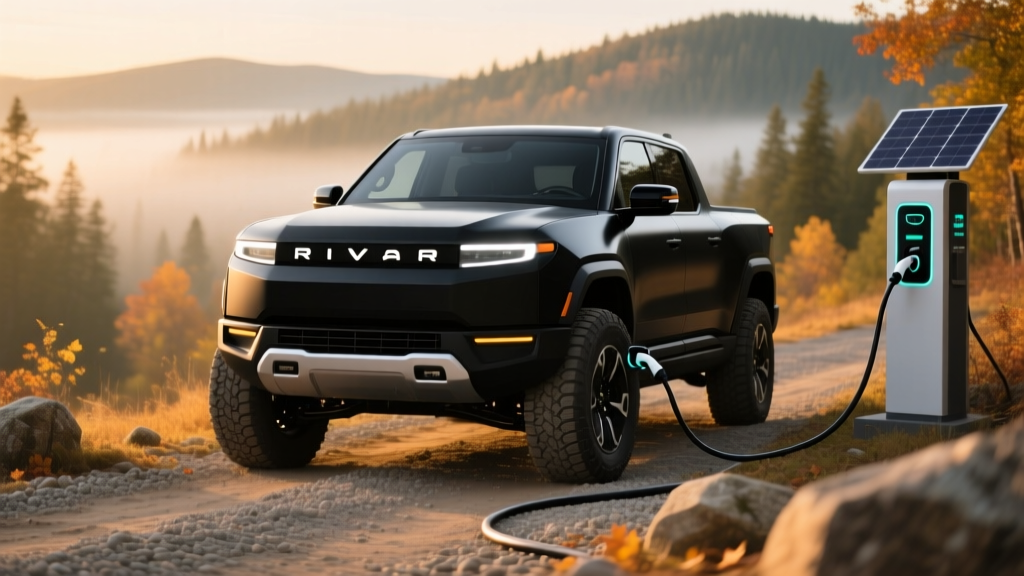
The 2025 Rivian R1T Dual-Motor with the Standard battery pack — commonly referred to by its 700-horsepower output — occupies a narrow but compelling lane: a full-size electric pickup that actually fits in a standard garage, tows respectably, and delivers over 250 miles of usable highway range. With a starting MSRP of $69,900 before destination, it undercuts the R1T Quad-Motor by a wide margin while retaining the platform's core strengths — the gear tunnel, the integrated air compressor, and a unibody architecture that rides more like a performance SUV than a body-on-frame truck.
For 2025, Rivian has refined the thermal management system, slightly bumped DC fast-charge acceptance on the Standard pack, and expanded the driver-assist feature set under its Highway Assist umbrella. The question for buyers is whether the Standard battery's range and the Dual-Motor's power output hit the right balance for your use case — or whether stepping up to the Large or Max pack is worth the premium.
Range, Battery, and Real-World Efficiency
The 2025 R1T Dual-Motor Standard pack pairs a dual-motor all-wheel-drive powertrain with a usable battery capacity of approximately 92 kWh. Rivian does not publicly disclose cell-level chemistry for the Standard pack in the same way it does for the Max pack, but industry teardowns and supply-chain reporting indicate a nickel-manganese-cobalt (NMC) formulation sourced from Samsung SDI, consistent with the rest of the R1 platform. NMC offers higher energy density than LFP, which is how Rivian keeps the Standard pack physically smaller and lighter while still delivering competitive range.
Real-World Expectation: Plan for 220–240 miles on sustained highway driving at 70–80 mph. In cold weather (below 32°F), expect a 15–25% reduction, bringing effective range to roughly 195–220 miles before you'll want to find a charger. City and mixed driving with regenerative braking set to high can push closer to the EPA sticker or slightly above.
The EPA rates the 2025 R1T Dual-Motor Standard at 73 MPGe combined, which translates to approximately 46 kWh per 100 miles. That's on the thirstier side of the EV truck segment — the Ford F-150 Lightning Standard Range posts 70 MPGe combined, while the Chevrolet Silverado EV 4WT, optimized for fleet efficiency, edges higher. The R1T's aerodynamic profile and 6,800-plus-pound curb weight work against it at highway speeds, which is where most of the real-world range gap shows up.
| Attribute | Value |
|---|---|
| EPA Range | 258 miles (20" wheels) |
| Usable Battery | ~92 kWh (NMC) |
| Drivetrain | Dual-Motor AWD |
| Horsepower | 533 hp (Dual-Motor); 700 hp (Performance Dual-Motor) |
| 0–60 mph | 4.5 sec (Dual-Motor); ~3.5 sec (Performance) |
| Max DC Fast Charge | 200 kW (peak) |
| 10–80% DC Charge Time | ~30 minutes |
| Level 2 Home Charge Rate | 11.5 kW (~25 mi/hr) |
| MPGe (Combined) | 73 MPGe |
| Towing Capacity | 11,000 lbs |
| Base MSRP | $69,900 |
| Battery/Powertrain Warranty | 8 years / 100,000 miles |
A note on the "700" designation: The base Dual-Motor produces 533 hp and 610 lb-ft of torque. The Performance Dual-Motor variant bumps output to 700 hp and 827 lb-ft via a software-unlocked motor calibration and revised inverter mapping. If you're specifically searching for the "Rivian 700," you're likely looking at the Performance Dual-Motor trim, which starts at $75,900 and drops the 0–60 time to approximately 3.5 seconds. Range on the Performance variant is slightly lower due to more aggressive torque delivery and standard 22-inch wheels — figure about 248 miles EPA.
Charging Speed: DC Fast, Level 2, and the Charge Curve Reality
The 2025 R1T Dual-Motor Standard pack supports a peak DC fast-charge rate of 200 kW via its CCS1 inlet (Rivian has confirmed NACS adoption for future model years, but 2025 vehicles still ship with CCS1; a NACS adapter is available for Supercharger access). On a 350 kW-class station like an Electrify America or EVgo Hypercharger, the R1T will ramp quickly to its 200 kW peak — but sustained rates tell a more complete story.
| Charge Level | Power / Rate | Speed | Typical Use Case |
|---|---|---|---|
| Level 1 (120V) | 1.4 kW | ~3 mi/hr | Emergency top-off, overnight trickle |
| Level 2 (240V, 48A) | 11.5 kW | ~25 mi/hr | Home overnight charging (full in ~9 hrs) |
| DC Fast Charge | 200 kW peak | 10–80% in ~30 min | Road trips, highway corridor charging |
Charge curve reality check: The 200 kW peak is achievable between roughly 10% and 40% state of charge. Above 60%, the curve tapers significantly — you'll see rates drop to 80–100 kW through the 60–80% window, and charging above 80% slows to a crawl as the battery management system protects cell longevity. On a road trip, the practical strategy is to charge from 10–80% and move on. Attempting a 10–100% session will add 25+ minutes for the final 20% — time better spent driving.
For home charging, the R1T's onboard charger accepts up to 11.5 kW on a 240V/48A Level 2 circuit. A full charge from empty takes roughly 9 hours, which means a standard overnight window (10 PM to 7 AM) comfortably replenishes even a heavily depleted pack. Installation of a hardwired Level 2 station typically requires a 60A dedicated circuit — budget $500–$1,500 for electrician labor and permits depending on panel proximity, or significantly more if your home needs a 200A service upgrade.
Performance, Drivetrain, and Towing
The Dual-Motor AWD powertrain places one permanent-magnet synchronous motor on each axle, providing full-time all-wheel drive with torque vectoring capability. The base Dual-Motor's 533 hp is more than adequate for merging, passing, and off-road crawling; the Performance variant's 700 hp turns the R1T into a genuine performance vehicle that will surprise sports-sedan drivers at stoplights.
Ride quality benefits from Rivian's fully independent suspension with available air springs, which offer up to 14.9 inches of ground clearance in Off-Road mode and drop to a more aerodynamic ride height at highway speed. The unibody platform — unusual for a full-size pickup — gives the R1T car-like composure on pavement that body-on-frame competitors like the F-150 Lightning and Silverado EV can't fully match.
Towing: The R1T is rated for 11,000 pounds maximum, competitive with the Lightning's 10,000-pound rating. However, towing at or near max capacity will slash range by 40–50% — plan for 120–150 miles between charges when pulling a heavy trailer. The integrated trailer brake controller and tow-assist camera views are standard, and the R1T's air suspension auto-levels under tongue load.
Interior, Cargo, and the Gear Tunnel Advantage
The R1T's cabin seats five with generous front legroom (41.3 inches) and adequate rear legroom (38.2 inches) — though the rear seat cushion is somewhat flat on longer journeys. Materials are premium without being ostentatious: vegan leather and real wood trim come standard, and the overall fit and finish on 2025 models reflects Rivian's manufacturing maturation at the Normal, Illinois plant.
Where the R1T genuinely differentiates itself is cargo versatility:
- Bed: 4-foot-6-inch bed (short by full-size standards, but the powered tonneau cover and integrated tie-downs maximize utility)
- Gear Tunnel: A full-width, lockable pass-through compartment behind the rear seats — approximately 11.7 cubic feet — accessible from both sides. This is the R1T's signature feature and a massive practical advantage for camping gear, tools, or luggage that you don't want exposed in the bed.
- Frunk: The front trunk offers 11.1 cubic feet of lockable, drainable storage — large enough for groceries, charging cables, or a cooler.
- Total cargo volume: Between bed, gear tunnel, and frunk, the R1T offers more enclosed/secure storage than any conventional crew-cab short-bed truck.
The infotainment system runs on a 15.6-inch center touchscreen with Rivian's proprietary OS. Wireless Apple CarPlay and Android Auto are not supported — Rivian insists on its native interface, which is responsive and well-designed but means you're locked into their ecosystem for navigation and media. A built-in Wi-Fi hotspot, over-the-air updates, and integrated camp kitchen accessories (the pull-out Camp Kitchen, sold separately) round out the tech story.
Pricing, Trims, and Federal Tax Credit Eligibility
The 2025 R1T lineup with the Standard battery pack breaks down as follows:
| Trim | MSRP | Est. After §30D Credit | Notes |
|---|---|---|---|
| Dual-Motor (533 hp) | $69,900 | $62,400 | Eligible if buyer meets income caps |
| Performance Dual-Motor (700 hp) | $75,900 | $68,400 | Eligible — below $80K truck MSRP cap |
Federal tax credit (§30D) details: The R1T qualifies as a light truck under IRS rules, meaning the MSRP cap is $80,000 (versus $55,000 for sedans). Both the Dual-Motor and Performance Dual-Motor with the Standard pack fall under this threshold. However, eligibility depends on several buyer-side requirements:
- Income caps: Modified adjusted gross income must not exceed $150,000 (single), $225,000 (head of household), or $300,000 (joint filers)
- Battery sourcing: The vehicle must meet critical minerals and battery component requirements that phase in more strictly each year — verify current-year compliance on IRS.gov before purchasing
- Point-of-sale transfer: As of 2024, buyers can transfer the credit to the dealer at purchase, reducing the out-of-pocket price immediately rather than waiting for a tax refund
- VIN verification: The dealer must report the sale and VIN to the IRS; confirm your specific vehicle's eligibility at the time of purchase
Critical minerals sourcing rules tighten annually. Rivian has worked to diversify its supply chain, but eligibility can change mid-year as IRS updates its approved vehicle list. Always confirm with your dealer and consult a tax professional before relying on the credit in your purchase budget.
Driver Assistance and Safety
The 2025 R1T comes standard with Rivian's Highway Assist, a SAE Level 2 driver-assistance system that combines adaptive cruise control with lane-centering on divided highways. It's competent and well-calibrated — the steering inputs are smooth and the following-distance logic is reasonable — but it requires continuous driver engagement. Your hands must remain on the wheel, and the system monitors via a driver-facing camera.
The R1T earned strong marks from NHTSA, and standard active-safety features include automatic emergency braking with pedestrian detection, blind-spot monitoring, rear cross-traffic alert, and a 360-degree camera system that's particularly useful given the truck's width and limited rear visibility.
Warranty and Ownership Costs
Rivian covers the R1T's battery and powertrain for 8 years or 100,000 miles, whichever comes first. The battery warranty guarantees the pack will retain at least 70% of its original capacity during the coverage period — a standard threshold for the industry, though some competitors like Hyundai offer longer 10-year/100,000-mile coverage on their EV powertrains.
The limited vehicle warranty runs 5 years / 60,000 miles. Rivian's service model relies on a mix of owned service centers and mobile service vans; coverage in rural areas has improved but remains a consideration for buyers far from a metro-area service hub.
Estimated 5-year ownership cost: Electricity costs for the R1T average roughly $0.05–$0.07 per mile at residential rates (varies by state), compared to $0.14–$0.18 per mile for a comparably powerful gas truck at $3.50/gallon. Over 75,000 miles, that's a fuel savings of approximately $6,000–$8,000 — though insurance premiums for the R1T run 15–25% higher than equivalent ICE trucks, partially offsetting the advantage.
Who Should Buy the 2025 Rivian R1T Dual-Motor 700?
- You want a daily-drivable electric truck with genuine off-road capability and don't regularly tow heavy loads over long distances
- The gear tunnel and frunk storage solve real problems for your gear-heavy lifestyle (camping, skiing, trades)
- You have reliable home Level 2 charging and your daily commute is under 100 miles round-trip
- You value unibody ride quality and performance over maximum bed length or payload
- You need a full 6-foot bed for work-site materials or frequent plywood/drywall hauling
- Your regular driving includes 400+ mile road trips through areas with sparse DC fast-charging infrastructure
- You need to tow near max capacity frequently — range while towing is the R1T's Achilles heel
- Budget is paramount — the Ford F-150 Lightning Pro starts significantly lower and covers most truck needs
Pros
- Gear tunnel is a genuinely unique and useful storage solution
- Unibody ride quality and handling exceed typical truck expectations
- Strong off-road capability with air suspension and quad-motor option
- 11,000-lb towing capacity with integrated brake controller
- Over-the-air updates continue to improve the vehicle post-purchase
Cons
- 4.5-foot bed is short for traditional truck work
- No wireless CarPlay/Android Auto — proprietary infotainment only
- Real-world highway range drops noticeably below EPA estimate
- Insurance costs run higher than comparable ICE trucks
- Service network still limited in rural areas
Frequently Asked Questions
What is the real-world range of the 2025 Rivian R1T Dual-Motor Standard?
The EPA rates it at 258 miles, but sustained highway driving at 75 mph typically yields 220–240 miles. In freezing temperatures, plan for 195–220 miles. Set regenerative braking to its highest setting in city driving and you may match or slightly exceed the EPA number.
How fast does the R1T charge at home and on the road?
On a Level 2 home charger (240V/48A), the R1T adds about 25 miles of range per hour, fully charging overnight in roughly 9 hours. On a DC fast charger, it peaks at 200 kW and charges from 10–80% in approximately 30 minutes — though the curve tapers significantly above 60% SoC.
Does the 2025 R1T qualify for the $7,500 federal EV tax credit?
It can, but eligibility depends on your income (under $150K single / $300K joint), the vehicle meeting current-year battery sourcing requirements, and the MSRP staying under the $80,000 truck cap. Both Standard-pack trims clear the MSRP cap. Verify your specific eligibility at IRS.gov and with a tax professional before purchasing.
Is the R1T worth buying over the Ford F-150 Lightning or Chevy Silverado EV?
The R1T excels at ride quality, off-road capability, and clever storage (gear tunnel, frunk). The F-150 Lightning offers a longer bed, a lower starting price, and a more established dealer/service network. The Silverado EV targets work-truck and fleet buyers with a longer bed option. If your priorities lean toward adventure, performance, and daily drivability over pure work utility, the R1T is the stronger choice. If you need a traditional work truck, the Lightning is more practical.
What's the biggest drawback of the R1T 700?
The 4.5-foot bed limits traditional truck utility, and the proprietary infotainment system — with no Apple CarPlay or Android Auto — frustrates buyers accustomed to phone mirroring. Range while towing is also a significant limitation: expect 120–150 miles when pulling near the 11,000-pound maximum.
What battery chemistry does the R1T Standard pack use?
The Standard pack uses NMC (nickel-manganese-cobalt) chemistry, which prioritizes energy density over the longer cycle life of LFP. This is why Rivian can package ~92 kWh of usable capacity in a physically smaller and lighter enclosure. NMC batteries benefit from staying between 20–80% SoC for daily use; Rivian's software lets you set charge limits accordingly.