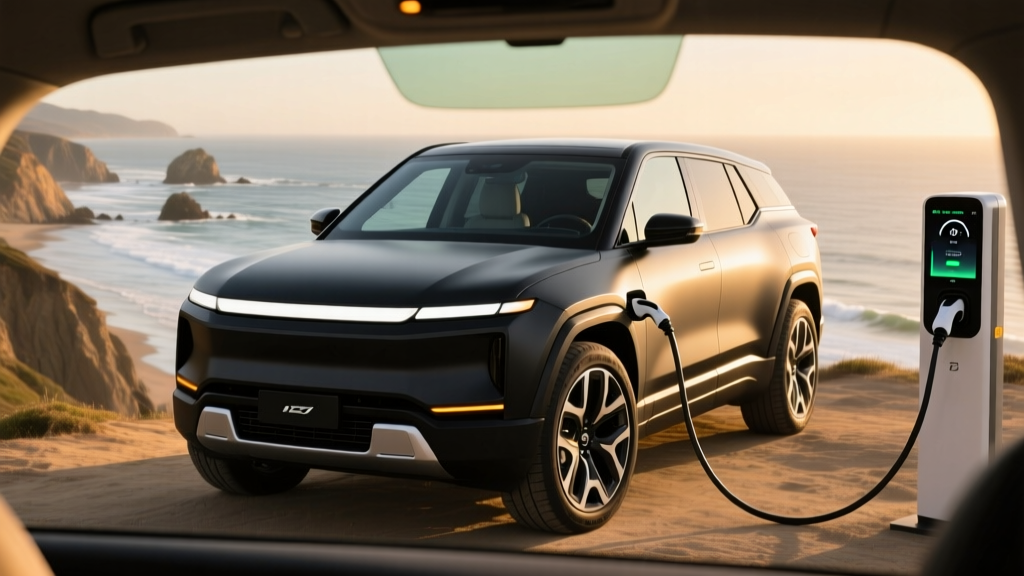
The 2025 Rivian R1S enters its second generation with a thoroughly reworked platform that addresses the first-generation model's biggest critiques: ride refinement, charging speed, and software maturity. As a three-row electric SUV built on a dedicated skateboard architecture, the R1S competes directly with the Tesla Model X, Kia EV9, and upcoming electrified body-on-frame rivals. After spending time with the updated Dual-Motor and Tri-Motor variants, here's everything buyers need to know before writing a check.
Quick Verdict: Who Should Buy the 2025 Rivian R1S
The R1S is best understood as a premium adventure-family hauler — think of it as the electric successor to the Land Cruiser ethos, with genuine off-road capability wrapped in a modern three-row package. It suits buyers who need seating for seven, want real towing capacity (up to 7,700 lbs), and plan to road-trip beyond the Supercharger network. It is not the most efficient large EV SUV on the market, nor the cheapest. But for capability-per-dollar in the premium electric SUV segment, it remains difficult to beat.
Skip it if: You prioritize maximum efficiency per mile, need the lowest possible purchase price, or only carry passengers in two rows.
2025 Rivian R1S Specifications at a Glance
| Spec | Dual-Motor Standard | Dual-Motor Max | Tri-Motor |
|---|---|---|---|
| EPA Range | 270 mi | 410 mi | 390 mi (est.) |
| Battery (usable) | ~92 kWh (Standard) | ~141 kWh (Max Pack) | ~141 kWh (Max Pack) |
| Chemistry | LFP (Standard) | NMC (Max) | NMC (Max) |
| Horsepower | 533 hp | 533 hp | 850 hp |
| 0–60 mph | 4.5 sec | 4.5 sec | 2.9 sec |
| Max DC Charge | ~200 kW | ~220 kW | ~220 kW |
| 10–80% DC Time | ~30 min | ~40 min | ~40 min |
| Level 2 (11.5 kW) | ~16 mi/hr | ~16 mi/hr | ~16 mi/hr |
| Towing Capacity | 7,700 lbs | 7,700 lbs | 7,700 lbs |
| Drivetrain | AWD (Dual-Motor) | AWD (Dual-Motor) | AWD (Tri-Motor) |
| Starting MSRP | $74,950 | $84,950 | $99,950 |
Sources: fueleconomy.gov, Rivian official specs. Tri-Motor EPA range estimated pending final certification. All prices exclude $1,800 destination.
Real-World Range: What the EPA Sticker Doesn't Tell You
EPA Max (Dual-Motor Max Pack): 410 miles
Expected highway (70–80 mph): ~310–340 miles
Cold weather (below 30°F): ~260–300 miles
Towing (5,000+ lb trailer): ~170–200 miles
The 410-mile EPA figure on the Max Pack is among the highest of any production three-row SUV, but real-world conditions tell a more nuanced story. The R1S is a 6,800-pound vehicle with the aerodynamic profile of a traditional SUV — at sustained highway speeds above 70 mph, energy consumption climbs significantly. In mixed highway driving at 75 mph in moderate temperatures (60–75°F), expect roughly 310–340 miles from a full charge on the Max Pack variant.
Cold weather compounds this. Lithium-ion batteries lose efficiency in low temperatures, and cabin heating in a large SUV draws substantial energy. In sub-30°F conditions, the Max Pack R1S typically delivers 260–300 miles. Rivian's heat pump (standard on Gen 2) mitigates some of this loss compared to resistive heating, but physics still wins. The heat pump preconditioning system activates automatically when navigation is set to a charger, warming the battery to optimal temperature for both efficiency and charging speed.
The Standard Pack's LFP chemistry offers a different trade-off: less total range (270 miles EPA) but superior longevity. LFP cells tolerate regular 100% charging without the degradation concerns that NMC batteries face, meaning daily usability stays closer to the sticker figure over years of ownership. For commuters with home charging who rarely road-trip beyond 200 miles, the Standard Pack is the pragmatic choice.
Charging Speed: DC Fast Charge and Home Level 2
The Gen 2 R1S uses Rivian's second-generation electrical architecture with improved thermal management, enabling faster DC charging than the Gen 1 model. Here's what the numbers look like in practice:
| Charging Method | Power / Rate | Speed | Notes |
|---|---|---|---|
| DC Fast Charge (Max Pack) | Peak ~220 kW | 10–80% in ~40 min | Sustains ~180 kW to ~55% SoC, then tapers. Requires preconditioning. |
| DC Fast Charge (Standard) | Peak ~200 kW | 10–80% in ~30 min | Smaller battery = faster relative fill. LFP accepts charge well at high SoC. |
| Level 2 (Home, 48A) | 11.5 kW | ~16 mi/hr | Full charge overnight (~10 hrs for Max Pack). Requires 60A circuit. |
| Level 1 (120V) | ~1.4 kW | ~2–3 mi/hr | Emergency/trickle only. ~6 days for Max Pack 0–100%. |
A critical note on the charge curve: the 220 kW peak on the Max Pack is not sustained for the entire session. Rivian's Gen 2 system holds near-peak power to roughly 50–55% State of Charge, then progressively tapers to protect the NMC cells. A 10–80% session on a 350 kW Electrify America or Rivian Adventure Network station typically takes 38–42 minutes. The Standard Pack's LFP chemistry, by contrast, maintains a flatter charge curve at higher SoC, which is why its 10–80% time is proportionally faster despite lower peak kW.
The R1S ships with a NACS (Tesla-style) charge port as of the 2025 model year, granting native access to Tesla Supercharger V3 and V4 stalls without an adapter. This is a significant practical advantage for road-tripping families, as the Supercharger network remains the most reliable DC charging infrastructure in North America, per J.D. Power reliability data.
Performance and Driving Dynamics
The Gen 2 R1S lineup offers three powertrain configurations, all using Rivian's in-house-developed motors:
- Dual-Motor (Standard & Max Pack): 533 hp / 610 lb-ft, one motor per axle. 0–60 mph in 4.5 seconds.
- Tri-Motor (Max Pack): 850 hp / 1,100+ lb-ft, one front motor and two rear motors with torque vectoring. 0–60 mph in 2.9 seconds.
- Quad-Motor: Discontinued for 2025 in favor of the Tri-Motor, which delivers comparable performance with less weight and complexity.
The Dual-Motor is the volume configuration and the one most buyers should choose. It provides genuinely quick acceleration (4.5 seconds to 60 mph in a 6,800-lb SUV is remarkable), standard all-wheel drive, and an adaptive air suspension that delivers a compliant highway ride while offering up to 14.9 inches of ground clearance off-road.
The Tri-Motor is a performance halo — 2.9 seconds to 60 mph makes it quicker than most sports cars, but the real advantage is the rear-axle torque vectoring, which sharpens handling and improves traction on loose surfaces. For buyers who will never exploit 850 hp, the weight and cost penalty of the Tri-Motor doesn't justify itself.
Ride quality on the Gen 2 platform is substantially improved over the first-generation R1S. The updated suspension tuning, revised bushings, and improved NVH isolation make this a genuinely comfortable highway cruiser — a previous weak point. Wind noise at 80 mph is well-managed, and the adaptive dampers effectively isolate road imperfections.
Interior Space, Cargo, and Technology
The R1S seats up to seven passengers in a 2-3-2 configuration. Key interior dimensions:
- Front headroom: 41.1 in | Legroom: 41.3 in
- Second-row headroom: 39.7 in | Legroom: 38.5 in
- Third-row headroom: 37.5 in | Legroom: 30.4 in
- Cargo (behind 3rd row): 20.0 cu ft
- Cargo (3rd row folded): 56.0 cu ft
- Cargo (all rear rows folded): 104.7 cu ft
- Front trunk (frunk): 11.0 cu ft
The third row is best suited for children or short-trip adult passengers — 30.4 inches of legroom is tight for long hauls. The Kia EV9 offers marginally more third-row space. However, the R1S compensates with the 11-cu-ft frunk, which provides secure, weatherproof storage that competitors like the Model X don't match.
Technology highlights include:
- 15.6-inch center touchscreen running Rivian's proprietary OS (Gen 2 hardware with faster processor)
- 12.3-inch digital instrument cluster
- Rivian Driver+ — a Level 2 SAE driver-assistance system with lane centering, adaptive cruise, and hands-on-wheel monitoring (not self-driving; driver must remain engaged)
- Over-the-air updates that have materially improved the vehicle since launch — navigation, suspension tuning, and charge scheduling have all been enhanced post-delivery
- Camp Kitchen option — a slide-out kitchen system integrated into the cargo area, unique to Rivian
- V2L (Vehicle-to-Load): 2.4 kW output via bed/cargo outlets, enough to power camping gear, tools, or emergency home appliances
Pricing, Trims, and Federal Tax Credit Eligibility
| Trim / Configuration | MSRP (excl. dest.) | Est. §30D Credit | Effective Price |
|---|---|---|---|
| Dual-Motor Standard (Adventure) | $74,950 | Up to $7,500* | ~$67,450 |
| Dual-Motor Max (Adventure) | $84,950 | Up to $7,500* | ~$77,450 |
| Tri-Motor Max (Adventure) | $99,950 | Up to $7,500* | ~$92,450 |
| Dual-Motor (Ascend trim) | $82,950+ | Up to $7,500* | ~$75,450+ |
*Federal tax credit eligibility under IRS §30D Clean Vehicle Credit depends on multiple requirements. See checklist below.
§30D Federal Tax Credit Eligibility Checklist
- MSRP cap: SUVs/vans must have an MSRP ≤ $80,000. The Dual-Motor Standard ($74,950) qualifies; the Dual-Motor Max ($84,950) and Tri-Motor ($99,950) exceed the cap and are ineligible for the federal credit.
- Buyer income limits (2025 tax year): AGI ≤ $300,000 (married filing jointly), $225,000 (head of household), $150,000 (single).
- Battery sourcing: Critical minerals and battery components must meet phased-in domestic/free-trade-partner sourcing thresholds. Rivian has been progressively reshoring supply chains — verify current-year compliance at the point of sale.
- Point-of-sale transfer: Eligible buyers can transfer the credit to the dealer at purchase, reducing the out-of-pocket price immediately rather than waiting for a tax refund.
- Final assembly: Must occur in North America. The R1S is assembled in Normal, Illinois — this requirement is met.
Efficiency and Operating Costs
The Dual-Motor R1S with the Standard Pack returns an EPA-rated 73 MPGe combined (approximately 46 kWh/100 miles). The Max Pack variant is slightly less efficient due to its heavier battery — roughly 70 MPGe combined (48 kWh/100 miles).
At the U.S. average residential electricity rate of ~$0.17/kWh (EIA data), charging the Max Pack at home costs approximately $24 for a full 141 kWh fill, translating to roughly $0.08–0.09 per mile. Compare this to a gas-powered Tahoe getting 18 MPG combined at $3.50/gallon: $0.19 per mile. The per-mile energy savings are substantial, though the R1S's premium purchase price means the break-even timeline is measured in years, not months.
Insurance costs for the R1S run higher than average for the segment. Expect annual premiums of $2,400–$3,800 depending on state, driving record, and coverage level — a factor worth incorporating into total cost of ownership calculations.
Warranty and Battery Longevity
- Battery warranty: 8 years / 175,000 miles (whichever comes first), with a minimum 70% capacity retention threshold
- Powertrain warranty: 8 years / 175,000 miles
- Bumper-to-bumper: 5 years / 60,000 miles
- Roadside assistance: 5 years / unlimited miles
Rivian's 175,000-mile battery warranty is among the most generous in the segment, exceeding Tesla's 120,000–150,000-mile thresholds for the Model X. The 70% retention floor is industry-standard. Gen 2 battery modules are designed for individual replacement rather than full-pack swaps, which should reduce out-of-warranty repair costs — though long-term pricing for module replacements has not been published.
The LFP Standard Pack battery is expected to outlast the NMC Max Pack in cycle life, as LFP chemistry inherently tolerates deeper cycling and 100% SoC storage without accelerated degradation. For buyers planning 10+ year ownership, the Standard Pack's longevity advantage may outweigh its shorter range.
2025 Rivian R1S vs. Key Competitors
| Attribute | Rivian R1S (Dual-Motor Max) | Tesla Model X (Long Range) | Kia EV9 (GT-Line AWD) |
|---|---|---|---|
| EPA Range | 410 mi | 335 mi | 270 mi |
| Base MSRP | $84,950 | $79,990 | $73,900 |
| Rows / Seats | 3 / 7 | 3 / 6-7 | 3 / 6-7 |
| Towing | 7,700 lbs | 5,000 lbs | 4,500 lbs |
| Ground Clearance | 14.9 in (max) | ~8.3 in | ~7.8 in |
| Off-Road Capability | Excellent (air susp., skid plates) | Limited | Moderate |
| DC Charge Peak | ~220 kW | ~250 kW | ~236 kW |
| §30D Credit Eligible | Standard Pack only | Partial (varies) | Yes (most trims) |
- You need genuine off-road capability and 7,700-lb towing
- Maximum range (410 mi) is a priority for road trips
- You value adventure-oriented features (Camp Kitchen, gear tunnel, V2L)
- You want NACS native charging + Rivian Adventure Network access
- You want the fastest Supercharger network integration (native)
- Falcon-wing doors and tech-forward aesthetics matter
- You prioritize Autopilot/FSD (Supervised) software maturity
- Budget is a primary concern ($10K+ less than R1S)
- You want full §30D credit eligibility across most trims
- Third-row passenger space is a higher priority than off-road ability
Pros and Cons
- Class-leading 410-mile EPA range (Max Pack)
- Genuine off-road capability with air suspension
- 7,700-lb towing — best in electric SUV segment
- NACS charge port = native Supercharger access
- Generous 8-yr/175,000-mi battery warranty
- Continuous OTA improvements post-purchase
- Unique adventure features (Camp Kitchen, gear tunnel, V2L)
- Max Pack and Tri-Motor exceed $80K §30D MSRP cap
- Third-row legroom (30.4 in) is tight for adults
- Heavy vehicle = higher tire wear and energy consumption
- Insurance premiums above segment average
- Service center network still expanding in rural areas
- No Apple CarPlay/Android Auto (Rivian OS only)
- DC charge speed trails Model X and EV9 peak rates
Frequently Asked Questions
What is the real-world range of the 2025 Rivian R1S?
The EPA rates the Dual-Motor Max Pack at 410 miles, but expect 310–340 miles in real-world highway driving at 70–80 mph, and 260–300 miles in sub-30°F cold weather. The Standard Pack (270 mi EPA) delivers closer to 220–240 miles highway. Towing cuts range roughly in half.
How fast does the 2025 R1S charge at home and on the road?
On a Level 2 home charger (11.5 kW / 48A), the R1S adds approximately 16 miles of range per hour — a full Max Pack charge takes about 10 hours overnight. On DC fast chargers, the Max Pack peaks at ~220 kW, achieving a 10–80% charge in roughly 40 minutes with battery preconditioning. The Standard Pack completes 10–80% in about 30 minutes at ~200 kW peak.
Does the 2025 Rivian R1S qualify for the $7,500 federal EV tax credit?
Only the Dual-Motor Standard Pack (Adventure trim, $74,950 MSRP) qualifies, because the IRS §30D credit caps SUV eligibility at $80,000 MSRP. The Max Pack ($84,950) and Tri-Motor ($99,950) exceed this cap. Additionally, buyer income must not exceed $300K (joint), $225K (head of household), or $150K (single), and battery sourcing requirements must be met. Always verify current eligibility at irs.gov and consult a tax professional.
Is the Rivian R1S worth buying over the Tesla Model X or Kia EV9?
The R1S wins on range (410 mi vs. 335 mi for Model X), towing (7,700 vs. 5,000 lbs), and off-road capability. The Model X offers faster DC charging and a more mature driver-assist system. The EV9 is significantly more affordable and broadly tax-credit eligible but offers less range and no serious off-road chops. For adventure-oriented families who road-trip and tow, the R1S is the strongest choice in the segment.
What is the biggest drawback of the 2025 R1S?
The MSRP-cap problem: the most desirable configuration (Dual-Motor Max Pack with 410-mile range) costs $84,950 — above the $80,000 §30D threshold — meaning most buyers won't receive the $7,500 federal credit. Combined with higher-than-average insurance costs and a still-growing service network, the total cost of ownership advantage over gas SUVs takes longer to realize than with cheaper EVs.
Does the R1S have Apple CarPlay or Android Auto?
No. Rivian uses its proprietary operating system exclusively. The Gen 2 infotainment is faster and more polished than the Gen 1 system, with improved navigation and charge planning, but smartphone projection is not available. This is a dealbreaker for some buyers accustomed to CarPlay integration.