Quick Verdict: Heavy, Capable, and Surprisingly Efficient
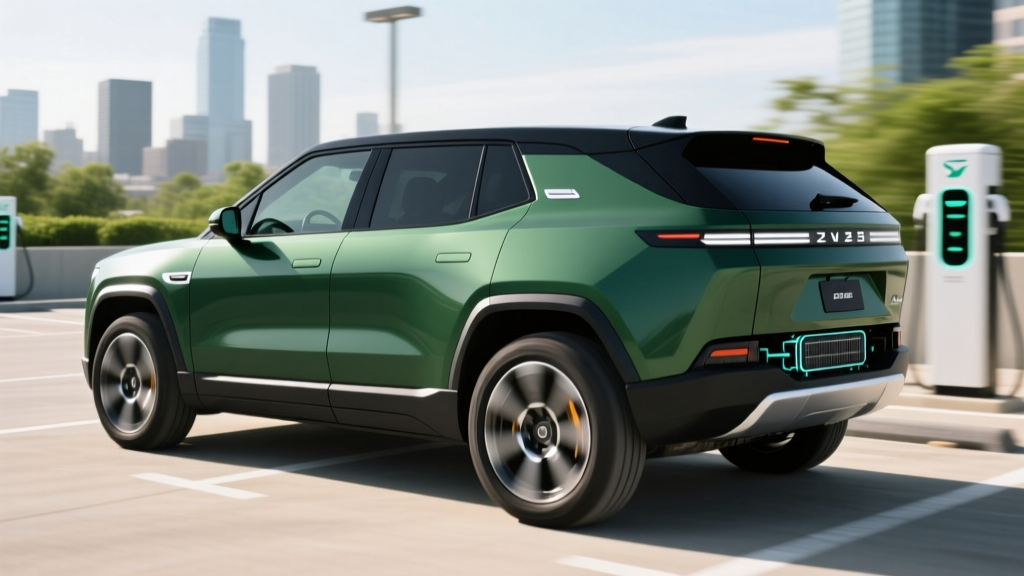
The 2025 Rivian R1S is a three-row electric SUV built for buyers who need serious cargo and passenger space without sacrificing performance. But with capability comes mass. The 2025 Rivian R1S curb weight ranges from approximately 6,900 lbs to 7,300 lbs depending on the battery pack and powertrain configuration — making it one of the heaviest production passenger vehicles on the road. That mass directly affects efficiency, tire wear, braking distances, and even the type of home garage jack you can safely use. Yet Rivian's second-generation platform manages this weight with a dual-motor or quad-motor powertrain that delivers sports-car acceleration and up to 410 miles of EPA-estimated range on the Max Pack.
This review covers every number that matters: real-world range, charging curves, battery chemistry, tax-credit eligibility, and whether the R1S justifies its premium price against the Tesla Model X, BMW iX, and Mercedes EQS SUV.
Full Spec Sheet: 2025 Rivian R1S at a Glance
| Spec | Standard Pack (Dual-Motor) | Large Pack (Dual-Motor) | Max Pack (Dual-Motor) | Quad-Motor (Large) |
|---|---|---|---|---|
| EPA Range | 270 mi | 340 mi | 410 mi | 321 mi |
| Battery Usable Capacity | ~95 kWh (LFP) | ~113 kWh (NMC) | ~141 kWh (NMC) | ~113 kWh (NMC) |
| Horsepower | 533 hp | 533 hp | 533 hp | 1,025 hp |
| 0–60 mph | 4.5 sec | 4.5 sec | 4.5 sec | 3.0 sec |
| Drivetrain | AWD Dual-Motor | AWD Dual-Motor | AWD Dual-Motor | AWD Quad-Motor |
| Max DC Fast Charge | ~200 kW | ~220 kW | ~220 kW | ~220 kW |
| 10–80% DC Charge Time | ~30 min | ~30 min | ~40 min | ~30 min |
| Level 2 Home Charge Rate | 11.5 kW (~30 mi/hr) | 11.5 kW (~30 mi/hr) | 11.5 kW (~30 mi/hr) | 11.5 kW (~30 mi/hr) |
| Curb Weight (approx.) | ~6,900 lbs | ~7,050 lbs | ~7,300 lbs | ~7,150 lbs |
| Towing Capacity | 7,700 lbs | 7,700 lbs | 7,700 lbs | 7,700 lbs |
| EPA Efficiency (MPGe) | 73 MPGe combined | 73 MPGe combined | 70 MPGe combined | 70 MPGe combined |
| Base MSRP | $79,900 | $85,400 | $94,900 | $99,900 |
Source: EPA fueleconomy.gov, Rivian official specs. Specs reflect 2025 model year. Rivian updates specs periodically; confirm with your dealer before ordering.
Curb Weight Breakdown: Why 7,000+ Pounds Matters
The 2025 Rivian R1S curb weight is not just a trivia stat — it shapes the ownership experience in tangible ways:
- Efficiency penalty: Heavier vehicles require more energy per mile. The R1S Max Pack's 7,300-lb curb weight contributes to its slightly lower 70 MPGe rating versus the Standard Pack's 73 MPGe, despite carrying 48 more kWh of battery.
- Tire wear: Expect to replace tires every 25,000–35,000 miles. The combination of high torque, AWD, and 7,000+ lbs accelerates tread wear. Budget $1,200–$1,800 for a set of EV-rated touring tires (Rivian uses 275/50R21 or 285/45R22 depending on trim).
- Braking: The regenerative braking system handles most daily deceleration, but the friction brakes work overtime during emergency stops or mountain descents. Rivian uses large ventilated discs all around to manage the mass.
- Garage and lift considerations: Standard two-post residential lifts rated for 7,000 lbs will not safely accommodate a Max Pack R1S. If you plan to rotate tires at home, you need a jack rated for at least 4 tons and proper frame-pad adapters — Rivian's skateboard chassis requires specific lift points.
- Registration fees: Several states (including California, Colorado, and Washington) impose additional EV registration fees partly based on vehicle weight. The R1S's curb weight pushes it into higher fee tiers in some jurisdictions.
For comparison, the Tesla Model X weighs roughly 5,100–5,400 lbs, the BMW iX xDrive50 comes in around 5,600 lbs, and the Mercedes EQS 580 SUV sits at about 5,800 lbs. The R1S gives up 1,500–2,000 lbs to these competitors — a gap largely explained by its body-on-frame-inspired skateboard architecture, larger battery packs, and robust off-road underpinnings.
Real-World Range: What the EPA Sticker Doesn't Tell You
EPA Estimate: Up to 410 miles (Max Pack Dual-Motor)
Real-World Highway (70 mph, 72°F): Expect ~330–350 miles
Real-World Cold Weather (30°F, mixed driving): Expect ~270–310 miles
Towing a 5,000-lb trailer: Range drops to roughly 180–210 miles
Rivian's 410-mile EPA figure for the Max Pack is genuinely impressive for a three-row SUV, but real-world results depend heavily on conditions. In highway testing at sustained 70–75 mph speeds, the R1S Max Pack typically delivers 330–350 miles before hitting a 10% state of charge. The R1S's tall, boxy profile creates more aerodynamic drag than sleeker crossovers, and drag dominates energy consumption above 60 mph.
Cold weather compounds the issue. Lithium-ion batteries lose efficiency in low temperatures, and cabin heating draws substantial power. Expect 25–35% range reduction in sustained sub-freezing conditions. The R1S includes a heat pump (standard across all trims), which helps — but physics still wins in single-digit temperatures. Preconditioning the battery while plugged in mitigates some of this loss and is essential before DC fast charging in cold weather.
If towing is a priority, plan your charging stops carefully. Pulling a 5,000-lb camper at highway speeds roughly halves your range. Rivian's built-in tow planning software in the navigation system accounts for trailer weight and terrain, which is one of the better implementations we've tested.
Charging Speed: DC Fast Charge and Home Level 2
The 2025 R1S uses Rivian's second-generation drive platform with improved charging architecture. Here's what to expect at each charging level:
| Charging Level | Power / Rate | Miles Added per Hour | Notes |
|---|---|---|---|
| Level 1 (120V household) | ~1.4 kW | ~3–4 mi/hr | Emergency/trickle only; a full Max Pack takes 4+ days |
| Level 2 (240V, 48A home charger) | 11.5 kW | ~28–30 mi/hr | Overnight charge: ~10 hrs for Large Pack, ~13 hrs for Max Pack (10–100%) |
| DC Fast Charge (peak) | Up to ~220 kW | N/A | 10–80% in ~30 min (Large), ~40 min (Max) |
| DC Fast Charge (sustained avg) | ~140–160 kW | ~180–220 mi/30 min | Charge curve tapers significantly above 80% SoC |
Understanding the charge curve: The R1S does not sustain its peak 220 kW for the entire session. Like all EVs, the battery management system (BMS) tapers charge rate as the battery fills to protect cell longevity. You'll see 200+ kW between roughly 15–40% state of charge (SoC), then a gradual step-down. Charging from 80–100% on DC fast charge is painfully slow — plan to unplug at 80% during road trips and move on.
NACS compatibility: The 2025 R1S ships with a NACS (Tesla-style) charge port, giving native access to Tesla Supercharger stations — the most reliable DC fast-charging network in North America. Rivian owners can also use CCS1 stations via adapter for Electrify America, EVgo, and other networks. This dual-network access is a major practical advantage over CCS-only competitors.
Home charging setup: To achieve the full 11.5 kW Level 2 rate, you need a 60-amp dedicated circuit with a 48-amp hardwired EVSE (or a NACS Wall Connector). Expect $800–$2,500 for a professional home installation depending on your panel capacity and run distance. Homes with 100-amp service panels may need a $2,000–$4,000 panel upgrade to support a 60-amp EV circuit alongside existing loads.
Battery Chemistry, Degradation, and Warranty
Rivian uses two distinct battery chemistries in the 2025 R1S, and the choice affects longevity, charging habits, and weight:
| Attribute | LFP (Standard Pack) | NMC (Large & Max Pack) |
|---|---|---|
| Chemistry | Lithium Iron Phosphate | Nickel Manganese Cobalt |
| Usable Capacity | ~95 kWh | ~113 kWh (Large) / ~141 kWh (Max) |
| Energy Density | Lower (heavier per kWh) | Higher (lighter per kWh) |
| Cycle Life | 3,000+ cycles to 80% SoH | 1,500–2,000 cycles to 80% SoH |
| Recommended Daily Charge | 100% OK daily | 80% daily; 100% for trips only |
| Cold-Weather Performance | Slightly worse | Better low-temp efficiency |
| Cost to Replace (est.) | $12,000–$16,000 | $18,000–$25,000 (Max Pack) |
The Standard Pack's LFP chemistry is a smart choice for commuters who charge daily and don't need maximum range. LFP cells tolerate regular 100% charges without accelerated degradation, and they offer significantly longer cycle life. The trade-off: more weight per kWh and reduced cold-weather performance.
The Large and Max Pack NMC batteries deliver higher energy density (critical for hitting 410 miles in the Max Pack) but benefit from daily charge limits of 80% to maximize longevity. Rivian's software lets you set custom charge limits, and the BMS includes a buffer — the usable capacity is less than the gross cell capacity to protect against over-discharge.
Warranty: Rivian covers the R1S battery and drive system for 8 years or 175,000 miles, whichever comes first, with a capacity retention threshold of 70%. The vehicle limited warranty is 5 years/60,000 miles. This is competitive with Tesla's 8-year/150,000-mile battery warranty and exceeds most legacy automakers.
Performance: Quad-Motor Muscle Meets Off-Road Capability
The dual-motor R1S produces 533 horsepower and 610 lb-ft of torque, delivering a 4.5-second 0–60 mph time. That's genuinely quick for a 7,000-lb SUV — comparable to a Porsche Cayenne S. But the Quad-Motor variant is in another league entirely: 1,025 hp, 1,198 lb-ft, and a 3.0-second 0–60 time that embarrasses many sports cars.
Beyond straight-line speed, the R1S's performance story is about versatility:
- Air suspension: Standard adaptive air suspension provides 6.5–14.9 inches of ground clearance. Lower it for highway efficiency, raise it for trails.
- Wading depth: Over 3 feet of water wading capability in off-road mode.
- Tank turns: Quad-motor models can perform 180-degree tank turns by spinning left and right wheels in opposite directions — useful on tight trails, though it chews up tires.
- One-pedal driving: Strong regenerative braking enables genuine one-pedal driving in most conditions, reducing brake wear.
- Towing: 7,700-lb max towing capacity across all trims, with integrated trailer brake controller and tow-specific drive modes.
Pricing, Trims, and Federal Tax Credit Eligibility
| Configuration | Base MSRP | Est. As-Tested (Adventure trim) | §30D Credit Eligible? |
|---|---|---|---|
| Dual-Motor Standard Pack | $79,900 | $83,000–$87,000 | No — exceeds $80,000 SUV MSRP cap |
| Dual-Motor Large Pack | $85,400 | $89,000–$94,000 | No — exceeds $80,000 SUV MSRP cap |
| Dual-Motor Max Pack | $94,900 | $99,000–$105,000 | No — exceeds $80,000 SUV MSRP cap |
| Quad-Motor Large Pack | $99,900 | $104,000–$112,000 | No — exceeds $80,000 SUV MSRP cap |
Tax credit reality: Under current IRS §30D rules, the federal EV tax credit caps SUV MSRP eligibility at $80,000. Every 2025 R1S configuration exceeds this threshold at base MSRP, meaning no new R1S currently qualifies for the $7,500 federal tax credit. Additionally, buyers must meet income caps ($300,000 joint / $150,000 single modified AGI) and the vehicle must meet battery critical-mineral and component sourcing requirements — but the MSRP cap alone disqualifies the R1S.
Rivian does not currently offer a sub-$80,000 R1S trim. If the federal credit is a dealbreaker, consider the Tesla Model X Long Range (~$79,990 base, which sits right at the cap — verify current eligibility on fueleconomy.gov) or wait for Rivian's upcoming, smaller and more affordable R2 SUV expected in 2026.
State incentives: Some states offer their own EV rebates or HOV lane access that are not subject to federal MSRP caps. Check your state's energy office or DMV for current programs — these vary widely and change frequently.
Interior Space, Tech, and Daily Livability
The R1S is one of the few EVs offering genuine three-row seating for seven passengers, and the interior dimensions reflect its full-size SUV footprint:
- Cargo volume: ~21 cu ft behind the third row, ~58 cu ft behind the second row, ~105 cu ft with both rear rows folded
- Front legroom: 41.3 inches
- Second-row legroom: 38.5 inches
- Third-row legroom: 30.2 inches (best for children or short trips)
- Frunk: ~11 cu ft front trunk, useful for charging cables and groceries
The third row is tighter than a Tahoe or Expedition but competitive with the Tesla Model X and significantly more usable than the Mercedes EQS SUV's optional third row. The second row slides fore/aft for flexibility.
Infotainment: A 15.6-inch center touchscreen runs Rivian's proprietary OS — responsive, clean, and regularly updated over-the-air. Wireless Apple CarPlay and Android Auto are not supported; Rivian's native navigation and media apps are robust but this omission frustrates some buyers. A 12.3-inch digital driver display and an available rear-seat entertainment screen round out the package.
Driver assistance: Rivian's Driver+ system provides adaptive cruise control, lane centering, and automatic lane changes on divided highways. This is an SAE Level 2 system — the driver must remain engaged with hands on the wheel and eyes on the road at all times. It is not self-driving. Driver+ is competent for highway cruising but trails Tesla's Autopilot and GM's Super Cruise in hands-free capability. Rivian does not currently offer a hands-free driving mode.
Pros, Cons, and Who Should Buy the R1S
✅ Pros
- Up to 410-mile EPA range (Max Pack) — best-in-class for three-row EVs
- Genuine off-road capability with air suspension and 14.9" ground clearance
- NACS charge port = native Tesla Supercharger access
- 7,700-lb towing with integrated trailer software
- 7-passenger seating with usable third row
- Quad-motor performance (3.0 sec 0–60) is extraordinary
- 8-year/175,000-mile battery warranty
- Regular OTA updates add features post-purchase
❌ Cons
- 6,900–7,300 lb curb weight hurts efficiency and tire life
- No federal §30D tax credit (all trims exceed $80K SUV MSRP cap)
- Third row is tight for adults on long trips
- No wireless Apple CarPlay / Android Auto
- Driver+ is capable but not hands-free (no Level 2+ mode)
- High starting price — $79,900 minimum before options
- Real-world highway range is ~15–20% below EPA sticker
- Cold-weather range loss of 25–35% in sub-freezing temps
Who the R1S Suits Best
Buy the R1S if: You need three rows, tow regularly, want off-road capability, and value maximum range. The Max Pack Dual-Motor is the sweet spot for road-tripping families who want 350+ real-world highway miles and Supercharger access.
Look elsewhere if: You want the federal tax credit, prefer hands-free highway driving (consider the BMW iX with Highway Assistant or a Cadillac Escalade IQ with Super Cruise), or primarily drive in the city where a smaller EV like the Tesla Model Y or Hyundai Ioniq 5 is more practical and affordable.
Frequently Asked Questions
What is the real-world range of the 2025 Rivian R1S?
The EPA rates the Max Pack Dual-Motor at 410 miles, but expect 330–350 miles in real-world highway driving at 70 mph and 270–310 miles in freezing temperatures. The Large Pack delivers roughly 280–300 real-world highway miles, and the Standard Pack around 220–235.
How fast does the R1S charge at home and on the road?
On a 48-amp Level 2 home charger, the R1S charges at 11.5 kW, adding about 28–30 miles per hour. A full overnight charge (10 hours) restores roughly 280–300 miles. On DC fast chargers, peak rate is ~220 kW with a 10–80% time of approximately 30 minutes (Large Pack) or 40 minutes (Max Pack).
Does the 2025 R1S qualify for the $7,500 federal EV tax credit?
No. Under current IRS §30D rules, SUVs must have an MSRP at or below $80,000 to qualify. Every R1S configuration starts above $80,000, so none are eligible for the new-vehicle federal credit. State-level incentives may still apply.
Is the R1S worth buying over the Tesla Model X?
The R1S offers superior off-road capability, a more traditional SUV interior layout, and a more usable third row. The Model X offers faster Supercharger charging speeds, hands-free Autopilot capability, falcon-wing rear doors, and a slightly lower starting price. If you tow or go off-pavement, the R1S wins. If you prioritize charging speed and autonomous tech, the Model X has advantages.
How does the R1S curb weight affect ownership costs?
The 6,900–7,300 lb curb weight increases tire replacement frequency (budget for new tires every 25,000–35,000 miles), raises energy consumption per mile (roughly 40–44 kWh/100 mi depending on pack), and may trigger higher state registration fees. It also means you need a heavy-duty jack and lift-rated equipment for home maintenance.
What is the Rivian R1S battery warranty?
Rivian covers the battery pack and drive system for 8 years or 175,000 miles, whichever comes first. The warranty guarantees the battery will retain at least 70% of its original capacity during the coverage period. The vehicle bumper-to-bumper warranty is 5 years/60,000 miles.