Quick Verdict: The 2025 Rivian R1S Adventure at a Glance
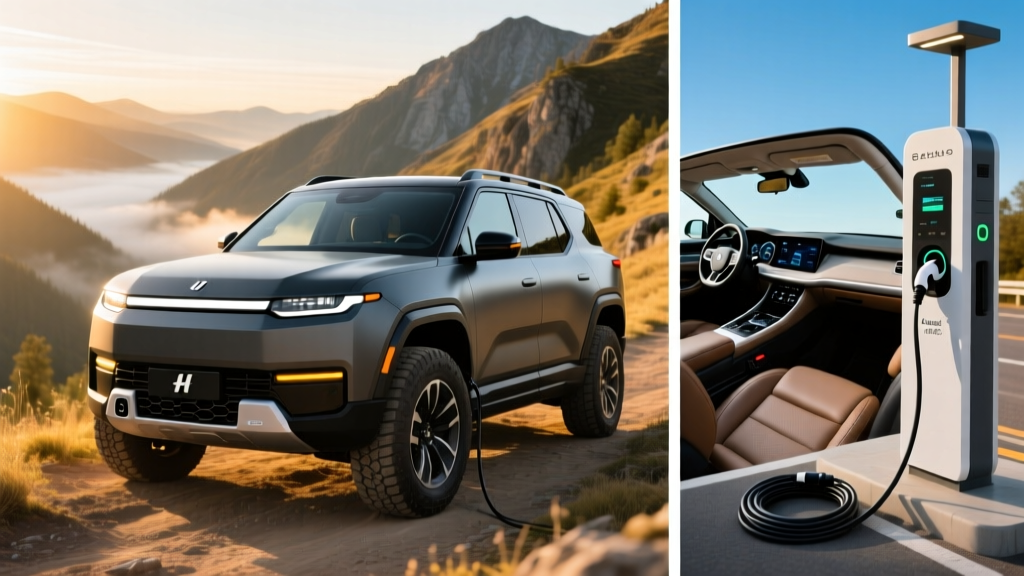
The 2025 Rivian R1S Adventure is a three-row electric SUV that tries to do everything: school runs, 500-mile road trips, and 7,700-pound towing duty — all without a drop of gasoline. After spending time with the Dual-Motor and Quad-Motor variants, the R1S Adventure proves that a body-on-frame family hauler can deliver genuine off-road chops and sub-4-second acceleration, provided you accept its premium price tag and real-world range compromises at highway speed.
Rivian's second-generation R1S (introduced for the 2025 model year with an updated electrical architecture, new drive units, and a refreshed interior) moves the needle on charging speed and software polish. But with competitors like the Kia EV9, Tesla Model X, and upcoming three-row entrants pressing hard, the question isn't whether the R1S Adventure is impressive — it's whether it's worth $80,000+ before incentives. This review breaks down every number that matters.
| Spec | Dual-Motor (Standard) | Tri-Motor | Quad-Motor |
|---|---|---|---|
| EPA Range (Max Pack) | 410 miles | 390 miles | 370 miles |
| Battery (Max Pack usable) | ~141 kWh (NMC) | ~141 kWh (NMC) | ~141 kWh (NMC) |
| Horsepower | 533 hp | 850 hp | 1,025 hp |
| 0-60 mph | 4.5 sec | 2.9 sec | 2.5 sec |
| Peak DC Fast Charge | 220 kW | 220 kW | 220 kW |
| 10-80% DCFC Time | ~30 min | ~30 min | ~30 min |
| Towing Capacity | 7,700 lbs | 7,700 lbs | 7,700 lbs |
| Starting MSRP | $79,900 | $99,900 | $109,900 |
Real-World Range vs. EPA Estimates
Real-World Expectation: ~320–350 miles at sustained 70 mph highway speeds; ~260–290 miles in sub-30°F cold weather with cabin heat; ~200–230 miles when towing a 5,000+ lb trailer.
The 410-mile EPA figure applies specifically to the Dual-Motor with the Max Pack (approximately 141 kWh usable, NMC lithium-ion chemistry) and the most aerodynamic 20-inch wheel configuration. Step up to 22-inch wheels and you'll lose roughly 20–30 miles of rated range. Choose the Tri-Motor or Quad-Motor and the extra drivetrain mass and rolling resistance pull the EPA number down to 390 and 370 miles, respectively.
In real-world highway driving at 70–75 mph on flat terrain in moderate temperatures (60–75°F), expect to see roughly 320–350 miles before needing to plug in. The R1S Adventure is a tall, boxy, 7,000-pound SUV — aerodynamic drag is its enemy at speed. Cold weather compounds this: battery chemistry slows and cabin heating draws significant energy, cutting usable range by 25–35% depending on conditions. Rivian's heat pump (standard on Gen 2 models) helps mitigate this compared to resistive heating, but physics still wins in deep winter.
If you plan to tow, plan your charging stops accordingly. Towing a mid-size travel trailer (5,000–6,000 lbs) typically halves effective range, bringing you to roughly 200 miles between charges. The R1S Adventure's range is generous among three-row EVs, but it is not immune to the same consumption realities that affect every large electric vehicle.
Charging Speed: DC Fast Charge and Home Level 2
The second-generation R1S uses Rivian's updated electrical architecture with a peak DC fast-charge rate of 220 kW on the Max Pack. That translates to a 10–80% charge in approximately 30 minutes under optimal conditions (battery preconditioned, ambient temperature 60–80°F, connected to a 350 kW-capable charger like Electrify America or EVgo). The charge curve tapers significantly above 80% — expect the final 20% to take nearly as long as the first 70%. This is standard behavior for NMC chemistry managed for long-term battery health.
| Charge Level | Power (kW) | Connector | Miles Added per Hour | Typical Use Case |
|---|---|---|---|---|
| Level 1 (120V household) | ~1.4 kW | J1772 / NACS adapter | ~3–4 mi/hr | Emergency trickle |
| Level 2 (240V, 48A) | ~11.5 kW | J1772 / NACS | ~28–32 mi/hr | Home overnight charging |
| DC Fast Charge (peak) | 220 kW | CCS / NACS | ~600+ mi/hr (peak) | Road trips, 10-80% in ~30 min |
For home charging, the R1S Adventure accepts up to 11.5 kW on Level 2 (48 amps on a 60-amp circuit). That means a full Max Pack recharge from 10% to 100% takes roughly 12–13 hours — perfectly suited to overnight charging. You'll need a hardwired Level 2 wall connector (Rivian sells its own Wall Charger, or you can use third-party units like the ChargePoint Home Flex or Emporia Vue) installed by a licensed electrician on a 60-amp dedicated circuit. Expect installation costs between $800 and $2,000 depending on your panel's proximity to the garage and whether a panel upgrade to 200A service is needed.
The 2025 R1S ships with the NACS (North American Charging Standard) port as standard, giving it native access to Tesla Superchargers — a major advantage for road-trip charging reliability. CCS adapters are available for Electrify America and other legacy networks. The Rivian app handles route planning with integrated charger stops and automatic battery preconditioning, which warms the pack before you arrive at a DC fast charger to maximize charge speed.
Performance, Drivetrain, and Efficiency
The 2025 R1S Adventure lineup offers three powertrain configurations, all with standard all-wheel drive:
- Dual-Motor: One motor per axle, 533 hp, 610 lb-ft torque. 0-60 mph in 4.5 seconds. This is the volume seller and the range champion.
- Tri-Motor: One front motor, two rear motors, 850 hp. 0-60 mph in 2.9 seconds. A performance-oriented option that sacrifices some range.
- Quad-Motor: One motor per wheel with torque vectoring, 1,025 hp. 0-60 mph in 2.5 seconds. The flagship, primarily for enthusiasts who want supercar acceleration in a three-row SUV.
Efficiency varies by configuration. The Dual-Motor Max Pack returns approximately 73 MPGe combined (per EPA fueleconomy.gov data), translating to roughly 46 kWh per 100 miles. That's thirsty compared to a sedan like the Hyundai IONIQ 6 (140 MPGe), but competitive for a 7,000-lb body-on-frame SUV. The Tri-Motor and Quad-Motor drop efficiency further due to additional drivetrain mass and power output.
On-road, the R1S Adventure rides on a sophisticated air suspension that adjusts ride height by up to 6.5 inches — from a low "Park" mode for easy loading to a high "Off-Road" mode for rock crawling. The quad-corner air springs and adaptive dampers deliver a surprisingly compliant highway ride given the vehicle's mass, and the electro-hydraulic steering is well-weighted. Regenerative braking offers multiple levels, including a one-pedal driving mode that can bring the R1S to a complete stop without touching the brake pedal.
Interior, Cargo, and Passenger Space
The R1S Adventure seats up to seven passengers across three rows. The second row offers a 60/40 split bench (seating three) or optional captain's chairs (seating two, reducing total capacity to six). Interior materials on the Adventure trim include vegan leather upholstery, real wood trim, and aluminum accents — a step above the base Pure trim.
Cargo volume is competitive for the segment:
- Behind third row: ~10.5 cu ft (enough for a few grocery bags or a compact stroller)
- Third row folded: ~46 cu ft (genuine family-hauler space)
- Second and third rows folded: ~83 cu ft (near-flat load floor)
- Front trunk (frunk): ~11 cu ft (weather-sealed, drainable — ideal for muddy gear or ice)
Legroom is generous in the first two rows (approximately 41.3 inches front, 38.5 inches second row), but the third row is best suited for children or adults on short trips — a common limitation in three-row SUVs. The flat floor (no transmission tunnel) helps footroom. The Adventure trim includes a panoramic glass roof, heated and ventilated front seats, a heated steering wheel, and a premium 18-speaker Rivian Elevation audio system.
The infotainment system runs on a 15.6-inch center touchscreen with a dedicated climate control strip below it. The 2025 model year brings a faster processor, improved voice recognition, wireless Apple CarPlay and Android Auto, and over-the-air software updates that have historically added meaningful features (camp mode, pet mode, improved route planning) post-purchase.
Pricing, Trim Levels, and Federal Tax Credit Eligibility
The 2025 R1S Adventure starts at $79,900 for the Dual-Motor with the Standard Pack (~106 kWh, ~270-mile EPA range). The Max Pack Dual-Motor Adventure — the configuration most buyers should target for road-trip versatility — starts around $89,900. Adding the Tri-Motor pushes the Adventure to $99,900, while the Quad-Motor tops out near $109,900 before options.
| Configuration | Base MSRP | Federal §30D Credit* | Effective Price* |
|---|---|---|---|
| Dual-Motor, Standard Pack | $79,900 | Up to $7,500 | ~$72,400 |
| Dual-Motor, Max Pack | $89,900 | Up to $7,500 | ~$82,400 |
| Tri-Motor, Max Pack | $99,900 | Up to $7,500 | ~$92,400 |
| Quad-Motor, Max Pack | $109,900 | Up to $7,500 | ~$102,400 |
*Federal tax credit eligibility under IRS §30D is subject to multiple requirements that change periodically:
- MSRP cap: SUVs/vans/pickups must have an MSRP at or below $80,000. Configurations above this threshold do not qualify.
- Buyer income cap: Modified adjusted gross income must not exceed $300,000 (joint filers), $225,000 (head of household), or $150,000 (single).
- Battery sourcing: A percentage of critical minerals and battery components must be sourced from the US or free-trade-agreement countries. These thresholds increase annually and may reduce or eliminate the credit for some configurations.
- Point-of-sale transfer: As of 2024, buyers can transfer the credit to the dealer at purchase, reducing the out-of-pocket price immediately (rather than waiting for a tax refund).
The Dual-Motor Standard Pack at $79,900 sits just under the $80,000 SUV MSRP cap and is the most likely candidate for the full credit — but only if battery-sourcing requirements are met for the specific build date and buyer income qualifies. Always verify current eligibility with Rivian at the time of order and consult a tax professional before relying on the credit. Higher-trim configurations above $80,000 MSRP are not eligible for the §30D new-vehicle credit.
Warranty, Battery Longevity, and Ownership Costs
Rivian provides the following warranty coverage on the 2025 R1S Adventure:
- Battery pack: 8 years / 175,000 miles (whichever comes first), with a guaranteed minimum 70% capacity retention
- Powertrain (drive units): 8 years / 175,000 miles
- Bumper-to-bumper (limited): 5 years / 60,000 miles
- Corrosion perforation: 12 years / unlimited miles
The battery uses NMC (nickel manganese cobalt) chemistry, which offers high energy density (essential for achieving 400+ miles in a heavy SUV) but is more sensitive to prolonged high states of charge and extreme heat than LFP (lithium iron phosphate). Rivian's thermal management system actively heats and cools the pack, and the software defaults to an 85% daily charge limit to preserve long-term health. Expect 5–8% degradation over the first 100,000 miles based on industry NMC data — well within the 70% warranty threshold.
Insurance premiums for the R1S Adventure tend to run 15–25% higher than comparable gas SUVs due to the vehicle's MSRP, repair complexity, and parts cost. Expect annual premiums between $2,200 and $3,500 depending on your profile and location. On the savings side, electricity costs roughly $0.13–$0.16/kWh nationally for home charging, translating to about $0.05–$0.07 per mile — roughly one-third the per-mile fuel cost of a gasoline SUV getting 20 mpg at $3.50/gallon. Over five years and 75,000 miles, that's a potential fuel savings of $6,000–$9,000, partially offsetting the higher purchase price.
Driver Assistance and Standout Technology
Rivian's Driver+ system includes adaptive cruise control, lane-centering assist, automatic emergency braking, blind-spot monitoring, rear cross-traffic alert, and a 360-degree camera system. The 2025 model year adds improved lane-keeping accuracy and more natural-speed curve handling. It's a competent Level 2 system, competitive with Toyota Safety Sense and Honda Sensing, though it does not yet match the hands-free highway capability of GM's Super Cruise or Ford's BlueCruise on mapped roads.
Unique technology highlights include:
- Rivian Waypoints: A community-sourced database of curated charging-friendly destinations (campgrounds, trailheads, scenic routes) with integrated route planning.
- Camp Mode: Maintains cabin climate and powers accessories while parked — useful for car camping with the available Camp Kitchen accessory.
- Gear Tunnel (R1T only, but R1S shares the platform's electrical architecture): V2L (vehicle-to-load) capability allows the R1S to power external devices up to 3.6 kW through bed and cabin outlets.
- Over-the-air updates: Rivian has a strong track record of adding features post-delivery, including improved range estimation, new drive modes, and UI refinements.
- Third-row space is tight for adults on longer trips.
- Highway efficiency drops noticeably above 70 mph — plan extra charging buffer on fast-paced interstates.
- Rivian's service center network is still expanding; some owners in rural areas face longer wait times for warranty repairs.
- The glass roof lacks a retractable shade, which can make the cabin warm in direct summer sun.
- Towing dramatically reduces range — plan 200-mile charging intervals with a heavy trailer.
Who Should Buy the 2025 Rivian R1S Adventure?
- You need genuine three-row seating with a usable frunk and 7,700-lb towing capacity.
- You want off-road capability (up to 14.9 inches of ground clearance) without sacrificing on-road refinement.
- You value over-the-air updates and a brand that adds features post-purchase.
- You have home charging access and mostly drive within 250 miles of home, with occasional longer road trips.
- Your budget is strictly under $60,000 — the Kia EV9 starts significantly lower (though with less range and no off-road focus).
- You rarely need the third row and prioritize efficiency — a two-row SUV like the Hyundai IONIQ 5 or Tesla Model Y offers better MPGe.
- You live in an area with sparse DC fast-charging infrastructure and frequently drive 300+ miles in cold weather.
Pros and Cons
- Class-leading EPA range (410 mi) among three-row electric SUVs
- Genuine off-road capability with air suspension and 14.9" clearance
- 7,700-lb towing capacity
- NACS port = native Tesla Supercharger access
- Quick DC fast charging (220 kW peak, 10-80% in ~30 min)
- Strong OTA update track record
- Spacious frunk + flexible cargo layout
- Starting MSRP near $80,000; most configurations exceed tax-credit cap
- Third row tight for adults
- Highway efficiency drops at speed; towing cuts range roughly in half
- Driver+ is Level 2 only — no hands-free highway mode yet
- Service center network still growing in some regions
- Glass roof lacks a shade
Frequently Asked Questions
What is the real-world range of the 2025 Rivian R1S Adventure?
The EPA rates the Dual-Motor Max Pack at 410 miles. In real-world highway driving at 70 mph, expect 320–350 miles. Cold weather (below 30°F) reduces this to roughly 260–290 miles, and towing drops it to around 200 miles. The Standard Pack's 270-mile EPA rating translates to roughly 210–230 miles real-world highway.
How fast does the R1S Adventure charge?
On a DC fast charger, the Max Pack peaks at 220 kW and charges from 10–80% in approximately 30 minutes with a preconditioned battery. At home on a 48-amp Level 2 charger (11.5 kW), you'll add roughly 30 miles of range per hour, fully recharging overnight in 12–13 hours.
Does the 2025 R1S Adventure qualify for the $7,500 federal EV tax credit?
Possibly, but it depends. The §30D credit requires the vehicle MSRP to be at or below $80,000 for SUVs, buyer income under $300,000 (joint), and compliance with battery-sourcing rules that tighten annually. The Dual-Motor Standard Pack at $79,900 is the most likely eligible configuration. Verify with Rivian and a tax professional before purchase. Rules are current as of 2025–2026 and subject to legislative change. See IRS §30D guidance for details.
Is the Rivian R1S Adventure worth buying vs. the Kia EV9 or Tesla Model X?
The R1S Adventure wins on range, off-road capability, and towing. The Kia EV9 is significantly more affordable (starting under $55,000) but offers less range (~304 mi max) and no serious off-road chops. The Tesla Model X is faster and has access to the Supercharger network (though the R1S now joins it via NACS), but it's more expensive, has an aging interior, and lacks the R1S's adventure-oriented features. If budget is flexible and you need range plus capability, the R1S is the strongest all-around choice in this segment.
How long will the R1S battery last?
Rivian warranties the NMC battery for 8 years / 175,000 miles with a minimum 70% capacity retention guarantee. Based on industry NMC data, expect 5–8% degradation in the first 100,000 miles. Proper care — avoiding frequent 100% charges, using preconditioning for DC fast charging, and limiting prolonged high-SoC storage — will maximize longevity. Full battery replacement costs are not publicly listed by Rivian but are estimated at $15,000–$25,000+ out of warranty for a pack of this size.
Can the R1S Adventure tow a travel trailer?
Yes — it's rated for 7,700 lbs, which covers most mid-size travel trailers, boat trailers, and car haulers. However, towing significantly increases energy consumption. Plan for roughly 200 miles of range between charging stops when towing near maximum capacity, and use Rivian's integrated trailer light checker and tow mode for optimized regenerative braking.