Quick Verdict: Built for the Last Mile, Not the Open Road
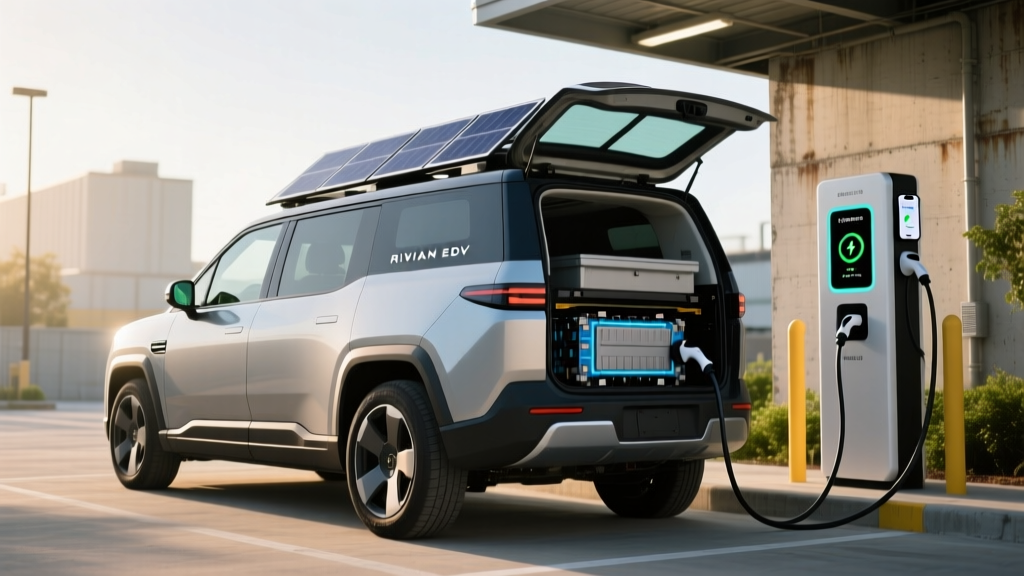
The 2025 Rivian EDV (Electric Delivery Van) is not a consumer vehicle — and that's exactly the point. Designed from the ground up for Amazon's delivery fleet and now expanding to other commercial operators, the EDV represents Rivian's high-volume manufacturing play. With a 150-mile EPA-estimated range on the Standard variant and a purpose-built cargo area that maximizes interior volume, it solves a very specific logistics problem. But for fleet managers or independent delivery operators evaluating this van, the charging speed, real-world range durability, and total cost of ownership matter more than any marketing gloss. Here's the data-driven breakdown.
EPA Estimate: 150 miles (Standard), 120 miles (Small) variant
Expect in practice: 110–130 miles highway/cold weather (Standard); stop-and-go urban delivery routes actually improve efficiency due to regenerative braking, yielding 135–150 miles.
Cold-weather penalty: Expect 20–30% range loss below freezing, dropping the Standard to roughly 105–120 usable miles.
Range, Battery & Efficiency
The EDV comes in three body sizes — Small (500 cu ft cargo), Standard (660 cu ft), and Large (840 cu ft) — with battery capacity scaling accordingly. The Standard variant, which dominates Amazon's fleet, uses a ~90 kWh usable lithium iron phosphate (LFP) battery pack.
| Spec | Small (EDV-500) | Standard (EDV-700) | Large (EDV-900) |
|---|---|---|---|
| EPA Range | ~120 mi | ~150 mi | ~150 mi |
| Battery (usable) | ~70 kWh | ~90 kWh | ~110 kWh |
| Chemistry | LFP | LFP | LFP |
| Efficiency | ~2.0 kWh/mi | ~1.8 kWh/mi | ~2.0 kWh/mi |
| MPGe (combined) | ~100 MPGe | ~112 MPGe | ~100 MPGe |
| Cargo Volume | 500 cu ft | 660 cu ft | 840 cu ft |
Why LFP matters here: LFP chemistry trades energy density for cycle life and thermal stability. For a delivery van running daily 80–100 mile routes with depot charging, LFP's 3,000+ cycle life and tolerance for daily 100% charging make it the correct engineering choice. You won't see the degradation anxiety that plagues NMC packs charged to full daily. Rivian's LFP packs are sourced to meet IRS §30D critical-mineral and battery-component requirements for commercial clean vehicle credits.
Charging Speed: Depot DC Fast & Level 2 Overnight
Fleet charging infrastructure is the make-or-break for the EDV. Here's what the hardware supports:
| Charging Level | Power | Speed / Time |
|---|---|---|
| Level 1 (120V) | ~1.4 kW | ~3 mi/hr — impractical for fleet |
| Level 2 (240V AC) | 11.5 kW (48A) | ~25 mi/hr; full charge in ~8 hrs |
| DC Fast Charge | 150 kW peak | 10–80% in ~45 min |
Charging curve reality: The EDV peaks near 150 kW only between 10–40% State of Charge (SoC). From 40–80%, the curve tapers to 80–100 kW, which is why the 10–80% time stretches to roughly 45 minutes rather than the 30 minutes a flat curve would suggest. For depot operations, this means DC fast-charging during a driver lunch break adds roughly 90 miles — enough for a second urban route.
Home/fleet Level 2: Most EDV operators install commercial-grade Level 2 stations (ChargePoint CT4000 or similar) at depot lots. At 11.5 kW, an overnight 8-hour session fully replenishes the Standard pack. Budget $2,000–$5,000 per stall for commercial L2 installation, plus potential panel upgrades for multi-stall depots.
Performance & Drivetrain
The EDV isn't built for drag races, but its instant torque matters for merging onto highways with a full cargo load.
| Performance Spec | Value |
|---|---|
| Drivetrain | Rear-wheel drive (single motor) |
| Horsepower | ~275 hp |
| Torque | ~350 lb-ft |
| 0–60 mph | ~7.5 seconds (unloaded) |
| Payload Capacity | ~2,500 lbs (Standard) |
| Turning Radius | ~45 ft (Standard) |
The single-motor RWD layout keeps costs and weight down. For a delivery van that rarely exceeds 65 mph and operates primarily in urban/suburban environments, AWD would add cost and reduce efficiency without meaningful benefit. The low center of gravity from the underfloor battery pack gives the EDV surprisingly stable handling when loaded — noticeably better than the body roll you'd feel in a comparable Ford E-Transit or Mercedes Sprinter at speed.
Pricing, Tax Credits & Fleet Economics
The EDV is sold primarily through fleet/commercial channels, not consumer dealerships. Pricing varies by fleet agreement, but here's the framework:
| Variant | Est. Base MSRP | Commercial Clean Vehicle Credit (§45W) | Net Cost (after credit) |
|---|---|---|---|
| Small (EDV-500) | ~$55,000 | Up to $7,500 | ~$47,500 |
| Standard (EDV-700) | ~$65,000 | Up to $7,500 | ~$57,500 |
| Large (EDV-900) | ~$75,000 | Up to $7,500 | ~$67,500 |
Critical tax credit note: The EDV qualifies under IRS §45W (Commercial Clean Vehicle Credit), not the consumer §30D credit. The §45W credit is up to $7,500 for vehicles under 14,000 lbs GVWR and requires the vehicle be placed in service by a business entity. There is no MSRP cap or buyer income cap under §45W, but the vehicle must be used predominantly in the U.S. and meet battery-sourcing requirements. Always consult a tax professional — these rules are subject to legislative change.
5-Year Fleet TCO Snapshot (Standard EDV-700):
| Cost Category | EDV-700 (5 yr / 100k mi) | Diesel Sprinter (5 yr / 100k mi) |
|---|---|---|
| Purchase (after credit) | $57,500 | $52,000 |
| Fuel / Electricity | $6,000 (depot L2 @ $0.12/kWh) | $18,500 (diesel @ $4.20/gal) |
| Maintenance | $3,500 | $9,000 |
| Insurance (est.) | $8,500 | $7,200 |
| Total | $75,500 | $86,700 |
The fuel and maintenance savings are where the EDV earns its keep. Fleet operators running 250+ days/year see payback in 3–4 years, depending on local electricity rates and depot charging infrastructure costs.
Tech, Safety & Driver Experience
The EDV's cabin is designed for a driver making 150+ stops per day. Key features:
- 15.6" center touchscreen with integrated route optimization (Amazon-proprietary on Amazon vans; Rivian Fleet OS for other operators)
- Rivian Driver+ (SAE Level 2): adaptive cruise + lane centering for highway segments between delivery zones — not self-driving; driver must remain engaged
- 360° camera system with curb-view for tight urban stops
- Automated emergency braking, blind-spot monitoring, rear cross-traffic alert
- Walk-through bulkhead between cab and cargo area for weather protection and quick package access
- Regenerative braking profiles: adjustable one-pedal driving optimized for stop-and-go routes
Rivian Driver+ is an SAE Level 2 system. It assists with steering and speed on marked highways but requires full driver attention at all times. It does not handle intersections, pedestrians, or construction zones autonomously. This is not a Level 4 robotaxi system.
Warranty & Battery Longevity
| Coverage | Term |
|---|---|
| Limited Vehicle Warranty | 5 years / 60,000 miles |
| Battery & Powertrain | 8 years / 100,000 miles |
| Battery Capacity Retention | ≥70% of original capacity over warranty term |
LFP chemistry gives the EDV a genuine longevity edge. Where NMC packs might lose 10–15% capacity over 100,000 miles with daily full charges, LFP packs typically lose 5–8% under the same conditions. For a fleet van charged nightly to 100%, this translates to roughly 140+ miles of usable range even at year 8 — still sufficient for most urban delivery routes. Rivian's fleet support program includes remote diagnostics and proactive battery health monitoring via OTA updates.
Pros & Cons
- Purpose-built cargo volume (660–840 cu ft) with low load floor
- LFP battery tolerates daily 100% charging with minimal degradation
- ~$12,000 fuel savings over 5 years vs diesel equivalent
- Driver+ Level 2 assists reduce fatigue on highway transfer segments
- Quiet operation improves neighborhood delivery experience
- OTA updates continuously improve route efficiency algorithms
- 150-mile range limits use to urban/suburban routes — no intercity hauling
- 150 kW DC fast charge is slower than consumer EVs (Ioniq 5 at 240 kW)
- RWD only — no AWD option for snow-belt fleets
- Not available to individual consumers — fleet/commercial sales only
- Depot charging infrastructure adds $15k–$50k upfront for multi-van operations
- Insurance premiums run 15–20% higher than diesel equivalents
Competitor Comparison: EDV vs Ford E-Transit vs Mercedes eSprinter
| Spec | Rivian EDV-700 | Ford E-Transit (2025) | Mercedes eSprinter (2025) |
|---|---|---|---|
| EPA Range | 150 mi | 126 mi | ~150 mi (est.) |
| Battery | ~90 kWh LFP | 68 kWh NMC | 113 kWh NMC |
| DC Fast Charge | 150 kW | 115 kW | 115 kW |
| Cargo Volume | 660 cu ft | 487 cu ft (LWB) | 533 cu ft (LWB) |
| Starting Price (est.) | $65,000 | $52,000 | $74,000 |
| Level 2 ADAS | Driver+ | Ford Co-Pilot360 | Active Distance Assist |
The EDV wins on cargo volume and charging speed. The E-Transit wins on upfront price and dealer network breadth. The eSprinter offers a longer wheelbase option but at a premium. For high-stop-count urban routes where cargo volume per dollar matters most, the EDV holds the edge.
FAQ
Can I buy a 2025 Rivian EDV as an individual consumer?
No. The EDV is sold exclusively through Rivian's commercial fleet channel. Individual consumers looking for a Rivian should explore the R1S SUV or R1T pickup, both available through consumer dealerships and eligible for the §30D consumer tax credit (subject to MSRP and income caps).
What is the real-world range on a typical delivery route?
On a stop-and-go urban route with 150+ stops, regenerative braking recovers significant energy. Fleet operators report 130–145 miles from the Standard EDV-700 in mild weather. Highway-dominant routes (Amazon sortation-center transfers) see 110–125 miles. Below 25°F, expect 105–120 miles from the Standard variant.
How long does depot charging take overnight?
At 11.5 kW Level 2, a fully depleted Standard EDV-700 (~90 kWh) charges in roughly 8 hours. Most fleet operators schedule 10-hour overnight windows, which provides buffer for preconditioning and ensures 100% SoC at departure.
Does the EDV qualify for any federal tax credit?
Yes — under IRS §45W (Commercial Clean Vehicle Credit), eligible business purchasers can claim up to $7,500. The vehicle must be placed in service in the U.S., used predominantly in the U.S., and meet battery-sourcing requirements. There is no MSRP cap or buyer income limit under §45W. Consult a tax professional for your specific situation.
How does the EDV handle winter weather?
The LFP battery's thermal management system includes a heat pump and liquid cooling/heating. Preconditioning while plugged in at the depot mitigates cold-weather range loss. However, LFP chemistry is more sensitive to extreme cold than NMC — below 10°F, charging speeds drop significantly unless the pack is preconditioned. Fleet operators in Minnesota and Michigan report 25–30% winter range reduction.
Is the EDV worth it versus a Ford E-Transit?
If your priority is maximum cargo volume per vehicle and you run high-stop urban routes, the EDV's 660 cu ft and LFP longevity justify the ~$13,000 price premium. If you need a broader dealer service network, lower upfront cost, or already operate Ford fleet vehicles, the E-Transit is a strong alternative with a proven service infrastructure.