Quick Verdict: Built for the Last Mile, Not the Open Road
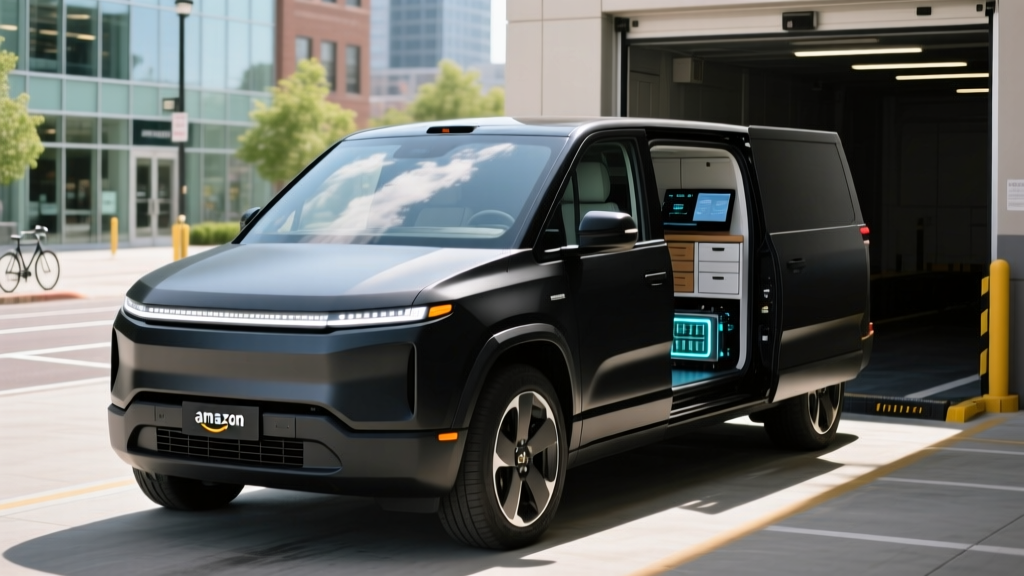
The 2025 Rivian EDV-700 (Electric Delivery Van, 700 cubic feet of cargo volume) is not a consumer vehicle you'll find on a dealership lot. It's a purpose-built commercial electric van designed from the ground up for fleet operators — most notably Amazon, its anchor customer. But with Rivian expanding EDV availability to other qualified commercial fleets in 2025, smaller logistics companies, courier services, and municipal fleets are now evaluating whether this electric workhorse makes financial sense.
This review breaks down the EDV-700's real-world range, charging infrastructure requirements, total cost of ownership, and how it stacks up against competitors like the Ford E-Transit and Mercedes-Benz eSprinter. If you're a fleet manager or commercial EV buyer, here's everything you need to know.
Range, Battery, and Real-World Efficiency
The 2025 Rivian EDV-700 is equipped with a 135 kWh usable lithium-ion battery pack using NMC (nickel manganese cobalt) chemistry — chosen for its energy density advantage in a vehicle that needs to maximize range while carrying heavy payloads. Rivian has not published an official EPA range figure for the EDV-700 in the same way it does for the R1T and R1S, since commercial vans follow different testing protocols, but the manufacturer estimates approximately 150 miles of range under typical urban delivery duty cycles.
- Manufacturer estimate: ~150 miles (urban stop-and-go delivery routes)
- Highway/loaded: Expect ~110–125 miles at sustained 55–65 mph with a full 2,500 lb payload
- Cold weather (below 32°F): Range drops 20–30%, potentially to ~100 miles on winter routes
- Efficiency: Approximately 2.0–2.2 kWh/mile depending on payload and route topography
The EDV-700's range is optimized for urban last-mile routes — think 60–90 mile daily loops with frequent regenerative braking opportunities. It is not designed for long-haul interstate runs.
| Spec | Value |
|---|---|
| Battery (usable) | 135 kWh, NMC chemistry |
| Estimated Range (urban delivery) | ~150 miles |
| Range (highway, loaded) | ~110–125 miles |
| Efficiency | ~2.0–2.2 kWh/mile |
| Max DC Fast Charge | 150 kW (peak) |
| 10–80% DC Charge Time | ~45 minutes |
| Level 2 AC Charge Rate | 11.5 kW (~19 miles/hr) |
| Drivetrain | RWD, single rear motor |
| Horsepower | 250 hp (185 kW) |
| Torque | 332 lb-ft |
| 0–60 mph | ~8.5 seconds (unloaded) |
| Cargo Volume | 660 cu ft (EDV-700 variant) |
| Max Payload | ~2,500 lbs |
| GVWR | ~9,500 lbs |
| Battery/Powertrain Warranty | 8 years / 100,000 miles |
Charging: Fleet Depot Setup Is the Real Story
Charging a commercial electric van is fundamentally different from consumer EV ownership. The EDV-700 supports a peak DC fast-charge rate of 150 kW via a CCS1 connector, achieving a 10–80% charge in approximately 45 minutes. However, most fleet operators will rarely use DC fast charging as a primary strategy — it's a fallback for mid-day top-ups or route extensions.
| Charge Level | Power | Time (10–80%) | Miles Added/Hour |
|---|---|---|---|
| Level 1 (120V) | 1.4 kW | Not practical (60+ hrs) | ~2 mi/hr |
| Level 2 (240V, 48A) | 11.5 kW | ~9.5 hours | ~19 mi/hr |
| DC Fast (CCS1) | 150 kW peak | ~45 minutes | ~150+ mi/hr (peak) |
The fleet charging reality: Most EDV-700 operators install depot-based Level 2 infrastructure — banks of 11.5 kW chargers that replenish vans overnight during off-peak electricity hours (typically 10 PM to 6 AM). At $0.06–$0.10/kWh for commercial off-peak rates, a full 135 kWh charge costs roughly $8–$14, compared to $40–$55 for an equivalent diesel fill-up.
The 150 kW DC fast-charge capability matters when a van needs a mid-shift boost. On a typical CCS1 station (like those from Electrify America), the EDV-700 will peak near 150 kW up to approximately 40% SoC, then taper progressively. The charge curve from 60–80% is noticeably slower — expect the final 20% to take nearly as long as the first 40%. Fleet managers should plan routes around depot charging and treat DC fast charging as an exception, not a routine.
Performance and Drivetrain: Adequate for the Job
The EDV-700 uses a single rear-mounted motor producing 250 hp and 332 lb-ft of torque, driving the rear wheels. This is a deliberate choice: rear-wheel drive maximizes cargo floor space (no front motor or driveshaft tunnel) and provides adequate traction when the van is loaded. The 0–60 mph time of approximately 8.5 seconds (unloaded) is perfectly adequate for urban merging — this isn't a performance vehicle, and it doesn't pretend to be.
Where the EDV-700 shines is low-speed torque delivery. Electric motors provide instant torque from 0 RPM, which makes stop-and-go delivery routes feel surprisingly responsive. The regenerative braking system is aggressive enough to enable near-one-pedal driving in city traffic, reducing brake wear — a meaningful maintenance savings for fleets that go through brake pads every 20,000–30,000 miles in conventional vans.
The ride quality is firm but compliant when loaded. Unloaded, the EDV-700 can feel choppy over rough pavement — a common trait of heavy commercial vehicles with stiff leaf-spring rear suspensions. Cabin noise is well-controlled, with the absence of a diesel engine making the driver environment significantly less fatiguing over a 10-hour shift.
Cargo, Interior, and Driver-Focused Tech
The "700" in EDV-700 refers to approximately 660 cubic feet of cargo volume (Rivian rounds for the model designation). The cargo area features a low, flat floor with a maximum interior height that allows most drivers to stand upright. A large curbside sliding door and rear barn doors provide multiple loading access points. The bulkhead between the cargo area and driver compartment is integrated into the vehicle structure, improving rigidity and crash protection.
Driver environment highlights:
- 15.6-inch central touchscreen with Rivian's commercial fleet management software
- Integrated route optimization that factors in current SoC, terrain, and weather
- Heated seats and heated steering wheel (critical for cold-climate fleet ops)
- 360-degree camera system for tight urban maneuvering
- Six-way adjustable driver seat with lumbar support
- Multiple USB-C ports and a wireless charging pad
Driver assistance (SAE Level 2): The EDV-700 includes Rivian's Driver+ suite with adaptive cruise control, lane-keeping assist, automatic emergency braking, and blind-spot monitoring. This is not autonomous driving — it's a Level 2 driver-assist system that requires the driver to remain fully engaged at all times. In fleet use, the adaptive cruise and lane-centering reduce driver fatigue on highway segments between delivery zones, and the automatic emergency braking has proven valuable in dense urban environments with unpredictable pedestrian and cyclist traffic.
Pricing, Tax Credits, and Fleet Economics
The Rivian EDV-700 is not sold through traditional consumer channels. Pricing is negotiated directly between Rivian and fleet customers, typically as part of a multi-unit purchase agreement. Industry reporting places the estimated per-unit cost at $75,000–$85,000 depending on volume, configuration, and contract terms. For comparison, a conventional gas-powered Ram ProMaster or Ford Transit cargo van starts around $45,000–$55,000.
| Item | Amount |
|---|---|
| Estimated Base Price (per unit, fleet) | $75,000–$85,000 |
| Federal Commercial Clean Vehicle Credit (§45W) | Up to $7,500 (for vehicles under 14,000 lbs GVWR) |
| Estimated Price After Federal Credit | $67,500–$77,500 |
| State/Utility Fleet Incentives | Varies widely — check local programs |
| Estimated Depot Charger Install (per stall) | $3,000–$7,000 (Level 2, commercial) |
Tax credit clarification: The EDV-700 does not qualify for the consumer §30D Clean Vehicle Credit — it qualifies for the §45W Commercial Clean Vehicle Credit, which is available to businesses and tax-exempt organizations that purchase qualified commercial electric vehicles. Under IRS §45W rules, the credit is the lesser of 15% of the vehicle's basis (or 30% if the vehicle is not depreciated) or the incremental cost over a comparable ICE vehicle, capped at $7,500 for vehicles under 14,000 lbs GVWR and $40,000 for heavier vehicles. The EDV-700's GVWR of approximately 9,500 lbs places it in the $7,500 cap tier.
There are no MSRP caps or buyer income limits under §45W as there are under §30D — but the credit is non-refundable and subject to business tax liability. Consult a tax professional to determine your fleet's specific eligibility. State and utility incentives for commercial EV adoption vary significantly by jurisdiction; programs in California (via CARB's HVIP), New York, and Colorado can stack additional $10,000–$30,000 in incentives per vehicle.
Total Cost of Ownership: Where the EDV-700 Wins
The higher upfront cost of the EDV-700 is offset by dramatically lower operating costs over a typical 5-year/150,000-mile fleet lifecycle:
| Cost Category | EDV-700 (Electric) | Gas Van (ICE) |
|---|---|---|
| Purchase Price (after credit) | ~$72,000 | ~$50,000 |
| Fuel / Electricity | ~$6,750 (at $0.09/kWh) | ~$27,000 (at $3.60/gal, 15 MPG) |
| Maintenance (brakes, fluids, filters) | ~$3,500 | ~$9,000 |
| Depreciation (est.) | ~$25,000 | ~$20,000 |
| Downtime (est. lost revenue) | ~$2,000 | ~$5,000 |
| 5-Year Total | ~$109,250 | ~$111,000 |
At parity or slight advantage over 5 years, the EDV-700's economics improve further in years 6–8 as the powertrain requires minimal maintenance compared to an aging gas engine. The 8-year/100,000-mile battery and powertrain warranty provides fleet operators with predictable cost exposure. Rivian also offers fleet service agreements that bundle maintenance into a per-mile operating cost.
Pros, Cons, and Who Should Buy the EDV-700
- Low per-mile energy cost ($0.04–$0.06/mile vs. $0.20+/mile for gas)
- Minimal drivetrain maintenance — no oil changes, no transmission service
- Regenerative braking extends brake pad life 2–3x vs. ICE vans
- Quiet, low-fatigue driver environment improves retention
- Purpose-built for delivery: low floor, wide doors, integrated fleet software
- Qualifies for §45W commercial credit plus state/utility incentives
- Zero tailpipe emissions — helps fleets meet ESG and municipal clean-air mandates
- ~150-mile range limits use to urban/suburban routes — no long-haul capability
- Depot charging infrastructure requires significant upfront investment
- Higher purchase price than comparable ICE vans ($25K–$30K premium before credits)
- Not available through dealers — direct fleet purchase only
- Cold-weather range loss (20–30%) requires winter route planning
- Limited AWD options — RWD only may challenge snowy/rural routes
- Production allocation may be constrained by Amazon's priority as anchor customer
- Urban last-mile delivery fleets with predictable daily routes under 100 miles
- Courier and logistics companies operating in metro areas with depot charging access
- Municipal fleets (parks departments, public works, mail delivery) with overnight parking and charging
- Fleets under ESG mandates requiring measurable emissions reductions
- Long-haul or intercity delivery operations requiring 200+ mile daily range
- Rural routes without reliable charging infrastructure
- Small operators who cannot invest in depot-level charging infrastructure
- Fleets needing AWD for severe winter or off-pavement conditions
Frequently Asked Questions
What is the real-world range of the 2025 Rivian EDV-700?
In urban delivery duty cycles with frequent stops and regenerative braking, expect approximately 140–150 miles. On highway segments at 60+ mph with a full payload, range drops to roughly 110–125 miles. In cold weather (below 32°F), plan for 100–120 miles depending on cabin heat usage and route profile. The EDV-700 is optimized for routes under 100 miles round-trip, with a comfortable buffer for traffic delays and detours.
How fast does the EDV-700 charge at home and on DC fast chargers?
On a Level 2 depot charger (11.5 kW, 240V), the EDV-700 gains approximately 19 miles of range per hour, and a full 10–80% charge takes about 9.5 hours — ideal for overnight depot charging. On a 150 kW DC fast charger (CCS1 connector), 10–80% takes roughly 45 minutes, though the charge curve tapers significantly above 60% SoC. Fleet operators should plan for depot L2 charging as the primary strategy and DC fast charging as an occasional mid-day supplement.
Does the Rivian EDV-700 qualify for the federal EV tax credit?
The EDV-700 does not qualify for the consumer §30D credit. Instead, it qualifies for the §45W Commercial Clean Vehicle Credit, which provides up to $7,500 for vehicles under 14,000 lbs GVWR (the EDV-700 weighs approximately 9,500 lbs). Unlike §30D, the §45W credit has no MSRP cap or buyer income limit — but it is non-refundable, meaning it can only offset actual tax liability. Consult your tax professional and review the IRS §45W guidance for your fleet's specific situation.
How does the EDV-700 compare to the Ford E-Transit?
The Ford E-Transit offers a lower starting price (~$55,000) but significantly less range (~126 miles EPA) and a smaller battery (68 kWh usable). The EDV-700's 135 kWh battery provides roughly 20% more range, and its purpose-built delivery architecture (vs. the E-Transit's adapted ICE platform) offers better cargo access and driver ergonomics. However, the E-Transit is available through Ford's Pro commercial dealer network, making it easier for smaller fleets to purchase and service. If range and cargo efficiency are paramount, the EDV-700 wins; if budget and dealer service access are priorities, the E-Transit may be more practical.
What is the battery warranty on the EDV-700?
Rivian covers the EDV-700's battery and powertrain for 8 years or 100,000 miles, whichever comes first. The warranty guarantees the battery will retain a minimum percentage of its original capacity (typically 70% or above, though fleet buyers should confirm exact retention thresholds in their purchase agreement). For fleets running 25,000–30,000 miles per year, this covers approximately 3–4 years of operation — many fleet operators will cycle vehicles before the warranty expires.
Is the EDV-700 available for individual purchase?
No. The EDV-700 is sold exclusively to qualified commercial and government fleet operators through direct purchase agreements with Rivian. It is not available through consumer dealerships and is not eligible for consumer financing or consumer tax credits. If you're an individual looking for a Rivian electric vehicle, the R1T pickup and R1S SUV are the consumer offerings.
Can the EDV-700 tow a trailer?
The EDV-700 is not designed for towing. Its GVWR and drivetrain calibration prioritize cargo payload (up to ~2,500 lbs inside the van) over trailer capability. Fleet operators requiring tow capability should evaluate the Rivian R1T or other electric trucks in Rivian's future commercial lineup.