The Bottom Line on the 2025 Ram ProMaster EV
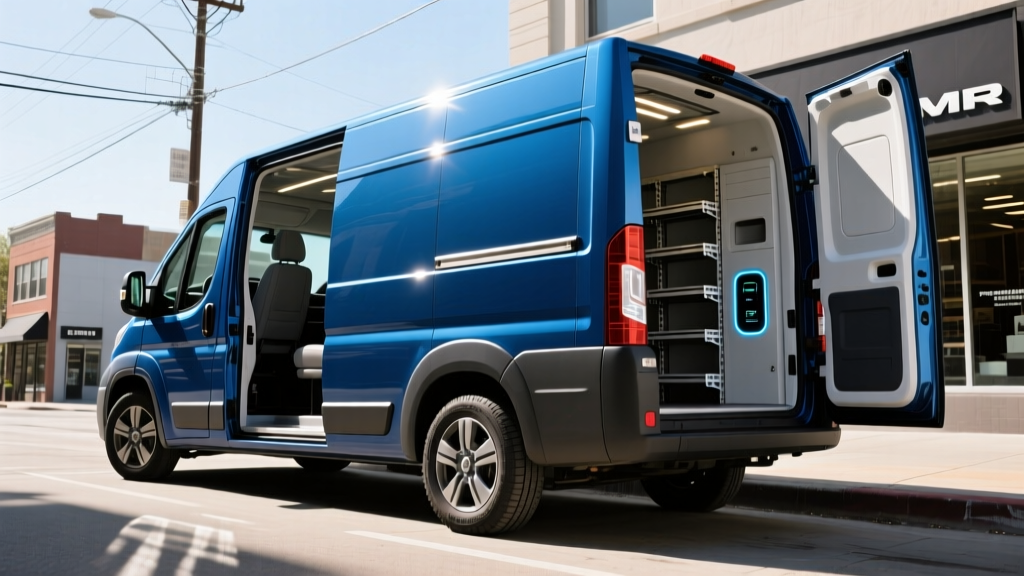
The 2025 Ram ProMaster EV is a battery-electric cargo van built for predictable, urban and suburban commercial routes. It delivers an EPA-estimated 162 miles of range from a 110 kWh battery pack, a payload capacity near 3,020 pounds, and DC fast charging that peaks at 150 kW (10–80% in roughly 40–45 minutes). Starting MSRP sits around $59,995 before destination and incentives. It makes financial sense for fleets with depot-based Level 2 charging and daily routes under 120 miles. It does not replace the gas ProMaster for long-haul or rural routes where charging infrastructure is sparse.
Range, Battery, and Efficiency: What the Numbers Mean in Practice
Ram equips the ProMaster EV with a 110 kWh usable battery pack using NMC (nickel manganese cobalt) lithium-ion cells. The EPA rates it at 162 miles on a full charge for the standard low-roof cargo configuration. Efficiency lands at approximately 2.0–2.2 kWh per mile, which is typical for a full-size electric cargo van carrying moderate payload.
Real-World Range vs. EPA Sticker
The 162-mile EPA figure assumes a mix of urban and suburban driving with moderate payload. Expect the following in actual fleet operations:
- Urban stop-and-go routes (light load, mild weather): 155–170 miles — regenerative braking recovers energy in traffic
- Highway-heavy routes at 65–70 mph: 120–135 miles — aerodynamic drag dominates at speed in a boxy van
- Cold weather (below 32°F) with cabin heat: 100–120 miles — battery chemistry and HVAC draw cut range 25–35%
- Max payload (near 3,000 lbs) on mixed routes: 130–145 miles
Fleet managers should plan routes around a 100–110 mile usable daily range to preserve a safety buffer and avoid deep discharge cycles that accelerate long-term degradation.
The ProMaster EV uses a front-mounted permanent-magnet electric motor producing 268 horsepower (200 kW) and 302 lb-ft of torque. The 0–60 mph time is approximately 8.5 seconds when unloaded — adequate for merging and city driving but not quick by passenger-EV standards. Top speed is electronically limited to roughly 75 mph.
Charging Speeds and Depot Setup
Charging is where commercial EV ownership is won or lost. The ProMaster EV supports three charging levels:
| Charging Level | Power (kW) | Connector | Approximate Speed | Use Case |
|---|---|---|---|---|
| Level 1 (120V) | ~1.4 kW | J1772 | ~4–5 miles/hour | Emergency/top-off only |
| Level 2 (240V, 48A) | ~11.5 kW | J1772 | ~30–35 miles/hour; full charge in ~10 hrs | Overnight depot charging |
| DC Fast Charge | Up to 150 kW peak | CCS1 | 10–80% in ~40–45 min | Mid-day opportunity charging |
A critical note on the DC fast-charge curve: the ProMaster EV reaches its 150 kW peak only at a low state of charge (roughly 10–25% SoC). Charge speed tapers significantly above 60% SoC and drops sharply past 80% to protect battery health. Fleet operators should plan DC charging sessions around the 10–80% window and avoid routinely charging to 100% unless a long route demands it.
For depot charging, most fleet operators will need one or more Level 2 wall-box chargers rated at 11.5 kW (48A, hardwired on a 60A circuit). Commercial-grade Level 2 stations from providers like ChargePoint or Blink run $1,500–$3,500 per unit (hardware), plus $2,000–$8,000 per stall for electrical work depending on panel capacity, conduit runs, and whether a service upgrade is required. Fleets with 5+ vans should consult a commercial electrician about load management software to avoid demand-charge spikes from the utility.
2025 Ram ProMaster EV vs. Gas ProMaster: Cost Comparison
The gas-powered Ram ProMaster with the 3.6L Pentastar V6 starts around $45,000 — roughly $15,000 less than the EV. But purchase price is only part of fleet economics. Here is how the two compare on operating costs over 5 years and 75,000 miles (assuming 15,000 miles/year, primarily urban routes):
| Cost Factor | ProMaster EV | Gas ProMaster (V6) |
|---|---|---|
| Base MSRP | ~$59,995 | ~$45,000 |
| Federal Commercial Clean Vehicle Credit (§45W) | Up to $7,500 (for vans under 14,000 lbs GVWR) | $0 |
| Effective Purchase Price | ~$52,495 | $45,000 |
| Fuel/Energy (5 yr, 75k mi) | ~$6,750 (at $0.18/kWh, 2.1 kWh/mi) | ~$13,500 (at $3.60/gal, 15 MPG combined) |
| Maintenance (5 yr) | ~$2,000 (no oil, fewer brake jobs due to regen) | ~$5,500 (oil changes, spark plugs, transmission, brakes) |
| Estimated Insurance (5 yr) | ~$12,500 | ~$10,000 |
| Total 5-Year Cost (purchase + fuel + maint. + insurance) | ~$73,745 | ~$74,000 |
The numbers show near-parity over five years. The EV pulls ahead in year six and beyond as maintenance savings compound and fuel savings remain consistent. Fleets that keep vans 7–10 years will see the most significant return. However, this model assumes reliable access to depot Level 2 charging at commercial electricity rates. If your fleet must rely on public DC fast charging at $0.40–$0.55/kWh, the energy cost advantage narrows considerably.
According to fueleconomy.gov, the gas ProMaster achieves roughly 15–16 MPG combined in real-world city cargo use, making it one of the thirstier vehicles in a commercial fleet.
Payload, Cargo Volume, and Configurations
The ProMaster EV is offered primarily as a low-roof cargo van with a 12-foot cargo length. Key specs:
| Specification | 2025 Ram ProMaster EV |
|---|---|
| EPA Range | 162 miles |
| Battery Capacity | 110 kWh (NMC lithium-ion) |
| Motor Output | 268 HP / 302 lb-ft torque |
| Payload Capacity | ~3,020 lbs |
| Cargo Volume | ~316 cu ft (low roof, 12-ft cargo) |
| Max DC Fast Charge | 150 kW (CCS1) |
| Level 2 Charge Rate | 11.5 kW (J1772) |
| 0–60 mph | ~8.5 seconds (unloaded) |
| Towing | Not rated for trailer towing |
| Starting MSRP | ~$59,995 |
| Powertrain Warranty | 5 years / 60,000 miles |
| Battery Warranty | 8 years / 100,000 miles (70% capacity retention) |
The EV's battery pack sits beneath the cargo floor, preserving the flat load floor and full cargo volume of the gas version. The 3,020-pound payload is lower than the gas ProMaster's maximum (which can exceed 4,000 lbs in certain trims), so fleets hauling dense cargo like beverages, metal parts, or building materials need to verify their typical loads fit within the EV's envelope.
Notably, the ProMaster EV is not rated for towing. If your operation requires pulling a trailer, the gas ProMaster remains the only option.
Tax Credits and Incentives for Commercial Buyers
The ProMaster EV is typically purchased by businesses or fleets, which changes the incentive landscape compared with personal EV buyers:
- §45W Commercial Clean Vehicle Credit: Businesses can claim up to $7,500 for qualifying commercial EVs with a GVWR under 14,000 lbs. Unlike the consumer §30D credit, there are no MSRP caps, buyer income limits, or battery-sourcing requirements under §45W. The vehicle must be used for business and not be eligible for the §30D credit in the same tax year. See IRS.gov guidance on §45W for eligibility details.
- State and utility incentives: Many states and utilities offer additional rebates or make-ready grants for commercial EV depot charging infrastructure. Check DSIRE (Database of State Incentives for Renewables & Efficiency) for your jurisdiction.
- Depreciation/bonus write-offs: Commercial EVs may qualify for accelerated depreciation under §179 or bonus depreciation, further reducing effective cost. Consult a tax professional for your specific fleet structure.
- Point-of-sale transfer: The §45W credit does not currently have a point-of-sale transfer mechanism like §30D — it is claimed on the business's tax return.
Common Misconceptions About Electric Cargo Vans
| Myth | Fact |
|---|---|
| "162 miles of range isn't enough for any real work." | The average urban delivery route covers 60–90 miles per day (Bureau of Transportation data). The ProMaster EV handles most last-mile and metro routes with buffer to spare. |
| "EV vans can't handle cold climates." | Range drops 25–35% in freezing weather, but preconditioning while plugged in and using seat heaters instead of cabin air can recover 10–15 miles. Fleets in Minnesota and Norway run electric vans year-round with route planning. |
| "Battery replacement will cost more than the van is worth." | NMC battery packs are warranted for 8 years/100,000 miles at 70% capacity retention. Most commercial vans will retire or be reassigned before a pack swap is needed. If required, replacement packs currently run $15,000–$22,000 — significant, but less than a new van. |
| "Level 2 charging is too slow for a work van." | At 11.5 kW, the ProMaster EV gains ~30 miles per hour of charging. A 10-hour overnight session adds ~300 miles of range capacity — more than the battery holds. Depot charging is the ideal use case. |
| "All businesses qualify for the $7,500 federal credit." | The §45W credit has specific requirements around vehicle qualification, business use, and tax liability. Some businesses with no tax liability may not benefit directly. Always verify with a tax professional. |
Who Should Buy the 2025 Ram ProMaster EV — and Who Shouldn't
Decision Framework: Is the ProMaster EV Right for Your Fleet?
Choose the ProMaster EV if:
- Your daily routes are under 120 miles with predictable patterns
- You have depot or warehouse access where Level 2 chargers can be installed
- Your typical payload is under 2,500 pounds
- You operate primarily in urban or suburban areas
- Your fleet keeps vehicles 5+ years (to capture long-term operating savings)
- You want to reduce fleet emissions for ESG reporting or municipal contract requirements
Stick with the gas ProMaster if:
- Your routes regularly exceed 150 miles per day or vary unpredictably
- You lack access to overnight depot charging and must rely on public infrastructure
- Your payloads regularly exceed 3,000 pounds
- You need towing capability
- You operate in extreme cold (consistent sub-zero temps) without heated depot parking
- You turn over fleet vehicles every 2–3 years (the upfront premium won't pay back)
First-Time Commercial EV Buyer Checklist
If this is your fleet's first electric van, here is what you need to address before purchase:
- Audit your routes: Pull GPS or telematics data for the past 90 days. Identify which vehicles consistently run under 120 miles/day. Those are your EV candidates.
- Assess your electrical panel: A commercial electrician should evaluate your depot's panel capacity. A single 60A circuit for one Level 2 charger is straightforward; five chargers may require a panel upgrade costing $5,000–$20,000+.
- Understand utility demand charges: Some commercial electricity plans charge peak-demand fees based on your highest 15-minute draw. Multiple chargers running simultaneously can spike demand charges. Ask your utility about managed-charging or time-of-use commercial rates.
- Plan for charger lead times: Commercial-grade Level 2 stations can have 4–12 week lead times for hardware plus permitting and installation. Order chargers before the vans arrive.
- Train your drivers: Regenerative braking, one-pedal driving, and preconditioning are not intuitive for drivers coming from gas vans. A 30-minute training session pays dividends in efficiency and driver satisfaction.
- Monitor battery State of Health (SoH): Use the van's telematics or a third-party fleet management platform to track battery degradation over time. This data is critical for warranty claims and resale value.
Frequently Asked Questions
What is the real-world range of the 2025 Ram ProMaster EV?
The EPA rates it at 162 miles. In real-world urban delivery use with moderate payload, expect 140–155 miles in mild weather and 100–120 miles in freezing temperatures. Highway-heavy routes at 70 mph will yield roughly 120–135 miles.
How long does it take to charge the ProMaster EV overnight?
On a Level 2 charger at 11.5 kW, a full charge from near-empty takes approximately 10 hours. Since most fleet vans return to the depot with 30–50% SoC remaining, a typical overnight session of 6–8 hours is sufficient.
Can the ProMaster EV be fast-charged on a road trip?
Yes, via CCS1 DC fast chargers at up to 150 kW. However, with only 162 miles of range, road-trip charging is impractical for most cargo operations. This van is designed for depot-based, predictable routes — not long-haul driving.
Does the ProMaster EV qualify for the $7,500 federal tax credit?
Commercial buyers can claim up to $7,500 under the §45W Commercial Clean Vehicle Credit, which does not have the MSRP caps, income limits, or battery-sourcing restrictions of the consumer §30D credit. Eligibility depends on business use and tax liability. Consult IRS.gov or a tax professional.
What is the payload capacity compared to the gas ProMaster?
The ProMaster EV offers approximately 3,020 lbs of payload capacity, compared to over 4,000 lbs for some gas ProMaster configurations. If your typical loads exceed 2,500 lbs regularly, verify that the EV's payload envelope meets your needs — the battery weight reduces available cargo capacity.
How much does depot charging cost to install?
A single commercial Level 2 charging station costs $1,500–$3,500 for hardware plus $2,000–$8,000 for electrical installation (depending on conduit length, panel capacity, and local permitting). For fleets adding multiple chargers, budget $5,000–$15,000+ per stall on average. Utility make-ready programs may offset infrastructure costs in some regions.
What is the battery warranty?
Ram covers the ProMaster EV battery for 8 years or 100,000 miles, warranting at least 70% capacity retention over that period. The general powertrain warranty is 5 years / 60,000 miles.
Is the ProMaster EV available as a passenger or cutaway model?
For the 2025 model year, the ProMaster EV is offered as a low-roof cargo van. Passenger and cutaway configurations are not currently available in electric form. Ram has not announced plans for additional body styles.