Quick Answer: Is the 2025 Ram ProMaster 3500 EV Right for Your Fleet?
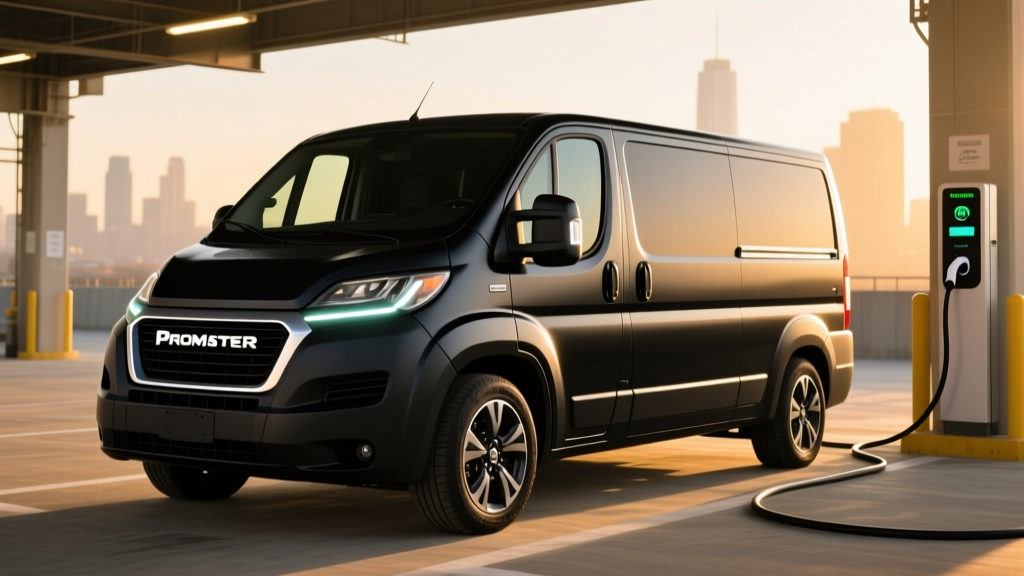
The 2025 Ram ProMaster 3500 EV delivers an EPA-estimated 162 miles of range from a 110 kWh battery pack, a maximum payload of approximately 3,160 pounds, and DC fast charging up to 150 kW. Starting at an MSRP of roughly $65,000 (before incentives), it targets last-mile delivery and urban commercial fleets with predictable daily routes under 120 miles. It works best when depot charging is available overnight. For long-haul or rural routes exceeding 150 miles daily, the gas ProMaster 3500 remains the more practical choice.
Range, Battery & Efficiency: What the Numbers Actually Mean
The 2025 Ram ProMaster 3500 EV is built on Stellantis's STLA Large platform adapted for commercial use. Its 110 kWh usable lithium-ion (NMC chemistry) battery pack powers a front-mounted permanent-magnet electric motor producing 268 horsepower and 302 lb-ft of torque. The EPA rates it at 162 miles of combined range — but fleet managers need to plan around real-world conditions, not sticker numbers.
Real-World Range Expectations
EPA Estimate: 162 miles combined
Urban stop-and-go (loaded): ~140–155 miles (regenerative braking recovers energy in city traffic)
Highway (65 mph sustained, loaded): ~115–130 miles (the boxy aerodynamics penalize highway efficiency)
Cold weather (below 32°F, loaded): ~100–120 miles (battery chemistry and cabin heating reduce usable capacity by 25–35%)
Source: fueleconomy.gov and manufacturer preliminary specifications.
The ProMaster EV's efficiency lands around 2.0–2.2 kWh/mile when loaded — typical for a Class 2b electric van. For context, that translates to roughly 1.5 MPGe in diesel-equivalent terms, though the cost-per-mile comparison heavily favors electricity in most commercial utility-rate environments.
Charging Speeds and Depot Infrastructure
Charging logistics determine whether an electric commercial van succeeds or fails. The ProMaster 3500 EV supports three charging tiers:
| Charging Level | Connector | Max Power | Charge Time | Miles Added/Hour |
|---|---|---|---|---|
| Level 1 (120V AC) | J1772 | 1.4 kW | ~78 hours (0–100%) | ~3 mi/hr |
| Level 2 (240V AC) | J1772 / CCS1 | 11 kW (onboard charger) | ~10–11 hours (0–100%) | ~15 mi/hr |
| DC Fast Charge | CCS1 | 150 kW peak | ~45 min (10–80%) | ~170 mi/hr (peak) |
Key insight for fleet managers: The 11 kW onboard AC charger means a full overnight charge on Level 2 takes roughly 10–11 hours. This is workable for depot-based operations where vans return by 7 PM and depart by 6 AM. However, the 150 kW DC fast-charge peak is modest compared to some competitors — the charge curve tapers significantly above 80% state of charge (SoC), meaning a 10–80% session takes approximately 45 minutes at a properly rated CCS1 station. Plan midday top-ups accordingly.
The ProMaster EV uses the CCS1 connector standard. Stellantis has not announced NACS (Tesla Supercharger) compatibility for this model year. Fleets operating in regions with sparse CCS1 infrastructure (particularly rural corridors) should audit public charging availability via the DOV Alternative Fuels Data Center before committing.
Payload, Cargo Volume & Commercial Practicality
The electric ProMaster 3500 retains the body-on-frame architecture and cargo dimensions that made the gas ProMaster popular, but the battery pack adds curb weight that reduces maximum payload.
| Specification | 2025 Ram ProMaster 3500 EV | 2025 Ram ProMaster 3500 (Gas V6) |
|---|---|---|
| Powertrain | Single FWD electric motor, 268 hp / 302 lb-ft | 3.6L Pentastar V6, 276 hp / 250 lb-ft |
| Transmission | Single-speed reduction gear | 9-speed automatic |
| EPA Range / Fuel Economy | 162 mi (combined) | ~16 mpg combined |
| Battery / Fuel Tank | 110 kWh usable (NMC) | 24-gallon fuel tank |
| Max Payload | ~3,160 lbs | ~4,290 lbs |
| Cargo Volume (159" WB, high roof) | 463 cu ft | 463 cu ft |
| Starting MSRP | ~$65,000 | ~$48,000 |
| Warranty (powertrain/battery) | 8 yr / 100,000 mi battery | 5 yr / 60,000 mi powertrain |
The payload penalty is real: roughly 1,100 pounds less than the gas version. For parcel delivery, catering, and light commercial work, 3,160 pounds is usually sufficient. For heavy-material transport (plumbing supplies, building materials, appliance delivery), the gas ProMaster retains a meaningful advantage. Cargo volume, however, is identical — the battery is mounted under the floor, preserving the full 463 cubic-foot cargo area on the 159-inch wheelbase high-roof configuration.
Total Cost of Ownership: EV vs. Gas ProMaster
The upfront price gap between the electric and gas ProMaster 3500 is substantial — approximately $17,000 before incentives. But fleet economics depend on total cost of ownership over the vehicle's service life. Here is a 5-year / 75,000-mile projection for a typical urban delivery fleet scenario (15,000 miles/year, depot charging):
| Cost Category | ProMaster 3500 EV | ProMaster 3500 Gas |
|---|---|---|
| Purchase Price (base MSRP) | $65,000 | $48,000 |
| Federal Commercial Clean Vehicle Credit (§45W) | −$7,500 (if eligible) | $0 |
| Net Purchase Cost | $57,500 | $48,000 |
| Fuel/Energy (75,000 mi total) | $4,125 (at $0.15/kWh, 2.1 kWh/mi) | $14,063 (at $3.50/gal, 16 mpg) |
| Maintenance (5 yr est.) | $2,500 (no oil, fewer brake replacements) | $5,500 (oil changes, transmission, brakes) |
| Insurance (5 yr est.) | $12,500 | $10,000 |
| Estimated Resale Value (5 yr) | $22,000 | $20,000 |
| 5-Year Net Cost | $54,625 | $57,563 |
Bottom line: The EV breaks even or saves money over five years in this scenario, primarily through fuel savings of nearly $10,000 and reduced maintenance. However, this assumes consistent depot charging access at commercial electricity rates ($0.10–$0.18/kWh). Fleets relying on public DC fast charging at $0.35–$0.50/kWh will see significantly higher energy costs — potentially erasing the fuel savings advantage.
Note: The §45W Commercial Clean Vehicle Credit (up to $7,500 for vehicles under 14,000 lbs GVWR) applies to business purchases and is subject to IRS sourcing and eligibility requirements. Consult a tax professional and review current IRS §45W guidelines before budgeting around this credit.
What First-Time EV Fleet Buyers Need to Know
Transitioning from a gas van fleet to electric involves infrastructure investment that goes beyond the vehicle purchase. Here are the critical first-time buyer considerations:
Depot Charging Installation
Level 2 (240V, 40–48 amp) depot chargers are essential for daily operations. Budget for:
- Hardware: $600–$1,200 per commercial-grade Level 2 EVSE (ChargePoint, Blink, or similar)
- Electrical work: $2,000–$8,000 per charger (conduit run, panel capacity, permitting)
- Panel upgrade: $3,000–$10,000+ if your facility lacks sufficient amperage for multiple chargers
- Utility demand charges: Some commercial rate structures impose demand charges for simultaneous charging — consult your utility before installing a multi-port depot
Cold-Weather Operations
If your fleet operates in northern climates where temperatures regularly drop below freezing, expect 25–35% range reduction. The ProMaster EV's battery thermal management system mitigates this partially, but cabin heating (resistive or heat pump — Stellantis has not specified which) draws additional energy. Fleets in Minneapolis, Chicago, or Boston should plan routes around a 100–120 mile real-world winter range.
Driver Training
EV vans drive differently: instant torque, regenerative braking (which can approximate one-pedal driving in city traffic), and quieter operation. Budget a half-day of driver orientation to maximize regen efficiency and reduce brake wear.
Common Misconceptions About Electric Commercial Vans
| Myth | Fact |
|---|---|
| "EV vans can't handle real payloads." | The ProMaster 3500 EV carries 3,160 lbs — sufficient for most parcel, food-service, and light-trade applications. Only heavy-material fleets should default to gas. |
| "Charging takes too long for commercial use." | Overnight Level 2 depot charging (10–11 hours) covers 90%+ of daily needs. DC fast charging adds ~100 miles in 30 minutes for midday top-ups. |
| "Electric vans are always cheaper to operate." | Only if you have access to affordable electricity ($0.10–$0.18/kWh). Public DC fast charging at $0.40+/kWh can make the EV more expensive per mile than gas. |
| "The battery will need replacing in 5 years." | NMC batteries in commercial EVs are warrantied for 8 years/100,000 miles at 70%+ capacity retention. Real-world fleet data from early adopters shows ~8–12% degradation over 100,000 miles. |
| "Federal tax credits cover the whole price difference." | The §45W credit is up to $7,500 — it narrows the gap but does not eliminate the ~$17,000 MSRP premium. TCO savings close the rest over 3–5 years. |
Decision Framework: Should Your Fleet Go Electric?
Choose the ProMaster 3500 EV If:
- Daily routes are under 120 miles (or under 100 miles in cold climates) with predictable stops
- You have depot or facility charging access — or can invest in Level 2 installation
- Your cargo weight stays under 3,000 lbs on most runs
- You operate in a city or metro area with stop-and-go traffic (regen maximizes efficiency)
- Your fleet qualifies for §45W or state/local commercial EV incentives
- You plan to hold the vehicle 5+ years to capture TCO savings
Stick With the Gas ProMaster 3500 If:
- Daily routes exceed 150 miles or vary unpredictably
- You regularly haul loads above 3,500 lbs
- No depot charging is available and public CCS1 infrastructure is sparse in your operating area
- You operate primarily on highways (the EV's boxy aero and single-speed gearing favor city efficiency)
- You need to tow (the gas ProMaster offers up to 6,910 lbs towing; the EV has limited or no tow rating — confirm with Stellantis for final specs)
- Fleet turnover is under 3 years — the upfront premium won't be recovered
Warranty, Service & Long-Term Ownership
Stellantis provides the ProMaster 3500 EV with an 8-year/100,000-mile battery warranty guaranteeing at least 70% capacity retention — consistent with industry standards for commercial electric vehicles. The basic vehicle warranty covers 3 years/36,000 miles. Service intervals are longer than gas equivalents: no oil changes, no spark plugs, no transmission fluid, and regenerative braking significantly extends brake pad life. Expect annual maintenance to run $400–$600 versus $1,000–$1,400 for the gas ProMaster.
One ownership reality to plan for: EV commercial van service networks are still maturing. Stellantis has designated select Ram BusinessLink dealerships for EV service, but coverage in rural areas may require longer tow distances. Confirm your nearest qualified service center before purchasing.
Frequently Asked Questions
What is the real-world range of the 2025 Ram ProMaster 3500 EV?
The EPA rates it at 162 miles combined. In real-world loaded urban delivery use, expect 140–155 miles. Highway driving at sustained speeds reduces this to 115–130 miles, and cold weather (below freezing) can drop range to 100–120 miles. Plan routes with a 20% buffer below your expected range.
How long does it take to charge the ProMaster EV?
On a Level 2 (240V, 11 kW) depot charger, a full charge takes approximately 10–11 hours. On a 150 kW DC fast charger, a 10–80% session takes roughly 45 minutes. Level 1 (standard 120V outlet) is impractical for fleet use at nearly 78 hours for a full charge.
Does the ProMaster 3500 EV qualify for federal tax credits?
The ProMaster EV may qualify for the §45W Commercial Clean Vehicle Credit (up to $7,500) when purchased for business use. This credit has battery component and critical mineral sourcing requirements that change annually. Consult the IRS §45W page and a qualified tax professional to confirm eligibility for your specific purchase.
How does payload compare to the gas ProMaster 3500?
The EV carries approximately 3,160 lbs maximum payload versus ~4,290 lbs for the gas V6 model — a roughly 1,100 lb reduction due to battery weight. Cargo volume remains identical at up to 463 cu ft. For most delivery and light commercial applications, the EV payload is sufficient.
Is the ProMaster EV good for highway driving?
It's capable but not optimized for it. The tall, boxy profile creates significant aerodynamic drag above 55 mph, reducing efficiency and range. The single-speed transmission means no gear hunting, but highway energy consumption is notably higher than city driving. Fleets running primarily highway routes over 100 miles should consider the gas ProMaster.
What charging connector does the ProMaster EV use?
The 2025 ProMaster EV uses the CCS1 connector for both AC (Level 2) and DC fast charging. It is not currently compatible with Tesla Superchargers (NACS) without an adapter, and Stellantis has not announced native NACS support for this model year.