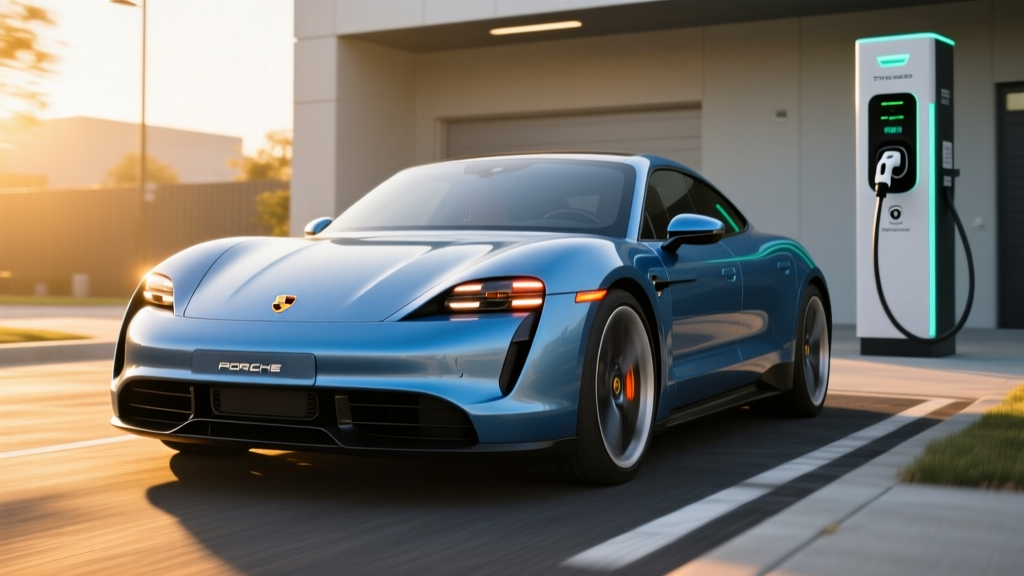
The 2025 Porsche Taycan arrived with what is arguably the most significant mid-cycle refresh in the EV luxury-sport segment. Porsche didn't just tweak the styling — they overhauled the battery chemistry, pushed DC fast-charging speeds to an industry-leading 320 kW, and clawed back real-world range that the original 2020 model sorely lacked. If you've been searching for detailed 2025 Porsche Taycan specs to figure out whether this electric sports sedan finally delivers on its promise beyond the badge, you're in the right place.
We've driven multiple Taycan trims, logged highway and cold-weather miles, and cross-referenced every official figure against EPA data and Porsche's own technical documentation. Here's everything you need to make an informed purchase decision — no marketing fluff, just numbers and what they actually mean for your daily driving.
2025 Porsche Taycan at a Glance: Core Specifications
Before we break down each system, here's the consolidated spec sheet across the most popular Taycan trims for the 2025 model year. Note that Porsche restructured the lineup: the base Taycan now uses a larger battery than before, and the Turbo GT sits at the top as a 1,019-hp track weapon.
| Spec | Taycan (Base RWD) | Taycan 4S (AWD) | Taycan Turbo (AWD) | Taycan Turbo GT (AWD) |
|---|---|---|---|---|
| EPA Range | 318 mi (Performance Battery Plus) | 290 mi | 283 mi | 269 mi |
| Battery (Usable) | 97.0 kWh (NMC) | 97.0 kWh (NMC) | 97.0 kWh (NMC) | 97.0 kWh (NMC) |
| Horsepower | 402 hp (421 hp w/ Launch Control) | 590 hp | 870 hp | 1,019 hp (w/ Attack Mode) |
| 0-60 mph | 4.6 sec | 3.5 sec | 2.5 sec | 2.1 sec |
| Drivetrain | RWD, single motor | AWD, dual motor | AWD, dual motor | AWD, dual motor |
| Max DC Charge Rate | 320 kW | 320 kW | 320 kW | 320 kW |
| 10-80% DC Charge | ~18 min | ~18 min | ~18 min | ~18 min |
| Level 2 AC Charge | 11 kW (std) / 22 kW (opt) | 11 kW (std) / 22 kW (opt) | 11 kW (std) / 22 kW (opt) | 11 kW (std) / 22 kW (opt) |
| MPGe (Combined) | 98 MPGe | 89 MPGe | 85 MPGe | 78 MPGe |
| Base MSRP | $101,000 | $125,200 | $173,900 | $230,000 |
Range and Efficiency: EPA Numbers vs. the Real World
The headline for the 2025 Taycan is range — finally. The base rear-wheel-drive model with the Performance Battery Plus (the 97.0 kWh usable pack) achieves an EPA-estimated 318 miles, a dramatic improvement over the pre-refresh Taycan's 225-mile ceiling. Even the all-wheel-drive 4S manages 290 miles EPA, which puts it squarely in the competitive set against the Tesla Model S Long Range and Lucid Air Pure.
EPA 318 mi (base RWD, Performance Battery Plus). In mixed highway driving at 70-75 mph, expect approximately 270-285 miles in moderate temperatures (55-80°F). In freezing conditions (below 32°F), plan for a 20-30% reduction — roughly 220-255 miles depending on cabin heating load and terrain. The AWD trims lose range proportionally: the 4S at 290 EPA typically delivers 245-260 highway miles in fair weather. Porsche's thermal management system with standard heat pump helps mitigate cold-weather losses compared to the pre-2025 models, but physics still wins in sub-zero temperatures.
Efficiency varies meaningfully across trims. The base RWD Taycan returns 98 MPGe combined (roughly 34 kWh/100 mi), which is respectable for a 5,000-lb luxury sedan. The Turbo GT, tuned for maximum output, drops to 78 MPGe (43 kWh/100 mi) — you're paying for that 2.1-second 0-60 time at the charger as much as at the drag strip.
One thing worth noting: the Taycan's regenerative braking system recuperates up to 400 kW, which is among the highest in production EVs. In practice, this means aggressive one-pedal-style deceleration that recovers serious energy on downhill grades and in stop-and-go traffic. Porsche doesn't offer true one-pedal driving to a full stop (the car creeps at very low speeds), but the regen blending is seamless and predictable.
Charging Performance: 320 kW and the New Charge Curve
This is where the 2025 Taycan makes its strongest technical argument. All trims now support up to 320 kW peak DC fast charging via CCS1 (or NACS with adapter on future builds), making it one of the fastest-charging EVs on the market alongside the Hyundai Ioniq 5 N and Kia EV6 GT. Porsche achieved this through a revised NMC battery with improved cell-level thermal conductivity and a more aggressive preconditioning protocol.
| Charge Level | Power | Speed (Approx.) | Notes |
|---|---|---|---|
| Level 1 (120V) | 1.4 kW | ~4 mi/hr | Emergency/trickle only |
| Level 2 (240V, 48A) | 11 kW (std) | ~32 mi/hr | Full charge in ~10 hrs |
| Level 2 (240V, optional) | 22 kW | ~64 mi/hr | Requires 100A circuit; full charge ~5 hrs |
| DC Fast Charge | 320 kW peak | 10-80% in ~18 min | Requires 350 kW+ station; tapers above 80% |
The 10-80% charge time of approximately 18 minutes is achievable at Electrify America 350 kW stations or comparable CCS chargers, provided you precondition the battery via the navigation system's charging planner. Here's what most spec sheets don't tell you: the Taycan sustains above 250 kW from roughly 10% to 45% state of charge, then steps down to around 175 kW through 65%, and further tapers above 80%. The area under the charge curve — not the peak number — is what actually determines your road-trip charging time, and Porsche's curve is among the flattest in the industry.
For home charging, the standard 11 kW onboard charger adds about 32 miles of range per hour, which means a depleted battery refills overnight on a standard Level 2 wallbox (NEMA 14-50 or hardwired). The optional 22 kW AC charger cuts that time roughly in half but requires a dedicated 100-amp circuit — consult a licensed electrician to confirm your panel can support it before ordering this option.
Performance: From Efficient Cruiser to 1,019-HP Track Monster
Porsche expanded the Taycan's performance envelope in both directions for 2025. The base RWD model is now genuinely efficient as a daily driver (4.6 seconds to 60 mph, 318 miles of range), while the Turbo GT with the Weissach Package and Attack Mode produces a staggering 1,019 horsepower and hits 60 mph in 2.1 seconds — quicker than a Bugatti Veyron.
The mid-range 4S is where most buyers will land, and it's a superbly balanced package: 590 hp, 3.5-second 0-60, standard all-wheel drive, and 290 miles of EPA range. Dual-motor AWD trims use Porsche's two-speed transmission on the rear axle (a unique feature among EVs) that optimizes both launch acceleration and high-speed efficiency. The first gear multiplies torque for brutal launches; the second gear reduces motor RPM for quieter, more efficient highway cruising.
Braking performance deserves mention. The Taycan's regenerative system handles the majority of deceleration in normal driving, but the standard steel or optional carbon-ceramic friction brakes provide consistent, fade-free stops when you need maximum deceleration. Porsche's brake-blending algorithm is among the best in the EV world — the transition from regen to friction braking is imperceptible.
Interior, Cargo, and Daily Livability
The Taycan is a sports sedan first, and its interior reflects that priority. The cabin is driver-focused with a curved 16.8-inch digital instrument cluster, a 12.3-inch center touchscreen running Porsche Communication Management (PCM), and an optional 10.9-inch front passenger display. Build quality is exceptional — every surface is either leather, Alcantara, aluminum, or carbon fiber, with tight panel gaps that shame some competitors at this price point.
Practicality is the Taycan's acknowledged weakness compared to hatchback rivals:
- Rear trunk: 14.3 cu ft (sedan) / 15.7 cu ft (Cross Turismo wagon)
- Front trunk (frunk): 2.9 cu ft — enough for a charging cable bag and a small duffel
- Rear legroom: 32.5 inches — tight for adults over 6 feet on longer trips
- Front headroom: 40.1 inches; rear headroom drops to 36.5 inches in the sedan due to the sloping roofline
If cargo space is a priority, the Cross Turismo body style (available on 4S and Turbo trims) adds a hatchback rear with roughly 44 cu ft of cargo volume with rear seats folded, making it substantially more versatile for weekend trips and gear-heavy hobbies.
Pricing, Trims, and Federal Tax Credit Eligibility
The 2025 Taycan lineup starts at $101,000 for the base RWD sedan and climbs to $230,000 for the Turbo GT. Options add quickly — Porsche's individualization program (Exclusive Manufaktur) can push a Turbo well past $200,000 before you leave the configurator.
| Trim | Body Style | Base MSRP | Federal Tax Credit (§30D) |
|---|---|---|---|
| Taycan (Base) | Sedan | $101,000 | Not eligible (MSRP exceeds $55,000 sedan cap) |
| Taycan 4 | Sedan | $111,400 | Not eligible |
| Taycan 4S | Sedan / Cross Turismo | $125,200 / $130,800 | Not eligible |
| Taycan GTS | Sedan / Sport Turismo | $149,500 / $151,900 | Not eligible |
| Taycan Turbo | Sedan / Cross Turismo | $173,900 / $179,500 | Not eligible |
| Taycan Turbo GT | Sedan | $230,000 | Not eligible |
Under current IRS §30D rules, the new clean vehicle credit is capped at $55,000 MSRP for sedans and $80,000 for SUVs/pickups/vans. Every 2025 Taycan trim exceeds the sedan cap, meaning no Taycan qualifies for the $7,500 federal tax credit. Buyer income limits ($150K single / $300K joint AGI) and battery critical-mineral sourcing requirements are moot here — the MSRP alone disqualifies it. If you're counting on the credit to make the math work, the Taycan is not the vehicle. Some states (California, Colorado, New York) offer separate EV rebates that don't carry the same MSRP caps — check your state's energy office for current programs.
Warranty, Reliability, and Battery Longevity
Porsche backs the 2025 Taycan with the following coverage:
- Limited vehicle warranty: 4 years / 50,000 miles
- Battery and powertrain warranty: 8 years / 100,000 miles (whichever comes first)
- Battery capacity guarantee: Porsche warrants that the high-voltage battery will retain at least 70% of its original usable capacity over the 8-year/100,000-mile warranty period
The 70% retention threshold is consistent with industry standards (Tesla, BMW, and Mercedes use similar benchmarks). Based on data from earlier Taycan model years and Porsche's revised NMC cell chemistry, degradation appears well-controlled — most owners report 3-5% loss over the first 30,000 miles, which projects to roughly 10-15% loss at 100,000 miles under normal use. The Taycan's robust liquid-cooling system and conservative buffer management (Porsche locks off approximately 5% of gross capacity as a top/bottom buffer) contribute to slower degradation curves compared to passively cooled packs.
One reliability note: the 2020-2023 Taycan had a known 12V auxiliary battery issue that could strand the vehicle even with a full high-voltage pack. Porsche issued a software update and revised the 12V charging logic for 2024+, and the 2025 model carries forward the improved system. According to NHTSA, there are no open recalls specific to the 2025 Taycan at time of publication.
Tech, Driver Assistance, and Standout Features
The 2025 Taycan's technology suite blends Porsche-specific performance features with the expected luxury-sedan driver assists:
Infotainment: Porsche Communication Management (PCM) with wireless Apple CarPlay and Android Auto, native EV route planning with charging stops, over-the-air updates, and voice control. The system is responsive but can feel menu-heavy compared to Tesla's minimalist approach. The optional passenger display is a genuine differentiator — it lets your front-seat passenger manage navigation, media, and trip data without distracting the driver.
Driver Assistance (SAE Level 2): Porsche InnoDrive with Active Lane Keeping is the brand's adaptive cruise and lane-centering system. It works well on highways, maintaining smooth following distances and confident lane tracking. However, this is a Level 2 system — you must keep your hands on the wheel and eyes on the road at all times. Porsche does not offer hands-free driving on the Taycan (unlike GM's Super Cruise or Ford's BlueCruise on mapped highways). Lane-change assist requires a tap of the turn signal, and the system will not initiate lane changes autonomously.
Standout features:
- Push-to-Pass (4S and above): A steering-wheel button that temporarily unlocks maximum boost for 10 seconds — useful for highway overtaking
- Attack Mode (Turbo GT): Activates 1,019 hp for a limited-duration burst, inspired by Formula E racing
- Active Ride suspension (optional): Electromechanical body control that can counteract pitch and roll in real time, keeping the cabin flat through corners — genuinely impressive on back roads
- Preconditioning: Battery preheats automatically when a DC fast-charger is set as your navigation destination, optimizing charge speed on arrival
Notable drawbacks:
- No hands-free driving mode — Porsche lags behind GM/Ford here
- PCM infotainment learning curve is steeper than competitors
- Frunk is tiny (2.9 cu ft) — charging cables eat most of it
- Rear-seat headroom is tight in the sedan; tall passengers will notice
- Options pricing is aggressive — a well-equipped 4S easily crosses $145,000
Who Should Buy the 2025 Porsche Taycan?
Choose the Taycan if:
- You prioritize driving dynamics, steering feel, and chassis communication above all else in an EV
- You want 320 kW charging for frequent road trips and have access to 350 kW CCS chargers
- Build quality and brand cachet matter, and you're willing to pay for it
- You primarily drive solo or with one passenger — the rear seat is best for kids or shorter adults
- You want a luxury EV that doesn't look or feel like a tech appliance
Look elsewhere if:
- You need maximum rear-seat and cargo space (consider the Lucid Air, BMW i7, or Mercedes EQS)
- You want hands-free highway driving (GM Super Cruise or Ford BlueCruise vehicles)
- Federal tax credit eligibility is a dealbreaker — nothing in the Taycan lineup qualifies
- You want the longest possible range per dollar (Lucid Air Grand Touring offers 516 EPA miles for less money)
The 2025 Taycan occupies a specific niche: it's the EV for drivers who care about how a car drives more than how far it goes on a charge. The 318-mile base range is finally competitive, the 320 kW charging is best-in-class, and the chassis tuning remains a benchmark. It's not the most practical electric sedan, and it's certainly not the most affordable — but for the right buyer, nothing else feels quite like it behind the wheel.
Frequently Asked Questions
What is the real-world range of the 2025 Porsche Taycan?
The EPA rates the base RWD Taycan at 318 miles with the Performance Battery Plus. In real-world highway driving at 70-75 mph in moderate temperatures, expect 270-285 miles. In freezing weather, plan for 220-255 miles. AWD trims (4S, Turbo) deliver proportionally less — roughly 245-260 highway miles for the 4S in fair conditions.
How fast does the 2025 Taycan charge at home and on the road?
On DC fast chargers rated 350 kW or higher, the Taycan peaks at 320 kW and charges from 10-80% in approximately 18 minutes with battery preconditioning. At home on a standard Level 2 wallbox (11 kW / 48 amps), it adds about 32 miles of range per hour, fully recharging overnight. The optional 22 kW onboard charger doubles that speed but requires a 100-amp electrical circuit.
Does the 2025 Porsche Taycan qualify for the $7,500 federal EV tax credit?
No. Under IRS §30D rules, new clean vehicle credits are capped at $55,000 MSRP for sedans. Every Taycan trim starts above $101,000, disqualifying the entire lineup regardless of buyer income or battery sourcing. Check IRS.gov for the latest rules, and consult a tax professional for your specific situation. Some state-level incentives may still apply.
Is the 2025 Taycan worth buying over the Tesla Model S or Lucid Air?
It depends on your priorities. The Taycan wins on driving dynamics, build quality, and DC charging speed. The Lucid Air Grand Touring wins decisively on range (516 EPA miles) and rear-seat space. The Tesla Model S Plaid offers comparable performance at a lower price but with a less refined interior and older platform. If how a car feels on a canyon road matters more to you than maximizing range-per-dollar, the Taycan is the answer.
What is the biggest drawback of the 2025 Taycan?
The two most common owner complaints are the small frunk (2.9 cu ft — barely fits the charging cable) and the tight rear headroom in the sedan body style. Additionally, Porsche's InnoDrive is a capable Level 2 system, but it doesn't offer hands-free highway driving like GM's Super Cruise. For a vehicle at this price point, the lack of a hands-free mode is a notable gap.