Quick Verdict: Is the 2025 Porsche Macan EV Worth It?
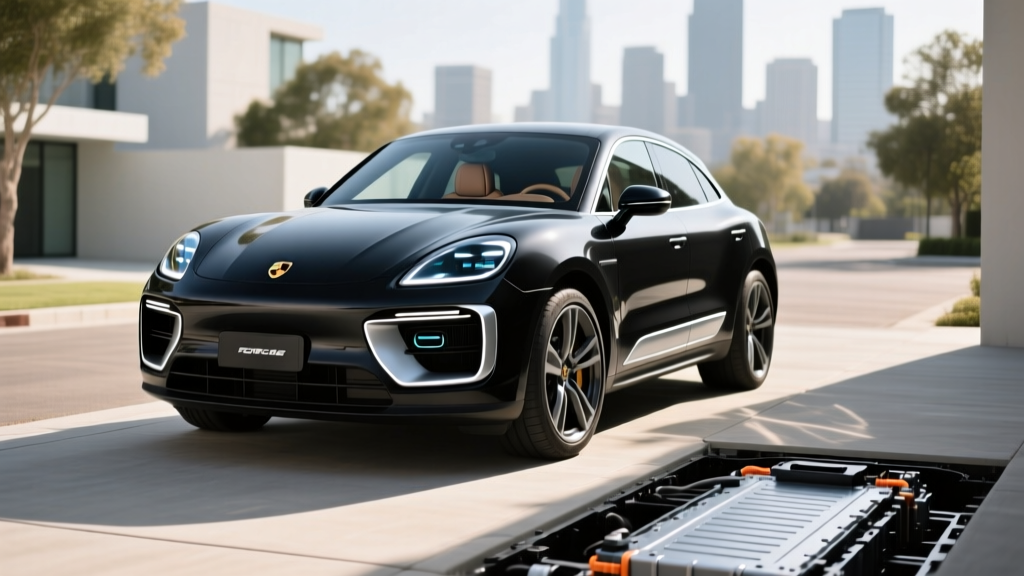
The 2025 Porsche Macan EV is a premium electric compact SUV that delivers genuine sports-car dynamics with practical daily usability. Base MSRP starts at $78,800 (Macan 4) and climbs to $106,900 for the Turbo variant. EPA range spans 288 to 308 miles depending on trim, with real-world highway driving closer to 240–270 miles. DC fast charging peaks at 270 kW, enabling a 10–80% charge in approximately 21 minutes. It does not qualify for the federal §30D tax credit due to its MSRP exceeding the $80,000 SUV cap on most trims and foreign battery sourcing. Buy it if you prioritize driving dynamics and 800V charging architecture over maximum range or tax incentives.
Range, Battery, and Real-World Efficiency
Porsche equips the Macan EV with a 100 kWh gross (approximately 95 kWh usable) lithium-ion battery using NMC (nickel-manganese-cobalt) chemistry, mounted low in the skateboard platform for optimal weight distribution. The 800-volt architecture — shared with the Taycan and Audi Q6 e-tron — is the defining technical feature, enabling both rapid DC charging and sustained high-speed power delivery.
| Trim | EPA Range | Real-World Estimate* | MPGe (Combined) | kWh/100mi |
|---|---|---|---|---|
| Macan 4 | 308 mi | 260–280 mi | 84 MPGe | 40 |
| Macan 4S | 288 mi | 240–260 mi | 80 MPGe | 42 |
| Macan Turbo | 288 mi | 235–255 mi | 79 MPGe | 43 |
*Real-world estimates assume mixed highway/city driving at 70–75 mph. Expect 15–25% range reduction in sub-freezing temperatures due to cabin heating demands and increased battery resistance, even with the Macan's standard heat pump system.
According to EPA data at fueleconomy.gov, the Macan 4 achieves 84 MPGe combined — respectable for a 5,300+ lb performance SUV, though it trails lighter competitors like the Tesla Model Y (122 MPGe combined). The efficiency gap matters most on road trips: you'll stop to charge roughly every 220–250 highway miles rather than every 280–300.
Charging Speed: 800V Architecture in Practice
The Macan EV's 800-volt platform is its strongest ownership advantage for road-trip charging. Peak DC fast-charge rate reaches 270 kW, which is among the fastest in its class. Here's what charging actually looks like across all levels:
| Level | Power | Time / Rate | Notes |
|---|---|---|---|
| Level 1 (120V) | ~1.4 kW | ~3 mi/hr | Emergency/trickle only |
| Level 2 (240V, 48A) | 11.5 kW | ~10 hours (0–100%) | Standard home/workplace charging |
| DC Fast Charge | Peak 270 kW | 10–80% in ~21 min | Requires 350 kW station; tapers above 80% |
Charging curve reality: The 270 kW peak only holds between roughly 10–40% state of charge. From 40–60%, the rate tapers to approximately 180–200 kW, and from 60–80% it drops further to around 120–150 kW. This is normal for high-speed charging and still delivers a competitive 21-minute 10–80% session on a functioning 350 kW Electrify America or Ionity station. At a more common 150 kW charger, expect 10–80% in approximately 32–35 minutes.
The Macan EV comes with a NACS (Tesla Supercharger-compatible) port for the US market starting with the 2025 model year, plus a CCS1 adapter is included. This dual-network access is a significant practical advantage over CCS-only competitors, giving owners access to over 17,000 Tesla Superchargers alongside Electrify America and other networks.
Performance: The Porsche Driving Experience, Electrified
Every Macan EV uses dual-motor all-wheel drive with a two-speed transmission on the rear axle (a Porsche hallmark carried over from the Taycan) for both aggressive launch and efficient highway cruising.
| Spec | Macan 4 | Macan 4S | Macan Turbo |
|---|---|---|---|
| Horsepower | 402 hp | 509 hp | 630 hp |
| 0–60 mph | 4.9 sec | 3.9 sec | 3.1 sec |
| Top Speed | 136 mph | 152 mph | 161 mph |
| Towing Capacity | 4,409 lbs | 4,409 lbs | 4,409 lbs |
The Macan Turbo's 3.1-second 0–60 time places it in supercar territory, but the more relevant daily metric is the 4S trim's 3.9-second sprint with a $20,000 savings over the Turbo. Rear-axle steering (standard on 4S and Turbo) tightens the turning radius and adds low-speed agility unusual for a 5,300-lb SUV.
EV vs Gas Macan: Cost and Ownership Comparison
For buyers cross-shopping the electric Macan against the gas-powered Macan S, the financial picture depends heavily on how long you own the vehicle and your local electricity rates. Here's a five-year ownership projection assuming 12,000 miles/year, $4.20/gallon premium fuel, and $0.14/kWh home electricity (national average):
| Category | 2025 Macan 4 EV ($78,800) | 2025 Macan S Gas (~$68,500) |
|---|---|---|
| Purchase Price | $78,800 | $68,500 |
| Federal Tax Credit | $0 (MSRP exceeds cap) | $0 |
| Fuel/Energy (5 yrs) | ~$4,200 | ~$13,860 |
| Maintenance (5 yrs) | ~$1,800 | ~$4,500 |
| Insurance (5 yrs est.) | ~$16,500 | ~$13,200 |
| Estimated Depreciation | ~$39,400 (50%) | ~$30,800 (45%) |
| Total 5-Year Cost | ~$101,900 | ~$99,260 |
Key takeaway: The Macan EV saves roughly $9,660 in fuel and maintenance over five years, but the higher purchase price, steeper depreciation typical of luxury EVs, and higher insurance premiums erase most of that advantage. The break-even point is approximately year 7–8 for most owners. This is a driving-experience purchase, not a cost-savings strategy.
EV insurance premiums run 15–25% higher than gas equivalents due to higher repair costs after collisions (specialized high-voltage safety procedures, aluminum body panels, and sensor recalibration). Get quotes from your insurer before committing.
Federal Tax Credit and Incentive Reality
The 2025 Porsche Macan EV does not qualify for the $7,500 federal §30D new EV tax credit. There are two reasons under current IRS rules:
- MSRP cap: The §30D credit caps eligibility at $80,000 for SUVs. Only a base Macan 4 with zero options could theoretically fall under this, but destination charges and mandatory equipment typically push it above.
- Battery sourcing requirements: The Macan EV's battery cells are manufactured in partnership with Cellforce Group (a Porsche-Customcells joint venture) in Germany, and critical mineral sourcing does not currently meet the US free-trade-agreement thresholds required by the Inflation Reduction Act.
Some states offer separate incentives — California's Clean Fuel Reward and New York's Drive Clean rebate are examples, but amounts and eligibility vary. Check your state energy office and consult a tax professional for current-year rules.
Real-World Ownership: What First-Time EV Buyers Must Know
Common Macan EV Misconceptions
| Myth | Fact |
|---|---|
| "308 miles of range means 308 miles between charges" | Real highway driving at 75 mph yields ~250 miles. Cold weather drops this to ~200–220. Plan charging stops at 200-mile intervals on road trips. |
| "I can charge on any DC fast charger at 270 kW" | Only 350 kW-rated stations (Electrify America Ultra-Fast, some Tesla V4) can deliver peak rates. Most public chargers max at 50–150 kW. |
| "No tax credit means it's a bad deal" | The $7,500 credit is meaningful, but Porsche positions this as a performance luxury vehicle. The 800V charging, NACS access, and driving dynamics are the value proposition. |
| "EV batteries need replacing every few years" | Porsche warrants the battery for 8 years / 100,000 miles against degradation below 70% capacity. Industry data shows NMC packs typically retain 85–90% capacity at 100k miles. |
Home Charging Is Non-Negotiable for Most Owners
Level 2 home charging is essential for a satisfying Macan EV ownership experience. Relying solely on public DC fast charging is more expensive ($0.35–0.55/kWh vs $0.14/kWh home average), more time-consuming, and adds wear from repeated high-current sessions. A Level 2 home installation (240V, 48-amp circuit with a hardwired wall connector) typically costs $1,200–$3,500 depending on panel proximity and whether your electrical panel needs a 200-amp upgrade (an additional $1,500–$3,000 if needed). Budget for this as part of your purchase.
If you live in an apartment or lack dedicated parking with electrical access, the Macan EV — like any EV — becomes significantly less convenient. Public charging infrastructure continues to expand, but daily reliance on it adds 20–40 minutes per week and unpredictable costs.
Cold-Weather Considerations
The Macan EV includes a heat pump (standard), which significantly reduces winter range loss compared to resistive cabin heating. Still, expect 15–25% range reduction at 20°F and below. The battery preconditioning feature warms the pack when you navigate to a DC fast charger, preserving charge speed in cold weather — use it. Garage parking mitigates cold-soak losses substantially.
Decision Framework: Should You Buy the 2025 Macan EV?
Choose the Macan EV If:
- You value driving dynamics and steering feel above maximum range or cargo space
- You have home Level 2 charging access (or can install it)
- You road-trip frequently enough to benefit from 800V / 270 kW DC charging
- You want NACS + CCS dual-network compatibility without adapters
- You're cross-shopping the BMW iX, Audi Q8 e-tron, or Mercedes EQB and want the sportiest option
- Your budget accommodates $80,000–$110,000 without relying on a tax credit
Look Elsewhere If:
- Tax credit eligibility is a deal-breaker (consider the Hyundai Ioniq 5, Tesla Model Y, or Ford Mustang Mach-E)
- You need 350+ miles of EPA range (look at the Lucid Gravity or Tesla Model X)
- You lack home charging access and your area has sparse public DC infrastructure
- Third-row seating is required (the Macan is strictly a 5-passenger SUV)
- You plan to trade in within 3 years — luxury EV depreciation is steep in early years
Frequently Asked Questions
Does the 2025 Macan EV have a frunk (front trunk)?
Yes, but it's small — approximately 3.0 cubic feet. It fits a charging cable bag and a small duffel. The rear cargo area offers 18.4 cu ft behind the second row and 52.3 cu ft with seats folded, which is competitive for the segment.
Can the Macan EV tow?
Yes. All trims are rated for 4,409 lbs of towing capacity when properly equipped with the factory tow package. This is adequate for a small boat trailer or a light camper, though towing will reduce range by approximately 30–40%.
How does the Macan EV compare to the Audi Q6 e-tron?
Both ride on the VW Group PPE (Premium Platform Electric) 800V architecture. The Macan EV is tuned for sharper handling with a lower ride height, firmer damping, and rear-axle steering. The Q6 e-tron offers more interior space and a slightly more comfort-oriented ride. Pricing is similar. If driving engagement is your priority, the Macan wins; if interior room and tech-forward cabin design matter more, the Q6 is competitive.
What is the battery replacement cost out of warranty?
Full battery pack replacement for a 100 kWh NMC pack currently ranges from $18,000–$28,000 at Porsche dealerships depending on labor. However, module-level repairs (replacing individual degraded cells or modules) are increasingly available and cost significantly less. Battery degradation to 70% within the 8-year/100,000-mile warranty period triggers a no-cost replacement under Porsche's coverage.
Is the Macan EV's driver assistance self-driving?
No. Porsche InnoDrive with Active Lane Keeping is a SAE Level 2 driver-assistance system. It provides adaptive cruise control, lane centering, and predictive speed adjustment based on navigation data, but the driver must remain fully engaged with hands on the wheel and eyes on the road at all times. It is not autonomous — no consumer vehicle currently sold in the US is.
What should I budget for insurance?
Expect annual premiums of $2,800–$4,200 depending on your state, driving record, and coverage level. Luxury EVs carry higher premiums due to repair complexity and parts costs. Obtain quotes from at least three insurers before purchasing — some companies (like Geico and Progressive) have begun offering EV-specific discounts that can offset 5–10% of the premium.
Sources: fueleconomy.gov (EPA range and MPGe data), Porsche Newsroom (manufacturer specifications), IRS.gov §30D (tax credit rules).