Quick Verdict: The Driver's EV SUV Arrives
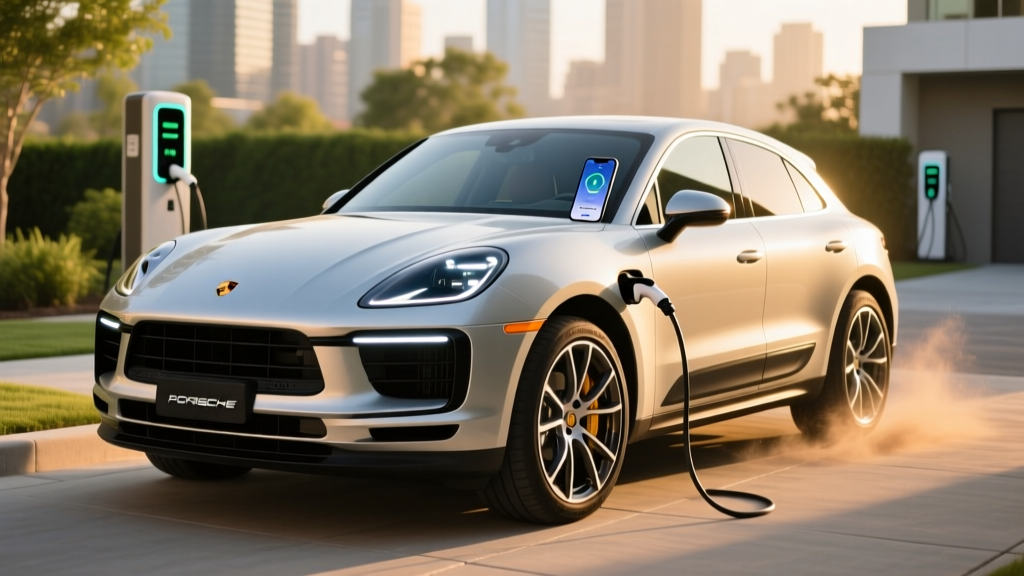
Porsche didn't build the 2025 Macan Electric to chase maximum range or undercut competitors on price. They built it to prove that a luxury electric SUV can still feel like a Porsche on a back road — and by that measure, it delivers. With up to 630 horsepower in the Turbo trim, an 800-volt architecture enabling some of the fastest DC charging in the segment, and chassis tuning that embarrasses vehicles twice its weight, the electric Macan sets a dynamic benchmark. The trade-offs are equally real: a base price starting at $78,800, an EPA range that peaks at 308 miles only in the base rear-wheel-drive model, and zero federal tax credit eligibility for most buyers.
| Spec | Macan (Base RWD) | Macan 4 | Macan 4S | Macan Turbo |
|---|---|---|---|---|
| EPA Range | 308 mi | 307 mi | 288 mi | 288 mi |
| Battery (usable) | 96 kWh (NMC) | 96 kWh (NMC) | 96 kWh (NMC) | 96 kWh (NMC) |
| Horsepower | 335 hp | 402 hp | 509 hp | 630 hp |
| 0-60 mph | 5.5 sec | 4.9 sec | 4.0 sec | 3.1 sec |
| Drivetrain | RWD (single motor) | AWD (dual motor) | AWD (dual motor) | AWD (dual motor) |
| Peak DC Charge Rate | 270 kW | 270 kW | 270 kW | 270 kW |
| 10-80% DC Time | ~21 min | ~21 min | ~21 min | ~21 min |
| MPGe (combined) | 100 MPGe | 96 MPGe | 89 MPGe | 85 MPGe |
| Base MSRP | $78,800 | $85,700 | $99,300 | $118,500 |
Source: EPA fueleconomy.gov, Porsche USA specifications.
EPA Range vs. Real-World Expectations
EPA Sticker: Up to 308 miles (Base RWD) / 288 miles (4S and Turbo)
Real-World Expectation: Plan for ~240-265 miles on sustained highway driving at 70+ mph. In cold weather (below 32°F), expect a 15-25% reduction — roughly 200-230 miles usable in the Turbo. City and mixed driving with regenerative braking yields results closer to the EPA sticker.
The 2025 Macan Electric uses a 100 kWh gross battery pack (approximately 96 kWh usable) with nickel-manganese-cobalt (NMC) chemistry. Porsche's 800-volt architecture is the same platform underpinning the Taycan, and it provides both performance and efficiency advantages. However, the Macan's SUV profile and 5,300+ lb curb weight work against it at highway speeds.
In independent real-world testing, the Macan 4 has demonstrated roughly 2.8-3.0 kWh per mile at highway speeds — translating to approximately 260-275 miles before needing to charge. The Turbo trim, with its wider tires and more aggressive performance tuning, consumes closer to 3.2-3.4 kWh/mile on the highway. For context, the Tesla Model Y Long Range achieves roughly 3.5 miles per kWh (about 286 Wh/mi) in similar conditions, making it noticeably more efficient.
If your typical commute is under 50 miles round-trip with home charging, range will not be an issue. If you regularly drive 300+ miles between charging stops in winter, you'll want to plan carefully.
Charging Speed: 800V Architecture Pays Off
| Charging Level | Power / Rate | Time / Miles Added |
|---|---|---|
| Level 1 (120V household) | ~1.4 kW | ~4 miles per hour |
| Level 2 (240V home) | 11 kW (onboard charger) | ~33 miles per hour; 0-100% in ~10 hours |
| DC Fast Charge (peak) | 270 kW | 10-80% in ~21 minutes |
| DC Fast Charge (sustained) | ~180-200 kW avg | ~150 miles in 15 minutes |
The Macan Electric's 270 kW peak DC fast-charging rate places it among the fastest-charging EVs available, alongside the Hyundai Ioniq 5 (240 kW) and well ahead of the BMW iX (150 kW). The 800-volt system enables this by reducing current at a given power level, which lowers heat and sustains higher charge rates longer.
Charging curve reality: The Macan holds near-peak rates from roughly 10-40% state of charge, then tapers progressively. Expect 270 kW at the low end, stepping down to ~200 kW by 55%, then ~120 kW by 70%, and ~50 kW approaching 80%. This taper is normal physics — but it means the advertised "21-minute 10-80%" time assumes ideal battery temperature and a charger capable of sustained 270+ kW delivery. At a typical 150 kW Electrify America station, expect 10-80% in roughly 30-35 minutes.
On Level 2, the 11 kW onboard charger is generous. A full overnight charge from 20% to 100% takes about 8 hours on a 48-amp home charger. This is faster than most competitors and means you'll rarely need to think about charging at home — plug in at night, wake up full.
The Macan Electric comes with a NACS (Tesla-style) charge port for the US market, meaning direct access to the Tesla Supercharger network without an adapter. For public non-Tesla networks, the vehicle ships with a CCS-to-NACS adapter if needed.
Performance: The Porsche DNA Is Intact
This is where the Macan Electric justifies its badge. Even the base rear-wheel-drive model hits 60 mph in 5.5 seconds — quicker than most gas-powered Macan S models from the previous generation. The Turbo, with launch control engaged, rockets to 60 in 3.1 seconds, placing it in supercar territory from a 5,300-pound SUV.
Beyond straight-line speed, the Macan Electric features:
- Rear-axle steering (optional, standard on Turbo): turns the rear wheels up to 5 degrees for tighter low-speed maneuvering and greater high-speed stability
- Porsche Active Suspension Management (PASM): adaptive dampers that read road conditions 1,000 times per second
- Air suspension: standard on all trims, with adjustable ride height
- Torque Vectoring Plus: brakes the inside rear wheel during cornering to sharpen turn-in
- Regenerative braking: up to 290 kW of regen capacity, enabling genuine one-pedal driving in most conditions
The dual-motor AWD system on the 4, 4S, and Turbo trims can shift torque front-to-rear in milliseconds. In Sport Plus mode, the Macan sends more torque rearward for a rear-drive bias that Porsche enthusiasts will recognize. The steering is electric but well-weighted — not quite as communicative as the old hydraulic systems, but among the best electric racks in production.
Interior, Tech, and Cargo Space
The Macan Electric's cabin represents a clean-sheet redesign. The centerpiece is a 12.6-inch curved digital instrument cluster paired with a 10.9-inch central infotainment touchscreen running Porsche Communication Management (PCM). An optional 10.9-inch passenger display sits on the dash — useful for navigation or media, though it adds $1,220 to the build sheet.
Cargo and passenger dimensions:
| Dimension | Measurement |
|---|---|
| Cargo volume (behind rear seats) | 18.4 cu ft |
| Cargo volume (rear seats folded) | 46.5 cu ft |
| Front trunk (frunk) | 2.9 cu ft |
| Front legroom | 41.3 in |
| Rear legroom | 33.5 in |
| Front headroom | 39.8 in |
| Rear headroom | 38.4 in |
The 18.4 cu ft behind the rear seats is competitive with the Audi Q5 and BMW X3 but falls short of the Tesla Model Y's 30.2 cu ft. The small 2.9 cu ft frunk is useful for charging cables but won't hold a carry-on bag. If cargo capacity is a primary concern, the Model Y or Kia EV9 will serve you better.
Driver assistance: The Macan Electric includes Porsche InnoDrive with adaptive cruise control, lane-keeping assist, and traffic sign recognition. This is an SAE Level 2 system — the driver must maintain hands on the wheel and full situational awareness at all times. It is competent on highways but does not offer hands-free driving like GM's Super Cruise or Ford's BlueCruise. Porsche has not announced plans for a higher-level autonomy feature.
Pricing, Tax Credits, and Ownership Costs
| Trim | Base MSRP | As-Tested (typical options) | Federal §30D Credit |
|---|---|---|---|
| Macan (Base RWD) | $78,800 | $84,000-$88,000 | $0 — exceeds MSRP cap |
| Macan 4 | $85,700 | $92,000-$98,000 | $0 — exceeds MSRP cap |
| Macan 4S | $99,300 | $108,000-$115,000 | $0 — exceeds MSRP cap |
| Macan Turbo | $118,500 | $130,000-$145,000 | $0 — exceeds MSRP cap |
Federal tax credit reality: Under current IRS §30D rules, the Macan Electric does not qualify for the $7,500 federal EV tax credit. The credit's MSRP cap for SUVs is $80,000 — and only the base RWD model's sticker price falls at or below that threshold. However, the base model still exceeds the cap once any options or destination charges are added. Additionally, the buyer income caps ($150,000 single / $300,000 joint) and battery critical-mineral sourcing requirements further limit eligibility. Per IRS guidance, always consult a tax professional before relying on credit eligibility.
Some states offer additional rebates or incentives that may apply regardless of federal credit status. Check your state's energy or DMV website for current programs.
Five-year ownership cost estimate (Macan 4, 15,000 mi/yr):
- Electricity (home charging at $0.16/kWh): ~$4,200
- Insurance (national avg for luxury EV SUV): ~$14,000-$18,000
- Maintenance (no oil changes, brake pad life extended by regen): ~$2,500
- Estimated depreciation (5 years): ~$38,000-$45,000
- Total estimated 5-year cost: ~$58,700-$69,700 (excluding purchase price)
Battery Warranty and Longevity
Porsche provides an 8-year / 100,000-mile warranty on the high-voltage battery, guaranteeing it will retain at least 70% of its original capacity during that period. The powertrain (motors, power electronics) is covered for the same 8 years / 100,000 miles. The basic vehicle warranty is 4 years / 50,000 miles.
NMC chemistry in the Macan's pack is well-proven across the Taycan lineup. Real-world degradation data from Taycan owners suggests approximately 5-8% capacity loss over the first 100,000 miles with normal charging habits. Porsche recommends keeping daily charging to 80-85% and using DC fast charging sparingly for optimal long-term battery health. The vehicle's thermal management system actively conditions the battery during fast charging and in extreme temperatures.
Pros
- Class-leading driving dynamics — steering, chassis, braking feel unmatched in electric SUVs
- 270 kW peak DC charging is among the fastest available
- 800V architecture enables sustained fast-charge performance
- NACS port provides direct Tesla Supercharger access
- Air suspension and rear-axle steering deliver both comfort and agility
- Quiet, refined cabin with excellent build quality
- 290 kW regenerative braking capacity reduces brake wear significantly
Cons
- No federal tax credit eligibility — full MSRP applies
- EPA range of 288-308 miles trails Tesla Model Y (330 mi) and Hyundai Ioniq 5 (303-340 mi)
- Real-world highway range closer to 240-265 miles
- Cargo space (18.4 cu ft) is modest for the class
- Small 2.9 cu ft frunk barely fits charging cables
- Driver-assist system is competent but not class-leading (no hands-free mode)
- Options and packages push prices well above $100,000 on higher trims
- Insurance premiums run 20-30% higher than comparable gas SUVs
Who Should Buy the 2025 Macan Electric?
Choose the Macan Electric if:
- You prioritize driving feel and chassis dynamics above all else in an EV SUV
- You have reliable home Level 2 charging and rarely drive more than 250 miles between stops
- You want 800V fast charging for road trips with minimal downtime
- You value build quality, brand cachet, and a premium cabin experience
- Your budget comfortably accommodates $85,000-$120,000+ without relying on tax incentives
Look elsewhere if:
- Maximum range or cargo space is your top priority (consider Tesla Model Y, Kia EV9)
- You need the $7,500 federal tax credit to justify the purchase
- You want hands-free highway driving (GM Super Cruise or Ford BlueCruise vehicles)
- You frequently drive 300+ miles in cold weather between charging stops
Frequently Asked Questions
What is the real-world range of the 2025 Porsche Macan Electric?
The EPA rates the base RWD at 308 miles and the Turbo at 288 miles. In real-world highway driving at 70-80 mph, expect roughly 240-265 miles. Cold weather (below freezing) can reduce that by 15-25%, bringing usable range to around 200-230 miles in the Turbo. City driving with regenerative braking returns results much closer to the EPA sticker.
How fast does the Macan Electric charge at home and on DC fast chargers?
On a Level 2 home charger (240V, 48A), the Macan charges at up to 11 kW, adding roughly 33 miles per hour and reaching a full charge in about 10 hours. On a DC fast charger, it peaks at 270 kW, achieving a 10-80% charge in approximately 21 minutes under ideal conditions. Real-world DC sessions at 150 kW chargers take closer to 30-35 minutes for the same 10-80% span.
Does the 2025 Porsche Macan Electric qualify for the federal EV tax credit?
No. Under IRS §30D rules, the SUV MSRP cap is $80,000. Only the base RWD model's starting price of $78,800 approaches this, but destination charges and any options push it above the cap. All other trims exceed the cap significantly. Additionally, buyer income limits and battery sourcing requirements further restrict eligibility. Consult a tax professional for your specific situation. See IRS clean vehicle credit rules.
Is the Macan Electric worth buying over the Tesla Model Y or BMW iX?
It depends on priorities. The Model Y Long Range offers more range (330 mi EPA), more cargo space (30.2 cu ft), a lower price (~$48,000), and tax credit eligibility — but cannot match the Macan's driving dynamics, build quality, or charging speed. The BMW iX is a closer luxury competitor with a more spacious cabin but slower charging (150 kW peak) and less engaging steering. If driving engagement is paramount and budget allows, the Macan is the segment's best driver's car. If value, space, or range lead your list, the Model Y or iX make stronger cases.
What is the battery warranty on the Macan Electric?
Porsche covers the high-voltage battery for 8 years or 100,000 miles, whichever comes first, guaranteeing at least 70% capacity retention. The powertrain warranty matches at 8 years / 100,000 miles. The basic vehicle limited warranty is 4 years / 50,000 miles.
Does the Macan Electric use NACS or CCS charging?
The US-market 2025 Macan Electric is equipped with a NACS (Tesla-style) charge port, providing native access to the Tesla Supercharger network. This eliminates the need for an adapter at Superchargers. For CCS-based public chargers, Porsche includes a CCS-to-NACS adapter.