Quick Verdict: Polestar's Premium Electric SUV Arrives With Substance
The 2025 Polestar 3 is the Swedish-Chinese brand's entry into the high-stakes midsize luxury electric SUV segment, and it arrives with serious hardware. Built on Volvo's SPA2 platform at the Ridgeville, South Carolina factory, the Polestar 3 packs a 111 kWh NMC lithium-ion battery, up to 348 miles of EPA-estimated range, and a starting price of $67,900 before incentives. It's a deliberate shot at the BMW iX, Audi Q8 e-tron, and Tesla Model X — trading flamboyant design for Scandinavian restraint and genuine long-distance capability.
After spending time with the specs and cross-referencing EPA data on fueleconomy.gov, the Polestar 3 emerges as one of the most range-competitive luxury electric SUVs on the market. But its premium pricing, limited service network, and evolving tax credit eligibility demand a careful look before you sign a purchase agreement.
| Specification | Long Range Single Motor | Long Range Dual Motor | Long Range Dual Motor w/ Performance Pack |
|---|---|---|---|
| EPA Range | 348 miles | 315 miles | 300 miles (est.) |
| Battery (usable) | 107 kWh (111 kWh gross) | 107 kWh (111 kWh gross) | 107 kWh (111 kWh gross) |
| Chemistry | NMC (Nickel Manganese Cobalt) | NMC | NMC |
| Horsepower | 299 hp / 361 lb-ft | 489 hp / 620 lb-ft | 517 hp / 671 lb-ft |
| 0-60 mph | 7.4 sec | 4.7 sec | 4.5 sec |
| Drivetrain | RWD | AWD (dual motor) | AWD (dual motor) |
| Max DC Fast Charge | 250 kW | 250 kW | 250 kW |
| 10-80% DC Charge | ~30 min | ~30 min | ~30 min |
| Level 2 Home Charge | 11 kW (~30 mi/hr) | 11 kW (~30 mi/hr) | 11 kW (~30 mi/hr) |
| MPGe (combined) | 89 MPGe | 84 MPGe | ~82 MPGe (est.) |
| Base MSRP | $67,900 | $73,900 | $79,900 |
Real-World Range: What to Actually Expect From 348 EPA Miles
EPA Sticker: 348 miles (Long Range Single Motor) | 315 miles (Dual Motor)
Real-World Expectation: Expect 280-310 miles on mixed highway driving at 70-75 mph. In cold weather (below 30°F), plan for 230-260 miles on the single-motor variant. The dual-motor AWD models will see a proportionally larger drop due to higher baseline consumption.
The Polestar 3's 111 kWh gross battery (approximately 107 kWh usable, with top and bottom buffers to protect long-term cell health) is one of the largest in its class. That capacity is what enables the 348-mile EPA figure on the single-motor variant. However, the EPA combined cycle includes city driving where regenerative braking recovers significant energy. On sustained highway runs at 75 mph — where regen is minimal and aerodynamic drag dominates — efficiency drops to roughly 3.0-3.2 miles per kWh, translating to approximately 300-320 miles before you need to plug in.
The dual-motor AWD versions sacrifice range for traction and power. The 489-hp Long Range Dual Motor earns a 315-mile EPA rating, which in real-world highway conditions translates to roughly 260-285 miles. Add winter temperatures and the range picture tightens further. NMC chemistry is more cold-sensitive than LFP, and the Polestar 3's heat pump (standard equipment) mitigates but doesn't eliminate winter range loss. Expect a 20-30% reduction in frigid conditions.
For context on a 400-mile road trip: the single-motor Polestar 3 requires one charging stop. The dual-motor variants may need a brief top-up depending on speed, elevation, and temperature. That's competitive with the BMW iX xDrive50 (324 miles EPA) and well ahead of the Audi Q8 e-tron (285 miles EPA).
Charging Speed: 250 kW Peak, but Watch the Curve
| Charging Level | Power / Rate | Miles Added per Hour | Notes |
|---|---|---|---|
| Level 1 (120V) | ~1.4 kW | ~3-4 mi/hr | Emergency/trickle only |
| Level 2 (240V, 48A) | 11 kW | ~30 mi/hr | Full charge in ~11 hours |
| DC Fast Charge | Peak 250 kW | ~650+ mi/hr (peak) | 10-80% in ~30 minutes |
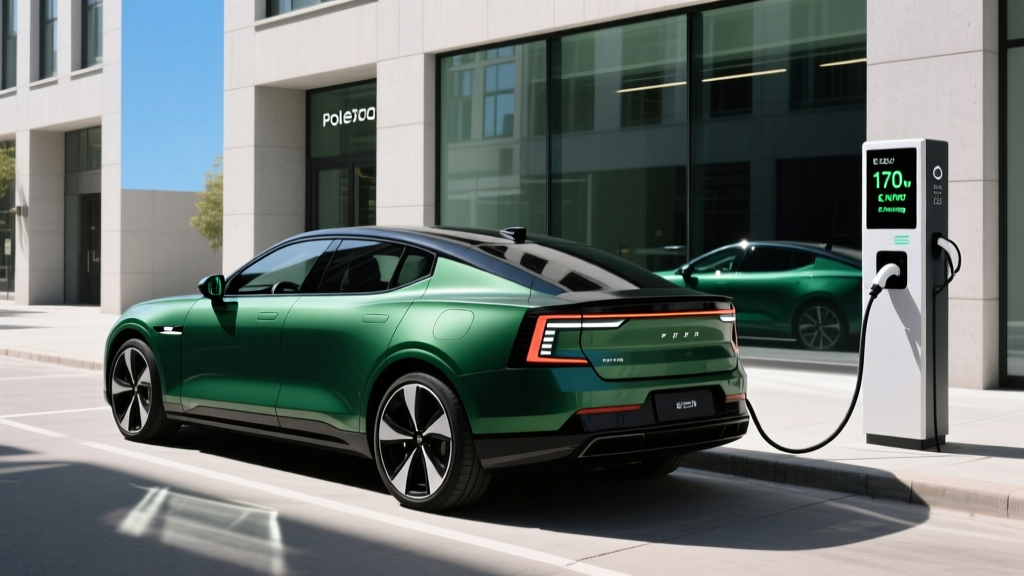
The Polestar 3 supports up to 250 kW DC fast charging via its CCS1 connector (NACS adapter access to Tesla Superchargers is available via Polestar's partnership). At peak rate, the large 111 kWh battery absorbs electrons rapidly — Polestar quotes approximately 30 minutes for a 10-80% session, which is competitive but not class-leading. The Hyundai Ioniq 5 and Kia EV9, with their 800V architectures, manage 10-80% in roughly 18-20 minutes, albeit with smaller batteries.
Here's what the spec sheet doesn't tell you: the 250 kW peak is not sustained. Like most 400V-architecture EVs, the Polestar 3's charge curve tapers meaningfully above 50-60% state of charge. You'll see close to 250 kW between roughly 10-35% SoC, then a step-down to approximately 150-170 kW through 60%, and further reduction to under 100 kW past 80%. This is standard physics for NMC cells at this capacity — managing thermal load prevents degradation. For road tripping, the practical implication is clear: charge from 10-80% and move on. Sitting at a charger above 80% is painfully slow and wastes time.
At home on a Level 2 charger (240V, 48-amp circuit requiring a 60-amp breaker), the 11 kW onboard charger replenishes the battery at roughly 30 miles of range per hour. A full 10-100% charge takes approximately 11 hours — easily accomplished overnight. Home charging installation typically costs $800-$2,500 depending on your electrical panel capacity and run length. If your panel is at or near 200 amps, a panel upgrade ($1,500-$3,000) may be necessary to support a 60-amp dedicated circuit.
Preconditioning is supported: when you navigate to a DC fast charger in the Polestar infotainment system, the vehicle preheats the battery to optimal temperature for maximum charge acceptance. This matters — arriving at a charger with a cold battery can reduce peak charge rate by 30-50%.
Performance and Driving Dynamics
The Polestar 3 lineup offers three distinct personalities. The Long Range Single Motor (299 hp, RWD) is the efficiency champion — relaxed, smooth, and oriented toward grand-touring comfort rather than sportscar theatrics. Its 7.4-second 0-60 mph time is adequate for merging and passing but won't impress anyone coming from a performance sedan.
The Long Range Dual Motor (489 hp, AWD) transforms the character entirely. With 620 lb-ft of instant torque and a 4.7-second 0-60, it pulls with the authority of a sports sedan in an SUV body. The dual-motor setup provides torque vectoring across the rear axle, and the optional air suspension (standard on Performance Pack models) adjusts ride height and damping for a genuinely composed highway cruiser that can tighten up on back roads.
The Performance Pack bumps output to 517 hp and 671 lb-ft, dropping the 0-60 to approximately 4.5 seconds. It also adds Öhlins dual-valve dampers, 22-inch wheels, and gold brake calipers and seatbelts — Polestar's signature performance accents. The trade-off: larger wheels reduce range and increase road noise.
All variants feature a low center of gravity thanks to the underfloor battery pack, and the steering is weighted appropriately for a luxury cruiser. This isn't a track car, and it doesn't pretend to be. The ride quality on the air suspension is the standout dynamic characteristic — it absorbs highway imperfections with the composure of a vehicle costing significantly more.
Interior, Cargo Space, and Technology
The Polestar 3's interior follows the brand's minimalist Scandinavian philosophy: clean surfaces, high-quality materials (vegan upholstery is standard, Nappa leather is optional), and a portrait-oriented 14.5-inch center touchscreen running a Google Android Automotive OS-based infotainment system. Google Maps, Google Assistant, and the Google Play Store are natively integrated — a significant usability advantage over proprietary systems.
Cargo space is generous for the segment:
- Rear cargo (behind second row): approximately 26.0 cu ft
- Cargo (rear seats folded): approximately 54.0 cu ft
- Frunk (front trunk): approximately 1.1 cu ft (enough for charging cables and a small bag)
- Rear legroom: approximately 39.4 inches
- Rear headroom: approximately 38.7 inches
Compared to the BMW iX (35.5 cu ft behind the second row), the Polestar 3 gives up some cargo volume. Compared to the three-row Tesla Model X, it's not even in the same conversation for family hauling. This is a two-row, five-passenger luxury SUV — not a family hauler.
Driver-assistance technology includes Polestar's Pilot Pack with adaptive cruise control, lane-centering assist, and blind-spot monitoring. The available Pilot Pack with LiDAR (sourced from Luminar) adds a roof-mounted sensor for enhanced perception, though it's important to note this remains an SAE Level 2 driver-assistance system. The driver must remain engaged, hands on or near the wheel, and eyes on the road at all times. This is not autonomous driving.
ADAS Limitation Notice: The Polestar 3's driver-assistance features, including the available LiDAR-equipped Pilot Pack, are classified as SAE Level 2. The vehicle can control steering, acceleration, and braking under specific conditions, but the driver is fully responsible for monitoring the environment and must be prepared to take over immediately. Do not treat this system as self-driving.
Pricing, Trim Levels, and Federal Tax Credit Eligibility
| Trim | Base MSRP | Est. Federal Credit (§30D) | Effective Price (if eligible) |
|---|---|---|---|
| Long Range Single Motor | $67,900 | Up to $7,500* | ~$60,400 |
| Long Range Dual Motor | $73,900 | Up to $7,500* | ~$66,400 |
| LR Dual Motor w/ Performance Pack | $79,900 | Up to $7,500* | ~$72,400 |
*Federal tax credit eligibility is subject to IRS §30D requirements. See checklist below. Credit can be transferred to the dealer at point of sale as an immediate price reduction.
The Polestar 3's pricing places it firmly in luxury SUV territory. The single-motor variant at $67,900 undercuts the BMW iX xDrive50 ($87,250) significantly, though the iX is dual-motor AWD standard. The dual-motor Polestar 3 at $73,900 is more directly comparable and still represents a value proposition against German competitors.
Federal tax credit eligibility for the Polestar 3 is nuanced. Under current IRS §30D rules, the following requirements apply:
- MSRP Cap: SUVs must have an MSRP at or below $80,000. The Long Range Single Motor ($67,900) and Long Range Dual Motor ($73,900) qualify. The Performance Pack at $79,900 also falls under the cap, but option packages could push it over — verify the final sticker.
- Buyer Income Cap: Modified adjusted gross income must not exceed $300,000 (joint filers), $225,000 (head of household), or $150,000 (single filers).
- Battery Sourcing: The $7,500 credit is split into two halves — $3,750 for critical minerals and $3,750 for battery component sourcing. The Polestar 3's battery is manufactured by CATL. Sourcing compliance varies by model year and production batch. Verify current eligibility on fueleconomy.gov before purchasing.
- Point-of-Sale Transfer: Eligible buyers can transfer the credit to the dealer for an immediate price reduction at purchase, rather than waiting to claim it on their tax return.
- VIN and Assembly: The vehicle must undergo final assembly in North America. The Polestar 3 is assembled in Ridgeville, South Carolina, satisfying this requirement.
Critical caveat: battery sourcing requirements have tightened progressively. The Polestar 3's CATL-sourced battery cells may face partial or full credit disqualification depending on the specific model year's critical-mineral and component-sourcing percentages. Always check the latest eligibility status before committing to a purchase. Consult a tax professional for your specific situation.
Ownership Costs, Warranty, and Long-Term Value
Polestar provides a competitive warranty package:
- Battery warranty: 8 years / 100,000 miles (whichever comes first), covering defects and capacity retention below 70% of original capacity
- Vehicle limited warranty: 4 years / 50,000 miles
- Roadside assistance: 4 years / unlimited miles
The 70% battery capacity retention threshold is standard for the industry. Real-world degradation data for the Polestar 3 specifically is limited given its recent launch, but the NMC chemistry in a thermally managed pack with a ~4 kWh buffer (111 kWh gross, ~107 kWh usable) should result in modest degradation. Industry averages for modern NMC packs suggest 8-12% capacity loss over 100,000 miles, well within the warranty coverage.
Insurance costs for the Polestar 3 are in line with luxury EVs of similar value — expect $2,000-$3,000 annually depending on your location, driving history, and coverage level. EV insurance premiums tend to run 15-25% higher than equivalent ICE vehicles due to higher repair costs and parts pricing.
Maintenance is minimal: no oil changes, no spark plugs, no transmission fluid. Expect cabin air filter replacements, brake fluid checks (regen braking dramatically extends pad life), tire rotations, and wiper fluid. Annual maintenance costs should be well under $500.
How the Polestar 3 Stacks Up Against Key Competitors
| Specification | 2025 Polestar 3 LR SM | BMW iX xDrive50 | Audi Q8 e-tron Premium Plus | Tesla Model X LR |
|---|---|---|---|---|
| EPA Range | 348 mi | 324 mi | 285 mi | 335 mi |
| Battery (usable) | 107 kWh | 105.2 kWh | 106 kWh | ~100 kWh |
| Horsepower | 299 hp | 516 hp | 402 hp | 670 hp |
| 0-60 mph | 7.4 sec | 4.4 sec | 5.5 sec | 3.8 sec |
| Max DC Charge | 250 kW | 195 kW | 170 kW | 250 kW |
| Base MSRP | $67,900 | $87,250 | $74,400 | $79,990 |
| Cargo (behind 2nd row) | 26.0 cu ft | 35.5 cu ft | 28.5 cu ft | 42.5 cu ft |
The Polestar 3's standout advantage is its combination of range and price. At $67,900 with 348 miles of EPA range, it offers the best range-per-dollar ratio in the luxury electric SUV segment. The BMW iX is quicker and roomier but costs nearly $20,000 more. The Audi Q8 e-tron is the weakest on range and charging speed. The Tesla Model X wins on performance and cargo space but carries a premium and Tesla's polarizing build-quality reputation.
Where the Polestar 3 loses ground: cargo volume (26 cu ft trails all competitors listed), the single-motor's leisurely 0-60 time, and Polestar's still-developing service network compared to BMW, Audi, and Tesla. If you need three rows or maximum cargo space, look at the Model X or consider the Kia EV9 (non-luxury but practical).
Pros
- Class-leading EPA range at a competitive price point
- South Carolina assembly (supports tax credit eligibility)
- 250 kW DC fast charging — faster than BMW iX and Audi Q8 e-tron
- Google Android Automotive infotainment is intuitive and well-integrated
- Standard heat pump for cold-weather efficiency
- Available LiDAR sensor for future-proofed ADAS capability
- Understated, premium interior design with high-quality materials
Cons
- Cargo space (26 cu ft) trails key competitors
- Single-motor variant is slow for the price (7.4 sec 0-60)
- Polestar's service center network is still limited in many regions
- NMC battery is more cold-sensitive than LFP alternatives
- Brand recognition and resale value remain unproven vs. established luxury marques
- No frunk of meaningful size
- Tax credit eligibility uncertain due to battery sourcing rules
Who Should Buy the 2025 Polestar 3?
Choose the Polestar 3 if:
- You prioritize maximum range in a luxury electric SUV and want to spend under $70,000
- You prefer Scandinavian minimalist design over German opulence or Tesla's tech-bro aesthetic
- Your daily commute is under 60 miles and you want to charge exclusively at home most of the time
- You want Google-native infotainment with seamless Maps, Assistant, and app integration
- You value a comfortable, quiet highway cruiser over sportscar-level acceleration
Look elsewhere if:
- You need three rows of seating or maximum cargo capacity (consider Tesla Model X, Kia EV9, or Rivian R1S)
- You want sub-4-second 0-60 performance (Tesla Model X Plaid, BMW iX M60)
- You live in a region with no Polestar service center within reasonable distance
- You want an LFP battery for maximum longevity and cold-weather tolerance (no luxury SUV currently offers LFP in the US market)
- You need guaranteed, full $7,500 tax credit eligibility — verify sourcing before purchase
The 2025 Polestar 3 is best suited for the luxury buyer who values range, design restraint, and Google-native technology over badge prestige and outright performance. It's a strong daily driver and a capable road-tripper with its 250 kW charging and 348-mile range. For couples or small families who don't need three rows, it occupies a compelling niche between the German establishment and Tesla's ecosystem.
Frequently Asked Questions
What is the real-world range of the 2025 Polestar 3?
The single-motor Polestar 3 earns a 348-mile EPA rating. In real-world highway driving at 70-75 mph, expect 280-310 miles. In cold weather below 30°F, plan for 230-260 miles. The dual-motor variants (315 miles EPA) deliver roughly 260-285 miles on the highway in moderate temperatures.
How fast does the Polestar 3 charge at home and on the road?
On a Level 2 home charger (240V, 11 kW), the Polestar 3 adds approximately 30 miles of range per hour, with a full charge taking about 11 hours. On a DC fast charger, it peaks at 250 kW and charges from 10-80% in approximately 30 minutes, though the charge rate tapers significantly above 60% state of charge.
How much does the Polestar 3 cost after federal tax credits?
The base Long Range Single Motor starts at $67,900. If you qualify for the full $7,500 federal tax credit under IRS §30D, the effective price drops to approximately $60,400. However, eligibility depends on your income, the vehicle's MSRP staying under $80,000, and battery sourcing requirements. Verify current eligibility on fueleconomy.gov and consult a tax professional.
Is the Polestar 3 worth buying vs. the BMW iX or Tesla Model X?
The Polestar 3 offers the best range-per-dollar in the segment at $67,900 for 348 EPA miles. The BMW iX is quicker and roomier but costs $87,250. The Tesla Model X offers more cargo space and performance but at a higher price and with polarizing build quality. If range and value are your priorities, the Polestar 3 is compelling. If you need cargo space, three rows, or badge prestige, look elsewhere.
Does the 2025 Polestar 3 qualify for the $7,500 federal EV tax credit?
It may qualify, but eligibility is not guaranteed. The Polestar 3 is assembled in South Carolina (meeting the North American assembly requirement) and its MSRP is below the $80,000 SUV cap. However, the battery sourcing requirements under §30D — specifically critical minerals and battery component sourcing — are the determining factor and can change. Always verify current eligibility on fueleconomy.gov before purchasing.
What connector does the Polestar 3 use for charging?
The Polestar 3 uses a CCS1 connector for DC fast charging and a J1772 connector for Level 1 and Level 2 AC charging. Polestar has announced Tesla Supercharger (NACS) access via adapter, expanding the available fast-charging network significantly.
How long will the Polestar 3 battery last?
Polestar warranties the battery for 8 years or 100,000 miles against defects and capacity loss below 70%. Modern NMC batteries with active thermal management typically retain 85-92% capacity after 100,000 miles. The 111 kWh gross / 107 kWh usable buffer strategy helps protect long-term health by avoiding operation at the extreme top and bottom of the charge window.