Quick Verdict: Premium Performance SUV With Real-World Caveats
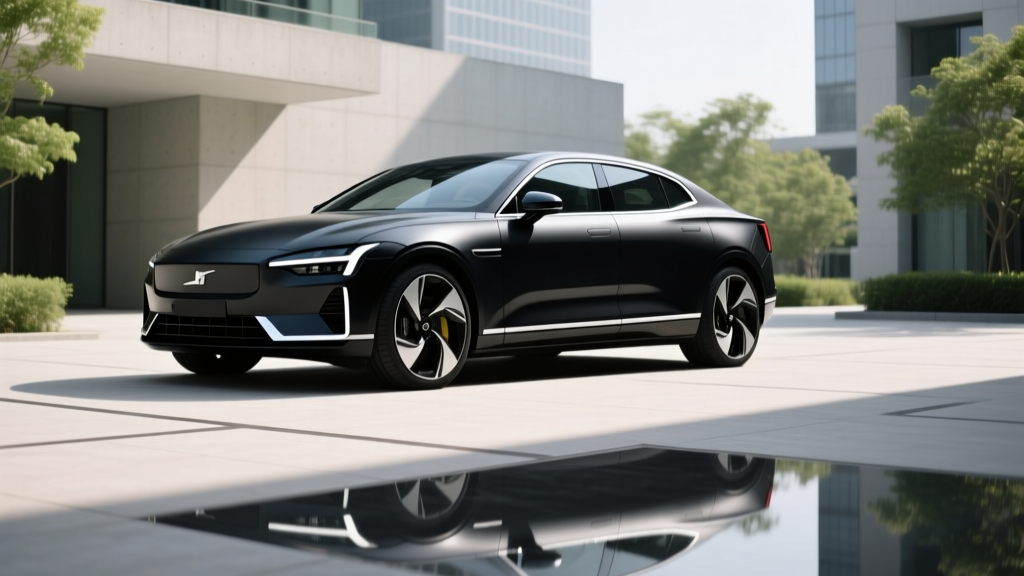
The 2025 Polestar 3 arrives as the Swedish-Chinese brand's flagship electric SUV, targeting Tesla Model X and BMW iX buyers who want Scandinavian design, serious performance, and Google-built infotainment. With dual-motor all-wheel drive standard, up to 517 horsepower, and an EPA-estimated range reaching 315 miles on the Long Range Dual Motor variant, the Polestar 3 makes compelling numbers on paper. But the 2025 Polestar 3 MSRP starting at $67,500 before incentives places it firmly in luxury territory — and real-world range and charging behavior tell a more nuanced story than the spec sheet alone.
After spending time with the specs, cross-referencing EPA data, and evaluating ownership practicality, here's everything you need to decide whether the Polestar 3 deserves a spot in your garage.
2025 Polestar 3 MSRP and Trim Pricing Breakdown
| Trim | Drivetrain | Base MSRP | As-Tested (w/ Pilot & Plus Packs) |
|---|---|---|---|
| Long Range Dual Motor | AWD (Dual Motor) | $67,500 | ~$75,000 |
| Long Range Dual Motor w/ Performance Pack | AWD (Dual Motor) | $73,500 | ~$81,000 |
The entry point for the 2025 Polestar 3 is the Long Range Dual Motor at $67,500. Adding the Performance Pack bumps output from 489 hp to 517 hp and drops the 0-60 mph time from 4.7 seconds to 4.2 seconds, for an additional $6,000. Both trims share the same 111 kWh battery pack and core hardware.
Polestar's optional Plus Pack ($4,000) adds a panoramic glass roof, premium audio, and heated rear seats. The Pilot Pack ($2,000) includes Pilot Assist with adaptive cruise and lane-centering. Fully loaded, expect to approach $80,000+ before any incentives.
EPA Range, Battery Chemistry, and Real-World Expectations
| Spec | Long Range Dual Motor | LRDM w/ Performance Pack |
|---|---|---|
| EPA Range | 315 miles | 300 miles |
| Battery (Usable) | 107 kWh (111 kWh gross) | 107 kWh (111 kWh gross) |
| Chemistry | NMC (Nickel Manganese Cobalt) | NMC |
| MPGe (Combined) | 85 MPGe | 82 MPGe |
| Efficiency | 39 kWh/100 mi | 41 kWh/100 mi |
Polestar uses an NMC (nickel manganese cobalt) lithium-ion pack supplied by CATL. NMC offers higher energy density than LFP, which is necessary for a vehicle this size to achieve 300+ miles. The trade-off: NMC batteries are more sensitive to sustained 100% state of charge and extreme heat. For daily driving, charge to 80–90% and save 100% for road trips to maximize long-term battery health.
Charging Speeds: DC Fast, Level 2, and the Curve Reality
| Charging Level | Max Rate | Time / Speed |
|---|---|---|
| DC Fast Charge (CCS) | 200 kW peak | 10–80% in ~30 minutes |
| Level 2 (Home/Public AC) | 11 kW (48A at 240V) | ~25 miles per hour of charging; 0–100% in ~11 hours |
| Level 1 (120V Household) | ~1.4 kW | ~3–4 miles per hour (impractical for daily use) |
The Polestar 3's 200 kW peak DC fast-charge rate is respectable but not class-leading — the Hyundai Ioniq 5 peaks at 240 kW and the Tesla Model X can accept up to 250 kW on V3 Superchargers. More importantly, peak rate isn't sustained rate. The Polestar 3's charge curve tapers noticeably above 60% state of charge. Expect to see 180–200 kW between 10–40%, dropping to ~120 kW by 60%, and falling below 50 kW past 80%. That 30-minute 10–80% figure assumes a capable CCS station (Electrify America, EVgo) and a preconditioned battery.
Preconditioning matters: The Polestar 3 can precondition its battery when you navigate to a DC fast charger via the built-in Google Maps. Without preconditioning — especially in cold weather — your initial charge rate may start below 80 kW and take several minutes to ramp up. Always navigate to the charger rather than just plugging in.
At home on a Level 2 charger (11 kW / 48A), the Polestar 3 adds roughly 25 miles of range per hour. A full charge from 10% to 100% takes about 11 hours — plan on overnight charging. You'll need a NEMA 14-50 outlet or hardwired wall connector installed on a 60A circuit. Installation costs typically range from $800 to $2,500 depending on panel capacity and run distance.
Performance, Drivetrain, and Driving Dynamics
| Spec | Long Range Dual Motor | LRDM w/ Performance Pack |
|---|---|---|
| Horsepower | 489 hp | 517 hp |
| Torque | 620 lb-ft | 671 lb-ft |
| 0–60 mph | 4.7 seconds | 4.2 seconds |
| Drivetrain | AWD (Dual Motor) | AWD (Dual Motor) w/ torque vectoring |
| Top Speed | 130 mph (electronically limited) | 130 mph |
Both variants use a dual-motor AWD layout with a permanent-magnet synchronous motor on each axle. The Performance Pack adds torque vectoring on the rear axle via a dual-clutch module, improving cornering agility. At 5,400+ pounds, the Polestar 3 is no lightweight, but the instant electric torque and low center of gravity (battery pack mounted in the floor) make it feel more agile than its curb weight suggests.
Regenerative braking offers multiple modes including a one-pedal driving setting that brings the car to a complete stop. The blended brake feel is among the better-executed systems in the EV space — the transition from regen to friction braking is nearly imperceptible.
Interior Space, Cargo, and Practicality
The Polestar 3 seats five and offers competitive but not class-leading cargo space:
- Cargo volume (rear seats up): 17.1 cu ft
- Cargo volume (rear seats folded): 54.0 cu ft
- Frunk (front trunk): 1.1 cu ft (enough for charging cables, not luggage)
- Rear legroom: 39.2 inches
- Front headroom: 40.8 inches
The cargo area is well-shaped and the power liftgate is standard, but 17.1 cu ft behind the second row trails the BMW iX (35.5 cu ft) and the Tesla Model X (43.0 cu ft behind the second row). If maximum cargo versatility is your priority, the Polestar 3's sleek roofline exacts a practicality tax.
Interior materials are premium: vegan upholstery is standard, with Nappa leather optional. The minimalist cabin centers on a 14.5-inch portrait touchscreen running Google built-in (Google Maps, Google Assistant, Google Play Store). A 9-inch driver display sits behind the steering wheel. Wireless Apple CarPlay is supported; Android Auto is redundant given the native Google OS.
Driver Assistance and Safety Technology
Standard safety features include automatic emergency braking with pedestrian and cyclist detection, blind-spot monitoring with steering assist, rear cross-traffic alert, run-off-road protection, and a 360-degree camera system. Polestar targets top marks from both NHTSA and IIHS, though final 2025 crash-test ratings should be confirmed before purchase.
The LiDAR-equipped Pilot Pack provides enhanced highway assist with smoother lane changes and better handling of cut-in traffic. It's competitive with Volvo's Pilot Assist (the two brands share parent company Geely's SPA2 platform) but doesn't match the hands-free highway capability of GM's Super Cruise or Ford's BlueCruise.
Warranty Coverage and Battery Longevity
| Coverage | Term |
|---|---|
| Limited Vehicle Warranty | 4 years / 50,000 miles |
| Battery & Drive Unit Warranty | 8 years / 100,000 miles |
| Battery Capacity Retention Threshold | 70% of original capacity at 8 yr / 100,000 mi |
| Corrosion Warranty | 12 years / unlimited miles |
| Roadside Assistance | 4 years / unlimited miles |
The 8-year/100,000-mile battery warranty is industry-standard, matching Tesla, BMW, and most other EV manufacturers. The 70% capacity retention threshold means Polestar will repair or replace the battery if it degrades below 70% of its original 111 kWh capacity within the warranty period. Based on NMC degradation data from similar CATL-supplied packs, most owners should expect to retain 85–90% capacity at 100,000 miles under normal use — well above the warranty threshold.
For context, a full battery replacement outside warranty on a 111 kWh NMC pack would likely cost $20,000–$28,000 at current pricing, though this figure should decline as battery costs continue their long-term downward trend.
Pros, Cons, and Who Should Buy the Polestar 3
Pros
- 315-mile EPA range is strong for a dual-motor luxury SUV
- Google built-in infotainment is fast and intuitive
- 489–517 hp provides effortless acceleration
- Minimalist Scandinavian interior with premium materials
- Standard heat pump for cold-weather efficiency
- LiDAR-ready hardware for future ADAS improvements
- Strong regenerative braking with one-pedal capability
Cons
- 200 kW peak DC charging trails rivals (Ioniq 5, Model X)
- 17.1 cu ft cargo space behind rear seats is tight for the class
- Chinese manufacturing likely disqualifies from §30D federal credit
- Starting at $67,500 — expensive before options
- No hands-free highway driving (unlike Super Cruise/BlueCruise)
- Small 1.1 cu ft frunk is nearly useless
- Limited service center network vs. Tesla or BMW
Who the Polestar 3 Suits Best
- Design-conscious commuters who want something distinct from the ubiquitous Tesla and German luxury SUVs
- Tech-forward buyers who prefer Google-native infotainment over proprietary OEM systems
- Two-adult households who prioritize driving refinement over maximum cargo volume
- Home-charging owners with reliable Level 2 access who won't depend on DC fast-charging daily
Look elsewhere if: You need maximum cargo space (BMW iX, Tesla Model X), require hands-free highway driving (Cadillac Lyriq with Super Cruise), or need the federal tax credit to make the math work (consider US-built alternatives like the Rivian R1S or Tesla Model X).
Frequently Asked Questions
What is the real-world range of the 2025 Polestar 3?
The EPA rates the Long Range Dual Motor at 315 miles. In real-world mixed driving, expect 270–290 miles. Sustained highway driving at 75 mph drops that to roughly 260–280 miles, and cold winter conditions (below 30°F) can reduce range to 210–240 miles on the highway. The heat pump helps, but NMC chemistry inherently loses capacity in extreme cold.
How fast does the Polestar 3 charge at home and on the road?
On a DC fast charger, the Polestar 3 peaks at 200 kW and charges from 10–80% in approximately 30 minutes, assuming a preconditioned battery and a capable station. At home on Level 2 (11 kW / 48A), it adds about 25 miles of range per hour, with a full charge taking roughly 11 hours. Level 1 (120V) is impractical at 3–4 miles per hour for a 111 kWh pack.
Does the 2025 Polestar 3 qualify for the federal EV tax credit?
Likely not. The §30D new clean vehicle credit requires final assembly in North America, and the Polestar 3 is built in Chengdu, China. Even if assembly requirements were met, you'd need to satisfy income caps ($300,000 MFJ / $150,000 single), the $80,000 MSRP cap for SUVs (which the base trim meets), and battery-sourcing requirements. Always verify current eligibility on the IRS qualified vehicles page before purchasing. Some states offer separate incentives that don't require North American assembly.
Is the Polestar 3 worth buying vs. the BMW iX or Tesla Model X?
It depends on your priorities. The BMW iX xDrive50 offers more cargo space (35.5 cu ft), comparable range (~324 miles EPA), faster charging (up to 200 kW, similar), and a more established service network — starting around $87,000. The Tesla Model X provides Supercharger access, more cargo room, available third-row seating, and hands-free-capable Autopilot, starting around $79,990. The Polestar 3 wins on design differentiation and Google-native tech but trails on practicality and charging infrastructure access. If you value uniqueness and don't need maximum utility, the Polestar 3 is a compelling choice.
What are the biggest drawbacks of the Polestar 3?
The three most significant compromises are: (1) cargo space at 17.1 cu ft behind the second row, which is tight for a luxury SUV of this price; (2) 200 kW peak DC charging, which is adequate but not competitive with the fastest-charging rivals; and (3) likely ineligibility for the $7,500 federal tax credit due to Chinese manufacturing, making the effective cost higher than US-built competitors that qualify.
How does the Polestar 3's battery hold up over time?
The NMC battery is warranted for 8 years/100,000 miles at 70% minimum capacity retention. Based on data from similar CATL NMC packs in other Geely/Volvo vehicles, typical degradation is approximately 8–12% over 100,000 miles when charged responsibly (avoiding frequent 100% charges and extreme heat exposure). Most owners report 88–92% state of health at the 100,000-mile mark.