Quick Verdict: The Budget-Friendly EV That Knows Its Lane
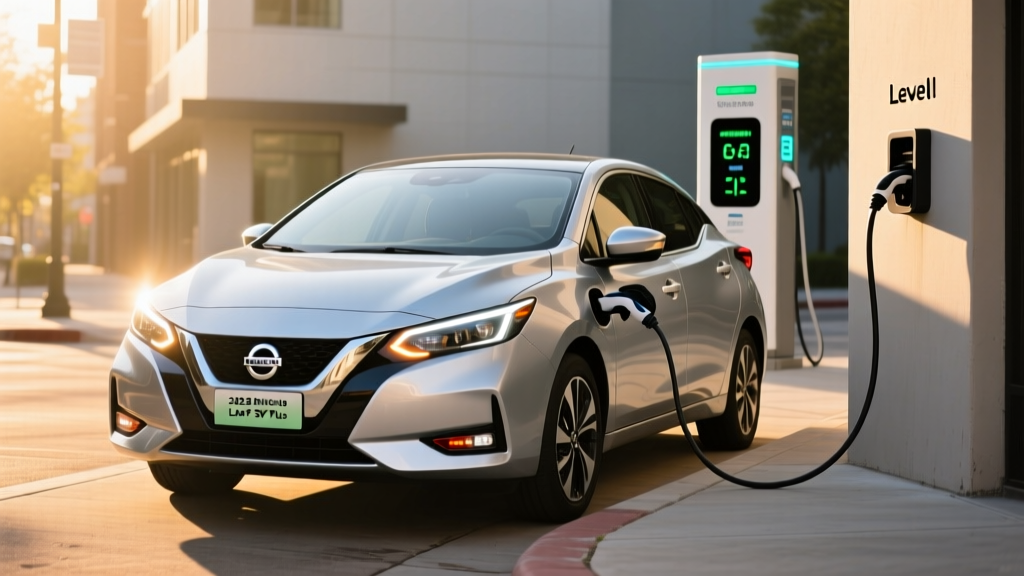
The 2025 Nissan Leaf SV Plus remains one of the most affordable long-range electric vehicles on the U.S. market, undercutting nearly every competitor on base price while delivering a practical 212 miles of EPA-rated range. It is not the flashiest EV, nor the fastest-charging, and its CHAdeMO connector is increasingly a liability on a public charging network that has standardized around NACS and CCS. But for commuters, second-car households, and buyers who charge primarily at home, the Leaf SV Plus continues to make a compelling case on economics alone.
With a starting MSRP of $38,140 (before destination), this is one of the few EVs where the total cost of ownership math works out favorably against a comparable gas-powered compact hatchback — especially if you qualify for federal or state incentives. Let's break down exactly what you get, where it falls short, and whether it earns a spot in your driveway.
Range, Battery, and Real-World Efficiency
| Specification | 2025 Nissan Leaf SV Plus |
|---|---|
| EPA Range | 212 miles |
| Battery Capacity (usable) | 60 kWh (NMC lithium-ion) |
| Efficiency | 121 MPGe combined / 28 kWh per 100 mi |
| Drivetrain | Front-wheel drive (FWD), single motor |
| Horsepower / Torque | 214 hp / 250 lb-ft |
| 0–60 mph | ~6.5 seconds |
| Cargo Volume | 23.6 cu ft (rear seats up) / 50.1 cu ft (folded) |
| Rear Legroom | 33.5 inches |
| Battery Warranty | 8 years / 100,000 miles |
| Base MSRP (SV Plus) | $38,140 + $1,095 destination |
Real-World Range Expectations
EPA Sticker: 212 miles
Real-World Highway (70+ mph): Expect roughly 170–190 miles. The Leaf's aerodynamics and single-speed reduction gear work against it at sustained highway speeds.
Cold Weather (below 32°F): Range drops to approximately 140–165 miles. The Leaf uses resistive cabin heating rather than a heat pump, which draws significantly more energy in winter.
City / Mild Conditions: You can match or slightly exceed the 212-mile EPA figure in stop-and-go driving where regenerative braking recovers energy.
The SV Plus uses a 60 kWh usable-capacity battery pack with NMC (nickel manganese cobalt) chemistry. Nissan has stuck with NMC across the Leaf lineup, prioritizing energy density over the longer cycle life and lower cost of LFP (lithium iron phosphate) packs found in some competitors like the base Tesla Model 3. The pack is passively air-cooled rather than liquid-cooled, which is a meaningful distinction — air-cooled batteries are more susceptible to temperature extremes and may degrade faster in hot climates or under repeated DC fast-charging sessions.
Per fueleconomy.gov, the SV Plus achieves 121 MPGe combined, which translates to roughly 28 kWh per 100 miles. That is competitive within the compact EV segment but trails the Hyundai Ioniq 5 and Tesla Model 3, which both hover around 25–26 kWh/100mi.
Charging Speed: The Leaf's Most Visible Weakness
| Charging Level | Power / Rate | Speed (Miles Added) | Notes |
|---|---|---|---|
| Level 1 (120V household) | ~1.4 kW | ~4 miles per hour | Adequate only for overnight top-ups of 30–40 mi |
| Level 2 (240V home/public) | 7.2 kW (onboard charger) | ~25 miles per hour | Full charge in ~9 hours from empty |
| DC Fast Charge | Peak ~100 kW | ~80 miles in 30 min | 10–80% in approximately 40–45 minutes |
Here is where the 2025 Leaf SV Plus reveals its age. The peak DC fast-charging rate of roughly 100 kW is modest by 2026 standards, where competitors like the Hyundai Ioniq 5 (up to 240 kW) and Chevrolet Equinox EV (up to 150 kW) charge significantly faster. A 10–80% session takes approximately 40–45 minutes — acceptable for occasional road trips but noticeably slower on longer drives.
The bigger structural issue is the connector. Nissan uses CHAdeMO for DC fast charging, a standard that has been largely abandoned in North America. Electrify America still supports CHAdeMO at many stations, but Tesla's Supercharger network — the most reliable and expansive in the country — is not accessible to the Leaf without a third-party adapter (and Nissan has not announced NACS adoption for the current-generation Leaf). CCS is the dominant non-Tesla standard, and the Leaf does not have it.
For home charging, the 7.2 kW onboard Level 2 charger is adequate. A full charge from near-empty takes about 9 hours on a 240V Level 2 home station. Most owners will plug in overnight and wake to a full battery, which is the ideal use case for this vehicle.
Performance and Driving Dynamics
The SV Plus's 214-horsepower, front-mounted electric motor delivers 250 lb-ft of torque to the front wheels. The 0–60 mph time of approximately 6.5 seconds is brisk enough for confident highway merging and passing, though it trails the dual-motor AWD options in competitors like the Ioniq 5 and Model 3. There is no AWD variant available for the Leaf.
Ride quality is tuned toward comfort rather than sportiness. The suspension absorbs bumps competently, and the cabin remains quiet at city speeds. At highway velocity, there is noticeable wind noise around the A-pillars — a carryover from the Leaf's older platform design. The e-Pedal mode provides strong regenerative braking that enables one-pedal driving in most conditions, though it does not bring the car to a complete stop without brake application (unlike Tesla's or GM's one-pedal implementations).
The steering is light and low-effort, ideal for urban driving but lacking feedback on twisty roads. This is a commuter car, and it knows it.
Interior, Tech, and Driver Assistance
The Leaf SV Plus interior is functional rather than luxurious. The 8-inch touchscreen infotainment system supports wireless Apple CarPlay and wired Android Auto, and the SV Plus trim adds built-in navigation. Physical knobs for climate control and volume are a welcome usability choice that many newer EVs have abandoned.
The ProPILOT Assist suite comes standard on the SV Plus and includes:
- Adaptive cruise control with stop-and-go
- Lane-keeping assist with lane centering
- Automatic emergency braking with pedestrian detection
- Blind-spot warning and rear cross-traffic alert
- Rear automatic braking
SAE Automation Level: ProPILOT Assist is a Level 2 driver-assistance system. It can manage steering and speed simultaneously on highways, but the driver must remain fully engaged — hands on the wheel, eyes on the road — at all times. This is not autonomous or self-driving capability.
The system works competently on well-marked highways but can struggle with faded lane lines, sharp curves, and construction zones. It is comparable to Toyota Safety Sense and Honda Sensing but a step below GM's Super Cruise and Ford's BlueCruise in terms of hands-free capability on mapped roads.
Notable omissions: no over-the-air (OTA) software updates, no vehicle-to-load (V2L) capability, and no frunk (front trunk). The rear cargo area provides 23.6 cubic feet behind the second row — competitive with the Chevrolet Bolt EV but smaller than the Ioniq 5's 27.2 cu ft.
Pricing, Tax Credits, and Total Cost
| Trim | Base MSRP | With Destination | Est. After §30D Credit |
|---|---|---|---|
| Leaf S (40 kWh, 149-mi range) | $29,130 | $30,225 | Varies — see eligibility notes |
| Leaf SV Plus (60 kWh, 212-mi range) | $38,140 | $39,235 | As low as ~$31,735 if eligible |
The 2025 Leaf SV Plus starts at $38,140 plus $1,095 destination, for a total of $39,235 before options. The as-tested price for a well-equipped SV Plus typically lands between $39,500 and $41,000 depending on paint, floor mats, and dealer accessories.
Federal Tax Credit Eligibility (IRS §30D)
The Leaf's eligibility for the up-to-$7,500 federal EV tax credit depends on several factors that change periodically under the Inflation Reduction Act. As of 2026 rules, here is what determines eligibility:
- MSRP Cap: The Leaf SV Plus qualifies — it is a passenger car (not an SUV/truck) and its MSRP is well under the $55,000 cap for sedans/hatchbacks.
- Buyer Income Cap: Adjusted gross income must not exceed $150,000 (single), $225,000 (head of household), or $300,000 (married filing jointly).
- Battery Sourcing: A portion of the credit depends on critical minerals and battery components being sourced from the U.S. or free-trade-agreement countries. Nissan assembles the Leaf in Smyrna, Tennessee, but battery-cell sourcing has historically involved Japanese and Chinese supply chains. The exact credit amount ($3,750 or $7,500) depends on current-year sourcing compliance. Check the latest eligibility on fueleconomy.gov before purchasing.
- Point-of-Sale Transfer: Buyers can elect to transfer the credit to the dealer at purchase, reducing the upfront price rather than claiming it on their tax return.
The Leaf SV Plus is not available for the commercial clean vehicle credit (§45W) as a personal purchase, and used-Leaf buyers may qualify for the separate up-to-$4,000 used-EV credit under §25E if the vehicle is purchased from a dealer for $25,000 or less (unlikely for a 2025 model in 2026 but relevant for older Leafs).
5-Year Cost of Ownership Estimate
| Cost Category | Leaf SV Plus (Est.) | Comparable Gas Hatchback (Est.) |
|---|---|---|
| Purchase Price (after credit) | ~$31,735 – $39,235 | ~$28,000 – $32,000 |
| Fuel / Electricity (5 yr, 60k mi) | ~$2,800 – $3,500 | ~$6,500 – $8,000 |
| Maintenance (5 yr) | ~$800 – $1,200 | ~$2,500 – $3,500 |
| Insurance (5 yr avg) | ~$7,500 – $9,000 | ~$6,000 – $7,500 |
| Estimated 5-Year Total | ~$42,800 – $52,900 | ~$43,000 – $51,000 |
The Leaf's lower fuel and maintenance costs largely offset its higher purchase price over five years, particularly if you secure the full $7,500 credit. Home charging at the national average of $0.16/kWh costs roughly $4.75 per 100 miles, compared to $11–$14 per 100 miles for a 30 MPG gas car at $3.40/gallon. Consult a tax professional to confirm your personal credit eligibility — rules are subject to change.
Who Should Buy the 2025 Leaf SV Plus?
Choose the Leaf SV Plus If:
- You commute 40–80 miles round-trip and charge at home nightly
- You want the lowest entry price for a 200+ mile EV
- Public DC fast charging is an occasional need, not a daily one
- You live in a moderate climate where cold-weather range loss is manageable
- You value physical buttons, straightforward controls, and proven reliability
Look Elsewhere If:
- You take frequent road trips and need fast DC charging (consider Ioniq 5, Model 3, or Equinox EV)
- You need AWD for snow or mountain driving (no AWD Leaf exists)
- You rely on Tesla Superchargers for travel (CHAdeMO is not compatible)
- You want the latest OTA updates, V2L, or premium tech features
- You live in an extreme-heat climate where air-cooled batteries degrade faster
Pros and Cons
Pros
- One of the lowest MSRPs for a 200+ mile EV
- Comfortable, quiet ride for city and suburban driving
- ProPILOT Assist standard on SV Plus (Level 2 driver assist)
- Strong regenerative braking via e-Pedal mode
- Competitive cargo space for the class (23.6 cu ft)
- Proven platform with extensive real-world reliability data
- Physical controls for climate and infotainment
Cons
- CHAdeMO DC connector — increasingly orphaned standard in North America
- Peak 100 kW DC charging is slow for 2026 road-trip standards
- Air-cooled battery — suboptimal for hot climates and repeated fast charging
- No AWD option available
- No heat pump — significant range loss in cold weather
- No OTA updates; tech feels dated vs. newer EV platforms
- No frunk; no V2L capability
How It Compares to Key Competitors
| Spec | 2025 Leaf SV Plus | 2025 Hyundai Ioniq 5 SE Std Range | 2025 Chevy Equinox EV 2LT | 2025 Tesla Model 3 RWD |
|---|---|---|---|---|
| EPA Range | 212 mi | 220 mi | 319 mi | 272 mi |
| Battery (kWh) | 60 kWh (NMC) | 58 kWh (NMC) | 85 kWh (NMC) | 60 kWh (LFP) |
| DC Fast Charge Peak | ~100 kW | ~180 kW | ~150 kW | ~170 kW |
| 10–80% Time | ~40–45 min | ~18 min | ~20 min | ~25 min |
| Connector | CHAdeMO | NACS (2025+) | NACS (2025+) | NACS |
| Base MSRP | $38,140 | $42,600 | $43,400 | $44,130 |
| Drivetrain | FWD | RWD | FWD | RWD |
The Leaf SV Plus is the cheapest option here by a significant margin — $4,000 to $6,000 less than any competitor listed. That price gap is meaningful, especially when combined with potential tax credits. However, every competitor charges faster, uses the NACS connector (access to Tesla Superchargers), and offers more modern platforms with liquid-cooled batteries.
If your budget is firm around $35,000–$40,000 out-the-door, the Leaf SV Plus is one of the few EVs that gets you 200+ miles of range without stretching into higher-tier pricing. If you can stretch to $42,000+, the Ioniq 5 SE Standard Range offers dramatically better charging speed and Supercharger access.
Frequently Asked Questions
What is the real-world range of the 2025 Nissan Leaf SV Plus?
The EPA rates it at 212 miles, but real-world highway driving at 70+ mph typically yields 170–190 miles. In cold weather (below freezing), expect 140–165 miles due to the lack of a heat pump. City driving with regenerative braking can match or slightly exceed the EPA number.
How fast does the Leaf SV Plus charge?
On DC fast charging, it peaks at approximately 100 kW, taking about 40–45 minutes for a 10–80% charge. On a Level 2 home charger (240V), the 7.2 kW onboard charger adds roughly 25 miles per hour, fully charging in about 9 hours. Level 1 (120V) adds about 4 miles per hour.
Does the 2025 Leaf SV Plus qualify for the $7,500 federal EV tax credit?
It may qualify for the full $7,500 or a partial $3,750 credit, depending on current battery-sourcing compliance under IRS §30D rules. The MSRP is under the $55,000 cap, and buyer income limits apply ($150K single / $300K married). Verify current eligibility at fueleconomy.gov or consult a tax professional before purchasing. The credit can be transferred to the dealer at point of sale.
Is the Nissan Leaf SV Plus worth buying over the Tesla Model 3 or Hyundai Ioniq 5?
If your priority is the lowest possible purchase price for a 200+ mile EV and you charge primarily at home, the Leaf SV Plus is a strong value. If you take road trips, need fast public charging, or want Supercharger access, the Model 3 or Ioniq 5 are better choices despite their higher price. The Leaf's CHAdeMO connector and slower charging are its biggest competitive disadvantages.
What are the biggest drawbacks of the Leaf SV Plus?
The CHAdeMO connector is the most significant — it limits public DC charging options as the industry moves to NACS. The air-cooled battery is less durable in extreme heat. The lack of a heat pump hurts cold-weather range. And at 100 kW peak, DC charging is slow for road trips compared to 150–240 kW competitors.
How long will the Leaf battery last?
Nissan warranties the battery for 8 years or 100,000 miles against capacity loss below 9 bars out of 12 on the capacity gauge (roughly 66% of original capacity). Real-world data from earlier Leaf generations shows moderate degradation over time, but the air-cooled design makes hot-climate owners more vulnerable. Replacement battery packs cost approximately $8,000–$12,000 installed, though full replacement is rare within the warranty period.
Can I use Tesla Superchargers with the Leaf SV Plus?
Not natively. The Leaf uses CHAdeMO for DC fast charging, while Tesla Superchargers use NACS. As of 2026, Nissan has not announced a NACS adapter for the current-generation Leaf. Third-party CHAdeMO-to-NACS adapters exist but are expensive and not universally compatible with all Supercharger stalls.
Sources: EPA Fuel Economy — 2025 Nissan Leaf, Nissan USA Leaf Specifications, IRS §30D EV Tax Credit Eligibility (fueleconomy.gov)