Quick Verdict: Still the Budget EV Commuter's Best Kept Secret
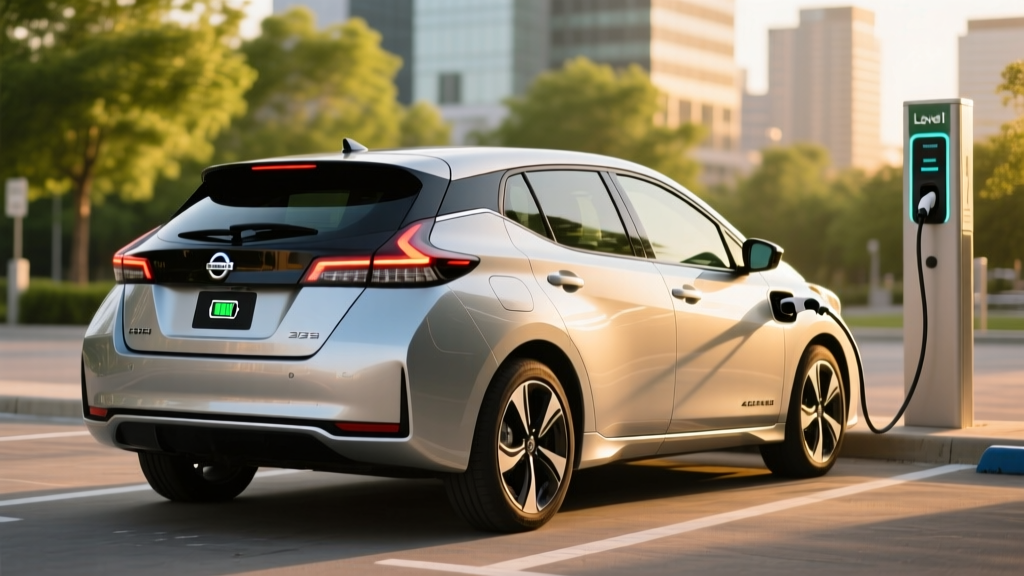
The 2025 Nissan Leaf electric car enters what may be its final model year with a formula that hasn't fundamentally changed since its 2018 refresh — and that's both its greatest strength and its most glaring limitation. Starting at $28,140 before any incentives, the Leaf remains one of the most affordable new electric vehicles on the US market. But its CHAdeMO charging connector, air-cooled battery, and 50 kW peak DC fast-charge rate place it firmly in the commuter-car category, not the road-trip cruiser lane.
If you can charge at home and your daily round-trip commute stays under 100 miles, the Leaf delivers practical, predictable, and genuinely cheap-to-own electric transportation. If you need frequent highway road trips or access to the Tesla Supercharger network, look elsewhere. Here's exactly what the numbers say.
Range and Efficiency: EPA Numbers vs. Real-World Reality
The 2025 Leaf comes in two trims with two different battery packs, and the range gap between them is significant:
- Leaf S: 40 kWh battery (usable ~38 kWh) — EPA-estimated 149 miles
- Leaf SV Plus: 60 kWh battery (usable ~58 kWh) — EPA-estimated 212 miles
Leaf S (EPA 149 mi): Expect 115–130 miles in mixed highway driving, dropping to 95–110 miles in freezing temperatures or sustained 75+ mph highway runs. City driving with regen braking can push closer to 150+ miles.
Leaf SV Plus (EPA 212 mi): Expect 175–195 miles in mixed highway use, dropping to 145–165 miles in cold weather or at sustained highway speeds. City commuting regularly yields 210+ miles.
The Leaf uses an NMC (nickel manganese cobalt) lithium-ion battery chemistry in both trims. Unlike LFP batteries found in some competitors, NMC offers higher energy density but benefits less from routine 100% charging — Nissan recommends charging to 80% for daily use and 100% only when you need the full range.
Efficiency figures from fueleconomy.gov show the Leaf SV Plus achieving 111 MPGe combined (120 city / 99 highway), translating to roughly 30 kWh per 100 miles. The lighter Leaf S posts slightly better numbers at 114 MPGe combined and approximately 29 kWh/100 mi. These are competitive efficiency figures for the segment, though the Hyundai Kona Electric and Chevrolet Bolt EUV edge slightly ahead.
Charging Speed: The Leaf's Most Persistent Weakness
Charging is where the 2025 Nissan Leaf shows its age most clearly. Nissan retained the CHAdeMO DC fast-charging connector rather than adopting the now-dominant CCS or NACS (Tesla) standards. That decision has real-world consequences in 2026, as the vast majority of new public DC fast-charging infrastructure is being built with CCS and NACS plugs.
| Charging Level | Leaf S (40 kWh) | Leaf SV Plus (60 kWh) |
|---|---|---|
| Level 1 (120V household) | ~2 kW / ~5 mi/hr | ~2 kW / ~5 mi/hr |
| Level 2 (240V home/public) | 6.6 kW / ~25 mi/hr | 6.6 kW / ~33 mi/hr |
| DC Fast Charge (CHAdeMO) | 50 kW peak | 100 kW peak |
| DC 10–80% Time (est.) | ~40 minutes | ~45 minutes |
| Full Level 2 Charge (0–100%) | ~7.5 hours | ~9.5 hours |
The Leaf SV Plus peaks at 100 kW on DC fast charging, but the charge curve tapers sharply above 60% state of charge. In practice, a 10–80% session takes approximately 45 minutes, and the rate drops to roughly 40–50 kW past 70%. The Leaf S is limited to 50 kW peak, making fast charging a slower affair at around 40 minutes for a similar 10–80% session despite the smaller battery.
Connector reality check: CHAdeMO stations still exist — Electrify America maintains some legacy CHAdeMO stalls, and older networks like EVgo have them — but the writing is on the wall. Tesla's Supercharger network, the largest in the US, does not natively support CHAdeMO. Nissan has not announced a NACS adapter for the Leaf, unlike Ford and GM's CCS-to-NACS solutions. If public DC charging access matters to you, verify CHAdeMO availability in your area before buying.
Home Level 2 charging at 6.6 kW is adequate for overnight replenishment. A full charge from empty takes 7.5–9.5 hours depending on trim, which works well for commuters who plug in each evening. A Level 2 home charger installation typically costs $500–$1,500 for equipment plus $800–$2,500 for electrician labor and permits, depending on panel proximity and whether a 240V circuit already exists.
Performance and Drivetrain
| Spec | Leaf S | Leaf SV Plus |
|---|---|---|
| Horsepower | 147 hp | 214 hp |
| Torque | 236 lb-ft | 250 lb-ft |
| Drivetrain | FWD (single motor) | FWD (single motor) |
| 0–60 mph | ~7.9 seconds | ~6.5 seconds |
| Top Speed | ~90 mph (electronically limited) | ~98 mph (electronically limited) |
The Leaf is a front-wheel-drive, single-motor vehicle in both trims. There is no AWD option. The SV Plus's 214 hp and 250 lb-ft of instant torque deliver genuinely peppy city and suburban driving — the 0–60 time of approximately 6.5 seconds is brisk enough for confident highway merging. The base S trim's 147 hp feels adequate around town but noticeably less energetic at highway speeds.
Ride quality is comfortable and compliant, tuned for commuting rather than sporty handling. The low center of gravity from the floor-mounted battery pack contributes to stable cornering. Regenerative braking is adjustable via the e-Pedal mode, which enables near one-pedal driving in city traffic — though the Leaf's regen doesn't bring the car to a complete hold at stoplights the way some competitors do; you'll still need the friction brake for final stops.
Interior Space, Cargo, and Technology
Despite its compact exterior footprint, the Leaf offers practical interior room:
- Front legroom: 42.1 inches
- Rear legroom: 33.5 inches
- Cargo volume (rear seats up): 23.6 cubic feet
- Cargo volume (rear seats folded): 38.5 cubic feet
The cargo area is generous for the hatchback class and easily accommodates a week's groceries, two carry-on bags, or a stroller. The 60/40 split-folding rear seat expands utility for longer items, though the load floor isn't perfectly flat due to the battery placement.
Infotainment: Both trims come with an 8-inch touchscreen, Apple CarPlay (wireless on SV Plus, wired on S), and Android Auto (wired). The interface is functional but dated compared to the large-format screens in the Hyundai Ioniq 5 or Tesla Model 3. A 4-speaker audio system is standard on S; SV Plus upgrades to a 6-speaker setup. Wireless phone charging is available on SV Plus.
Driver assistance (Nissan ProPILOT Assist): Available on SV Plus and standard on the SV Plus trim, ProPILOT Assist is a SAE Level 2 driver-assistance system combining adaptive cruise control and lane-centering steering. It works well on marked highways but requires the driver to keep hands on the wheel and eyes on the road at all times. This is not a self-driving system — it's a driver aid. Automatic emergency braking, lane departure warning, blind-spot monitoring, and rear cross-traffic alert are standard across all trims.
ProPILOT Assist is SAE Level 2 — the driver must remain fully engaged. It does not handle construction zones, unmapped intersections, or complex urban driving. Hands-off-wheel detection will issue warnings and eventually disengage the system if the driver does not respond. Do not confuse this with Level 4 autonomous driving services like Waymo.
Pricing, Trims, and Federal Tax Credit Eligibility
| Trim | Base MSRP | Est. As-Tested* | §30D Credit Eligibility |
|---|---|---|---|
| Leaf S | $28,140 | $29,500–$31,000 | See eligibility notes below |
| Leaf SV Plus | $36,140 | $37,500–$40,000 | See eligibility notes below |
*As-tested estimates include destination charge and common options/packages.
Federal tax credit (§30D) eligibility for the 2025 Leaf is complex and buyer-specific. Under current IRS rules, the new clean vehicle credit offers up to $7,500, but eligibility depends on multiple requirements:
- MSRP cap: The Leaf qualifies — it's a passenger car under the $55,000 MSRP cap.
- Buyer income limits: Adjusted gross income must not exceed $150,000 (single), $225,000 (head of household), or $300,000 (joint filing).
- Battery component sourcing: A percentage of battery components must be manufactured or assembled in North America, and critical minerals must meet sourcing thresholds. These percentages increase annually. The Leaf's battery sourcing has historically been a challenge for full credit qualification.
- Point-of-sale transfer: Eligible buyers can transfer the credit to the dealer at purchase, reducing the purchase price directly rather than waiting for a tax refund.
- Final assembly: The Leaf is assembled in Smyrna, Tennessee, satisfying the North American final assembly requirement.
Bottom line: The Leaf may qualify for the full $7,500, a partial credit ($3,750), or no credit at all depending on how battery-sourcing rules apply in the 2025 tax year. Always verify current eligibility at fueleconomy.gov and consult a tax professional before making a purchase decision based on credit assumptions. If eligible for the full $7,500, the Leaf S effectively starts around $20,640 — making it arguably the cheapest new EV in America.
Warranty and Battery Longevity
Nissan backs the 2025 Leaf with the following coverage:
- Battery warranty: 8 years / 100,000 miles (capacity retention — Nissan warrants the battery against dropping below approximately 66% of original capacity, measured via the battery health bar on the dashboard)
- Powertrain warranty: 5 years / 60,000 miles
- Bumper-to-bumper: 3 years / 36,000 miles
The Leaf's battery is passively air-cooled rather than liquid-cooled, which is a notable distinction. Air-cooled batteries are more susceptible to degradation in hot climates and during repeated DC fast-charging sessions (sometimes called "Rapidgate" in earlier Leaf generations). Nissan has improved thermal management in the current generation, and most owners report modest degradation — typically 5–10% capacity loss over the first 5 years in temperate climates. Owners in consistently hot regions (Arizona, Texas, Southern California) may see slightly faster degradation. Monitoring the battery health bars on the dash and avoiding frequent DC fast charging in hot weather are practical mitigation strategies.
Pros, Cons, and Who Should Buy the 2025 Leaf
- Lowest starting MSRP of any new EV (Leaf S at $28,140)
- Comfortable ride quality and spacious hatchback cargo area (23.6 cu ft)
- Strong city efficiency (111–114 MPGe combined)
- Standard safety features across all trims (AEB, blind-spot, rear cross-traffic)
- Proven reliability track record with millions of miles of fleet data
- US-assembled (Smyrna, TN) — supports final-assembly tax credit requirement
- CHAdeMO DC connector — shrinking public charging network compatibility
- Slow DC fast charging (50–100 kW peak) vs. 150–350 kW competitors
- Air-cooled battery — higher degradation risk in hot climates
- Dated infotainment and interior design
- FWD only — no AWD option for snow-belt buyers
- Limited real-world highway range (especially Leaf S at ~115–130 mi)
Choose the Leaf S if: You want the cheapest possible new EV, your commute is under 70 miles round-trip, you charge at home every night, and you rarely take road trips over 100 miles.
Choose the Leaf SV Plus if: You want 200+ miles of city range, peppy 214-hp acceleration, ProPILOT Assist for highway commuting, and you're willing to accept CHAdeMO charging limitations.
Look at competitors (Bolt EUV, Kona Electric, Ioniq 5) if: You need CCS/NACS fast-charging access, liquid-cooled battery longevity, AWD capability, or regular road-trip range beyond 200 miles.
Frequently Asked Questions
What is the real-world range of the 2025 Nissan Leaf?
The Leaf S delivers roughly 115–130 miles in mixed highway driving and up to 150 miles in city use. The SV Plus achieves 175–195 miles on the highway and can approach its 212-mile EPA rating in stop-and-go city driving. Cold weather (below freezing) reduces range by 20–30% in both trims.
How fast does the 2025 Leaf charge at home and on DC fast chargers?
At home on a 240V Level 2 charger (6.6 kW), the Leaf S fully charges in about 7.5 hours and the SV Plus in about 9.5 hours — adding roughly 25–33 miles of range per hour. On DC fast chargers, the Leaf S peaks at 50 kW and the SV Plus at 100 kW, with 10–80% sessions taking approximately 40–45 minutes. Both use the CHAdeMO connector.
Does the 2025 Nissan Leaf qualify for the $7,500 federal EV tax credit?
Possibly, but it depends on battery-sourcing compliance and your income. The Leaf meets the MSRP cap ($55,000 for cars), final assembly (Tennessee), and buyer income requirements for many purchasers. However, critical-mineral and battery-component sourcing rules may limit the credit to $3,750 or eliminate it entirely. Verify current status on fueleconomy.gov and consult a tax professional.
Is the 2025 Leaf worth buying vs. the Chevrolet Bolt or Hyundai Kona Electric?
The Leaf wins on base price — it's the cheapest new EV available. But the Chevrolet Bolt (if available in remaining 2025 inventory) and Hyundai Kona Electric both use the CCS connector with broader DC fast-charging network access, and the Kona Electric offers liquid-cooled battery management. If charging flexibility and long-term battery health are priorities, the Kona Electric or a used Bolt EUV may be stronger choices. If pure upfront affordability is the deciding factor, the Leaf S is hard to beat.
How long will the Leaf's battery last?
Nissan warrants the battery for 8 years/100,000 miles against dropping below ~66% capacity. Real-world data from earlier Leaf generations suggests 10–15% degradation over 8–10 years in moderate climates. Air-cooled batteries in hot climates may degrade faster. Avoiding daily DC fast charging and extreme state-of-charge levels (consistently 0% or 100%) helps preserve longevity.
Can I charge a 2025 Leaf at a Tesla Supercharger?
Not natively. The Leaf uses the CHAdeMO DC connector, and Tesla Superchargers use NACS. As of 2026, no official CHAdeMO-to-NACS adapter from Nissan has been announced. Some third-party adapters may exist, but compatibility and safety are not guaranteed. Leaf owners should plan charging around CHAdeMO-equipped networks like Electrify America (legacy stalls), EVgo, and independent providers.