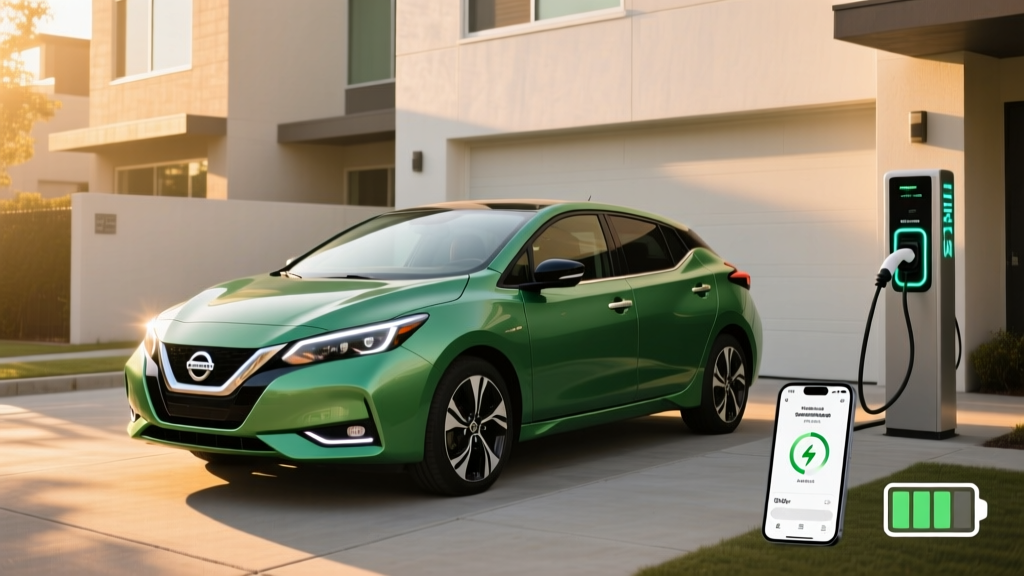
The Nissan Leaf holds a unique position in the EV market: it's one of the oldest nameplates in the battery-electric space, and for 2025, it remains the most affordable way to get into a new EV through leasing. But with a charging connector standard that's being phased out and range figures that trail modern rivals, is a 2025 Nissan Leaf lease still a smart move — or a trap?
We've analyzed the specs, crunched the lease economics, and tested real-world efficiency to give you the full picture before you sign anything.
2025 Nissan Leaf: Quick Verdict
The 2025 Leaf is a competent city commuter and a genuine bargain through lease deals, often available well below its MSRP. However, its CHAdeMO DC fast-charging connector is a dying standard in North America, its air-cooled battery limits fast-charge speeds and long-term longevity in hot climates, and its real-world highway range falls notably short of the EPA sticker. If your commute is under 40 miles round-trip and you can charge at home, a Leaf lease can be one of the cheapest ways to drive electric. If you need road-trip capability, look elsewhere.
Full Specifications at a Glance
| Spec | Leaf S (40 kWh) | Leaf SV Plus (60 kWh) |
|---|---|---|
| EPA Range | 149 miles | 212 miles |
| Battery Capacity | 40 kWh (NMC) | 60 kWh (NMC) |
| Battery Cooling | Passive air-cooled | Passive air-cooled |
| Motor Output | 147 hp / 236 lb-ft | 214 hp / 250 lb-ft |
| 0-60 mph | ~7.9 sec | ~6.5 sec |
| Drivetrain | FWD | FWD |
| Max DC Fast Charge | 50 kW (CHAdeMO) | 100 kW (CHAdeMO) |
| Level 2 Charge Rate | 6.6 kW | 6.6 kW |
| EPA Efficiency | 123 MPGe (27 kWh/100mi) | 114 MPGe (30 kWh/100mi) |
| Cargo Volume | 23.6 cu ft (rear seats up) | 23.6 cu ft (rear seats up) |
| Rear Legroom | 33.5 in | 33.5 in |
| Base MSRP | $28,140 | $36,190 |
| Battery Warranty | 8 yr / 100,000 mi | 8 yr / 100,000 mi |
Real-World Range: What the EPA Sticker Doesn't Tell You
EPA Estimated: 149 mi (S) / 212 mi (SV Plus)
Real-World Expectation: ~120-135 mi highway (S) / ~175-195 mi highway (SV Plus). In cold weather (below 32°F), expect a further 20-30% reduction, bringing the SV Plus down to roughly 140-155 miles on a full charge.
The Leaf's EPA-rated efficiency is respectable for its class, but the gap between sticker and reality is wider than most modern EVs. The reasons are twofold:
- No heat pump. The 2025 Leaf uses a resistive PTC heater. In winter, cabin heating draws directly from the traction battery, consuming 2-4 kW continuously. That's energy that isn't moving the car.
- Air-cooled battery. Without active liquid thermal management, the battery runs hotter under sustained highway loads and colder in winter, both of which reduce usable capacity and efficiency.
For city driving with frequent regenerative braking, the Leaf often meets or even slightly exceeds its EPA rating. It's the highway commuter and the cold-climate driver who will feel the shortfall most acutely.
Charging: The CHAdeMO Problem
This is the single biggest factor to weigh before signing a 2025 Nissan Leaf lease. The Leaf uses the CHAdeMO DC fast-charging connector — a standard that Tesla, Ford, GM, Rivian, Volvo, Hyundai, and nearly every other major automaker has abandoned in North America in favor of NACS (Tesla's connector). Electrify America still maintains CHAdeMO plugs at many stations, but new infrastructure buildout overwhelmingly favors NACS and CCS.
| Charging Level | Leaf S (40 kWh) | Leaf SV Plus (60 kWh) |
|---|---|---|
| Level 1 (120V, 1.4 kW) | ~4 mi/hr | ~4 mi/hr |
| Level 2 (240V, 6.6 kW) | ~22 mi/hr, full in ~7.5 hr | ~22 mi/hr, full in ~11 hr |
| DC Fast (CHAdeMO) | 50 kW peak, 10-80% in ~40 min | 100 kW peak, 10-80% in ~45 min |
The SV Plus's 100 kW peak rate sounds reasonable, but the air-cooled battery causes rapid charge-curve taper. You'll see 100 kW only briefly in the 10-30% state-of-charge window. By 50%, the rate drops to roughly 50-60 kW, and above 70% it slows further. A 10-80% session takes approximately 45 minutes — competitive on paper, but the taper means the last 30% takes disproportionately long.
Home charging is where the Leaf shines for its use case. A 6.6 kW Level 2 home charger replenishes the SV Plus overnight in about 11 hours. For a daily commuter who plugs in each evening, this is perfectly adequate and costs roughly $0.12-$0.15 per mile depending on your electricity rate — a fraction of gasoline.
Performance, Ride, and Daily Livability
The SV Plus's 214 hp and 250 lb-ft of torque deliver a 0-60 mph time of roughly 6.5 seconds — brisk enough for confident highway merging and passing. The base S trim's 147 hp is adequate for city driving but feels strained at highway speeds when fully loaded.
Ride quality is comfortable and compliant, tuned more for comfort than sportiness. The cabin is quiet at city speeds but wind and tire noise become noticeable above 65 mph. The e-Pedal mode enables one-pedal driving with aggressive regenerative braking, though unlike some competitors, the Leaf doesn't come to a complete hold without touching the brake pedal.
Cargo and space: 23.6 cubic feet behind the rear seats is competitive with the Chevrolet Bolt EV and adequate for groceries, luggage, or a stroller. Fold the rear seats and you get roughly 30 cu ft of usable space. Rear legroom at 33.5 inches is tight for tall adults on longer trips.
Pricing, Lease Economics, and Tax Credit Eligibility
| Leaf S | Leaf SV Plus | |
|---|---|---|
| Base MSRP | $28,140 | $36,190 |
| Destination Fee | $1,095 | $1,095 |
| As-Tested (typical) | ~$30,500 | ~$38,500 |
| Federal §30D Credit (purchase) | $3,750* | $3,750* |
| Effective Price After Credit | ~$26,750 | ~$34,750 |
*Per IRS §30D guidelines, the Leaf qualifies for a partial credit. The full $7,500 requires meeting both critical-mineral and battery-component sourcing thresholds, which the Leaf's Japan-sourced battery does not fully satisfy for 2025. Buyer income caps apply: $150,000 single / $300,000 joint. MSRP cap for cars: $55,000. Consult a tax professional for your specific eligibility.
Why leasing changes the equation: Under the commercial clean vehicle credit (§45W), lease companies can claim the full $7,500 credit regardless of battery sourcing or buyer income, and many pass some or all of that savings into the lease as a capitalized-cost reduction. This is why you'll frequently see 2025 Leaf lease deals advertised at $199-$299/month with modest money down — rates that make it one of the cheapest new vehicles (electric or gas) you can lease. Nissan dealers often combine manufacturer incentives with the lease credit pass-through to push payments even lower.
Tech, Safety, and Driver Assistance
The 2025 Leaf comes equipped with Nissan's ProPILOT Assist, a SAE Level 2 driver-assistance system that combines adaptive cruise control with lane-centering. It works well on marked highways but requires continuous driver supervision — this is not a hands-off or self-driving system. The base S trim includes Nissan Safety Shield 360 (automatic emergency braking, blind-spot warning, rear cross-traffic alert, lane departure warning).
The 8-inch touchscreen infotainment system supports wireless Apple CarPlay and wired Android Auto. It's functional but dated compared to the larger, faster screens in the Hyundai Kona Electric or Chevrolet Equinox EV. There's no over-the-air update capability for major feature additions, and the instrument cluster uses a small digital display flanked by analog gauges — a deliberate cost-saving measure.
Battery Longevity and Warranty
Nissan covers the Leaf's battery with an 8-year/100,000-mile warranty against capacity loss below 9 bars (out of 12) on the battery health gauge — roughly equivalent to 66-70% state of health. This warranty is standard, not pro-rated.
The air-cooled battery is the Leaf's most debated engineering choice. Without liquid cooling, the battery experiences wider temperature swings, which accelerates degradation in hot climates (Arizona, Texas, Southern California) and under frequent DC fast-charging use. First-generation Leafs (2011-2017) showed measurable capacity loss within 3-5 years in hot regions. The current 40/60 kWh packs use improved NMC chemistry and are more resilient, but the thermal-management limitation remains. For a 2-3 year lease, this is largely a non-issue — you'll return the car before meaningful degradation appears. For buyers planning to keep the Leaf 8+ years in a hot climate, it's a legitimate concern.
Pros, Cons, and Who Should Lease the 2025 Leaf
Pros
- Among the cheapest new EV leases available ($199-$299/mo common)
- Comfortable ride, easy to drive, excellent visibility
- Low running costs: ~$0.12-$0.15/mi on home electricity
- ProPILOT Assist and Safety Shield 360 standard
- Adequate cargo space for daily errands (23.6 cu ft)
- e-Pedal one-pedal driving reduces brake wear
Cons
- CHAdeMO connector is a dying standard — fewer public chargers over time
- Air-cooled battery limits fast-charge speed and hot-climate longevity
- No heat pump — significant winter range loss (20-30%)
- Real-world highway range well below EPA sticker
- Dated infotainment and interior materials
- FWD only — no AWD option for snow-belt drivers
- Resale value likely to suffer as CHAdeMO infrastructure declines
Best for: Budget-conscious commuters with home charging, a sub-50-mile round-trip, and mild-winter climates. The lease economics are hard to beat.
Not ideal for: Road trippers, cold-climate drivers without garage parking, anyone who relies on public DC fast charging, or buyers planning to keep the vehicle 8+ years.
2025 Nissan Leaf vs. Key Competitors
The Leaf's closest rivals in the affordable EV segment include the Hyundai Kona Electric (261 mi EPA, CCS/NACS adapter available, liquid-cooled battery, ~$33,000 MSRP), the Chevrolet Equinox EV (315 mi EPA, NACS, ~$33,000), and the upcoming next-gen Nissan EVs on the CMF-EV platform. On pure value-per-mile-of-range, the Kona Electric and Equinox EV offer significantly more capability — but neither consistently matches the Leaf's rock-bottom lease pricing.
If your priority is the lowest possible monthly payment on a new EV and your driving pattern fits within the Leaf's real-world range, the lease deal can justify the compromises. If you want a vehicle that will age well, charge everywhere, and handle road trips, the Kona Electric or Equinox EV are stronger long-term choices.
Frequently Asked Questions
Does the 2025 Nissan Leaf qualify for the federal EV tax credit?
The Leaf qualifies for a partial §30D credit of $3,750 when purchased, as its Japan-sourced battery does not meet all critical-mineral and component-sourcing thresholds for the full $7,500. Income caps ($150K single / $300K joint) and the $55,000 MSRP cap for cars apply. However, when leased, the leasing company may claim the full $7,500 under §45W and pass savings into your monthly payment — often making the lease significantly cheaper than buying. Verify current rules at IRS.gov and with your dealer.
What is the real-world range of the 2025 Nissan Leaf?
The SV Plus (60 kWh) is EPA-rated at 212 miles, but expect roughly 175-195 miles on the highway and 140-155 miles in freezing weather. The base S (40 kWh) is rated at 149 miles EPA, with real-world highway range around 120-135 miles. City driving with regenerative braking often matches the EPA figure.
How fast does the Leaf charge at home and on the road?
At home on a 240V Level 2 charger (6.6 kW), the SV Plus adds about 22 miles of range per hour and fully charges in roughly 11 hours. On DC fast chargers, the SV Plus peaks at 100 kW via CHAdeMO but tapers quickly due to the air-cooled battery, reaching 10-80% in about 45 minutes. The base S peaks at just 50 kW.
Is the CHAdeMO connector a dealbreaker?
It depends on your charging habits. If you charge at home 90%+ of the time, CHAdeMO is manageable. For road trips or apartment dwellers relying on public charging, it's a growing liability — NACS and CCS dominate new infrastructure. Electrify America still supports CHAdeMO but is not expanding it. Adapters (CHAdeMO-to-NACS) are not widely available or certified.
Should I lease or buy the 2025 Nissan Leaf?
For most buyers, leasing is the stronger play. The lease structure allows the lessor to claim the full $7,500 commercial credit and pass savings through, resulting in monthly payments that are difficult to match through purchase. Leasing also insulates you from the Leaf's likely weak resale value as CHAdeMO infrastructure declines. If you plan to drive the car 8+ years and live in a mild climate, buying with the $3,750 purchase credit is viable — but the math rarely beats a well-structured lease.
How does the Leaf's battery hold up over time?
Nissan's 8-year/100,000-mile battery warranty covers capacity loss below approximately 70%. The air-cooled design means more degradation in hot climates and under heavy fast-charging use compared to liquid-cooled competitors. For a 2-3 year lease, degradation is negligible. For long-term ownership in hot states, monitor the battery health gauge regularly and minimize DC fast-charging sessions.