Quick Verdict: The Leaf's Lease Math in 2025
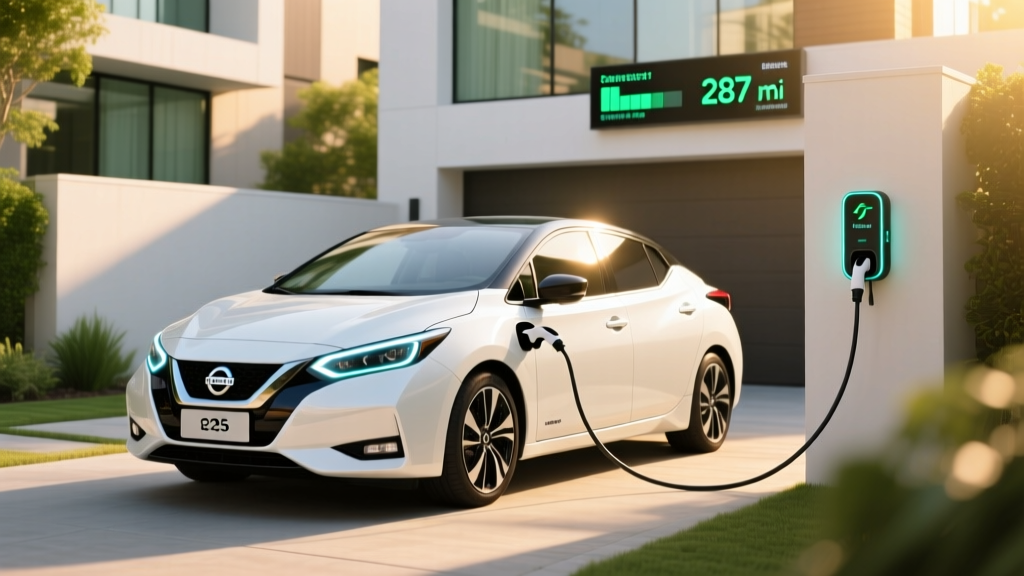
The 2025 Nissan Leaf occupies a specific and increasingly narrow lane in the EV market: it's the most affordable new electric car you can lease in the United States, provided your daily driving stays under 150 miles and you can charge at home. With a starting MSRP of $28,140 for the S trim and a usable battery of either 40 kWh or 60 kWh depending on trim, the Leaf undercuts competitors like the Chevrolet Bolt EV (now discontinued), the Hyundai Kona Electric, and the Mini Cooper SE on sticker price alone.
But lease deals on the Leaf require careful scrutiny. Nissan's advertised lease offers frequently target the 40 kWh S trim with restrictive mileage allowances (typically 10,000 miles/year), and the Leaf's CHAdeMO DC fast-charging connector is being phased out across North America in favor of NACS and CCS. If you're evaluating 2025 Nissan Leaf lease deals, this review gives you every number you need — range, charging speeds, real costs after incentives, and the ownership trade-offs that brochures don't mention.
Range, Battery, and Real-World Efficiency
The 2025 Leaf comes in two battery configurations across its trim lineup. The S trim uses a 40 kWh lithium-ion battery (NMC chemistry), while the SV Plus steps up to a 60 kWh pack, also NMC. Nissan does not offer an LFP (lithium iron phosphate) option on the Leaf, which means you get higher energy density but should expect typical NMC degradation patterns over 8–10 years.
| Spec | Leaf S (40 kWh) | Leaf SV Plus (60 kWh) |
|---|---|---|
| Battery Capacity (Usable) | ~38 kWh usable | ~58 kWh usable |
| Chemistry | NMC | NMC |
| EPA Estimated Range | 149 miles | 212 miles |
| MPGe (Combined) | 111 MPGe | 104 MPGe |
| Efficiency (kWh/100 mi) | 30 kWh | 32 kWh |
| Drivetrain | FWD, Single Motor | FWD, Single Motor |
| Horsepower | 147 hp | 214 hp |
| 0–60 mph | ~7.9 sec | ~6.5 sec |
EPA estimates assume a mix of city and highway driving at moderate temperatures. In practice:
- City commuting (S trim): Expect 140–155 miles thanks to regenerative braking in stop-and-go traffic.
- Highway driving at 70 mph (SV Plus): Expect roughly 175–190 miles — the Leaf's aerodynamics and lack of a heat pump hurt efficiency at sustained speed.
- Cold weather (below 32°F): Plan for 25–35% range reduction. The SV Plus drops to approximately 140–160 miles in winter conditions. The Leaf uses resistive cabin heating rather than a heat pump, which is a significant efficiency penalty in cold climates.
Source: fueleconomy.gov
Charging Speeds: The Leaf's Biggest Limitation
If there's one area where the 2025 Leaf shows its age, it's charging. The Leaf uses the CHAdeMO DC fast-charging standard, which has been effectively abandoned by nearly every other automaker in North America in favor of CCS and the Tesla NACS connector. While CHAdeMO chargers still exist at many Electrify America and EVgo stations, new installations overwhelmingly favor CCS/NACS, and long-term availability of CHAdeMO infrastructure is uncertain.
| Charging Level | Leaf S (40 kWh) | Leaf SV Plus (60 kWh) |
|---|---|---|
| Level 1 (120V, 1.4 kW) | ~4 mi/hr | ~4 mi/hr |
| Level 2 (240V, 6.6 kW onboard) | ~22 mi/hr (~7 hr full) | ~22 mi/hr (~9.5 hr full) |
| DC Fast Charge (CHAdeMO) | Peak 50 kW | Peak 100 kW |
| DC Fast 10–80% Time | ~40 min | ~45 min |
| Connector | CHAdeMO + J1772 | CHAdeMO + J1772 |
The S trim's 50 kW peak DC charge rate is particularly slow by 2025 standards — most competitors in this price range accept 150 kW or more. The SV Plus's 100 kW peak is adequate but not competitive with the Hyundai Kona Electric (which peaks around 100 kW but sustains it better) or the Volkswagen ID.4 (up to 170 kW).
Additionally, the Leaf's passive battery thermal management system (air-cooled rather than liquid-cooled) means that repeated DC fast charging in hot weather can trigger "Rapidgate" — Nissan's battery protection mode that severely throttles charge speeds to prevent overheating. If you plan to road-trip the Leaf through desert states in summer, expect charge sessions to stretch well beyond the spec-sheet numbers.
Pricing, Lease Deals, and Tax Credit Eligibility
The 2025 Leaf's MSRP positions it as the least expensive new EV sold in the U.S. But the actual cost depends heavily on whether you buy or lease, your income, and whether the vehicle meets current federal sourcing requirements.
| Trim | Base MSRP | Destination | Est. As-Tested | Federal §30D Credit (Purchase) |
|---|---|---|---|---|
| S (40 kWh) | $28,140 | $1,095 | $29,235 | Up to $3,750* |
| SV Plus (60 kWh) | $36,190 | $1,095 | $38,500+ | Up to $3,750* |
*Federal tax credit amounts depend on battery component and critical mineral sourcing requirements under IRS §30D. As of 2025, the Leaf qualifies for a partial credit ($3,750) because it meets one of two sourcing thresholds but not both. Credit eligibility is subject to change as sourcing rules tighten. Verify current eligibility at irs.gov before purchasing.
- MSRP cap: The Leaf (all trims) is under the $55,000 sedan cap. ✓
- Buyer income cap: AGI must not exceed $150,000 (single) / $300,000 (joint). Verify your MAGI.
- North American assembly: The Leaf is assembled in Smyrna, Tennessee. ✓
- Battery sourcing: Partial compliance — qualifies for $3,750, not the full $7,500.
- Point-of-sale transfer: Available — you can transfer the credit to the dealer for an upfront price reduction.
Lease Deal Considerations
Leasing the Leaf introduces a different calculus. Under IRS rules, the §30D tax credit technically applies to the lessor (the finance company), not to you. However, many manufacturers pass this savings through as a "lease cash" incentive that reduces your capitalized cost. Nissan has historically offered lease cash on the Leaf, but amounts vary by region and month.
A typical 2025 Leaf S lease might look like this: $2,500 due at signing, 36-month term, 10,000 miles/year, approximately $199–$259/month depending on region and dealer. The SV Plus leases for roughly $299–$369/month under similar terms.
The lease trap to watch: Low-mileage leases (10K/year) look cheap but can cost you dearly at lease-end if you exceed the limit — typically $0.15–$0.25 per excess mile. If you commute more than 25 miles each way, negotiate a 12K or 15K mileage lease even though the monthly payment rises.
Interior, Cargo, and Daily Livability
The 2025 Leaf's cabin is functional but shows its 2018-origin design. You get a 12.3-inch touchscreen on SV Plus trims (8.0-inch on S), wireless Apple CarPlay and Android Auto (on upper trims), and Nissan's ProPilot Assist adaptive cruise and lane-centering system.
| Dimension | Measurement |
|---|---|
| Front Legroom | 42.1 in |
| Rear Legroom | 33.5 in |
| Cargo Volume (behind rear seats) | 23.6 cu ft |
| Cargo Volume (seats folded) | 30.0 cu ft |
| Seating Capacity | 5 passengers |
| Ground Clearance | 5.9 in |
The 23.6 cu ft trunk is competitive with the Hyundai Kona Electric (25.5 cu ft) and significantly larger than the Mini Cooper SE (8.7 cu ft). The rear seat is adequate for adults on short trips but tight for taller passengers on longer drives. There is no front trunk (frunk).
Safety, Tech, and Driver Assistance
The 2025 Leaf earned a 5-star overall safety rating from NHTSA and includes standard Nissan Safety Shield 360: automatic emergency braking, blind-spot warning, rear cross-traffic alert, lane departure warning, and rear automatic braking.
ProPilot Assist (standard on SV Plus, available on S) provides SAE Level 2 adaptive cruise control with lane centering. This is a hands-on, eyes-on driver-assistance system — it is not self-driving. You must keep your hands on the wheel and remain fully engaged. The system works well on divided highways but can struggle with faded lane markings and construction zones.
Nissan ProPilot Assist is an SAE Level 2 system. The driver must continuously supervise the vehicle and be prepared to take over instantly. This is fundamentally different from Level 4 driverless services like Waymo, which operate without a human driver.
Warranty and Long-Term Battery Outlook
| Coverage | Term |
|---|---|
| Basic Vehicle Warranty | 3 years / 36,000 miles |
| Powertrain Warranty | 5 years / 60,000 miles |
| Lithium-Ion Battery Warranty | 8 years / 100,000 miles |
| Battery Capacity Guarantee | Retains ≥ 66% (9 bars of 12) during warranty period |
Nissan's battery warranty guarantees that the pack will retain at least 66% of its original capacity (displayed as 9 out of 12 capacity bars on the dash) for 8 years or 100,000 miles. This is a lower threshold than the industry-standard 70% retention used by most competitors. In practice, Leaf batteries — particularly in hot climates — have shown measurable degradation in the 3–5 year window, though Nissan has improved thermal management in recent model years.
For leaseholders, battery degradation is largely a non-issue: you'll return the car before significant capacity loss occurs. This is one of the strongest arguments for leasing rather than buying the Leaf.
Pros, Cons, and Who Should Lease the Leaf
- Lowest MSRP of any new EV in the U.S. ($28,140)
- Attractive lease payments in many markets ($199–$259/mo)
- Comfortable ride quality and quiet cabin at city speeds
- Standard DC fast charging included (no extra-cost package)
- 23.6 cu ft cargo volume — practical hatchback utility
- Assembled in Tennessee — qualifies for §30D partial credit
- CHAdeMO connector is being phased out — long-term charging access uncertain
- 50 kW peak DC charge rate on S trim is painfully slow by 2025 standards
- No active battery thermal management — Rapidgate risk on road trips
- No heat pump — significant winter range loss (25–35%)
- 66% battery warranty threshold is below the 70% industry norm
- Dated interior design and infotainment compared to newer competitors
- FWD only — no AWD option for snow-belt buyers
Who the Leaf Suits Best
Lease the Leaf S if: You commute under 60 miles round-trip, charge at home every night, live in a mild climate, and want the lowest possible monthly EV payment. It's an excellent second car or urban commuter.
Lease the SV Plus if: Your commute stretches to 80–100 miles, you occasionally drive 150+ miles between charges, and you value the extra horsepower and ProPilot Assist standard equipment.
Look elsewhere if: You need DC fast charging for regular road trips, live in a very hot or very cold climate, need AWD, or want a vehicle you'll keep past the lease term with confidence in long-term battery health.
Frequently Asked Questions
What is the real-world range of the 2025 Nissan Leaf?
The Leaf S delivers roughly 140–155 miles in mixed city/highway driving in moderate weather. The SV Plus delivers roughly 185–200 miles in similar conditions. In cold weather (below freezing), expect a 25–35% reduction — bringing the S to around 100–115 miles and the SV Plus to roughly 140–160 miles. Highway driving at 70+ mph also reduces range by 10–15% versus the EPA combined estimate.
How fast does the 2025 Leaf charge at home and on the road?
At home on a 240V Level 2 charger (6.6 kW onboard), both trims add approximately 22 miles of range per hour — a full charge takes about 7 hours (S) or 9.5 hours (SV Plus). On DC fast chargers, the S peaks at just 50 kW (10–80% in roughly 40 minutes) and the SV Plus peaks at 100 kW (10–80% in roughly 45 minutes). Both use the CHAdeMO connector, not CCS or NACS.
Does the 2025 Nissan Leaf qualify for the federal EV tax credit?
Yes, but only partially. Under current IRS §30D rules, the Leaf qualifies for $3,750 of the maximum $7,500 credit because it meets one of the two battery-sourcing requirements (critical minerals or battery components) but not both. The vehicle meets the MSRP cap (under $55,000 for sedans) and North American assembly requirement. Buyer income caps apply: $150,000 single / $300,000 joint filers. Eligibility can change — confirm before purchasing.
How much does a 2025 Leaf lease cost per month?
Typical 2025 Leaf S leases run $199–$259/month for 36 months with $2,500 due at signing and 10,000 miles/year. The SV Plus typically leases for $299–$369/month under similar terms. Actual offers vary by region, dealer, and current Nissan incentive programs. Always negotiate the capitalized cost and check whether lease cash (the lessor's tax credit pass-through) is applied.
Is the 2025 Leaf worth leasing vs. the Hyundai Kona Electric or Mini Cooper SE?
If your priority is the lowest monthly payment and you charge at home, the Leaf S wins on pure cost. The Kona Electric offers faster charging (CCS, ~100 kW peak), a more modern interior, and a heat pump, but leases for roughly $50–$80/month more. The Mini Cooper SE is sportier and more fun to drive but has only 114 miles of EPA range and a much smaller cargo area. The Leaf is the value play — if its limitations don't conflict with your driving patterns.
Should I be worried about the CHAdeMO connector?
For a 36-month lease, CHAdeMO access is adequate — thousands of CHAdeMO chargers remain operational at Electrify America, EVgo, and other networks. However, new installations are overwhelmingly CCS/NACS, and CHAdeMO availability will decline over the next 5–10 years. If you plan to buy and keep the Leaf long-term, this is a legitimate concern. For a lease that ends in 2028, it's manageable.