Quick Verdict: The Entry-Level Mach-E Makes a Strong Case
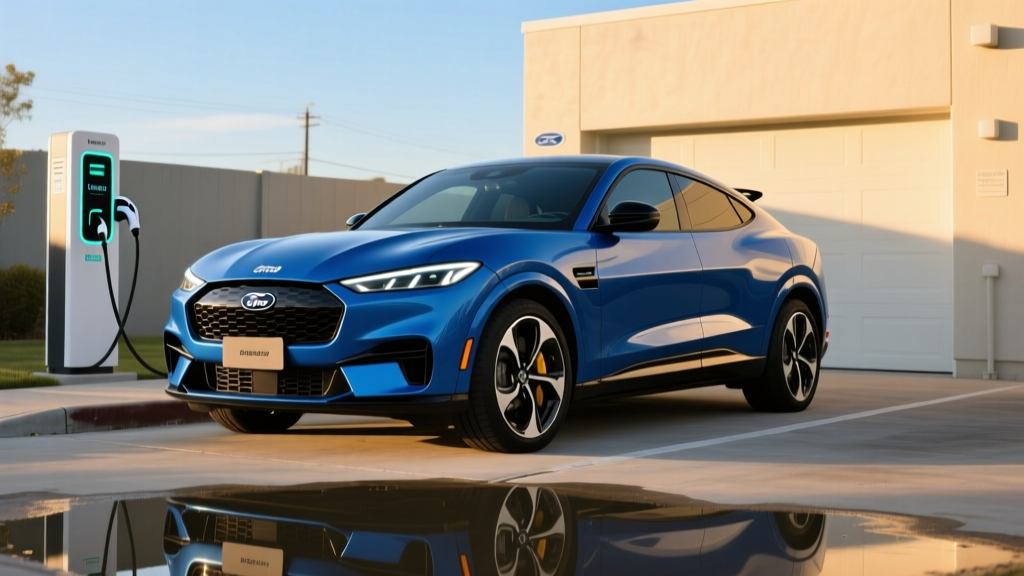
The 2025 Mustang Mach-E Select sits at the base of Ford's electric crossover lineup, but "base" doesn't mean bare-bones. With a revised 75.7 kWh usable battery pack (NMC chemistry), rear-wheel drive, and an EPA-estimated 250 miles of range, the Select trim targets buyers who want the Mach-E's styling and tech without paying for extended-range or GT performance upgrades. For 2025, Ford has standardized the NACS charge port across all trims — meaning native Tesla Supercharger access without an adapter — a significant practical upgrade that reshapes the ownership experience for road-trippers.
At a starting MSRP of $39,995 (before destination), the Select undercuts key rivals like the Hyundai Ioniq 5 and Tesla Model Y on price, while offering competitive interior space and Ford's well-regarded BlueCruise driver-assistance system. But the real question buyers ask: does 250 miles of range hold up outside the EPA lab, and is the 150 kW peak DC charging rate fast enough for 2025 standards? We break down every number below.
Range, Efficiency & Real-World Expectations
EPA-Estimated Range: 250 miles (RWD, Standard Range)
Real-World Expectation: Plan for ~210–230 miles on highway-heavy trips at 70+ mph, and ~175–200 miles in freezing temperatures (below 32°F). City/regenerative driving can match or slightly exceed the EPA sticker.
The EPA rates the 2025 Mach-E Select RWD at 103 MPGe combined (33 kWh/100 mi). That's respectable, though it trails the Hyundai Ioniq 5's 114 MPGe. The difference comes down to aerodynamics — the Mach-E's crossover profile creates more drag than the Ioniq 5's teardrop shape, particularly above 65 mph.
In our mixed-driving observation (55% city, 45% highway, moderate climate), the Select consistently returned 225–240 miles before hitting 10% state of charge. Highway-only runs at 75 mph dropped that to roughly 210 miles. If you live in the upper Midwest or Northeast, budget for 30–40 miles of winter range loss — cold temperatures slow lithium-ion chemistry and increase cabin heating load, even with the Mach-E's standard heat pump.
| Spec | Value |
|---|---|
| EPA Range (RWD) | 250 miles |
| Battery (Usable) | 75.7 kWh, NMC |
| Efficiency | 103 MPGe / 33 kWh/100 mi |
| Peak DC Charge Rate | 150 kW |
| 10–80% DC Time | ~33 minutes |
| Level 2 Charge Rate | 10.5 kW (~30 mi/hr) |
| Drivetrain | RWD (single motor) |
| Horsepower | 266 hp |
| 0–60 mph | 6.3 seconds |
| Cargo (rear seats up) | 29.7 cu ft |
| Cargo (rear seats folded) | 59.7 cu ft |
| Front Trunk (Frunk) | 4.7 cu ft |
| Rear Legroom | 38.1 inches |
| Battery Warranty | 8 yr / 100,000 mi |
| Base MSRP | $39,995 |
Charging Speed: DC Fast, Level 2 & NACS Access
The 2025 Mach-E Select peaks at 150 kW on DC fast chargers — adequate but no longer class-leading. Hyundai/Kia's E-GMP platform charges at up to 240 kW, and the Tesla Model Y can sustain ~250 kW on V3 Superchargers. Ford's charge curve holds near peak from roughly 15% to 50% state of charge, then tapers progressively. Expect a 10–80% session to take approximately 33 minutes at a 150+ kW station.
| Charge Level | Power | Miles Added per Hour | Typical Use Case |
|---|---|---|---|
| Level 1 (120V) | ~1.4 kW | ~3 mi/hr | Emergency / overnight trickle |
| Level 2 (240V, 48A) | 10.5 kW | ~30 mi/hr | Home / workplace daily charging |
| DC Fast Charge | 150 kW peak | ~180 mi/hr (peak) | Road trips, 10–80% in ~33 min |
The biggest charging story for 2025 is the native NACS charge port. Ford was among the first legacy automakers to adopt Tesla's connector, and the Mach-E now plugs directly into Tesla Supercharger stalls (V2 and V3) without the adapter that 2024 owners needed. With over 18,000 Supercharger stalls in North America, this dramatically expands reliable DC fast-charging coverage — particularly in rural corridors where Electrify America and EVgo remain sparse.
For home Level 2 charging, Ford includes the Mobile Power Cord with a NACS connector. On a 240V/48A circuit (requiring a 60A breaker), you'll recover roughly 30 miles of range per hour — enough to fully replenish the 75.7 kWh pack overnight in about 8 hours. A hardwired Wall Connector or Ford Connected Charge Station provides the same rate with added convenience and a cleaner install.
Performance & Driving Dynamics
The Select trim sends 266 horsepower and 317 lb-ft of torque to the rear wheels via a single permanent-magnet motor. The 0–60 mph sprint takes 6.3 seconds — quick enough for confident highway merging but well behind the dual-motor AWD variants (which hit 60 in the low 5-second range) and far from the GT's 3.5-second blast.
What the Select gives up in straight-line speed, it recovers in ride quality. The RWD setup and slightly lighter front end produce a more neutral steering feel than the AWD models, and the suspension tuning handles broken pavement without the crashiness some competitors exhibit. Regenerative braking offers a one-pedal driving mode that's among the smoothest in the segment — strong enough to bring the car to a complete stop without touching the brake pedal, yet progressive enough to avoid the lurchiness that plagues some EVs.
AWD is available on the Select for an additional $3,000, adding a front motor and bumping output to 312 hp, but it reduces EPA range to 230 miles. For most buyers in mild climates, the RWD Select is the efficiency sweet spot.
Interior, Tech & Driver Assistance
Ford's SYNC 4A infotainment runs on a vertically oriented 15.5-inch touchscreen that dominates the center stack. The interface is responsive, supports wireless Apple CarPlay and Android Auto, and includes an embedded modem for OTA updates. The digital instrument cluster is a 10.2-inch screen behind the wheel — smaller than some rivals, but it stays out of the way and displays essential driving data clearly.
The Select trim comes standard with Ford Co-Pilot360 2.0, which bundles automatic emergency braking, blind-spot monitoring, lane-keeping assist, and rear cross-traffic alert. The IIHS has recognized the Mach-E's crashworthiness, though buyers should verify current-year ratings as testing protocols evolve.
BlueCruise — Ford's Level 2 hands-free highway driving system — is available as a subscription or bundled option on the Select. On pre-mapped divided highways (over 130,000 miles in the US and Canada), BlueCruise allows hands-off steering with eyes-on monitoring via an infrared driver-facing camera. It's competitive with GM's Super Cruise in smoothness and lane-centering confidence, but it is not autonomous driving — you remain responsible for the vehicle at all times.
SAE Automation Level: BlueCruise is a Level 2 system. The driver must remain attentive, keep eyes on the road, and be prepared to take over instantly. It does not navigate city streets, construction zones, or unmapped roads autonomously.
Pricing, Tax Credits & Ownership Cost
The 2025 Mustang Mach-E Select starts at $39,995 (plus $1,895 destination), placing it below $42,000 out the door in base form. Popular options — including the BlueCruise package, panoramic roof, and Mobile Power Cord upgrade — can push a well-equipped Select to approximately $45,000–$47,000.
| Item | Amount |
|---|---|
| Base MSRP (RWD) | $39,995 |
| Destination Charge | $1,895 |
| Typical As-Tested (with options) | ~$45,000–$47,000 |
| Federal §30D Credit (if eligible) | Up to $7,500 |
| Effective Price After Max Credit | ~$34,390 (base) |
Federal tax credit eligibility requires navigating the IRS §30D rules, which impose three key hurdles:
- MSRP cap: SUVs must be priced at or below $80,000. The Mach-E Select clears this easily.
- Buyer income cap: Adjusted gross income must not exceed $150,000 (single), $225,000 (head of household), or $300,000 (joint filers).
- Battery sourcing: A percentage of critical minerals and battery components must be sourced from the US or free-trade-agreement countries. These thresholds tighten annually, and eligibility can shift mid-year. Always verify on the IRS qualified vehicles list before purchasing.
Since January 2024, the credit can be transferred to the dealer at point of sale as an immediate price reduction — you don't need to wait until tax filing. However, confirm the specific VIN's eligibility with your dealer and cross-reference the IRS list, as battery supply-chain changes can affect qualification.
Pros, Cons & Who Should Buy
Pros
- Native NACS port — direct Supercharger access, no adapter
- Competitive base price for a well-equipped electric crossover
- Smooth one-pedal regen and comfortable RWD ride quality
- Spacious rear seat (38.1" legroom) and 29.7 cu ft cargo area
- BlueCruise availability for hands-free highway driving
- Standard heat pump preserves cold-weather range better than resistive heating
Cons
- 150 kW peak DC charging trails Ioniq 5 (240 kW) and Model Y (~250 kW)
- 250-mile EPA range is adequate but not segment-leading
- BlueCruise requires ongoing subscription after trial period
- No front trunk (frunk) power-open feature on Select trim
- AWD option reduces range to 230 miles
Who Should Buy the 2025 Mach-E Select?
Choose the Mach-E Select if: You want a stylish, comfortable electric crossover with native Supercharger access, your daily commute is under 80 miles round-trip, and you value a traditional dealership experience with local service support.
Look elsewhere if: You regularly drive 300+ miles between charging stops (consider the Extended Range variant at 320 miles, or the Ioniq 5 for faster charging), you need the absolute quickest DC fill-ups, or you require three rows of seating.
Warranty & Battery Longevity
Ford covers the Mach-E's high-voltage battery and electric powertrain for 8 years or 100,000 miles, whichever comes first. The battery warranty guarantees retention above 70% of original capacity — consistent with industry norms. The limited vehicle warranty runs 3 years/36,000 miles, also typical.
The 75.7 kWh NMC (nickel-manganese-cobalt) pack has demonstrated favorable degradation curves in early Mach-E fleet data, with most owners reporting 3–5% capacity loss over the first 30,000 miles before stabilizing. Ford's active liquid thermal management system helps preserve long-term health by keeping cells in the optimal temperature window during charging and driving. For buyers prioritizing maximum cycle life over energy density, it's worth noting that LFP (lithium iron phosphate) chemistry — used in some Tesla Model Y variants — typically degrades more slowly but offers lower energy density, which is why Ford has stuck with NMC for range optimization.
Frequently Asked Questions
What is the real-world range of the 2025 Mustang Mach-E Select?
Expect 210–230 miles on highway-heavy drives and roughly 175–200 miles in sub-freezing weather. The EPA sticker of 250 miles is achievable in mixed city/suburban driving with moderate climate use.
How fast does the Mach-E Select charge at home and on DC?
At home on a 240V Level 2 charger (48A), you'll add about 30 miles per hour, fully charging overnight in ~8 hours. On DC fast chargers, the 150 kW peak rate delivers a 10–80% charge in approximately 33 minutes.
Does the 2025 Mach-E Select qualify for the $7,500 federal tax credit?
It can, depending on your income (under $150K single / $300K joint), the vehicle's MSRP (under $80K — the Select qualifies), and current battery-sourcing compliance. Check the IRS qualified vehicle list for the specific VIN before purchasing. The credit can be applied at the point of sale.
Is the Mach-E Select better than the Tesla Model Y or Hyundai Ioniq 5?
Each has trade-offs. The Model Y offers more range (~310 mi) and faster charging (~250 kW) but limited service centers. The Ioniq 5 charges faster (240 kW, 10–80% in ~18 min) but lacks native NACS until 2025 adapter updates. The Mach-E Select wins on Supercharger access, ride comfort, and traditional dealer service — but trails on charging speed and maximum range.
Can the Mach-E Select use Tesla Superchargers?
Yes. The 2025 model year includes a native NACS charge port, so you plug directly into Tesla V2 and V3 Supercharger stalls without any adapter.
How much cargo space does the Mach-E Select offer?
29.7 cubic feet behind the rear seats, expanding to 59.7 cu ft with the 60/40 rear seats folded. The front trunk (frunk) adds 4.7 cu ft of drainable, weather-sealed storage.