Quick Verdict: Is the 2025 Mustang EV Worth Buying?
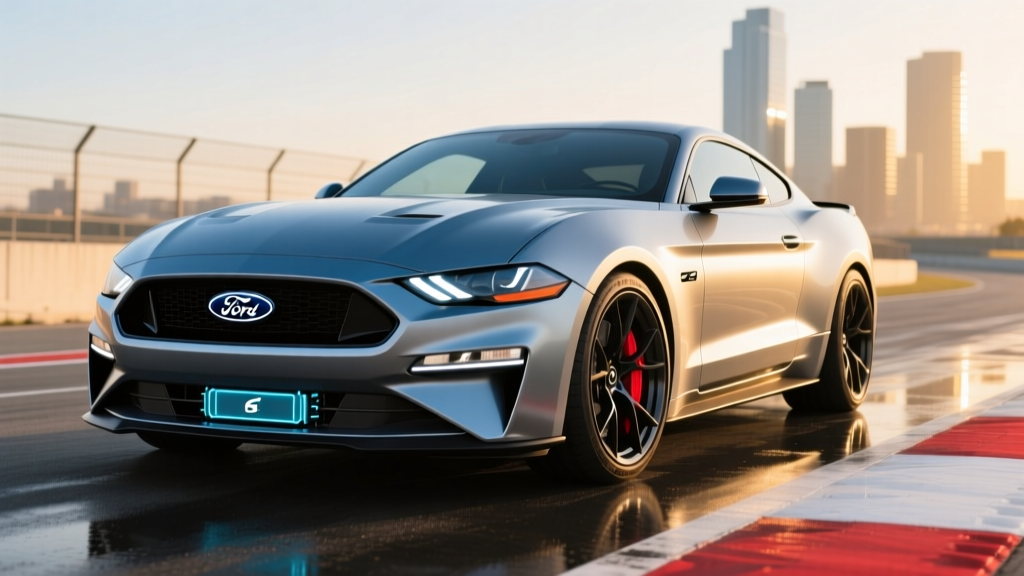
There is no 2025 Mustang EV. Ford has not announced, previewed, or trademarked a battery-electric Mustang coupe or convertible for the 2025 model year — or any model year currently on sale. The only electrified vehicle wearing a Mustang-adjacent badge is the Ford Mustang Mach-E, a battery-electric crossover SUV that continues into the 2025 model year with an EPA-estimated range of up to 320 miles (Extended Range RWD), DC fast charging at up to 150 kW, and a starting MSRP around $39,995 before incentives.
If you've been searching for a "2025 Mustang EV," you're likely looking for one of three things: the current Mach-E, rumors of a future electric Mustang coupe (which remain unconfirmed by Ford as of early 2026), or the gas-powered 2025 Mustang EcoBoost/GT. This guide addresses what actually exists, what's rumored, and how the Mach-E stacks up as an EV purchase for someone drawn to the Mustang name.
What the 2025 Mustang Mach-E Actually Offers
The Mach-E is Ford's all-electric crossover built on the company's dedicated EV platform. While it carries the Mustang badge, it's a four-door, five-seat SUV — not a two-door coupe. For 2025, Ford streamlined the lineup after discontinuing the high-performance Mach-E GT trim in late 2024.
| Spec | Standard Range (RWD) | Extended Range (RWD) | Extended Range (AWD) |
|---|---|---|---|
| EPA Range | 250 mi | 320 mi | 290 mi |
| Battery (usable) | ~70 kWh (LFP) | ~91 kWh (NMC) | ~91 kWh (NMC) |
| Horsepower | 266 hp | 290 hp | 346 hp |
| 0–60 mph | ~6.3 sec | ~5.8 sec | ~4.8 sec |
| Peak DC Fast Charge | 115 kW | 150 kW | 150 kW |
| 10–80% DC Charge | ~38 min | ~31 min | ~31 min |
| Level 2 Charge Rate | 10.5 kW | 10.5 kW | 10.5 kW |
| MPGe (combined) | 101 MPGe | 104 MPGe | 99 MPGe |
| Base MSRP | $39,995 | $46,995 | $49,995 |
| Battery Warranty | 8 years / 100,000 miles (≥70% capacity retention) | ||
Data sourced from fueleconomy.gov and Ford's official specifications. The Standard Range model uses a lithium iron phosphate (LFP) battery, which trades energy density for longer cycle life and less degradation anxiety. The Extended Range trims use nickel-manganese-cobalt (NMC) chemistry for higher range.
Real-World Range vs. EPA Sticker
EPA says: 320 miles (Extended Range RWD)
Expect in reality: ~260–285 miles on highway-heavy trips at 70–75 mph; as low as ~220–240 miles in freezing temperatures with cabin heat running. LFP Standard Range models hold up slightly better in cold weather as a percentage, but the smaller battery means fewer total miles regardless.
EV vs. Gas Mustang: Cost and Performance Compared
Buyers cross-shopping the Mach-E against the gas-powered 2025 Mustang EcoBoost are comparing very different vehicles — a crossover EV versus a two-door sports coupe. Still, the cost math matters.
| Category | Mach-E ER RWD | Mustang EcoBoost Coupe |
|---|---|---|
| Base MSRP | $46,995 | $32,515 |
| Fuel/Energy Cost per Mile | ~$0.044 (at $0.13/kWh) | ~$0.14 (at $3.50/gal, 25 mpg combined) |
| Annual Fuel/Energy (12,000 mi) | ~$528 | ~$1,680 |
| Annual Maintenance Estimate | ~$400 | ~$650 |
| 0–60 mph | 5.8 sec | 5.1 sec |
| EPA Range / MPG | 320 mi / 104 MPGe | ~25 mpg combined |
| Federal Tax Credit (§30D) | Up to $7,500 (eligibility varies) | $0 |
| Cargo Space | 29.7 cu ft (rear seats up) | 13.5 cu ft (trunk) |
The Mach-E costs roughly $14,000 more up front, but the fuel and maintenance savings run about $1,400/year. Even with the full $7,500 federal credit, payback takes roughly 4–5 years of average driving. The gas Mustang is faster to 60 and cheaper to buy; the Mach-E is cheaper to run and far more practical.
Federal Tax Credit: What You Actually Qualify For
The 2025 Mustang Mach-E is assembled in Cuautitlán, Mexico, which has historically complicated its §30D federal tax credit eligibility due to the North American final assembly requirement. However, Ford moved some Mach-E production and the credit status has shifted across model years. Here's the current-year framework:
§30D Federal EV Tax Credit Requirements (2025–2026 Rules)
- Final assembly in North America: Vehicle must pass VIN check on fueleconomy.gov
- MSRP caps: ≤$80,000 for SUVs/pickups/vans; ≤$55,000 for sedans (Mach-E qualifies as SUV)
- Buyer income caps: AGI ≤$300,000 (joint), ≤$225,000 (head of household), ≤$150,000 (single)
- Battery sourcing: Critical minerals and battery components must meet escalating domestic-content thresholds (phased in annually through 2029)
- Point-of-sale transfer: Eligible buyers can transfer the credit to the dealer for an upfront price reduction
- Filed as nonrefundable credit: You cannot get more back than your federal tax liability (unless transferred at POS)
Always verify current eligibility at irs.gov and check your VIN at fueleconomy.gov before committing. Tax rules change — consult a tax professional for your situation.
Real Ownership Costs: 5-Year Breakdown
| Category | Cost Estimate | Notes |
|---|---|---|
| Purchase Price (MSRP) | $46,995 | Before incentives, destination, or dealer adjustments |
| Federal Tax Credit | −$0 to −$7,500 | Depends on sourcing rules and buyer eligibility at purchase |
| Home Level 2 Charger Install | $800–$2,500 | 240V/48A circuit; panel upgrade may add $1,500–$3,000 |
| Electricity (60,000 mi) | ~$2,640 | At $0.13/kWh, ~3.4 mi/kWh; varies by utility rate |
| Maintenance (5 years) | ~$2,000 | Tire rotations, cabin filter, brake fluid, wipers; no oil changes |
| Insurance (5 years) | ~$9,000–$12,000 | EV premiums typically 15–25% higher than gas equivalents |
| Estimated Depreciation | ~$18,000–$22,000 | EV resale values remain volatile; Mach-E has held moderately |
| Total (with max credit) | ~$55,000–$64,000 | Highly dependent on credit eligibility and local electricity rates |
Insurance is the line item that catches most first-time EV buyers off guard. The Mach-E's collision repair costs and battery replacement exposure push premiums above comparable gas crossovers. Get quotes before buying — the difference between insurers can be $600–$1,200/year.
Charging Reality: Home vs. Public
The Mach-E uses the CCS1 connector for DC fast charging and J1772 for Level 2 AC. (Ford has announced future models will adopt the NACS/Tesla connector, but the 2025 Mach-E retains CCS.) Ford provides a complimentary adapter for Tesla Supercharger access on select networks — verify current compatibility on Ford's owner portal before relying on it.
| Level | Power | Miles Added per Hour | Where |
|---|---|---|---|
| Level 1 (120V) | ~1.4 kW | ~3–4 mi/hr | Standard household outlet |
| Level 2 (240V, 48A) | 10.5 kW | ~30–35 mi/hr | Home wallbox, workplace, public AC |
| DC Fast (CCS) | Up to 150 kW (peak) | ~150+ mi in 20 min | Electrify America, EVgo, public DC |
Charging curve reality: The 150 kW peak rate on Extended Range models is not sustained. Expect peak speeds between 10–40% state of charge, tapering to ~80 kW by 60% SoC and ~40 kW above 80%. A 10–80% session takes roughly 31 minutes at a capable 150+ kW station. Charging from 80–100% can add another 25–30 minutes — plan road-trip stops around 10–80% for efficiency.
If you don't have access to home Level 2 charging, the Mach-E becomes significantly less convenient. Public DC charging at $0.35–$0.50/kWh pushes per-mile costs to $0.10–$0.15 — nearly matching the gas Mustang's fuel cost. Home charging is where the economic case for any EV lives or dies.
Will Ford Build a Real Electric Mustang Coupe?
Ford executives have hinted at future electric performance vehicles wearing the Mustang name, and trademark filings have fueled speculation about a two-door electric pony car. However, as of early 2026:
- No official announcement, concept, or production timeline exists for a Mustang coupe EV.
- Ford's "Model e" division is focused on next-gen EV platforms, but confirmed products include a three-row SUV and a midsize pickup — not a Mustang coupe.
- The gas-powered Mustang (S650 generation, launched for 2024) continues through at least the late 2020s with EcoBoost and V8 GT variants.
If an electric Mustang coupe arrives, expect it no earlier than the 2027–2028 model year. Any specs you see online are speculative. We'll update this guide when Ford confirms details.
Common Misconceptions — Fact-Checked
| Myth | Fact |
|---|---|
| "The 2025 Mustang EV is a two-door electric coupe" | No such vehicle exists. The Mach-E is a four-door crossover SUV. |
| "The Mach-E gets the full $7,500 tax credit" | Eligibility depends on battery sourcing rules that tighten annually. Verify at fueleconomy.gov for your purchase date. |
| "EVs cost nothing to maintain" | Tires wear 15–20% faster on EVs due to weight and instant torque. Cabin filters, brake fluid, wipers, and suspension components still require service. |
| "The battery will need replacing in 5 years" | Ford warrants the battery for 8 years/100,000 miles with ≥70% capacity retention. Most EV batteries degrade 10–15% over 100,000 miles based on current fleet data. |
| "I can charge on any Tesla Supercharger" | Only via a Ford-approved NACS adapter at participating Superchargers. Verify network access before depending on it. |
Decision Framework: Should You Buy the Mach-E?
Buy the 2025 Mustang Mach-E If:
- You want a practical, spacious EV with 250–320 miles of range and don't need a coupe
- You have home Level 2 charging (or can install it)
- You qualify for at least a partial §30D tax credit, improving the value equation
- You prioritize low running costs and daily-drivable comfort over sports-car dynamics
- You're comfortable with CCS charging and Ford's BlueCruise Level 2 driver assist (hands-free on compatible highways, driver must remain attentive)
Look Elsewhere If:
- You specifically want a two-door electric performance coupe — no current option exists from Ford
- You rely exclusively on apartment/curbside parking with no charging access
- You tow regularly — the Mach-E is not rated for towing
- You want the fastest-accelerating EV in this price range — the Tesla Model Y Performance and Hyundai Ioniq 5 N are quicker
- You want NACS native charging without adapters — consider Tesla, Rivian, or 2026+ models from other brands adopting the standard
Frequently Asked Questions
Is there a 2025 Mustang EV coupe?
No. Ford does not currently produce or sell an electric Mustang coupe. The only electrified Mustang-branded vehicle is the Mustang Mach-E crossover SUV.
How much does the 2025 Mustang Mach-E cost?
The 2025 Mach-E starts at $39,995 for Standard Range RWD and reaches $49,995 for Extended Range AWD, before any incentives or destination charges.
Does the Mach-E qualify for the $7,500 federal tax credit?
Eligibility under IRS §30D depends on battery critical-mineral sourcing, final assembly location, buyer income, and MSRP caps — all of which can shift year to year. Check your specific purchase at fueleconomy.gov and irs.gov.
How long does it take to charge the Mach-E at home?
On a Level 2 home charger (10.5 kW), a full charge from 0–100% takes approximately 7–9 hours depending on battery size. Most owners charge overnight and wake up to a full battery.
What's the real-world highway range?
Expect roughly 260–285 miles from the Extended Range RWD at sustained highway speeds in moderate weather. In freezing conditions, plan for 220–240 miles. The Standard Range LFP model delivers roughly 200–220 miles highway in moderate weather.
Is the Mach-E self-driving?
No. Ford's BlueCruise is an SAE Level 2 driver-assistance system. It offers hands-free driving on pre-mapped divided highways, but the driver must remain alert and ready to take over at all times. A driver-monitoring camera enforces attention.