Quick Verdict: The Benchmark Sports SUV Still Sets the Pace
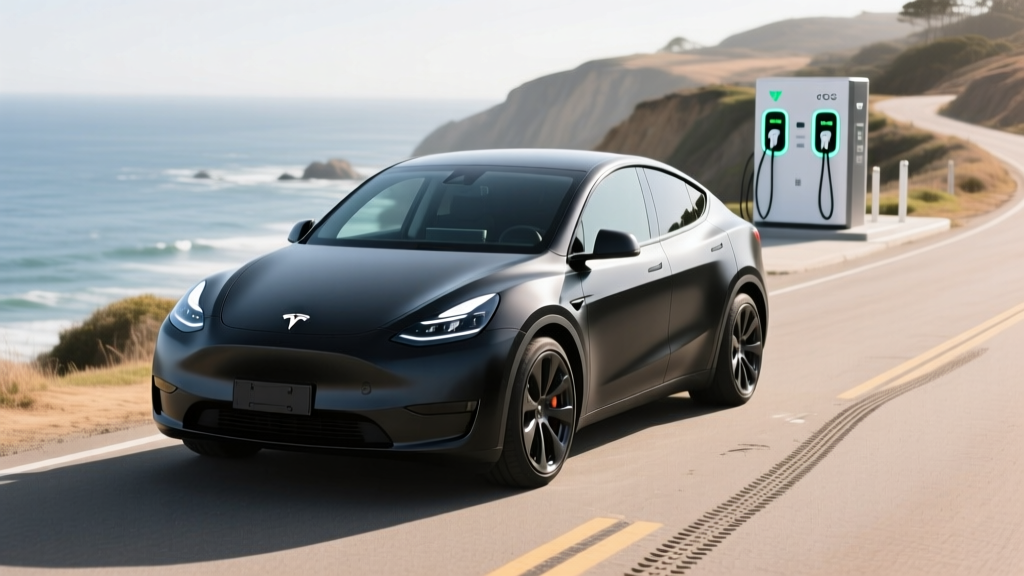
The 2025 Tesla Model Y Performance remains the default answer for buyers who want sports-sedan acceleration in a practical electric crossover. With a 3.5-second 0-60 mph time, 303 miles of EPA-estimated range, and access to the most reliable DC fast-charging network in North America, it continues to define the segment it created. The Juniper refresh brought meaningful interior and ride-quality improvements that address the most common complaints from prior model years. But at $52,490 before incentives, buyers need to weigh whether the Performance badge justifies its premium over the Long Range AWD variant — and whether competitors like the Hyundai Ioniq 5 N or BMW iX3 M Sport offer a more compelling package in 2025.
| Spec | Value |
|---|---|
| EPA Range | 303 miles |
| Battery (usable) | ~75 kWh, NMC (nickel manganese cobalt) |
| Drivetrain | Dual-motor AWD |
| Horsepower | 456 hp (combined) |
| 0-60 mph | 3.5 seconds |
| Top Speed | 155 mph |
| Max DC Fast Charge | 250 kW (peak) |
| 10-80% DC Charge Time | ~27 minutes |
| Level 2 Home Charge Rate | 11.5 kW (~44 mi/hr) |
| Efficiency | 111 MPGe combined / 30 kWh/100 mi |
| Cargo (rear seats up / folded) | 30.2 / 72.1 cu ft |
| Base MSRP | $52,490 |
| Battery Warranty | 8 years / 120,000 miles |
Range & Efficiency: What the EPA Number Doesn't Tell You
Tesla rates the 2025 Model Y Performance at 303 miles of EPA-estimated range. That figure comes from the EPA's standardized multi-cycle test and is useful for cross-shopping, but real-world results depend heavily on how and where you drive.
Real-World Range Expectations:
- City / moderate driving (65°F): ~290-310 miles — regen braking in stop-and-go traffic helps recover energy
- Highway (75 mph, 70°F): ~250-270 miles — aerodynamic drag dominates at sustained speed
- Cold weather highway (30°F, heater on): ~200-230 miles — battery resistance and cabin heating reduce range 20-30%
- Cold weather city (30°F): ~240-260 miles — heat pump helps, but cold battery still limits regen
Owner insight: On a 280-mile road trip from Denver to Grand Junction at 75-80 mph in summer, expect to arrive with roughly 15-20% SoC remaining. In January, that same trip requires a brief Supercharger stop in Glenwood Springs.
The Juniper update improved aerodynamic efficiency slightly, and the Model Y Performance's 30 kWh/100 mi combined consumption remains competitive for a 4,500-lb dual-motor crossover. The standard heat pump — which moves ambient heat rather than generating it resistively — is a critical cold-weather advantage that not all competitors include. It reduces the range penalty of winter cabin heating by roughly 30-40% compared to a resistive PTC heater.
One factor buyers should note: the Model Y Performance uses an NMC (nickel manganese cobalt) battery chemistry rather than the LFP (lithium iron phosphate) found in the base RWD Model Y. NMC offers higher energy density (more range in the same physical pack size) but Tesla recommends daily charging to 80% for longevity, reserving 100% for road trips. LFP packs can be charged to 100% daily without accelerated degradation — a trade-off worth understanding if your commute requires the full battery.
Charging Speed: Supercharger Access Is the Real Advantage
Charging speed is where the Model Y Performance separates itself from most competitors, and it's not just about peak kilowatt numbers — it's about network reliability and sustained charge curves.
| Charge Level | Power (kW) | Speed (miles added/hr) | Typical Use Case |
|---|---|---|---|
| Level 1 (120V household) | ~1.4 kW | ~5 mi/hr | Emergency / overnight trickle |
| Level 2 (240V, 48A home) | 11.5 kW | ~44 mi/hr | Daily home charging (8-10 hr for full) |
| Level 2 (public, 40A) | 9.6 kW | ~37 mi/hr | Destination / workplace charging |
| DC Fast (V3 Supercharger) | 250 kW peak | ~1,000+ mi/hr (peak) | Road trips, 10-80% in ~27 min |
| DC Fast (V4 Supercharger) | 250 kW peak | ~1,000+ mi/hr (peak) | Next-gen stalls, CCS adapter not needed |
| DC Fast (non-Tesla CCS) | Up to 250 kW | Varies | Requires Tesla CCS adapter (included) |
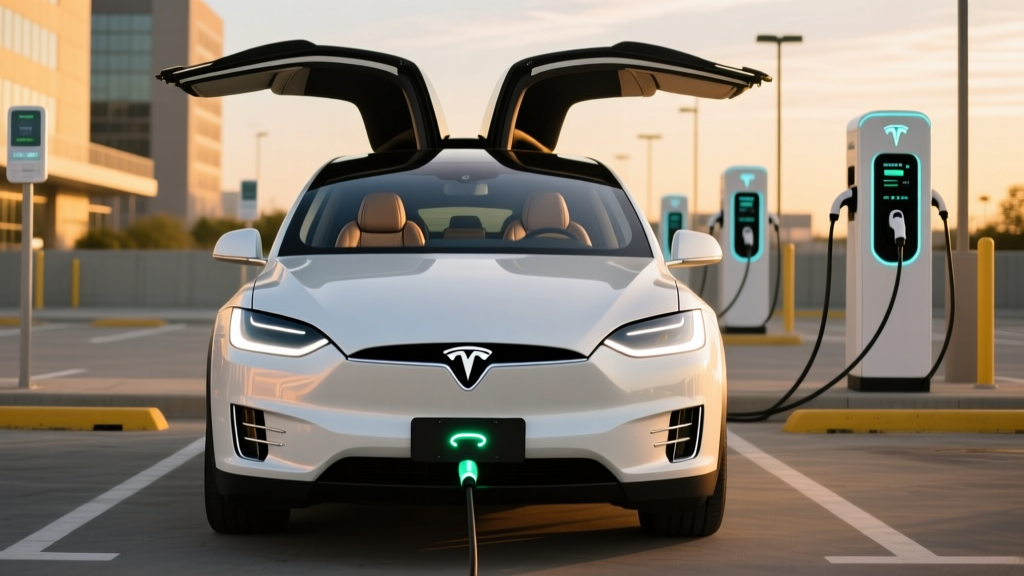
The Model Y Performance peaks at 250 kW on V3 and V4 Superchargers, but peak rate is only part of the story. The charge curve — how fast the battery charges across the entire session — matters more for actual road-trip time. Tesla's NMC pack sustains roughly 200+ kW from 10% to about 40% SoC, then gradually tapers. The 10-80% time of approximately 27 minutes is competitive, though the Hyundai Ioniq 5 (with its 800V architecture) can achieve 10-80% in around 18 minutes at a 350 kW charger.
Preconditioning matters: Navigate to a Supercharger using the car's built-in navigation, and the battery will preheat to optimal charging temperature before you arrive. Skip preconditioning — especially in cold weather — and your peak charge rate may drop to 100-150 kW, adding 10-15 minutes to your stop. Always route through the nav system for the fastest DC sessions.
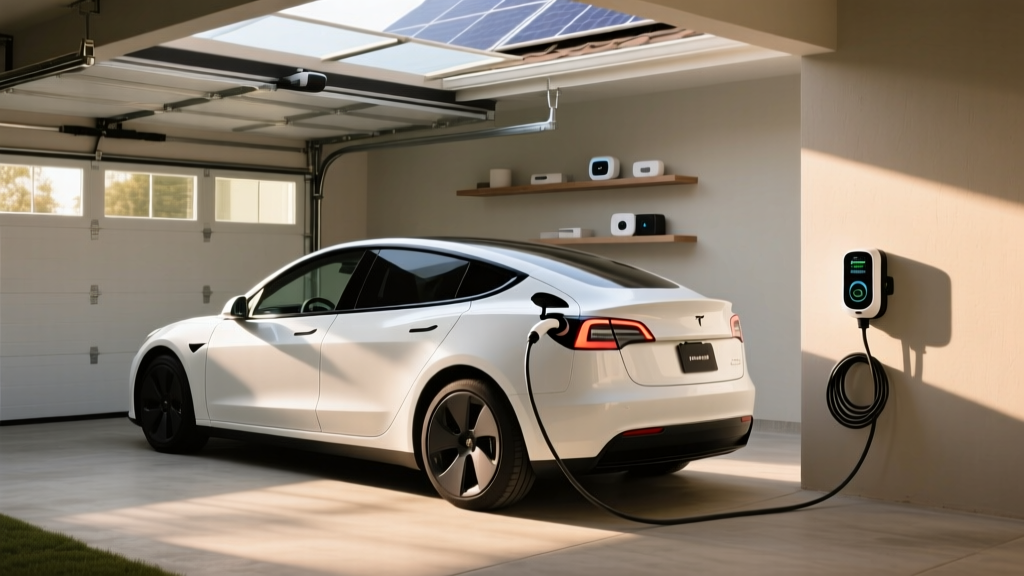
For home charging, a 48-amp Level 2 wall connector on a 60-amp circuit delivers 11.5 kW, replenishing roughly 44 miles of range per hour. A full overnight charge (10 hours) easily covers any daily driving. Budget $500-$800 for the Tesla Wall Connector and $800-$2,000 for professional installation by a licensed electrician, depending on your panel capacity and run distance. Homes with 100-amp service may require a $2,000-$4,000 panel upgrade — get a quote before purchasing.
Performance & Driving Dynamics
The Performance variant earns its name. Dual electric motors produce a combined 456 horsepower and deliver it instantaneously — no turbo lag, no transmission shift. The 3.5-second 0-60 mph time puts it in the territory of a Porsche Cayenne S or BMW X5 M50i, vehicles costing $30,000-$50,000 more. Top speed is electronically limited to 155 mph.
The Juniper refresh introduced several chassis and interior improvements that matter for daily driving:
- Adaptive damping: The Performance model now features frequency-selective dampers that firm up under hard cornering but absorb highway imperfections more compliantly than the prior generation's stiff setup.
- Acoustic glass: Laminated front and rear side glass reduces wind and road noise noticeably at highway speeds — a common complaint with the pre-2025 Model Y.
- Revised steering: The steering rack was retuned for more natural weighting, though it still leans toward the numb side compared to a Porsche Macan EV.
- 21-inch Überturbine wheels: Standard on Performance, these look aggressive but reduce range by roughly 10-15 miles compared to the 19-inch Gemini wheels available on Long Range. They also transmit more road harshness into the cabin.
The dual-motor AWD system provides excellent traction in rain and snow, with torque vectoring between axles. However, the Model Y Performance sits on low-profile summer tires from the factory — plan to invest in a dedicated winter tire set ($1,200-$1,800 mounted) if you drive in sustained sub-40°F conditions or on snow-covered roads.
Interior, Cargo & Technology
The Juniper interior is a meaningful step forward. Tesla eliminated the stalk-mounted turn signals (now on the steering wheel rim) and the gear selector (now a touchscreen swipe, with backup buttons on the overhead console). These changes are polarizing — some owners adapt within a week, others never stop finding them annoying.
Passenger space:
- Front headroom: 40.0 inches
- Rear headroom: 38.4 inches
- Front legroom: 41.8 inches
- Rear legroom: 38.0 inches
The rear seat comfortably fits two adults on longer trips, though the center position is best for children due to the floor hump created by the under-floor battery. The 30.2 cu ft of cargo space behind the second row is generous for the class, expanding to 72.1 cu ft with the 60/40 split rear seats folded. The front trunk (frunk) adds 4.1 cu ft for charging cables or a small bag.
Infotainment: The 15.4-inch center touchscreen runs Tesla's proprietary OS — responsive, intuitive, and feature-rich. Wireless Apple CarPlay and Android Auto are still not supported; Tesla's native navigation, media streaming (Spotify, Apple Music, Tidal), and gaming platform are the intended replacements. The 16-speaker premium audio system is a genuine highlight, rivaling systems from Bang & Olufsen and Burmester in clarity and bass response.
Driver assistance: Basic Autopilot (traffic-aware cruise control, lane centering) is standard. Full Self-Driving (Supervised) is an $8,000 option or $99/month subscription. FSD Supervised is a Level 2 system per SAE classification — it does not make the car self-driving. The driver must remain attentive, hands on or near the wheel, and ready to intervene at any moment. FSD performs well on highways and has improved significantly in urban environments, but it still struggles with construction zones, faded lane markings, and unprotected left turns. Treat it as an advanced cruise system, not a chauffeur.
Pricing, Trims & Federal Tax Credit Eligibility
| Trim | MSRP | Est. After §30D Credit | Key Difference |
|---|---|---|---|
| Long Range RWD | $44,990 | ~$37,490* | 320 mi range, single motor, LFP battery option |
| Long Range AWD | $47,990 | ~$40,490* | 311 mi range, dual motor, NMC battery |
| Performance AWD | $52,490 | ~$44,990* | 303 mi range, 3.5s 0-60, track mode, 21" wheels |
*Estimated price assumes full $7,500 §30D federal tax credit. Eligibility is not guaranteed — see requirements below.
The 2025 Model Y Performance starts at $52,490 including destination. Common options include:
- Full Self-Driving (Supervised): +$8,000 or $99/mo subscription
- Premium paint colors: $1,000-$2,500 (white, gray, blue, red; black is no-cost)
- Tow hitch: +$1,000 (3,500-lb towing capacity)
A well-equipped Performance with FSD and a premium color can reach $61,000-$63,000 before incentives.
Federal tax credit (§30D) eligibility for the 2025 Model Y:
Per current IRS guidelines, the $7,500 credit requires ALL of the following:
- MSRP cap: Vehicle base price must not exceed $80,000 for SUVs/pickups (Model Y qualifies at $52,490)
- Buyer income cap: Modified AGI must not exceed $150,000 (single) / $225,000 (head of household) / $300,000 (joint)
- Battery sourcing: A percentage of critical minerals and battery components must be sourced from the US or free-trade-agreement countries (thresholds increase annually — check IRS guidance for current-year percentages)
- Final assembly: Must occur in North America (Model Y assembled in Fremont, CA and Austin, TX — qualifies)
- Point-of-sale transfer: As of 2024, eligible buyers can transfer the credit to the dealer at purchase, reducing the purchase price directly rather than waiting for a tax refund
Critical: Battery sourcing requirements tighten each year. Consult a tax professional and verify current-year eligibility on fueleconomy.gov before relying on the credit in your purchase decision.
Ownership Costs & Warranty
Tesla covers the Model Y Performance with a 4-year/50,000-mile basic warranty and an 8-year/120,000-mile battery and drive unit warranty. The battery warranty guarantees the pack will retain at least 70% of its original capacity during the coverage period. If degradation exceeds 30% within 8 years or 120,000 miles, Tesla will repair or replace the battery at no cost.
Real-world degradation data from Tesla's fleet reports and third-party tracking (including Recurrent Auto) shows NMC packs in the Model Y typically lose about 8-12% of capacity over the first 100,000 miles, with degradation slowing significantly after the initial break-in period. Most owners report 90%+ State of Health (SoH) at 50,000 miles.
Five-year estimated ownership costs:
- Electricity (home charging, 15,000 mi/yr): ~$3,000-$4,000 (at $0.14/kWh national average)
- Maintenance: ~$1,000-$1,500 (cabin air filter, wiper fluid, tire rotations — no oil changes, no spark plugs)
- Tires: ~$1,500-$2,000 (EV-specific tires wear faster due to instant torque and heavier weight; expect 25,000-35,000 miles per set)
- Insurance: ~$9,000-$12,000 (Model Y insurance runs 15-25% higher than comparable ICE SUVs due to repair costs — get quotes before purchasing)
- Depreciation: ~$18,000-$22,000 over 5 years (EV depreciation has been volatile; Tesla price cuts in 2023-2024 hurt resale values)
Compared to a BMW X5 xDrive40i (similar performance, $68,000 MSRP), the Model Y Performance saves roughly $6,000-$8,000 in fuel over 5 years but may cost more in insurance and depreciation.
Pros, Cons & Who Should Buy
Pros
- 3.5s 0-60 mph rivals sports sedans at twice the price
- Tesla Supercharger network: 6,500+ stations, best reliability in North America
- 303 mi EPA range covers most commutes and road-trip segments comfortably
- Over-the-air updates continuously add features and improvements
- Class-leading cargo space (72.1 cu ft max) for a performance crossover
- Heat pump standard — better cold-weather range than many competitors
- Strong 16-speaker audio system included at no extra cost
Cons
- Stalkless turn signals and touchscreen gear selector frustrate some drivers
- No Apple CarPlay or Android Auto — Tesla's ecosystem is mandatory
- 21-inch Performance wheels reduce range and ride comfort vs smaller options
- Insurance premiums 15-25% above ICE equivalents
- FSD Supervised ($8,000) is not self-driving — still requires full driver attention
- Summer-only tires require a winter set in cold climates ($1,200-$1,800 added cost)
- Rear visibility limited by thick C-pillars and sloping roofline
Who the 2025 Model Y Performance is for:
- Daily commuters with home charging who want one car that handles school runs, grocery trips, and occasional 300-mile road trips without range stress
- Enthusiast drivers who want EV instant torque and sports-car acceleration but need rear seats and cargo space
- Tech-forward buyers comfortable with Tesla's minimalist interior and proprietary software ecosystem
- Cold-climate owners who benefit from the heat pump and AWD traction (with winter tires added)
Look elsewhere if: You want Apple CarPlay, prefer traditional controls, need three rows of seating, or want a Level 4 autonomous driving experience (which does not exist in any consumer vehicle as of 2025).
Competitor Comparison: Model Y Performance vs the Field
The Model Y Performance doesn't compete in a vacuum. Here's how it stacks up against key rivals in 2025:
| Spec | Tesla Model Y Perf. | Hyundai Ioniq 5 N | BMW iX xDrive50 | Porsche Macan 4 EV |
|---|---|---|---|---|
| MSRP | $52,490 | $67,500 | $87,250 | $80,700 |
| EPA Range | 303 mi | 221 mi | 307 mi | 300 mi |
| 0-60 mph | 3.5s | 3.25s | 4.4s | 4.9s |
| Max DC Charge | 250 kW | 350 kW | 195 kW | 270 kW |
| 10-80% Time | ~27 min | ~18 min | ~34 min | ~21 min |
| Cargo (cu ft) | 72.1 | 56.1 | 77.9 | 62.0 |
| Federal Credit | Up to $7,500 | Up to $7,500 | Not eligible (MSRP) | Not eligible (MSRP) |
The Ioniq 5 N is the enthusiast's pick — faster, sharper handling, 800V charging — but sacrifices 80 miles of range and $15,000 more. The BMW iX and Porsche Macan EV offer more luxurious interiors and traditional controls but start well above the Model Y's price and, in the BMW and Porsche cases, exceed the $80,000 MSRP cap for the federal tax credit. For pure value-to-performance ratio, the Model Y Performance still leads.
Frequently Asked Questions
What is the real-world highway range of the 2025 Model Y Performance?
Expect 250-270 miles at 75 mph in moderate temperatures. In cold weather (below freezing) with the heater running, highway range drops to roughly 200-230 miles. City driving with regenerative braking can approach or even slightly exceed the 303-mile EPA figure.
Does the 2025 Model Y Performance qualify for the $7,500 federal tax credit?
It can, but eligibility depends on your income (must be under $150K single / $300K joint), the vehicle's battery sourcing compliance for the current year, and final North American assembly (which the Model Y satisfies). Verify current-year sourcing rules on fueleconomy.gov and consult a tax professional. The credit can be transferred at point of sale to reduce your purchase price directly.
How long does it take to charge the Model Y Performance at home?
On a 48-amp Level 2 home charger (11.5 kW), a full charge from near-empty takes approximately 8-10 hours. Most owners plug in nightly and wake up to a full battery. A standard 120V outlet (Level 1) adds only about 5 miles per hour — useful for emergencies but impractical as a primary charging method.
Is the Model Y Performance worth the premium over the Long Range AWD?
The Performance costs $4,500 more and sacrifices 8 miles of EPA range for 1.5 seconds off the 0-60 time, adaptive dampers, 21-inch wheels, and Track Mode. If you value acceleration and sportier handling, it's worth it. If your priority is maximum range and ride comfort, the Long Range AWD at $47,990 is the smarter buy — and you can still hit 4.8 seconds to 60 mph.
Can I use non-Tesla chargers with the Model Y Performance?
Yes. Tesla includes a CCS adapter that allows charging at Electrify America, EVgo, ChargePoint, and other networks using the CCS1 standard. The Supercharger network remains the most reliable option, but the adapter opens up roughly 15,000 additional DC fast-charging stalls nationwide.
How long will the Model Y Performance battery last?
Tesla warranties the battery for 8 years or 120,000 miles (whichever comes first) with a 70% capacity retention guarantee. Fleet data suggests NMC packs typically retain 88-92% capacity at 100,000 miles. With proper charging habits (daily limit of 80%, occasional 100% for trips), many packs are expected to last 200,000+ miles before reaching the 70% threshold. A full battery replacement outside warranty currently costs $12,000-$16,000.
Is Full Self-Driving worth buying?
FSD Supervised ($8,000 or $99/month) is an advanced Level 2 driver-assist system. It handles highway driving well and has improved in city environments, but it requires constant driver supervision and does not make the car autonomous. Most owners find the monthly subscription a better value than the upfront purchase unless you drive 20,000+ highway miles per year. You can add it later via the Tesla app — there's no advantage to buying it at delivery.