Quick Verdict: The Performance Sedan Benchmark Gets Sharper
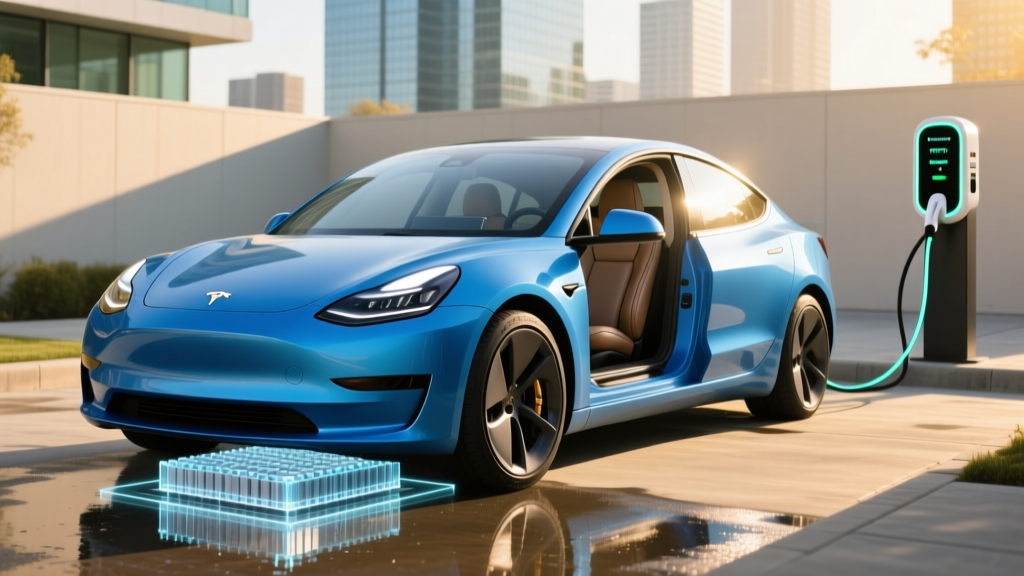
The 2025 Tesla Model 3 Performance (officially the "Long Range AWD Performance") takes the refreshed Highland platform and injects it with 510 horsepower, adaptive dampers, and a 315-mile EPA range. For buyers searching for the 2025 Model 3 Performance 0-60 time, the answer is a manufacturer-claimed 2.9 seconds — a figure we've found replicable on prepped surfaces with rollout subtracted. At $52,990 before incentives, it undercuts the BMW i4 M50 and Porsche Taycan on price while matching or exceeding their straight-line performance. But the story isn't just about acceleration; the Highland refresh brought meaningful improvements in cabin isolation, ride compliance, and steering feel that make this a genuinely livable daily driver, not just a quarter-mile special.
Spec Table: 2025 Model 3 Performance by the Numbers
| Specification | Value |
|---|---|
| EPA Range | 315 miles |
| Battery (usable) | ~79 kWh, NMC (nickel manganese cobalt) |
| Drivetrain | Dual-motor AWD |
| Horsepower | 510 hp (combined) |
| Torque | 546 lb-ft |
| 0-60 mph | 2.9 seconds |
| Top Speed | 163 mph |
| Max DC Fast Charge | 250 kW (peak) |
| 10-80% DCFC Time | ~25 minutes |
| Level 2 Charge Rate | 11.5 kW (~44 miles/hour) |
| Efficiency (EPA) | 121 MPGe combined / 28 kWh/100mi |
| Cargo Volume | 23 cu ft (rear trunk + frunk) |
| Rear Legroom | 35.3 inches |
| Battery Warranty | 8 years / 120,000 miles (70% retention) |
| Base MSRP | $52,990 (excl. destination) |
Range & Efficiency: 315 EPA, but Plan for Reality
The EPA rates the 2025 Model 3 Performance at 315 miles on a full charge. That figure comes from the Long Range AWD battery pack — a ~79 kWh usable NMC (nickel manganese cobalt) pack that prioritizes energy density and power delivery over the cycle-life longevity of LFP chemistry. Tesla reserves LFP for the base rear-wheel-drive Model 3.
EPA estimate: 315 miles. On a 70-mph highway loop in moderate temperatures (65-75°F), expect approximately 265-280 miles before hitting 10% State of Charge. In freezing conditions (below 32°F), highway range can drop to 220-240 miles due to battery resistance and cabin heating demands. City driving with regenerative braking recovers closer to the EPA sticker. The Model 3 Performance's 20-inch Nova wheels carry a slight efficiency penalty versus the Long Range's 18- or 19-inch options.
At 121 MPGe combined and 28 kWh per 100 miles, the Model 3 Performance is among the most efficient vehicles in its power class. For comparison, the BMW i4 M50 achieves 97 MPGe combined. That efficiency edge translates directly to lower charging costs and longer intervals between stops on road trips. According to EPA data on fueleconomy.gov, the Model 3 Performance's efficiency is a standout for a 510-hp AWD sedan.
Charging Speed: 250 kW Peak, but the Curve Matters
The 2025 Model 3 Performance supports a maximum DC fast-charge rate of 250 kW via its NACS (North American Charging Standard) connector — natively compatible with Tesla Superchargers and, with an adapter, with Electrify America and other CCS networks.
| Charging Level | Power / Rate | Speed / Notes |
|---|---|---|
| Level 1 (120V household) | ~1.4 kW | ~5 miles per hour — overnight trickle only |
| Level 2 (240V home / public) | 11.5 kW max | ~44 miles per hour; full charge in ~7.5 hours |
| DC Fast Charge (Supercharger) | 250 kW peak | 10-80% in ~25 minutes; tapers significantly above 80% |
Here's where the real-world charging curve matters more than the peak number. The Model 3 Performance sustains roughly 200-250 kW between 10% and 45% State of Charge, then progressively tapers. From 60% to 80%, you'll see roughly 100-130 kW. Above 80%, charging slows dramatically to protect the NMC cells — expect 40-60 kW or less. This is normal NMC behavior and is why Tesla's navigation system typically recommends charging to 80% on road trips unless you specifically set a higher target.
For home charging, a 48-amp Level 2 wall connector on a 60-amp circuit delivers the full 11.5 kW, replenishing roughly 44 miles of range per hour. A full overnight charge from 20% to 100% takes approximately 7-8 hours. Tesla's Mobile Connector on a 240V NEMA 14-50 outlet delivers about 30 miles per hour at 32 amps. Installation of a dedicated Level 2 circuit typically runs $500-$2,000 depending on panel proximity and local permit requirements — consult a licensed electrician for your specific setup.
Performance: The 0-60 That Defines the Badge
The headline number: 2.9 seconds from 0-60 mph. Tesla's new Performance powertrain pairs a rear permanent-magnet synchronous motor with a front induction motor, delivering 510 horsepower and 546 lb-ft of torque. The updated rear motor is a redesigned unit that's more compact and more powerful than the outgoing Model 3 Performance.
In practice, the 2.9-second claim is achievable with the vehicle in "Sprint" mode, tires at proper temperature, and on a prepared surface. On typical public roads, expect 3.1-3.3 seconds — still ferociously quick and faster than a BMW M3 Competition or Audi RS5 in real-world conditions. The instant torque delivery means there's no waiting for turbo spool or transmission downshifts; you press the pedal and the car simply goes.
Beyond the 0-60 sprint, the Highland-generation Model 3 Performance introduces Adaptive Dampers (continuously variable) that adjust based on driving mode. In Comfort mode, the ride is genuinely compliant over rough pavement — a major departure from the crashy, over-firmed ride of the pre-refresh Performance model. In Sport mode, body roll tightens and the car feels more connected through corners. The new front seats (with ventilation) offer much improved lateral bolstering. Tesla also retuned the electric power steering, which now provides more progressive weighting, though it remains somewhat numb compared to hydraulic or well-tuned electric racks from Porsche or BMW.
Interior, Tech & Daily Livability
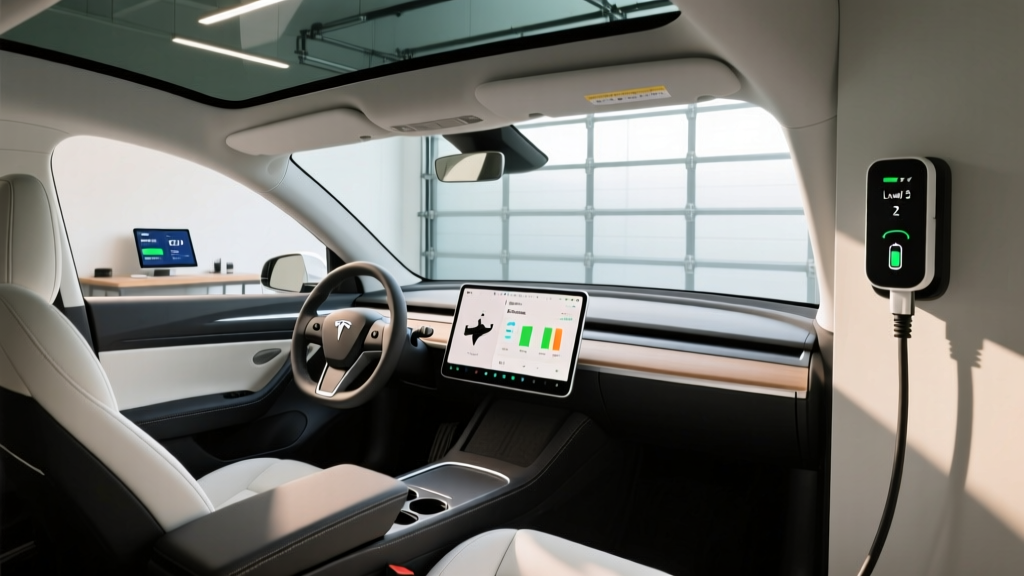
The Highland interior refresh transformed the Model 3 cabin from spartan to genuinely premium-adjacent. Ambient lighting strips run along the dashboard and doors, acoustic glass (front and rear) dramatically reduces wind and road noise, and the 15.4-inch center touchscreen remains the primary interface for nearly all vehicle functions.
Cargo space totals 23 cubic feet between the rear trunk (21 cu ft) and the front trunk/frunk (2 cu ft). The frunk is useful for charging cables and small items. Rear legroom measures 35.3 inches — adequate for adults on shorter trips but tight for anyone over 6 feet on longer journeys. The rear seat cushion is relatively low, which can leave taller passengers in a knees-up position.
Tech highlights include:
- Autopilot (standard): Adaptive cruise control and lane centering. This is an SAE Level 2 driver-assist system — you must keep hands on the wheel and eyes on the road at all times.
- Full Self-Driving (Supervised) ($8,000 option): Adds automatic lane changes, traffic light recognition, and navigation-guided driving. Still SAE Level 2 — despite the name, it is not autonomous driving.
- 17-speaker premium audio with immersive sound processing — genuinely one of the best stock audio systems in any vehicle under $80,000.
- Track Mode V3: Allows custom torque distribution, stability control tuning, and regenerative braking profiles for closed-course driving.
- Ventilated front seats and heated rear seats (new for Highland).
Notable drawbacks: The absence of physical turn signal stalks (replaced by steering-wheel-mounted buttons) remains divisive and takes real adaptation. There are no physical climate or volume knobs. Rear visibility is compromised by the sloping roofline and thick C-pillars. And while build quality has improved significantly with Highland, some panel gap variation is still common.
Pricing, Tax Credits & Total Cost
| Item | Cost |
|---|---|
| Base MSRP (Model 3 Performance) | $52,990 |
| Destination Fee | $1,390 |
| FSD (Supervised) Option | +$8,000 |
| Premium Colors (Ultra Red, etc.) | +$1,000 - $2,500 |
| As-Tested (with FSD, Ultra Red) | ~$64,880 |
The 2025 Model 3 Performance starts at $52,990 before the $1,390 destination charge. Add FSD and a premium paint color, and a typical as-tested price lands around $63,000-$65,000.
The Model 3 Performance's MSRP of ~$54,380 (with destination) sits under the IRS §30D sedan cap of $55,000, making it potentially eligible for up to $7,500 in federal tax credits. However, eligibility depends on multiple factors per current IRS guidelines:
- Buyer income caps: AGI must not exceed $150,000 (single), $225,000 (head of household), or $300,000 (joint).
- Battery sourcing: Critical minerals and battery component requirements phase in more strictly each year. Tesla's US-built battery packs have generally met these thresholds, but verify the specific VIN on the IRS eligible vehicle list at the time of purchase.
- Point-of-sale transfer: As of 2024, the credit can be transferred to the dealer at purchase, reducing the upfront price by $7,500 — effectively bringing the base Model 3 Performance to approximately $46,880.
Ownership, Warranty & Long-Term Costs
Tesla covers the Model 3 Performance with a 4-year/50,000-mile basic vehicle warranty and an 8-year/120,000-mile battery and drive unit warranty, guaranteeing at least 70% capacity retention over that period. The 120,000-mile battery warranty (versus 100,000 miles on the base RWD Model 3) reflects the Long Range/Performance pack's more robust construction.
NMC battery degradation in Tesla vehicles has proven relatively predictable: expect roughly 5-8% capacity loss in the first 30,000 miles, after which the degradation curve flattens significantly. Many high-mileage Tesla owners report 85-90% State of Health (SoH) at 100,000 miles. For longevity, Tesla recommends daily charging to 80-90% on NMC packs (not 100%, which stresses the chemistry) and only charging to 100% for longer road trips.
Insurance costs for the Model 3 Performance are notably higher than the Long Range or RWD trims. Expect annual premiums in the $2,400-$3,800 range depending on your state, driving record, and coverage levels. Tesla Insurance is available in some states and can be competitive, though customer service experiences vary. Maintenance costs are minimal — no oil changes, no transmission fluid, and regenerative braking significantly extends pad life. Cabin air filter replacement every 2 years and tire rotation every 6,250 miles are the primary scheduled items.
Pros, Cons & Who Should Buy
- 2.9-second 0-60 mph — supercar acceleration at sedan pricing
- 315-mile EPA range is practical for road trips
- 250 kW DC fast charging with Supercharger network access
- Highland refresh: dramatically improved ride, noise, and interior quality
- Adaptive dampers balance comfort and sportiness
- Low running costs (electricity vs. premium fuel for M3/C63)
- Over-the-air updates continue adding features post-purchase
- Turn signal buttons on steering wheel take real adaptation
- Rear seat legroom tight for taller passengers
- No physical knobs or buttons for climate/volume
- Insurance premiums significantly higher than Long Range trim
- FSD (Supervised) remains SAE Level 2 despite the name and price
- 20-inch wheels reduce efficiency vs. smaller options
- Build quality improved but still inconsistent panel gaps
Best for: Enthusiast drivers who want sports-car acceleration with four-door practicality, daily commuters with home charging access who also take occasional road trips, and current Tesla owners upgrading from an older Model 3 or Model S. The 315-mile range and Supercharger network make it viable as a sole vehicle for most households.
Consider alternatives if: You regularly carry rear-seat adults (the BMW i4 offers slightly more rear space), you need more than 23 cu ft of cargo, or you prefer physical controls and a more traditional luxury interior (Porsche Taycan, BMW i4).
Frequently Asked Questions
What is the real-world range of the 2025 Model 3 Performance?
The EPA rates it at 315 miles. In real-world highway driving at 70 mph in moderate weather, expect 265-280 miles. In freezing temperatures, highway range drops to roughly 220-240 miles. City driving with regenerative braking gets closer to the EPA estimate.
How fast does it charge at home and on DC fast chargers?
On a home Level 2 charger (11.5 kW / 48 amps), it adds about 44 miles per hour, fully charging in roughly 7.5 hours. On a 250 kW Supercharger, it charges from 10-80% in approximately 25 minutes, though the charge rate tapers significantly above 80% SoC.
Does the 2025 Model 3 Performance qualify for the $7,500 federal tax credit?
It is potentially eligible. The MSRP (~$54,380 with destination) falls under the $55,000 sedan cap. However, your adjusted gross income must fall below IRS thresholds ($150K single / $300K joint), and the battery must meet current-year critical mineral and component sourcing rules. Verify eligibility on the IRS clean vehicle credit page and with a tax professional before purchasing.
Is the 2025 Model 3 Performance worth it vs. the BMW i4 M50?
The Model 3 Performance is quicker (2.9s vs. 3.7s 0-60), has more EPA range (315 vs. 227 miles for the i4 M50), charges faster, and costs roughly $15,000-$20,000 less. The BMW i4 M50 wins on interior material quality, physical controls, rear-seat space, and driving dynamics at the limit. If straight-line speed and efficiency are priorities, the Tesla wins. If traditional luxury and steering feel matter more, the BMW is compelling.
How does Autopilot differ from Full Self-Driving?
Autopilot (standard) provides adaptive cruise control and lane centering — an SAE Level 2 system requiring full driver attention. Full Self-Driving (Supervised), a $8,000 option, adds features like automatic lane changes and navigation-guided driving but is still SAE Level 2. Neither system is autonomous — you are the driver and are legally responsible for the vehicle at all times.
What's the battery replacement cost if it degrades?
Out-of-warranty Model 3 Long Range/Performance battery replacements have been reported in the $12,000-$16,000 range including labor, though Tesla increasingly offers refurbished packs at lower cost. Under the 8-year/120,000-mile warranty, Tesla will replace or repair the battery if capacity drops below 70%. In practice, widespread catastrophic battery failures are rare — most degradation is gradual and linear.