The electric Mini has always been a polarizing proposition: undeniable charm and go-kart handling wrapped in a package with limited range. The 2025 Mini Cooper SE (the J01 generation) arrives with a larger battery, faster charging, and a thoroughly modernized interior — but the fundamental question remains the same. Is ~114 miles of EPA range enough for your daily life? We've analyzed the specs, crunched the ownership numbers, and mapped out exactly who this EV serves best.
Quick Verdict: Who the 2025 Mini Cooper SE Is For
The 2025 Mini Cooper SE is a purpose-built urban EV. It rewards city dwellers and short-distance commuters with sharp handling, a premium cabin, and low running costs — but punishes anyone who regularly drives highway stretches beyond 80 miles one-way or lives in a cold climate without reliable home charging. If your daily loop is under 60 miles round-trip and you can plug in at home overnight, the Cooper SE is one of the most engaging small EVs on the market. If you need a single-vehicle household that handles road trips, look at the Chevrolet Equinox EV or Hyundai Kona Electric instead.
Range, Battery & Real-World Efficiency
The 2025 Cooper SE is powered by a 54.2 kWh battery pack (approximately 40.7 kWh usable) using NMC (nickel manganese cobalt) lithium-ion cells. That's a meaningful step up from the previous generation's 32.6 kWh pack and directly translates to more usable miles.
| Spec | Value |
|---|---|
| Battery (gross / usable) | 54.2 kWh / ~40.7 kWh |
| Chemistry | NMC (nickel manganese cobalt) |
| EPA Estimated Range | 114 miles (Classic/Signature trims) |
| EPA Combined MPGe | 110 MPGe |
| Efficiency | ~30 kWh / 100 mi |
| Drivetrain | Front-wheel drive (single motor) |
The EPA rates the 2025 Cooper SE at 114 miles combined. In real-world driving, expect approximately 95–110 miles on the highway at 70+ mph, where aerodynamic drag hits this short, upright hatchback hard. In city driving with frequent regenerative braking opportunities, you'll see the full 114 miles or slightly more. In cold weather (below 32°F), plan on a 20–30% range reduction, bringing usable range down to roughly 75–90 miles. The Cooper SE does include a heat pump on select trims, which helps mitigate winter losses — but physics still wins in deep cold.
For context, the EPA's fueleconomy.gov comparison tool shows the Cooper SE trailing the Hyundai Kona Electric (261 mi EPA) and Chevrolet Bolt EV (259 mi EPA) significantly on range, but matching or beating them on city-driving efficiency thanks to its lighter curb weight (~3,600 lbs).
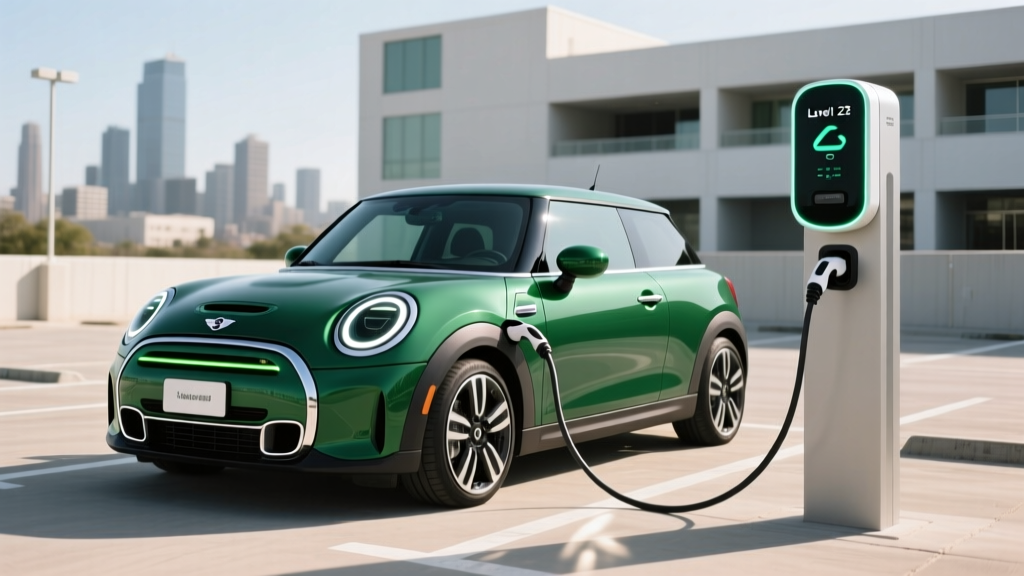
Charging Speed: DC Fast, Level 2 & Home Setup
Charging is where the 2025 Cooper SE makes its biggest generational leap. The new model supports significantly faster DC fast charging than its predecessor, which was limited to 50 kW.
| Charging Level | Power | Speed / Time |
|---|---|---|
| Level 1 (120V household) | ~1.4 kW | ~4–5 miles per hour |
| Level 2 (240V home/public) | Up to 11 kW (AC) | ~25–30 miles per hour; 0–100% in ~4.5 hours |
| DC Fast Charge (CCS) | Peak 95 kW | 10–80% in approximately 28–30 minutes |
A few practical notes on the charging experience:
- Peak vs. sustained kW: The 95 kW peak occurs at a low state of charge (roughly 10–30% SoC). The charge curve tapers progressively above 50%, and drops sharply past 80%. This is normal for NMC chemistry, but it means a 10–90% session will take noticeably longer than a 10–80% session — plan your highway stops accordingly.
- Connector: The 2025 Cooper SE uses the CCS1 connector for DC fast charging and J1772 for Level 2 AC. It does not natively support NACS (Tesla's connector), though CCS-to-NACS adapters are becoming available for Supercharger access.
- Preconditioning: The Cooper SE supports battery preconditioning when you set a charging stop in the navigation system. This warms the battery to optimal temperature before you arrive at a DC fast charger, improving charge speed — especially important in cooler weather.
- Home charging reality: At 11 kW AC, a full overnight charge takes about 4.5 hours on a dedicated Level 2 home charger (48A circuit). Most owners will plug in overnight and wake up to a full battery every morning, making the limited range a non-issue for daily use.
Performance & Driving Dynamics
Mini has always prioritized driving engagement over raw power, and the electric Cooper SE continues that tradition — with the bonus of instant electric torque filling in the low end.
| Spec | Value |
|---|---|
| Motor | Single front-mounted electric motor |
| Horsepower | 215 hp (Cooper SE) |
| Torque | 243 lb-ft |
| 0–60 mph | ~6.7 seconds |
| Drivetrain | Front-wheel drive |
| Drive Modes | Core, Green, Go-Kart |
The 6.7-second 0–60 time isn't going to embarrass a Tesla Model 3 Performance, but it's genuinely quick for a subcompact hatchback and makes merging and city passing effortless. The low center of gravity from the floor-mounted battery pack, combined with Mini's trademark sharp steering and firm-but-compliant suspension, delivers the "go-kart feeling" the brand promises. Regenerative braking offers multiple levels of aggression, though true one-pedal driving (bringing the car to a complete stop without touching the brake) is not as seamless as in some competitors.
Interior, Tech & Cargo Space
The 2025 Cooper SE's interior is where Mini's latest design language shines — or polarizes, depending on your taste. The centerpiece is a circular OLED display in the center of the dash that serves as both infotainment screen and instrument cluster, replacing the traditional gauge cluster entirely.
Key tech features:
- 9.4-inch circular OLED center display with Mini Operating System 9
- Wireless Apple CarPlay and Android Auto
- Mini Digital Key Plus (use your smartphone as the key fob)
- Available head-up display
- Mini Driving Assistant (adaptive cruise control, lane-keeping assist, parking assistant) — note: these are SAE Level 2 driver-assist features, not autonomous driving
- Ambient lighting with multiple color zones
- Available panoramic glass roof
Cargo and passenger space is where the Cooper SE's subcompact footprint shows:
| Dimension | Measurement |
|---|---|
| Cargo (rear seats up) | ~7.1 cu ft |
| Cargo (rear seats folded) | ~25.3 cu ft |
| Front Legroom | 41.3 in |
| Rear Legroom | 33.0 in |
| Seating Capacity | 4 passengers (2-door hardtop) |
The rear seats are best suited for children or occasional adult passengers on short trips. Cargo space with seats up is tight — a week's groceries for two, but not much more. Fold the rear seats and you gain useful flexibility for larger items, but the Cooper SE is fundamentally a personal commuter car, not a cargo hauler.
Pricing, Trims & Federal Tax Credit
The 2025 Mini Cooper SE is offered in two main trims in the U.S. market:
| Trim | Base MSRP | Est. As-Tested (with options) |
|---|---|---|
| Signature | ~$30,900 | $33,000–$35,000 |
| Signature Plus (Iconic) | ~$35,900 | $38,000–$41,000 |
The destination charge adds approximately $995. A well-equipped Signature Plus with the Premium Package, panoramic roof, and driver-assistance features can push past $40,000 — at which point you're cross-shopping the BMW iX1 territory.
As of current IRS guidelines, the 2025 Mini Cooper SE's federal tax credit eligibility is limited. Here's why:
- MSRP cap: The Cooper SE (as a sedan/hatchback) must be under $55,000 MSRP — it clears this easily.
- Buyer income cap: AGI must not exceed $150,000 (single) / $300,000 (joint) / $225,000 (head of household).
- Battery sourcing requirements: To receive the full $7,500, the battery must meet critical minerals and battery component sourcing thresholds that increase annually. The Cooper SE's battery supply chain has historically struggled to meet these thresholds.
- Point-of-sale transfer: If eligible, the credit can be transferred to the dealer at purchase, reducing your out-of-pocket cost immediately rather than waiting for tax filing.
Bottom line: As of early 2025, the Cooper SE qualifies for $0 to $3,750 of the federal credit depending on battery-component sourcing compliance. Always verify current eligibility on the IRS clean vehicle credit page or with your tax professional before purchasing — these rules shift as supply chains change.
Warranty & Ownership Costs
Mini provides competitive warranty coverage for the Cooper SE:
- Limited vehicle warranty: 4 years / 50,000 miles
- Powertrain / battery warranty: 8 years / 100,000 miles (covers battery capacity falling below 70% of original capacity)
- Complimentary maintenance: 3 years / 36,000 miles (scheduled service)
The 70% battery capacity retention threshold over 8 years is standard for the industry. Real-world NMC degradation data from similar platforms suggests most owners will retain 85–90% capacity after 5 years of normal use, well within warranty coverage. Long-term battery replacement costs for the Cooper SE are not yet widely published, but comparable BMW/Mini EV battery packs run $10,000–$15,000 if replacement is ever needed out of warranty.
On the cost-of-ownership side, electricity for the Cooper SE at the U.S. average rate of ~$0.17/kWh works out to roughly $5.10 per 100 miles — compared to approximately $12–$14 per 100 miles for a similarly sized gasoline car getting 30 MPG at $3.70/gallon. Over 15,000 miles per year, that's roughly $1,100–$1,300 in annual fuel savings.
Pros, Cons & the Competition
✅ Pros
- Engaging, go-kart handling with instant EV torque
- Premium, distinctive interior with circular OLED display
- Improved 95 kW DC fast charging (up from 50 kW)
- Compact size ideal for tight urban parking
- Low running costs vs. gas equivalents
- Available Mini Digital Key and modern ADAS suite
❌ Cons
- 114-mile EPA range limits highway and road-trip use
- Tight rear-seat legroom and minimal cargo space
- Limited or zero federal tax credit due to battery sourcing
- Price climbs quickly with options into luxury territory
- No native NACS (Tesla Supercharger) compatibility
- Cold-weather range drops to 75–90 miles
Key competitors to consider:
- Hyundai Kona Electric — 261 mi EPA range, ~$33,000, far more cargo space. Less engaging to drive but more practical overall.
- Chevrolet Bolt EV/EUV — 259 mi range, historically lower pricing, more interior room. Discontinued after 2025 model year but available in inventory.
- Nissan Leaf — 212 mi range (SV Plus), CHAdeMO connector limits DC fast-charging network access.
- Fiat 500e — Similar urban-EV philosophy, ~149 mi range, slightly lower price, less performance.
Decision Framework: Should You Buy the 2025 Mini Cooper SE?
Choose the Cooper SE if: You live in a city or dense suburb, your daily commute is under 60 miles round-trip, you have home or workplace charging, you value driving engagement and distinctive design, and this is a second vehicle or you have access to another car for longer trips.
Choose a competitor if: You need more than 150 miles of reliable range, you regularly carry rear-seat passengers, you need cargo flexibility, you want full federal tax credit eligibility, or this is your only vehicle and you take highway road trips more than a few times a year.
Frequently Asked Questions
What is the real-world range of the 2025 Mini Cooper SE?
The EPA estimates 114 miles combined. In real-world city driving, expect 110–120 miles. Highway driving at 70+ mph drops that to roughly 95–110 miles. In cold weather below freezing, plan for 75–90 miles of usable range before needing to charge.
How fast does the 2025 Mini Cooper SE charge?
On a DC fast charger, it peaks at 95 kW and charges from 10–80% in approximately 28–30 minutes. On a Level 2 home charger (240V, up to 11 kW AC), a full charge takes about 4.5 hours. On a standard 120V outlet (Level 1), expect roughly 4–5 miles of range added per hour — suitable only for occasional top-ups.
Does the 2025 Mini Cooper SE qualify for the federal EV tax credit?
Partially, and it depends on current battery-sourcing rules. The Cooper SE meets the MSRP cap (under $55,000 for cars) and most buyers will meet the income cap. However, battery component and critical mineral sourcing requirements mean the Cooper SE may qualify for $0 to $3,750 of the potential $7,500 credit. Always check the latest IRS clean vehicle credit page before purchasing.
How much does the 2025 Mini Cooper SE cost after incentives?
The base Signature trim starts around $30,900. If you qualify for the partial $3,750 federal credit and your state offers additional EV rebates (amounts vary widely — check your state energy office), your effective price could drop to approximately $27,000–$29,000 for the base model. A fully loaded Signature Plus can exceed $40,000 before any incentives.
Is the 2025 Mini Cooper SE worth buying vs. competitors?
If driving enjoyment, premium design, and urban practicality are your top priorities, the Cooper SE is genuinely compelling and has no direct rival in the "premium electric subcompact" space. If maximum range, cargo space, or tax-credit value are your priorities, the Hyundai Kona Electric or a used Tesla Model 3 will serve you better. The Cooper SE is a fantastic second car or dedicated city commuter — just know its limits before you buy.
What charger connector does the 2025 Mini Cooper SE use?
The 2025 Cooper SE uses CCS1 for DC fast charging and J1772 for Level 2 AC charging. It does not natively support NACS (the Tesla connector), though aftermarket CCS-to-NACS adapters are available to enable Tesla Supercharger access as the network opens to non-Tesla vehicles.