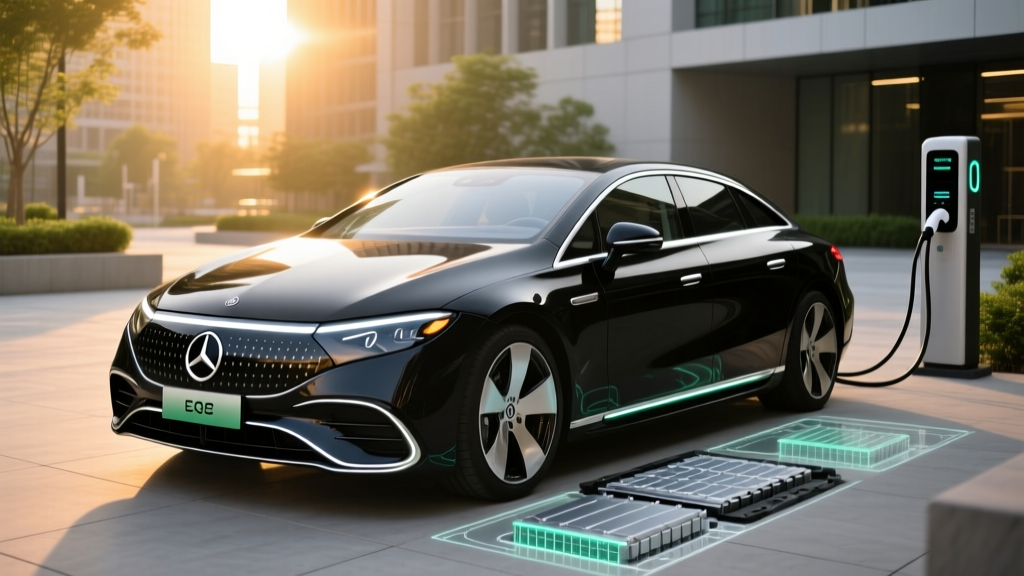
The Mercedes-Benz EQS sedan has always been a rolling showcase of what electric luxury can look like. For 2025, Mercedes updated its flagship EV with a larger battery, slightly revised styling, and a more prominent stand-up hood star. But beneath the prestige and the Hyperscreen lies a very specific set of engineering choices that make the 2025 EQS either a perfect fit or a puzzling miss depending on your priorities. This review breaks down every critical 2025 Mercedes-Benz EQS Class spec — from real-world range and charging curves to tax-credit eligibility and ownership costs — so you can decide whether this six-figure electric sedan earns a spot in your garage.
2025 Mercedes-Benz EQS Class Specs at a Glance
| Specification | EQS 450+ Sedan | EQS 450 4MATIC | EQS 580 4MATIC |
|---|---|---|---|
| EPA Range | 390 miles | 371 miles | 371 miles |
| Battery (Usable) | 118 kWh (NMC) | 118 kWh (NMC) | 118 kWh (NMC) |
| Horsepower | 355 hp | 355 hp | 536 hp |
| 0–60 mph | 5.9 sec | 5.3 sec | 4.1 sec |
| Drivetrain | RWD (single motor) | AWD (dual motor) | AWD (dual motor) |
| Max DC Fast Charge | 200 kW | 200 kW | 200 kW |
| 10–80% DC Time | ~31 min | ~31 min | ~31 min |
| Level 2 Home Charge | 9.6 kW (~30 mi/hr) | 9.6 kW (~30 mi/hr) | 9.6 kW (~30 mi/hr) |
| MPGe (Combined) | 95 MPGe | 91 MPGe | 91 MPGe |
| Base MSRP | $104,400 | $107,400 | $127,350 |
Range and Efficiency: EPA vs. Real-World Driving
The headline number for the 2025 EQS 450+ is 390 miles of EPA-estimated range — a substantial jump from the pre-refresh 90.6 kWh pack. Mercedes achieved this by fitting a 118 kWh usable NMC (nickel manganese cobalt) battery, one of the largest in any production sedan. The dual-motor 450 4MATIC and 580 4MATIC variants drop to 371 miles due to the added weight and friction of the front motor.
EPA 390 mi (450+). In mixed highway driving at 70–75 mph, expect approximately 330–355 miles in mild weather. In freezing temperatures (below 32°F), range can drop to 270–300 miles even with the standard heat pump engaged. City driving with heavy regenerative braking can match or slightly exceed the EPA figure, reaching 395–410 miles. The EQS's slippery 0.20 Cd drag coefficient helps highway efficiency, but the 5,600+ lb curb weight works against it in stop-and-go hills.
Efficiency lands at 95 MPGe combined (roughly 35 kWh/100 mi) for the 450+, which is respectable for a 5,600-pound luxury sedan but trails lighter competitors like the BMW i7 (which achieves 89 MPGe with a smaller battery). The EQS prioritizes range through sheer battery mass rather than drivetrain efficiency optimization.
Charging Speed: DC Fast Charging and Home Level 2
The 2025 EQS supports a peak DC fast-charge rate of 200 kW on CCS-equipped chargers. At that peak rate, Mercedes claims a 10–80% charge in approximately 31 minutes. However, real-world charging curves tell a more nuanced story.
| Charging Level | Power (kW) | Charge Rate | Time / Notes |
|---|---|---|---|
| Level 1 (120V) | ~1.4 kW | ~4 mi/hr | ~95 hours for full charge — impractical for this battery |
| Level 2 (240V, 40A) | 9.6 kW | ~30 mi/hr | ~12 hours 10–100%; ideal overnight charge |
| DC Fast (CCS) | 200 kW peak | ~560 mi/hr at peak | 10–80% in ~31 min; tapers significantly above 80% |
The 200 kW peak is competitive but not class-leading — the Hyundai Ioniq 6 and Porsche Taycan both sustain higher charge rates. The EQS charge curve is relatively flat between 10–60% SoC, holding close to 200 kW, but drops to around 100 kW past 70% and falls below 50 kW after 85%. This taper is typical of NMC chemistry managed conservatively for longevity.
Preconditioning matters. The EQS will automatically precondition the battery when a DC fast charger is set as your navigation destination. Without preconditioning in cold weather, expect peak charge rates closer to 120–140 kW until the pack warms, adding 10–15 minutes to a 10–80% session. Always navigate to your charger rather than just driving there.
For home charging, the onboard 9.6 kW AC charger adds roughly 30 miles of range per hour. Given the 118 kWh pack, a full Level 2 charge from near-empty takes about 12–13 hours. Most owners will plug in nightly and wake up fully topped off — a 48A hardwired Level 2 station (like a ChargePoint Home Flex or Tesla Wall Connector with J1772 adapter) is the recommended setup. Expect home installation costs of $800–$2,500 depending on your panel capacity and run length.
Performance and Driving Dynamics
The EQS was never engineered to chase sports-sedan lap times. It's a luxury cruiser, and the powertrain reflects that. The base EQS 450+ uses a single rear-mounted motor producing 355 hp and 419 lb-ft of torque, reaching 60 mph in 5.9 seconds. The dual-motor 450 4MATIC matches that horsepower but adds all-wheel grip for a 5.3-second run. The 580 4MATIC steps up to 536 hp and 631 lb-ft, cutting the 0–60 time to 4.1 seconds.
All variants feature a top speed limited to 130 mph. The air suspension and rear-axle steering (up to 10 degrees standard on most trims) give the EQS a surprisingly tight 35-foot turning circle despite its 207-inch length. Ride quality is exceptional — the cabin is genuinely isolated from road imperfections, and wind noise is among the lowest of any production sedan thanks to acoustic glass and the sealed underbody.
Regenerative braking offers three levels selectable via steering-wheel paddles (D+, D, D−) plus an intelligent D Auto mode that uses radar and map data to modulate regen. One-pedal driving is possible but not as aggressive as Tesla or Hyundai implementations — the EQS doesn't come to a complete stop in its strongest regen setting, which frustrates some EV veterans.
Interior, Cargo, and Technology
The EQS interior is dominated by the optional MBUX Hyperscreen — a 56-inch curved glass panel spanning the full dashboard width, combining a 12.3-inch instrument cluster, 17.7-inch center OLED, and 12.3-inch passenger display. It's visually stunning but can be distracting; some drivers prefer the standard split-screen setup with a more traditional floating center display.
Passenger space is generous up front but the rear seat is where the EQS draws criticism. Despite the car's massive exterior footprint, the sloping roofline and high floor (to accommodate the battery) reduce rear headroom and create a somewhat knees-up seating position. Rear legroom measures 41.7 inches — adequate but not S-Class limousine levels. Front headroom is 40.4 inches.
Cargo capacity is 22 cubic feet via the liftback trunk, which opens wide and swallows luggage easily. That's substantially more than a traditional sedan trunk and a real advantage for airport runs or weekend trips. There is no front trunk (frunk) — the space under the hood houses HVAC and power electronics.
The latest MBUX infotainment system (2025 refresh) runs faster than earlier versions, with improved voice recognition and native over-the-air update capability. Standard driver-assist features include adaptive cruise with stop-and-go, lane-keeping, blind-spot monitoring, and automated parking. The optional Drive Pilot system (SAE Level 3 conditional automation) is available in select markets and allows hands-off driving at speeds up to 40 mph on approved divided highways — one of the few Level 3 systems legally available in the US, though its operational design domain is extremely limited.
Drive Pilot operates only on pre-mapped divided highways, in daytime, clear weather, at speeds under 40 mph, with traffic ahead. The driver must be prepared to resume control within ~10 seconds when prompted. It is NOT a full self-driving system and is not available on all roads. Mercedes assumes liability only when the system is actively engaged within its operational domain.
Pricing, Trims, and Federal Tax Credit Eligibility
The 2025 EQS lineup starts at $104,400 (including destination) for the 450+ Sedan. The 450 4MATIC adds $3,000 at $107,400. The performance-oriented 580 4MATIC starts at $127,350. The ultra-luxury AMG EQS Sedan starts at $149,900. Options like the Hyperscreen ($8,500), Executive Rear Seat package, and Designo paint can push a 580 4MATIC past $150,000 quickly.
| Trim | Base MSRP | Federal Tax Credit (§30D) | Effective Price (if eligible) |
|---|---|---|---|
| EQS 450+ Sedan | $104,400 | $0 (MSRP cap exceeded*) | $104,400 |
| EQS 450 4MATIC | $107,400 | $0 (MSRP cap exceeded*) | $107,400 |
| EQS 580 4MATIC | $127,350 | $0 (MSRP cap exceeded*) | $127,350 |
Tax credit reality: Under current IRS §30D rules, the new clean vehicle credit offers up to $7,500, but sedans must have an MSRP at or below $55,000 to qualify. Every 2025 EQS variant exceeds this cap by a wide margin, meaning no EQS model qualifies for the federal purchase credit. Additionally, buyer income caps ($150,000 single / $300,000 joint) and battery critical-mineral sourcing requirements further restrict eligibility for vehicles near the threshold. Always verify current rules at IRS.gov or consult a tax professional before making a purchase decision based on incentives.
Some buyers may qualify for state-level incentives (California, Colorado, and others offer rebates for EVs above the federal MSRP cap) or for the commercial clean vehicle credit (§45W) if purchasing through a business entity — consult a tax advisor for structuring options.
Battery Warranty and Long-Term Ownership
Mercedes covers the EQS high-voltage battery with a 10-year / 155,000-mile warranty (whichever comes first), guaranteeing that capacity will not fall below 70% of the original rated capacity. This is more generous than the US-standard 8-year/100,000-mile warranty most competitors offer and reflects Mercedes's confidence in the NMC cell management system.
The basic vehicle warranty is 4 years / 50,000 miles, matching BMW and trailing Hyundai/Kia's 5-year/60,000-mile coverage. Scheduled maintenance is relatively minimal — no oil changes, no transmission fluid — but Mercedes still recommends annual cabin-filter replacements, brake-fluid checks, and tire rotations. Budget approximately $400–$600/year for maintenance after the complimentary first-year service.
Insurance premiums for the EQS are steep. Expect $3,500–$5,500 annually depending on your profile and location, driven by the vehicle's repair costs, aluminum-intensive construction, and sensor-laden body panels. Get quotes before purchasing — this is a meaningful ownership cost that surprises many buyers.
How the EQS Stacks Up Against Key Competitors
The EQS competes in a narrow segment of six-figure electric luxury sedans. Its closest rivals include:
- BMW i7 xDrive60 ($120,295, 318 mi EPA, 101.7 kWh): More traditional sedan proportions, better rear-seat comfort, but ~70 fewer miles of range and a smaller battery.
- Tesla Model S Long Range ($79,990, 402 mi EPA, ~100 kWh): Cheaper and longer range, but interior quality and ride refinement don't match Mercedes. Also no longer eligible for the federal credit.
- Lucid Air Pure/Touring ($69,900–$87,400, 419–425 mi EPA): Superior efficiency and range, more rear-seat space, but a younger brand with fewer service centers.
- Porsche Taycan (from $99,400, ~283 mi EPA, updated 2025): Far better driving dynamics and 320 kW DC charging, but significantly less range and a sportier, firmer ride.
- Class-leading 390-mile EPA range (450+)
- Exceptionally quiet, refined ride quality
- 22 cu ft liftback cargo — practical for a sedan
- 10-year/155,000-mile battery warranty
- Rear-axle steering makes it maneuverable in cities
- Available SAE Level 3 Drive Pilot (limited markets)
- No federal tax credit eligibility (MSRP cap)
- Rear-seat headroom compromised by battery floor
- 200 kW peak DC charge rate trails rivals (Taycan: 320 kW)
- Hyperscreen is an expensive option and can distract
- No frunk for supplemental storage
- Insurance and repair costs are high
Who Should Buy the 2025 EQS?
Choose the EQS 450+ if: You want the longest-range luxury sedan available, prioritize cabin silence and ride comfort over sportiness, and have reliable home Level 2 charging. It's ideal for executives who commute 40–80 miles daily and take occasional 300-mile road trips.
Choose the EQS 580 4MATIC if: You need all-weather AWD traction, want sub-4.5-second acceleration, and budget is flexible above $130K.
Look elsewhere if: You need genuine limousine rear-seat space (consider the BMW i7), want the fastest DC charging available (Porsche Taycan), or need to stay under the $55K federal credit MSRP cap (consider the Lucid Air Pure or BMW i4).
Frequently Asked Questions
What is the real-world range of the 2025 Mercedes-Benz EQS?
The EQS 450+ carries a 390-mile EPA estimate. In real-world highway driving at 70–75 mph in mild temperatures, expect 330–355 miles. Cold weather (below freezing) reduces this to roughly 270–300 miles. City driving with regenerative braking can match or slightly exceed the EPA figure.
How fast does the 2025 EQS charge at home and on the road?
On a DC fast charger, the EQS peaks at 200 kW and charges from 10–80% in approximately 31 minutes, with significant tapering above 80%. At home on a Level 2 (9.6 kW) charger, it adds about 30 miles per hour, requiring roughly 12 hours for a full charge from near-empty.
Does the 2025 EQS qualify for the $7,500 federal EV tax credit?
No. Under IRS §30D rules, new sedans must have an MSRP at or below $55,000 to qualify for the federal clean vehicle credit. Every 2025 EQS variant starts well above $104,000, disqualifying it entirely. Some state incentives or commercial-purchase structures (§45W) may offer alternatives.
Is the 2025 EQS worth buying over the BMW i7 or Lucid Air?
It depends on priorities. The EQS wins on range (390 vs. 318 mi for the i7) and battery warranty length (10 yr vs. 8 yr). The BMW i7 offers a more traditional luxury sedan rear seat and better build consistency. The Lucid Air delivers superior efficiency and range (419+ mi) at a lower price, but with a smaller service network. Test-drive all three before deciding.
What battery chemistry does the 2025 EQS use?
The 2025 EQS uses NMC (nickel manganese cobalt) lithium-ion cells with 118 kWh of usable capacity. NMC offers higher energy density than LFP, which is necessary given the sedan's size and range targets, but requires more conservative charge management for long-term health — hence the tapering charge curve above 80%.
How much does it cost to charge the EQS at home vs. public DC chargers?
At the US average residential electricity rate of ~$0.17/kWh, fully charging the 118 kWh battery costs roughly $20. At public DC fast chargers averaging $0.40–$0.55/kWh, that same charge costs $47–$65. Over a year of 12,000 miles, home-charging costs are approximately $550–$700 vs. $2,000+ for exclusive public DC charging.
Sources: EPA fuel economy data via fueleconomy.gov; Mercedes-Benz USA EQS model page; IRS §30D rules at irs.gov.