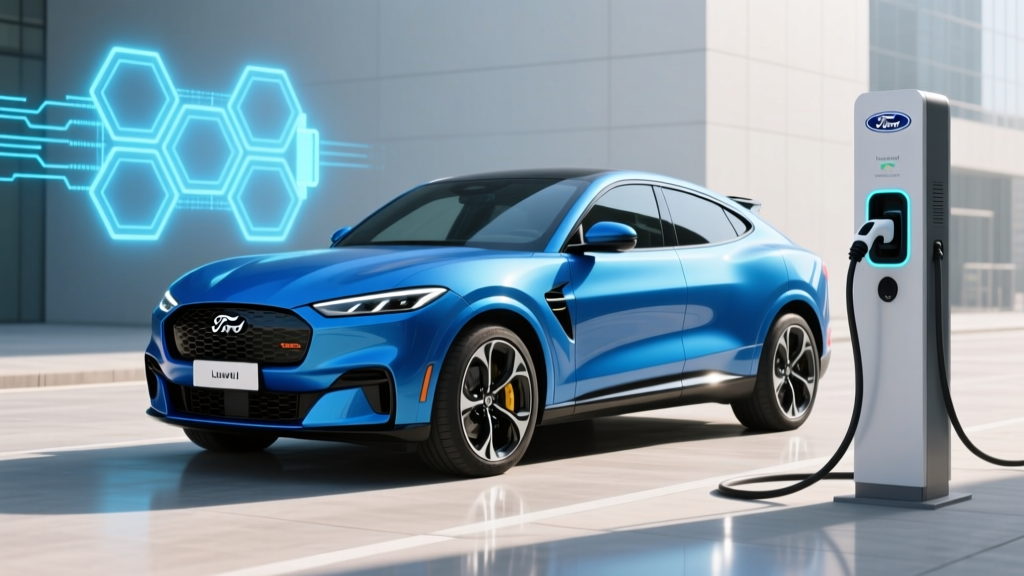
If you've been watching the electric SUV market, the Ford Mustang Mach-E has likely been on your radar. With the 2025 model year bringing subtle but meaningful updates — including improved range on select trims and expanded driver-assist features — now is an ideal time to evaluate whether 2025 Mach-E lease deals make financial sense for your situation. This review breaks down the exact numbers you need: real-world range expectations, charging speeds, pricing before and after tax credits, and how the Mach-E stacks up against rivals like the Hyundai Ioniq 5 and Tesla Model Y.
2025 Mach-E Quick Verdict
The 2025 Ford Mustang Mach-E remains one of the most balanced electric SUVs on the market. It doesn't chase headline-grabbing range or acceleration numbers like some competitors, but it delivers where most buyers actually live: comfortable ride quality, usable cargo space, a competitive real-world range of 250–270 miles depending on conditions, and access to Tesla's Supercharger network via the NACS adapter. Lease deals can make the math work well, especially if you qualify for the federal tax credit and want to avoid long-term battery depreciation risk.
Range, Battery, and Real-World Efficiency
The 2025 Mach-E is available with two battery packs across multiple trim levels. The Standard Range battery offers 70 kWh of usable capacity (LFP chemistry on select trims), while the Extended Range pack provides 91 kWh of usable capacity using NMC chemistry. EPA range estimates vary significantly by trim and drivetrain configuration.
| Trim | Battery | Drivetrain | EPA Range | MPGe (Combined) |
|---|---|---|---|---|
| Select RWD | 70 kWh (LFP) | Rear-Wheel Drive | 250 miles | 101 MPGe |
| Premium RWD | 91 kWh (NMC) | Rear-Wheel Drive | 310 miles | 101 MPGe |
| Premium AWD | 91 kWh (NMC) | Dual-Motor AWD | 290 miles | 94 MPGe |
| GT AWD | 91 kWh (NMC) | Dual-Motor AWD | 270 miles | 86 MPGe |
Efficiency ranges from 29–33 kWh per 100 miles depending on trim and driving style. That's competitive with the segment but trails the Hyundai Ioniq 5's slightly better efficiency figures.
Charging Speed: DC Fast and Home Level 2
Charging speed is where the Mach-E shows its age compared to newer competitors. The 2025 model peaks at 150 kW on DC fast chargers, which is respectable but not class-leading. Here's what that means in practice:
| Charging Level | Power | Speed |
|---|---|---|
| Level 1 (120V household) | 1.4 kW | ~4 miles per hour |
| Level 2 (240V home/work) | 10.5 kW | ~30 miles per hour |
| DC Fast Charge | Peak 150 kW | 10–80% in ~45 minutes |
The 10–80% DC fast-charge time of 45 minutes is slower than the Hyundai Ioniq 5's 18-minute capability (which uses an 800V architecture). If you frequently road-trip, this is a meaningful difference. The Mach-E's charge curve tapers significantly above 80% state of charge, so plan your stops accordingly — charging from 80–100% can add another 20–25 minutes.
For home charging, the 10.5 kW Level 2 rate is solid. With a 48-amp hardwired home charger (requires a 60-amp circuit), you'll add roughly 30 miles of range per hour, meaning a full overnight charge is easily achievable for daily driving needs.
Performance and Driving Dynamics
The Mach-E's performance varies widely by trim. The Select RWD produces 266 horsepower and hits 0–60 mph in about 6.3 seconds — adequate for merging and passing but not thrilling. The Premium trims with the Extended Range battery bump output to 290 hp (RWD) or 346 hp (AWD), with the AWD version reaching 60 mph in 5.1 seconds.
The GT trim is the performance flagship, delivering 480 horsepower and a 3.5-second 0–60 time with its dual-motor setup. That's genuinely quick and puts the Mach-E GT in sports-car territory off the line.
Ride quality is a strong point across all trims. Ford tuned the suspension for comfort over sportiness, which suits most buyers in this segment. The steering is precise but not overly communicative — typical for electric SUVs. Regenerative braking offers one-pedal driving capability, though the regen strength isn't quite as aggressive as Tesla's or Nissan's systems.
Pricing, Lease Deals, and Tax Credit Eligibility
The 2025 Mach-E starts at $39,995 for the Select RWD trim and climbs to $59,995 for the GT with the Performance Upgrade. Here's the breakdown by trim:
| Trim | Base MSRP | Federal Tax Credit | Effective Price |
|---|---|---|---|
| Select RWD | $39,995 | $7,500 (if eligible) | $32,495 |
| Premium RWD | $46,995 | $7,500 (if eligible) | $39,495 |
| Premium AWD | $49,995 | $7,500 (if eligible) | $42,495 |
| GT AWD | $59,995 | $0 (exceeds MSRP cap) | $59,995 |
Federal Tax Credit Caveats: The $7,500 credit under IRS §30D is not automatic. To qualify, you must meet income caps ($150,000 single / $300,000 joint modified AGI), the vehicle must be under the MSRP cap ($80,000 for SUVs), and the battery must meet critical minerals and battery component sourcing requirements that phase in annually. The GT trim's $59,995 MSRP is under the cap, but verify current-year sourcing compliance on the IRS website or with your dealer. The credit can now be transferred to the dealer at point of sale, reducing your upfront cost or lease payment.
Lease Considerations: Leasing can be advantageous if you want to avoid long-term battery depreciation risk and prefer predictable monthly payments. Many lease deals in 2025 are structured with $3,000–$5,000 down and monthly payments in the $400–$600 range depending on trim, term length, and mileage allowance. The tax credit typically flows through to the lease as a capitalized cost reduction, lowering your payment. Always confirm with the dealer whether the credit is being applied and how it affects your lease terms.
Interior, Cargo, and Tech Features
The Mach-E's interior is modern and functional, with a minimalist design centered around a large 15.5-inch vertical touchscreen running Ford's SYNC 4A infotainment system. The interface is responsive and includes wireless Apple CarPlay and Android Auto, over-the-air updates, and integrated navigation.
Cargo space is competitive: 29.7 cubic feet behind the rear seats and 59.7 cubic feet with the rear seats folded. That's slightly less than the Tesla Model Y but comparable to the Ioniq 5. The front trunk (frunk) adds 4.7 cubic feet of secure storage — useful for charging cables or small bags.
Passenger space is adequate for most families: 43.3 inches of front legroom and 36.9 inches of rear legroom. Rear headroom is slightly compromised by the sloping roofline, which may affect taller passengers on longer trips.
Standout Tech: Ford's BlueCruise hands-free driving system is available on Premium and GT trims. This is a Level 2 driver-assist system (not self-driving — you must remain attentive) that allows hands-off operation on pre-approved highway sections. It works well in practice, though the approved road network is more limited than GM's Super Cruise coverage.
Notable Drawbacks: The absence of physical buttons for climate controls (everything is touchscreen-based) frustrates some drivers. The panoramic glass roof lacks a shade, which can make the cabin hot in summer. And while build quality has improved since the 2021 launch, some owners report inconsistent panel gaps and interior rattles.
Warranty and Long-Term Ownership
Ford backs the Mach-E with a competitive warranty package:
- Battery: 8 years / 100,000 miles (whichever comes first), with a capacity retention threshold of 70% of original capacity
- Powertrain: 5 years / 60,000 miles
- Bumper-to-Bumper: 3 years / 36,000 miles
The 8-year battery warranty is standard for the segment and provides peace of mind, especially for lease customers who will return the vehicle before the warranty expires. Battery degradation data from early Mach-E owners suggests 5–8% capacity loss over the first 100,000 miles, which is within the warranty threshold.
For buyers (not lessees), long-term maintenance costs are lower than gas vehicles — no oil changes, fewer brake replacements due to regen, and fewer moving parts. However, insurance premiums for the Mach-E run 15–25% higher than comparable gas SUVs, according to industry data.
Who Should Consider the 2025 Mach-E?
The Mach-E is best suited for:
- Daily commuters who want a comfortable, quiet ride with 250+ miles of real-world range
- Small families who need usable cargo space and rear-seat room for car seats
- Tech-savvy buyers who value over-the-air updates and hands-free highway driving
- Road-trippers who want access to Tesla's Supercharger network (via NACS adapter)
It's less ideal for:
- Performance purists who prioritize handling over comfort (the GT is fast but not a sports car in corners)
- Heavy tow users — the Mach-E's 2,200-pound towing capacity is modest compared to trucks or larger SUVs
- Extreme cold-weather climates where 20–30% range loss in winter could be problematic for longer commutes
2025 Mach-E vs. Key Competitors
How does the Mach-E stack up against its main rivals? Here's a quick comparison:
| Spec | 2025 Mach-E Premium RWD | 2025 Ioniq 5 Long Range RWD | 2025 Tesla Model Y Long Range |
|---|---|---|---|
| EPA Range | 310 miles | 303 miles | 330 miles |
| DC Fast Charge (10–80%) | 45 min | 18 min | 25 min |
| 0–60 mph | 6.1 sec | 7.4 sec | 5.0 sec |
| Cargo (rear seats up) | 29.7 cu ft | 27.2 cu ft | 30.2 cu ft |
| Base MSRP | $46,995 | $47,400 | $48,990 |
The Mach-E trades faster charging (Ioniq 5) and longer range (Model Y) for a more comfortable ride, better build quality than early Model Y examples, and access to Tesla's Supercharger network via adapter. It's a strong middle-ground option that prioritizes daily livability over spec-sheet dominance.
Pros and Cons
Pros
- Competitive real-world range (250–280 miles highway)
- Comfortable ride quality and quiet cabin
- Access to Tesla Supercharger network via NACS adapter
- Strong warranty coverage (8-year battery)
- BlueCruise hands-free driving on approved highways
Cons
- Slower DC fast charging than competitors (45 min vs 18 min)
- Lack of physical buttons for climate controls
- Panoramic roof lacks shade
- Modest towing capacity (2,200 lbs)
- Insurance premiums 15–25% higher than gas SUVs
Frequently Asked Questions
What is the real-world range of the 2025 Mach-E?
Expect 250–280 miles in highway driving for the Premium RWD trim (EPA 310 miles). In cold weather below 30°F, plan for 220–240 miles. The GT trim delivers 230–250 miles in mixed driving.
How fast does the Mach-E charge?
DC fast charging peaks at 150 kW, reaching 10–80% in about 45 minutes. Home Level 2 charging at 10.5 kW adds roughly 30 miles per hour, so a full overnight charge is easily achievable.
How much does the Mach-E cost after tax credits?
If you qualify for the full $7,500 federal tax credit, the Select RWD drops from $39,995 to an effective $32,495. However, eligibility depends on income caps, MSRP limits, and battery sourcing requirements — verify on the IRS website or with your dealer.
Is the Mach-E worth buying vs. the Ioniq 5 or Model Y?
The Mach-E is a strong middle-ground choice that prioritizes comfort and daily usability over spec-sheet dominance. Choose the Ioniq 5 if fast charging is critical, the Model Y if you want maximum range and cargo space, or the Mach-E if you value ride quality and build consistency.
Does the 2025 Mach-E qualify for the federal EV tax credit?
Most trims qualify if you meet income requirements ($150K single / $300K joint) and the vehicle meets battery sourcing rules. The GT trim is under the $80K MSRP cap but verify current-year compliance. The credit can be transferred to the dealer at point of sale to reduce your lease payment or purchase price.
What's the warranty coverage on the battery?
Ford provides an 8-year / 100,000-mile battery warranty with a 70% capacity retention threshold. Real-world degradation data suggests 5–8% loss over 100,000 miles, well within the warranty coverage.
The 2025 Ford Mustang Mach-E remains a compelling electric SUV that balances range, comfort, and technology without chasing every headline spec. If you're evaluating lease deals, focus on the Premium RWD trim for the best combination of range (310 miles EPA), value, and daily usability — and always confirm tax credit eligibility before signing.