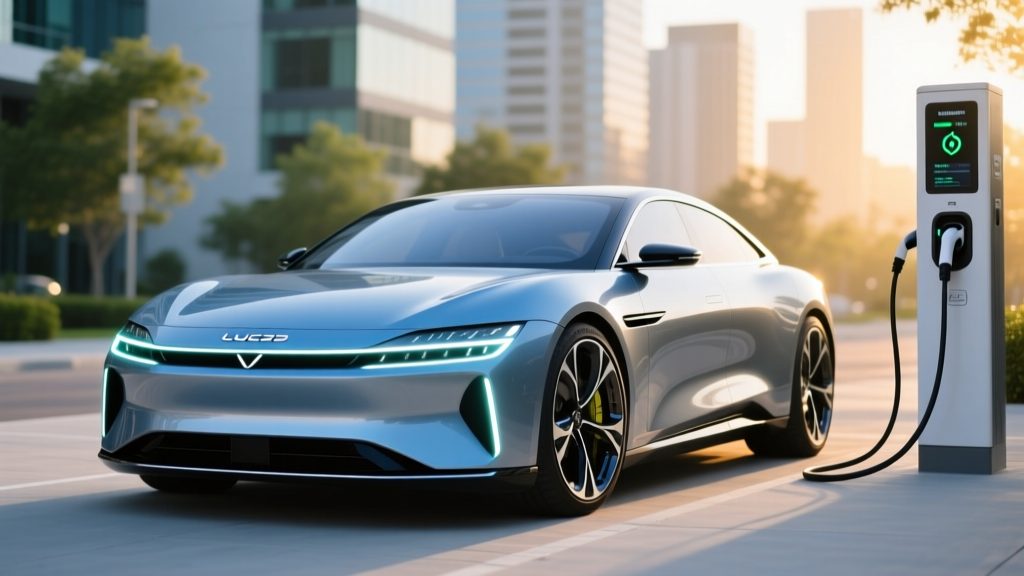
The 2025 Lucid Air remains the efficiency king of the luxury electric sedan segment. With an EPA-estimated range reaching 516 miles on the Pure RWD trim and a powertrain that extracts more miles per kilowatt-hour than any competitor, Lucid's engineering-first approach continues to set the benchmark. But range alone doesn't make a car — and the Air's story in 2025 is as much about its expanding Super Dream Drive ADAS suite, its 900-volt electrical architecture, and its increasingly competitive pricing as it is about going farther on a single charge.
We've spent time with multiple Air trims, tracked real-world energy consumption across seasons, and mapped charging curves at DC fast chargers. Here's the data-driven breakdown buyers need before writing a check.
2025 Lucid Air: At-a-Glance Specifications
| Spec | Pure RWD | Touring AWD | Grand Touring AWD | Sapphire |
|---|---|---|---|---|
| EPA Range | 419 mi | 425 mi | 516 mi | 427 mi |
| Battery (usable kWh) | 88 kWh | 112 kWh | 112 kWh | 118 kWh |
| Chemistry | NMC | NMC | NMC | NMC |
| Drivetrain | RWD (single motor) | AWD (dual motor) | AWD (dual motor) | AWD (tri-motor) |
| Horsepower | 430 hp | 620 hp | 819 hp | 1,234 hp |
| 0-60 mph | 5.0 sec | 3.4 sec | 3.0 sec | 1.89 sec |
| MPGe (combined) | 146 MPGe | 131 MPGe | 131 MPGe | 109 MPGe |
| kWh/100 mi | 23 | 26 | 26 | 31 |
| Base MSRP | $69,900 | $87,400 | $125,600 | $249,000 |
Source: fueleconomy.gov and Lucid Motors official specifications.
Real-World Range: What the EPA Sticker Doesn't Tell You
EPA (Grand Touring): 516 miles
Real-world highway (70 mph, 72°F): ~420–450 miles
Real-world highway (70 mph, 30°F): ~340–380 miles
Real-world city/mixed: ~460–490 miles
Your results will vary with speed, terrain, HVAC usage, and tire selection.
The Grand Touring's 516-mile EPA figure is genuinely extraordinary — no other production sedan, electric or otherwise, matches it. But EPA testing uses relatively low average speeds and moderate temperatures. In our experience, sustained 70-80 mph highway driving in mild conditions yields roughly 420 to 450 miles before the battery buffer engages. Drop the ambient temperature to freezing and add seat heaters and a warm cabin, and expect 340 to 380 miles. That's still more range than most EVs offer on paper.
The Pure RWD's 419-mile EPA rating translates to roughly 340–370 miles on a real highway trip in fair weather. For a base-priced luxury sedan, that's remarkable efficiency. The Air's secret is its miniaturized drive units, low-drag aerodynamics (a Cd of roughly 0.20 on the Pure), and a 900V+ architecture that minimizes energy losses in the power electronics.
The Sapphire, despite sharing the Grand Touring's 118 kWh battery pack, sacrifices range for its 1,234-horsepower tri-motor setup. At 427 miles EPA, it's still highly usable — but buyers choosing the Sapphire are prioritizing performance over distance.
Charging Speed: 900V Architecture Delivers
| Charging Level | Spec | Practical Result |
|---|---|---|
| DC Fast Charge (peak) | ~300 kW (Grand Touring/Sapphire); ~220 kW (Pure/Touring) | 10–80% in ~15–20 min on a 350 kW charger |
| DC Fast Charge (sustained avg) | ~180–220 kW average through 10–80% | ~250–300 miles added in 20 min |
| Level 2 Home (max onboard) | 19.2 kW (requires 100A circuit / 80A charger) | ~70–80 miles of range per hour |
| Level 2 Home (48A typical) | 11.5 kW on a 60A circuit | ~40–45 miles of range per hour |
| Level 1 (120V) | ~1.4 kW | ~5 miles of range per hour |
| Connector | CCS (Combo 1) — NACS adapter available | Tesla Supercharger access with adapter |
The Air's 900-volt electrical architecture is the key to its charging performance. Higher voltage allows more power at lower current, reducing heat buildup and sustaining faster charge rates deeper into the session. On a 350 kW Electrify America or Ionity station, the Grand Touring can peak near 300 kW — and crucially, it holds strong through the 10–60% state-of-charge window before tapering.
The charge curve matters more than the peak number. Many EVs advertise a peak kW figure but taper aggressively after 50% SoC. The Air's curve is comparatively flat: expect an average of 180–220 kW from 10% to 80% on the Grand Touring, translating to a 15–20 minute session. The Pure and Touring, with slightly different battery configurations, peak lower and average around 150–180 kW through the same window — still fast, but roughly 5 minutes slower to 80%.
At home, the Air's 19.2 kW onboard charger is among the most powerful available. Most Level 2 home installations use a 60-amp circuit (48 amps continuous), delivering 11.5 kW — enough to fully replenish even the 118 kWh Grand Touring pack overnight in roughly 10–11 hours. If your electrical panel supports a 100-amp circuit with an 80-amp hardwired charger, you unlock the full 19.2 kW, cutting that to about 6–7 hours. Consult a licensed electrician to assess your panel capacity before committing to a 100A install.
Performance and Driving Dynamics
Even the base Pure RWD hits 60 mph in 5.0 seconds with 430 horsepower — brisk by any sedan standard. The Touring's 620 hp and dual-motor AWD drop that to 3.4 seconds, which puts it firmly in sports-sedan territory. The Grand Touring's 819 hp and 3.0-second sprint feel effortless rather than aggressive, a hallmark of Lucid's tuning philosophy that prioritizes smoothness and composure over theatrics.
Then there's the Sapphire. At 1,234 horsepower and a verified 1.89-second 0-60 time, it is one of the quickest production cars ever built. It also features a dedicated track mode, carbon-ceramic brakes, and torque vectoring across its three motors. It's a legitimate hypercar killer wearing a luxury sedan body — though at $249,000, it competes in a very different price bracket than the rest of the lineup.
Ride quality across the lineup is excellent. The Air uses a multi-link front and rear suspension with available air springs (standard on Grand Touring and Sapphire, optional on Touring). Road isolation is impressive, and the cabin stays quiet even at highway speeds. The steering is precise but not particularly communicative — this is a grand tourer, not a track-focused sports sedan (the Sapphire excepted).
Interior, Cargo, and Technology
The Air's cabin leans minimalist-luxury, with a dominant 34-inch curved glass cockpit display that stretches across the upper dash. A secondary retractable lower touchscreen handles climate, media, and vehicle settings. Materials are high quality — available Nappa leather, Alcantara, and open-pore wood trim — though some owners have noted that panel-gap consistency still trails German competitors like Mercedes-Benz and BMW.
Passenger and cargo dimensions:
- Front legroom: 45.3 inches
- Rear legroom: 37.4 inches
- Trunk volume: 32.1 cu ft (rear cargo area including under-floor storage)
- Frunk (front trunk): 10.0 cu ft
- Total cargo capacity: 42.1 cu ft
The rear seat is genuinely comfortable for adults on longer trips, with generous headroom thanks to the Air's sedan proportions and glass canopy roof (standard on Grand Touring and Sapphire, optional elsewhere). The 32.1 cu ft trunk is large for a sedan and swallows luggage for four without issue. The 10 cu ft frunk adds meaningful utility for charging cables or a carry-on.
Standout tech features:
- Lucid UX infotainment with native streaming apps, over-the-air updates, and phone-as-key
- Surreal Surround audio (21 speakers, Dolby Atmos-capable on upper trims)
- Super Dream Drive (ADAS): adaptive cruise, lane centering, blind-spot intervention, and available highway-assist features — SAE Level 2; driver must remain fully engaged at all times
- 900V electrical architecture enabling faster charging and more efficient power delivery
- RangeXchange (announced V2H capability for home backup power — availability varies by model year and region)
Pricing, Tax Credits, and Total Cost
| Trim | Base MSRP | §30D Federal Credit | Effective Price (if eligible) |
|---|---|---|---|
| Pure RWD | $69,900 | Up to $7,500* | ~$62,400 |
| Touring AWD | $87,400 | Up to $7,500* | ~$79,900 |
| Grand Touring AWD | $125,600 | Not eligible (above $55K sedan MSRP cap) | $125,600 |
| Sapphire | $249,000 | Not eligible (above $55K sedan MSRP cap) | $249,000 |
*Under IRS §30D rules, the federal EV tax credit is subject to multiple requirements: the vehicle MSRP must not exceed $55,000 for sedans (which disqualifies the Grand Touring and Sapphire); the buyer's modified adjusted gross income must not exceed $150,000 (single), $225,000 (head of household), or $300,000 (joint); and the battery must meet critical-mineral and component-sourcing thresholds that change annually. The Pure RWD and Touring may qualify, but confirm current-year sourcing compliance and your personal tax situation with a qualified tax professional. Credit can be transferred to the dealer at point of sale as an upfront discount. See IRS.gov §30D guidelines for current rules.
The Pure RWD at roughly $62,400 after the potential credit is arguably the most compelling value in the lineup — a 419-mile luxury sedan for Tesla Model S money. The Touring at ~$79,900 adds AWD, more power, and the larger battery, positioning it against the BMW i5 and Mercedes EQE. The Grand Touring and Sapphire operate in a different financial stratum and are justified by their range and performance, not tax incentives.
Warranty and Long-Term Ownership
Lucid covers the Air with the following warranty structure:
- Basic vehicle warranty: 4 years / 50,000 miles
- Battery and drive unit warranty: 8 years / 100,000 miles (125,000 miles in California and states adopting CARB standards)
- Battery capacity retention threshold: 70% of original capacity during the warranty period
The 70% retention threshold is industry-standard, matching Tesla and most competitors. Lucid's NMC battery chemistry offers high energy density but is more sensitive to sustained high-state-of-charge storage and extreme heat than LFP. For longevity, Lucid recommends keeping daily charge limits around 80–90% and avoiding prolonged storage above 90% or below 20% SoC. The battery management system includes active liquid cooling and preconditioning to manage thermal loads during driving and charging.
Long-term degradation data for the Air is still emerging — the oldest examples on the road are 2022 models with roughly three years of fleet data. Early reports from high-mileage owners suggest degradation in line with industry norms: roughly 5–8% capacity loss in the first 30,000 miles, with the curve flattening significantly afterward.
2025 Lucid Air vs. Key Competitors
| Attribute | Lucid Air Pure | Tesla Model S LR | BMW i5 eDrive40 | Mercedes EQE 350+ |
|---|---|---|---|---|
| EPA Range | 419 mi | 402 mi | 295 mi | 305 mi |
| Base MSRP | $69,900 | $74,990 | $66,800 | $74,900 |
| 0-60 mph | 5.0 sec | 3.1 sec | 5.7 sec | 6.2 sec |
| DC Fast Charge (peak) | ~220 kW | ~250 kW | ~205 kW | ~170 kW |
| MPGe (combined) | 146 | 124 | 105 | 100 |
| Cargo (total cu ft) | 42.1 | 28.0 | 17.3 | 15.0 |
The Air's advantages are clear: best-in-class range and efficiency, a large frunk and trunk, and strong value at the Pure trim. The Model S counters with a more established Supercharger network (though Lucid's NACS adapter narrows this gap), a slightly quicker 0-60, and more mature Autopilot/FSD software. The BMW i5 and Mercedes EQE offer superior build quality and dealer networks but sacrifice 100+ miles of range and trail on efficiency.
- Maximum range and efficiency are your top priorities
- You want a luxury sedan with genuine 400+ mile real-world capability
- You charge at home most nights and value overnight replenishment over public-charging speed
- You want a spacious trunk + frunk combination in a sedan form factor
- You need the most mature public-charging network (Tesla Supercharger still leads in reliability)
- German build quality and dealer service infrastructure are non-negotiable
- You want a hatchback/wagon body style for maximum cargo flexibility
- You want Level 4 autonomous driving (not available on any consumer vehicle)
Pros and Cons
- Best-in-class EPA range (up to 516 mi)
- Outstanding efficiency — 146 MPGe combined on Pure
- 900V architecture enables fast, sustained DC charging
- Spacious interior with 42.1 cu ft total cargo
- 19.2 kW onboard charger is best-in-segment for home charging
- Pure trim is competitively priced after potential tax credit
- Quiet, composed ride quality
- Brand is still young — service center network is limited vs. legacy OEMs
- Grand Touring and Sapphire exceed the §30D MSRP cap
- Infotainment learning curve — lower screen retracts, some functions buried in menus
- Panel-gap consistency not yet at German-luxury standards
- CCS port requires adapter for Tesla Supercharger access
- ADAS (Super Dream Drive) trails Tesla FSD and GM Super Cruise in feature maturity
- Resale value data is limited given brand age
Who the 2025 Lucid Air Is For
Road-trippers and long-distance commuters: The Air's core value proposition. If you regularly drive 200+ miles between charges — whether on interstate commutes or weekend road trips — no other sedan gives you more buffer. The Pure RWD's 419-mile EPA range means most people can complete a full day's drive with a single 15–20 minute DC fast-charge stop.
Home-charging luxury buyers: With a 19.2 kW onboard charger and a typical overnight session, the Air wakes up fully charged every morning. If you have reliable Level 2 access at home, public charging becomes an occasional convenience rather than a daily necessity.
Performance enthusiasts (Sapphire): A 1.89-second 0-60 sedan that seats five comfortably and carries luggage for a week. It's a niche, but no one else offers this combination.
Not ideal for: Buyers who need extensive dealer-service infrastructure in rural areas, those who want the most polished hands-free highway driving system (GM Super Cruise and Tesla FSD are further ahead in real-world deployment), or anyone whose budget is strictly under $60,000.
Frequently Asked Questions
What is the real-world range of the 2025 Lucid Air?
In mixed driving at moderate speeds and temperatures, expect 460–490 miles from the Grand Touring and 370–400 miles from the Pure RWD. Sustained 70–80 mph highway driving reduces that by roughly 10–15%. Cold weather (below 35°F) can reduce range by an additional 15–25% depending on HVAC use and whether the battery is preconditioned.
How fast does the 2025 Lucid Air charge at home and on the road?
On a 350 kW DC fast charger, the Grand Touring peaks near 300 kW and charges from 10–80% in approximately 15–20 minutes. The Pure and Touring peak around 220 kW and take roughly 20–25 minutes for the same session. At home on a 60-amp Level 2 circuit (11.5 kW), expect 40–45 miles of range per hour — enough to fully charge overnight. With a 100-amp circuit and 19.2 kW delivery, the Air charges faster at home than nearly any competitor.
Does the 2025 Lucid Air qualify for the $7,500 federal EV tax credit?
The Pure RWD ($69,900 MSRP) and Touring ($87,400 MSRP) exceed the $55,000 MSRP cap for sedans under IRS §30D rules. As of 2025, no Air trim qualifies for the new-vehicle federal tax credit due to the sedan MSRP cap. However, the used-EV credit (§25E) may apply to pre-owned Air models priced at or below $25,000, subject to buyer income limits. Always verify current rules at IRS.gov and consult a tax professional.
Is the Lucid Air worth buying over the Tesla Model S?
It depends on your priorities. The Air offers superior range, efficiency, interior space, and ride comfort. The Model S offers a more mature Supercharger network, more advanced driver-assist features (FSD Supervised), quicker acceleration on the Plaid variant, and a more established service infrastructure. If range and luxury are paramount, the Air wins. If charging convenience and tech features matter most, the Model S remains compelling.
What is the battery warranty on the 2025 Lucid Air?
Lucid covers the battery and drive unit for 8 years or 100,000 miles (125,000 miles in CARB states like California). The warranty guarantees at least 70% of original battery capacity retention during that period. This is consistent with industry norms from Tesla, BMW, and Mercedes-Benz.
Can I use Tesla Superchargers with the 2025 Lucid Air?
Yes, with Lucid's NACS adapter. The Air ships with a CCS1 port, but the available NACS adapter grants access to Tesla's Supercharger network. Lucid has also announced plans to transition to a native NACS port on future model years. For 2025, the adapter solution works reliably at V3 and V4 Superchargers.